There's a moment in every residential design where you have to decide how big the beam should be. Too narrow and it disappears. Too wide and the room feels like it's wearing a hat. For medium-sized rooms—12 by 14, 14 by 16, anything in that range—the 10-inch width lands in the sweet spot more often than not.
Here's when and why.
What "medium-sized" actually means
Designers and contractors tend to throw "medium" around without defining it. A more useful breakdown:
- Small: under 130 sq ft (bedrooms, small offices, powder rooms)
- Medium: 130 to 280 sq ft (most bedrooms, dining rooms, family rooms, kitchens)
- Large: 280+ sq ft (great rooms, primary suites, finished basements, open-plan living)
In the medium band, ceiling heights usually run 8 to 10 feet. That's the range where a 10-inch-wide beam has enough presence to register as architecture without crushing the proportions.
Why 10 inches
A 10-inch-wide beam at 9-foot ceilings occupies just over 9 percent of the wall height. That ratio is right at the boundary where the beam reads as "structural" rather than "decorative trim." Go to 6 inches and you're in crown molding territory. Go to 12 inches and the beam starts to dominate a room that wasn't designed for it.
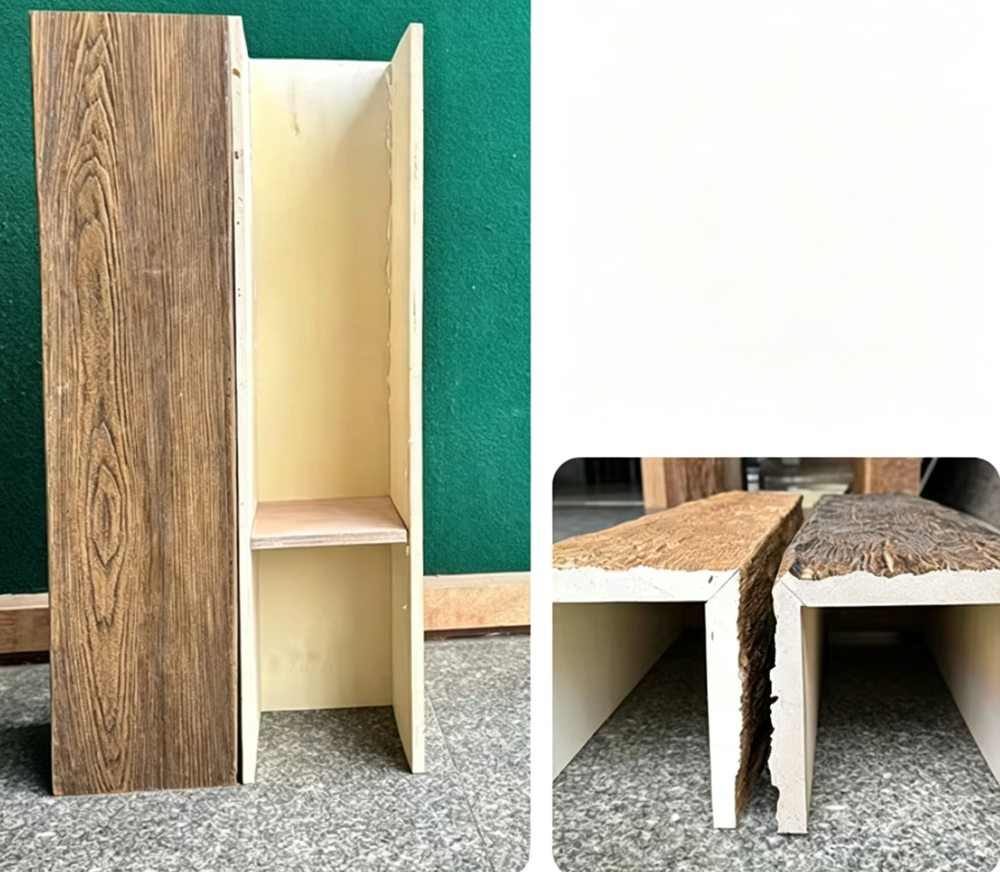
The 10-inch width is also a manufacturing sweet spot for polyurethane faux beams. Most mold tooling was developed around 8, 10, and 12-inch nominal widths because those specs cover roughly 70 percent of residential demand. Custom widths (9, 11, 13) require new tooling, which adds 30 to 60 days to lead times and a 25 to 40 percent cost premium.
Accent placement patterns
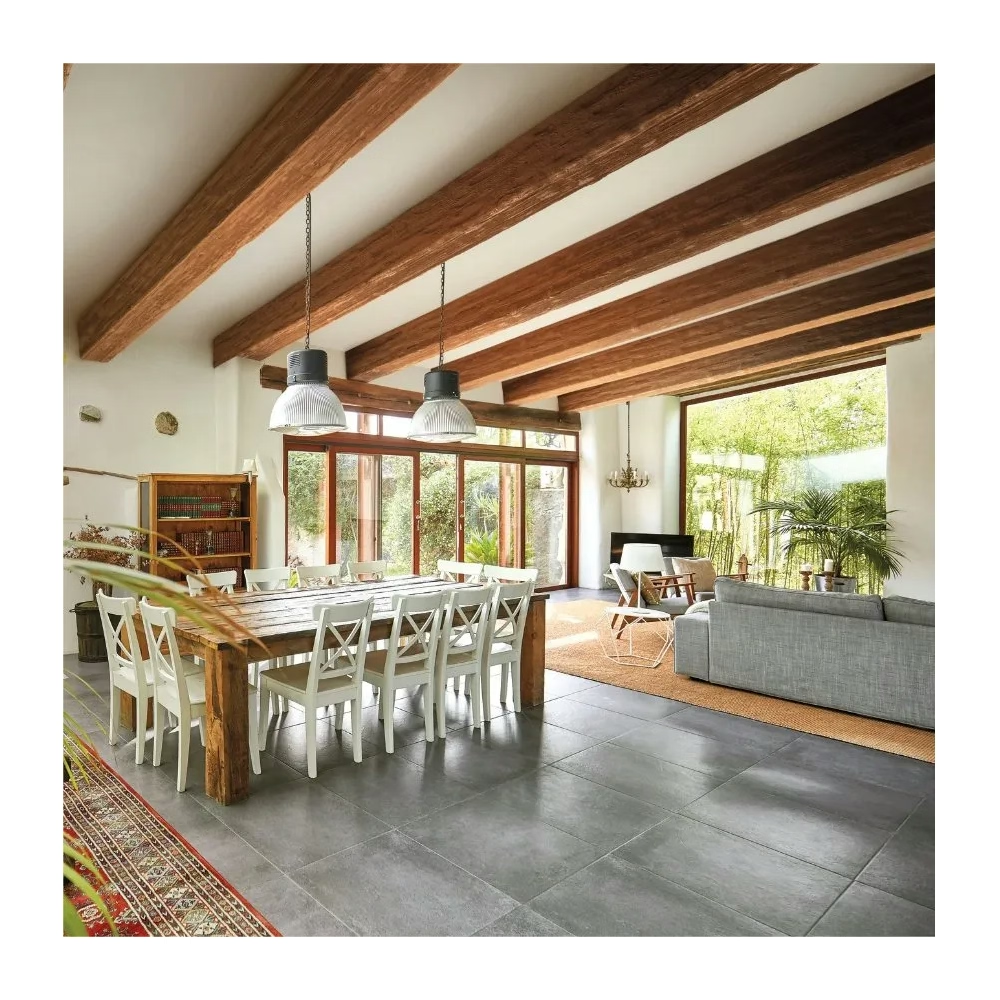
In medium rooms, faux beams usually go in one of three places:
Single statement beam — one beam across the short axis of the room, typically above a focal point (dining table, bed headboard, kitchen island). Cleanest visual move.
Pair of beams — two parallel beams creating a band. Reads as architectural framing rather than a single decorative element.
Perimeter tray — beams along three or four sides of the ceiling, framing a recessed center. Used in dining rooms and primary bedrooms where the goal is intimacy.
The single-beam pattern is the cheapest and the most common. Two beams adds about 80 percent of the material cost. Perimeter trays typically require four to six beam segments and corner blocks.
Width and ceiling height interaction
The relationship between beam width and ceiling height is the single most important proportion decision:
| Ceiling | Recommended Width | Why |
|---|---|---|
| 8 ft | 4–6 in | Anything wider feels heavy |
| 9 ft | 6–8 in | Standard residential ceiling |
| 10 ft | 8–10 in | The 10-inch width shines here |
| 12 ft | 10–12 in | Larger volumes, larger beams |
The 10-inch beam on a 10-foot ceiling is a 1:12 ratio that reads as intentional without being showy. It's the spec that most designers reach for when they want a beam to feel "right" without dominating.
Finish choices for medium rooms
Medium rooms take finishes better than large rooms because the eye can scan the whole beam in a single glance. That means texture quality matters more.
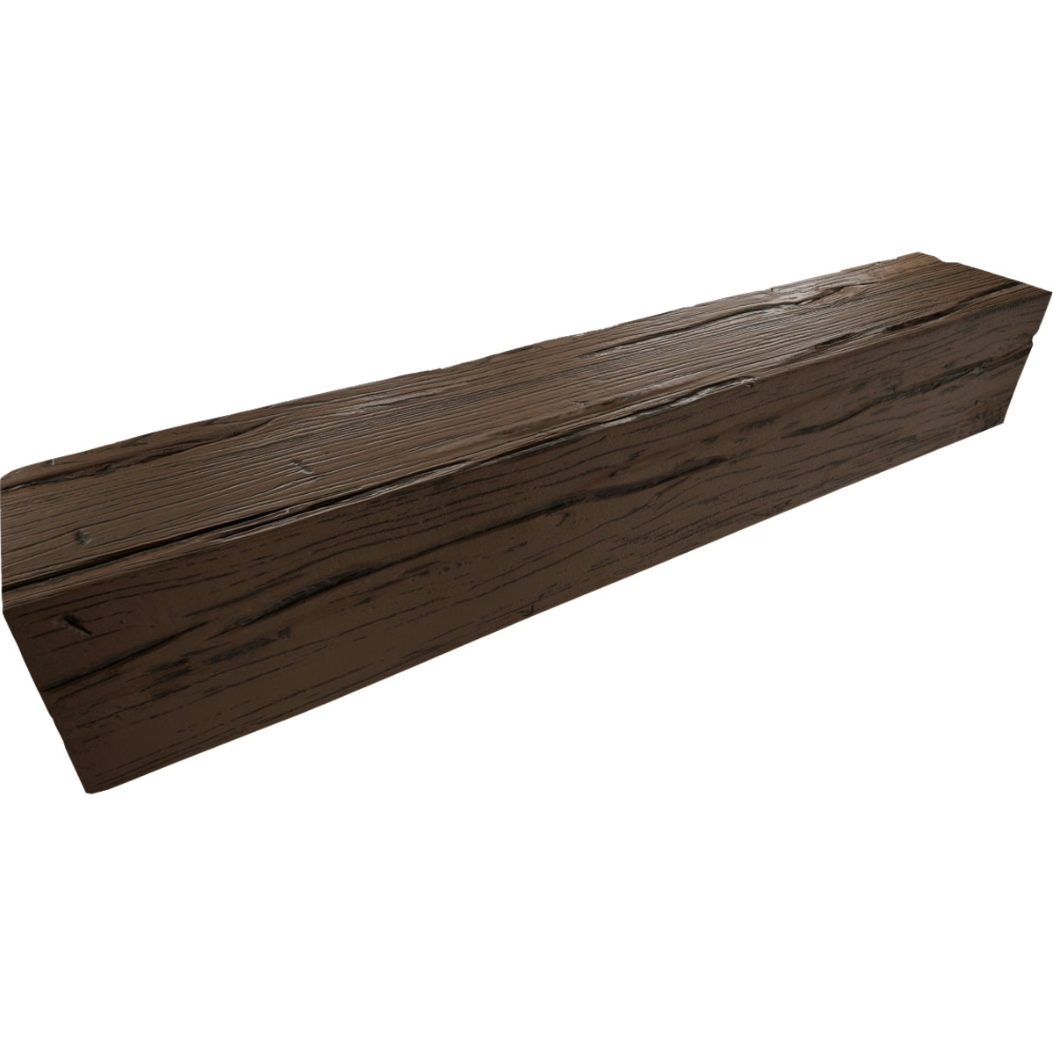
- Hand-hewn texture — visible tool marks, deep grain. Strong look in rustic, farmhouse, mountain, and craftsman interiors.
- Smooth or light-grain texture — clean lines. Better for transitional, modern farmhouse, Scandinavian, coastal.
- Distressed or reclaimed texture — looks like aged barn wood. Works in vintage, industrial, eclectic spaces.
Polyurethane takes texture far more cleanly than natural wood because the mold captures every detail at high resolution. The same beam molded in real timber would lose 30 to 40 percent of the surface detail to planing and sanding.
What a 10-inch beam handles structurally
A 10-inch-wide beam at 8 to 12 feet long weighs between 18 and 26 pounds depending on profile depth and whether it's solid or hollow-back. Even the heaviest version is a one-person lift for a fit installer, and a comfortable two-person lift for a DIY homeowner.
Mounting is the same as for narrower beams:
- Continuous bead of polyurethane-compatible adhesive on the back
- Mechanical fasteners every 16 to 24 inches through the mounting block
- Backing board or joist-driven mounting, depending on ceiling construction
Trade considerations
For distributors and project buyers, 10-inch-wide beams are usually sold as part of a 6x10, 8x10, or 10x10 nominal spec. Pricing tiers in 2026:
- 6x10: lower mid-range, around $48–$72 per linear foot wholesale
- 8x10: mid-range, $62–$88 per linear foot
- 10x10: premium, $85–$130 per linear foot
Stock 10-inch widths are available in most standard finishes. Custom widths (anything that isn't 6, 8, 10, or 12 inches) require a mold and a longer lead time.
When to choose a different width
Three situations push you away from 10 inches:
- Ceiling under 8 feet 6 inches. A 10-inch beam on a low ceiling makes the room feel oppressive. Drop to 6 inches.
- Very narrow room (under 10 feet wide). A 10-inch beam in a 9-foot-wide hallway or galley kitchen visually consumes the space. Use 4 or 6 inches, or skip the beam entirely.
- Already heavy ceiling detail (coffered tray, multiple recesses). Adding a 10-inch beam to a ceiling that already has deep architectural detail creates visual noise.
A final note on proportion
Most homeowners look at a 10-inch beam sample in a showroom and think it looks too big. They install it on the ceiling and realize the showroom sample sat too close to the eye. On a 9 or 10-foot ceiling, viewed from across a 14-foot-wide room, the beam reads as exactly the right size. Trust the proportion rules and the room will reward you.
A 10-inch-wide PU faux beam in a medium-sized room is one of the safest specifications in residential design. It almost always works. The variables that change are finish, placement, and how many beams you decide to install—not whether the width is right.
Technical References
ASTM standards cited in every specification
Test Data
Lab results from internal testing program
Updated 2026
Reviewed against current product specs


