Big rooms need big gestures. A 10-inch-wide beam in a 16 by 20 great room with a 12-foot ceiling isn't oversized—it's right-sized. The mistake designers make with spacious rooms is treating them like normal rooms scaled up. They aren't. Volume changes everything about how a beam registers.
The spacious ceiling problem
Spacious ceilings (anything above 11 feet, or rooms above 280 sq ft) make beams look smaller than they are. The eye has too much space to scan, so a beam that would dominate a 9-foot bedroom disappears into the void above a great room.
This is why spacious rooms need either:
- More beams (higher density of horizontal lines)
- Bigger beams (wider and deeper, to register at distance)
- Both
A 10-inch-wide beam in a spacious room is the minimum width that holds visual weight from across the space. Below 10 inches, the beam starts to feel like a piece of trim.
Proportion rules that change with volume
The standard proportion rule of "beam width = 1 inch per foot of ceiling height" works fine for 8 to 10-foot ceilings. Beyond that, the formula starts to underdeliver.
For spacious rooms:
| Ceiling | Standard Rule | Adjusted Rule |
|---|---|---|
| 11 ft | 11 in | 10 in (still OK) |
| 12 ft | 12 in | 10–12 in |
| 14 ft | 14 in | 12 in minimum, often 14 in |
| 16 ft+ | 16+ in | 12–16 in with deeper profile |
The 10-inch width works up to about 12-foot ceilings. Above that, you usually want to move to 12-inch widths or to a deeper profile (8x10 becoming 10x10, or 10x12 with the same 10-inch face but more depth).
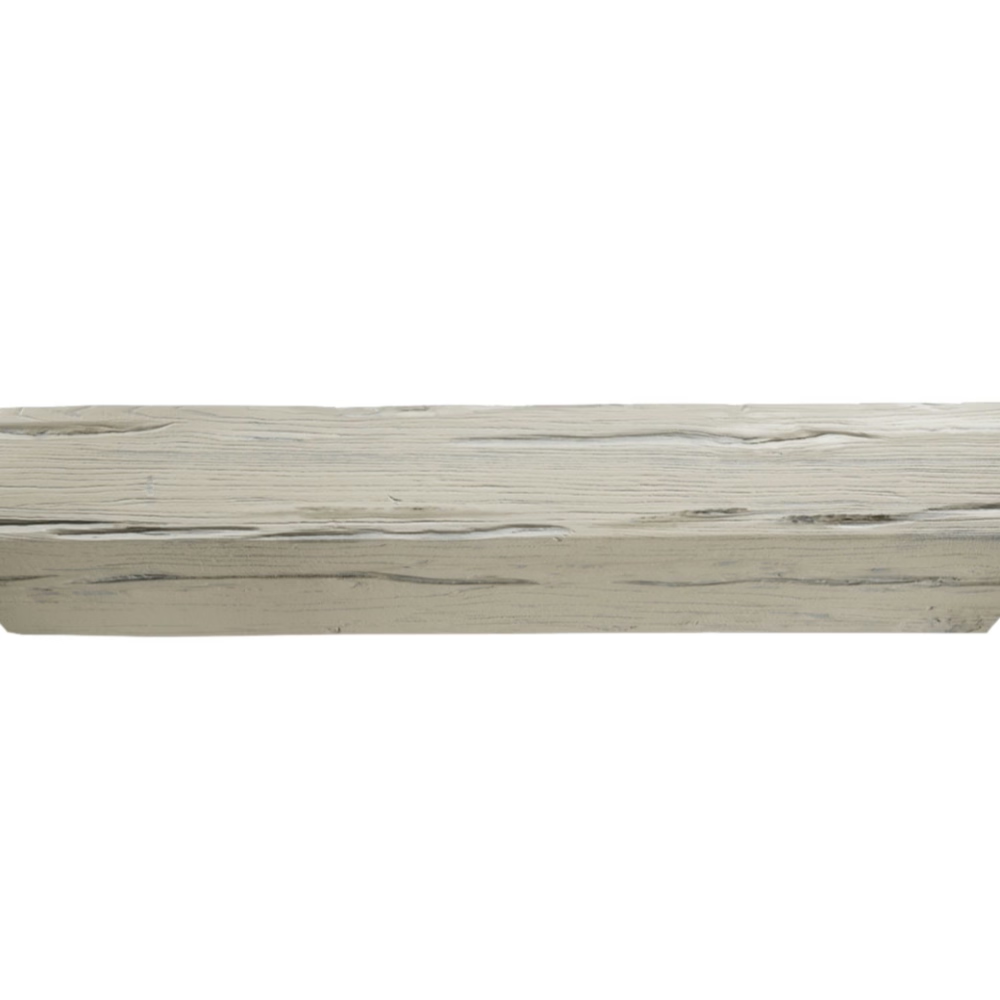
Why 10 inches specifically works in spacious rooms
There's a particular thing that happens when a 10-inch beam meets a 12-foot ceiling: the beam registers as architectural, but the room still feels open. Go to 12 inches and the ceiling starts to feel sectioned off. Go to 8 inches and the beam looks like an afterthought.
The 10-inch width hits a perception threshold. It's wide enough to read as a primary architectural element from any seat in the room, narrow enough to leave generous ceiling space between beams.
Layouts for spacious rooms
Three layouts dominate spacious residential work.
Parallel bands — Two, three, or four parallel beams across the room's short axis. Spacing of 4 to 6 feet. Works in modern farmhouse, transitional, and craftsman-style great rooms. The safest, most universally flattering option.
Coffered grid — Beams cross at right angles to form a grid pattern. Used in formal dining rooms, libraries, and traditional primary suites. Material cost roughly doubles compared to parallel bands. Visual impact roughly doubles too.
Vaulted treatment — Beams follow the rake of a vaulted or cathedral ceiling. Requires angled cuts and careful joint work. The dramatic option for chalet, mountain-modern, and craftsman interiors.
Mounting depth matters more in spacious rooms
In a 9-foot bedroom, a beam mounted flush to the ceiling reads fine. In a spacious room, flush-mounted beams can look like they were glued on top of the drywall—because that's exactly what they were.
Two strategies improve the result:
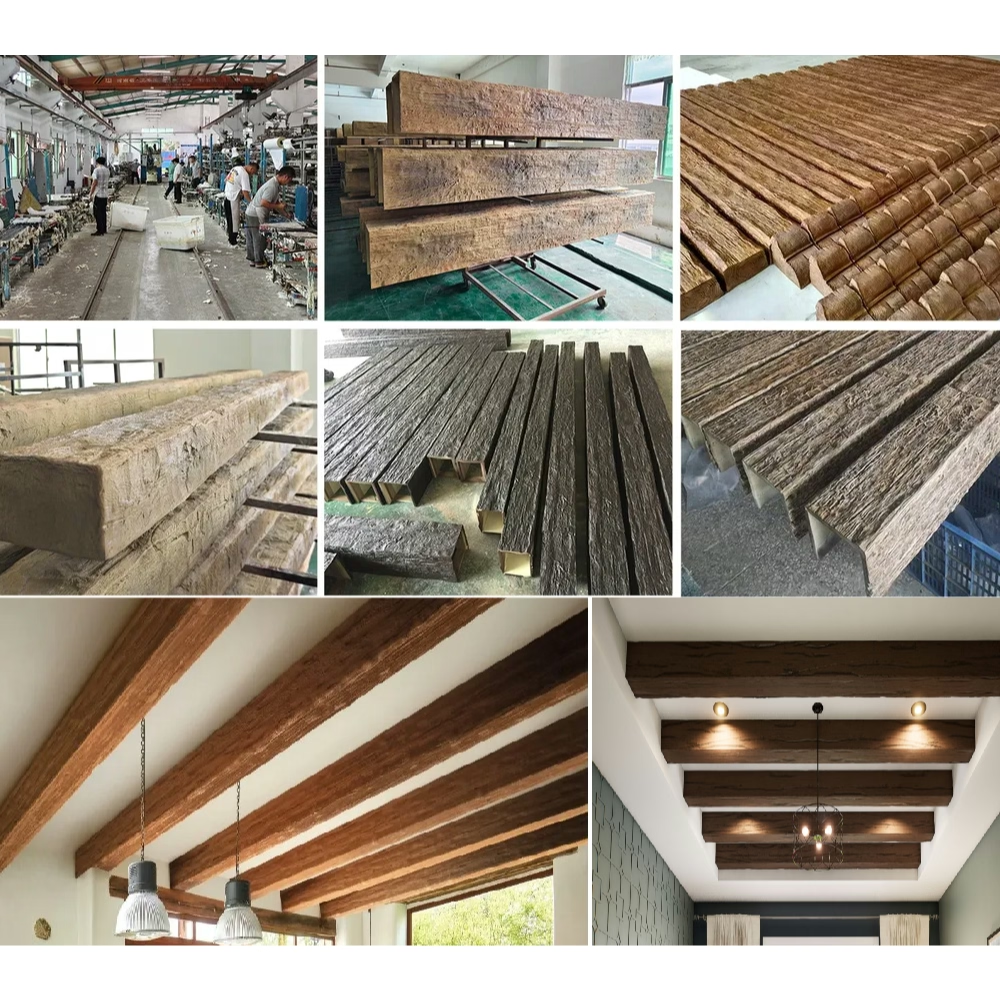
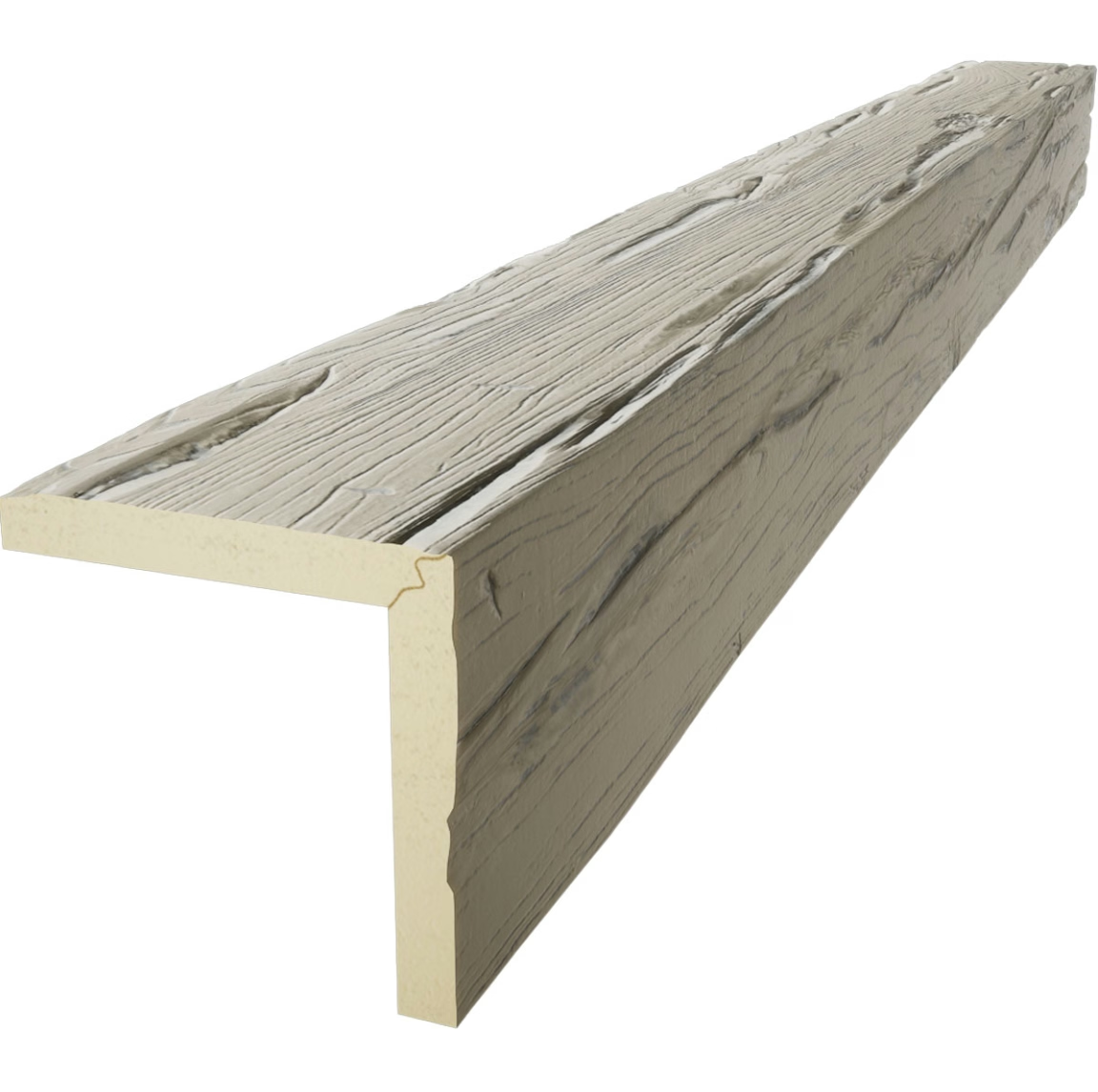
Drop mounting — Beam sits 4 to 8 inches below the ceiling on cleats or mounting blocks. Adds dimension, allows recessed lighting above the beam, and reads as a true structural member.
Box beam construction — Beam is wrapped around a structural lumber core, creating a hollow appearance with no visible mounting hardware. The premium option for high-end residential projects.
For spacious rooms, drop mounting is the standard. Box beams come into play when the budget allows and the client wants the highest-fidelity look.
Finish and texture choices
Spacious rooms have one finish rule that smaller rooms don't: texture matters more, not less. In a small room, the eye sees the whole beam at once. In a spacious room, the eye scans across the beam, and any flat or boring surface reads as artificial.
Strong texture options for spacious rooms:
- Deep hand-hewn grain — visible tool marks, deep relief, catches light at multiple angles
- Rough-sawn cedar texture — pronounced saw marks, looks like freshly milled timber
- Reclaimed barn wood texture — weathering, knot patterns, character that reads as authentic at distance
Smooth or light-grain finishes work in modern and Scandinavian-inspired spacious rooms, but most spacious rooms in residential projects lean rustic, transitional, or modern farmhouse—textures that benefit from deeper relief.
What a 10-inch beam won't solve
A 10-inch beam can make a spacious room feel grounded, but it can't fix:
- Poor lighting layout — beams need lighting. If the room has only two ceiling cans, the beam treatment will look like a mistake.
- Awkward room proportions — a 14 by 18 room with 9-foot ceilings isn't "spacious" no matter how many 10-inch beams you install.
- Mismatched materials — beams in dark walnut against blonde oak floors look like a parts catalog, not a designed room.
Trade notes for spacious-room specs
For distributors and project buyers, spacious-room projects tend to specify:
- 10x10 or 12x12 nominal profiles (10-inch face, 10 or 12-inch depth)
- 14 to 20-foot lengths, often with field cuts
- Higher finish tier — premium texture rather than entry-level smooth grain
- Matching beam straps, corbels, and end caps as add-ons
Container load efficiency drops for longer lengths. A 20-foot container holds roughly 600 beams at 16-foot length vs. 1,000 beams at 10-foot length. Project planning should account for the freight difference.
A working rule
If you're specifying a 10-inch PU faux beam for a spacious room, ask: "Will this beam be visible and intentional from the seat 24 feet away?" If yes, the spec is probably right. If the beam fades into the ceiling plane from across the room, it's undersized—move to 12 inches or add another beam to the layout.
A 10-inch beam in a spacious room works when the room is large but not huge. Past 16-foot ceilings or 400 sq ft floor plates, the 10-inch width starts to look modest. Stay below those thresholds and the spec holds.
Technical References
ASTM standards cited in every specification
Test Data
Lab results from internal testing program
Updated 2026
Reviewed against current product specs


