Amazon FBA Ready Packaging for Bulk Faux Wood Beam Shipments
The global e-commerce marketplace has transformed how polyurethane faux wood beams reach end customers, with Amazon's Fulfillment by Amazon (FBA) program enabling manufacturers and sellers to access Prime shipping benefits without maintaining their own logistics infrastructure. Success in this channel requires packaging that satisfies Amazon's rigorous requirements while protecting fragile beam products through the rough handling that fulfillment center operations impose.
Understanding FBA Packaging Requirements
Amazon enforces specific packaging standards designed to protect products through mechanical sorting, shelving, and retrieval systems that treat packages as inventory units rather than fragile cargo. These requirements include dimensional consistency that enables automated system handling, weight limits that protect workers and equipment, and durability standards that prevent package failure during normal operations.
Faux wood beams present unique packaging challenges: their length-to-weight ratio exceeds standard parameters, their irregular surfaces complicate uniform wrapping, and their structural fragility under point loading conflicts with the stacking requirements that storage density demands. Meeting these challenges requires packaging engineering that addresses each vulnerability systematically.
Dimensional Optimization for Unit Handling
Amazon's fulfillment centers process packages through automated systems calibrated for standard dimensional ranges. Oversized items trigger manual handling workflows that increase per-unit costs and extend processing times. Under-sized packages risk damage from system components designed for larger inventory units.
Optimal FBA packaging for faux beams balances these constraints through carefully calculated dimensional profiles that maximize protection while minimizing handling classification penalties. This often means using protective sleeves that add minimal dimension while providing crush resistance, combined with corner protection that prevents the edge damage that undermines customer satisfaction.
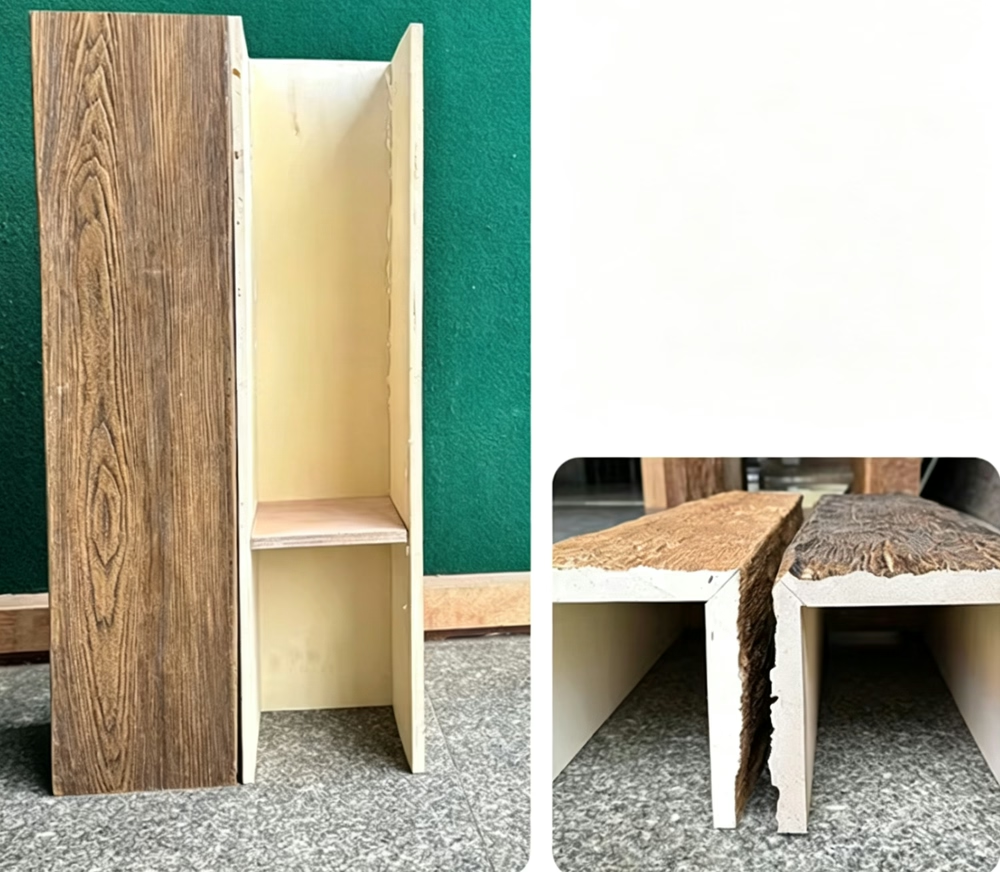
Material Protection Strategies
Beam products require protection against multiple hazard categories: compression damage from stacked inventory, impact damage from drop events, abrasion from adjacent packages, and moisture damage from environmental conditions in non-climate-controlled facilities.
Multi-layer protection addresses these threats economically. A rigid inner core prevents compression damage, flexible intermediate layers absorb impact energy, and weather-resistant outer wrapping handles moisture exposure. This approach weighs more than minimal packaging but significantly reduces damage rates that erode seller ratings and generate return processing costs.
Labeling and Compliance Considerations
FBA shipments require scannable barcodes, compliance labels, and country-of-origin markings that satisfy both Amazon requirements and international trade regulations. For Chinese manufacturers shipping to US and European fulfillment centers, proper marking becomes particularly important—customs authorities verify country-of-origin declarations that determine tariff classification and quota eligibility.
Polyurethane faux beams face specific tariff coding considerations that vary by destination market. Accurate classification prevents customs delays, duty assessment errors, and the compliance issues that trigger account penalties. Professional customs consultation helps sellers navigate these requirements without the trial-and-error that generates costly mistakes.
Bulk Shipment Consolidation
Full container shipments to FBA prep centers offer cost advantages over smaller lot shipping, but require coordination between manufacturing completion schedules and container availability. Consolidating multiple SKUs into unified shipments simplifies customs documentation while enabling volume-based freight rate optimization.
Professional prep center partnerships provide value beyond simple receiving and storage: they handle label application, poly-bagging requirements, and FNSKU barcode assignment that individual sellers find administratively burdensome. These services justify their fees through error reduction and compliance assurance that protects seller accounts from the penalties that packaging violations trigger.
Technical References
ASTM standards cited in every specification
Test Data
Lab results from internal testing program
Updated 2026
Reviewed against current product specs