A 12-inch beam is a commitment. It's the widest profile most residential projects ever specify, and at the boundary between "architectural ceiling feature" and "structural member." Used in the right room, it anchors the whole space. Used wrong, it makes the room feel like it's being closed in by the ceiling.
Here's the case for the 12-inch width.
Why 12 inches specifically
Most residential ceilings fall between 8 and 12 feet. The beam width that scales appropriately across that range:
- 8-foot ceilings: 4 to 6 inches
- 9-foot ceilings: 6 to 8 inches
- 10-foot ceilings: 8 to 10 inches
- 11-foot ceilings: 8 to 10 inches
- 12-foot ceilings: 10 to 12 inches
The 12-inch width is correct for ceilings at the upper end of residential—11 to 13 feet. Below that height, a 12-inch beam looks oversized. Above that height, it starts to feel modest and you should consider 14-inch widths or larger profiles.
The 12-inch spec also has manufacturing advantages. Like the 10-inch width, it's a standard mold size for most polyurethane beam manufacturers. Custom widths (11, 13, 15 inches) require tooling investment that adds 30 to 60 days to lead times.
Where 12-inch beams work
Three ceiling conditions suit the 12-inch width:
Tall ceilings in standard rooms — an 11 or 12-foot ceiling in a normal-width room (12 to 16 feet) reads correctly with a 12-inch beam. The beam has presence without dominating.
Standard ceilings in large rooms — a 10-foot ceiling in a large room (over 280 sq ft) needs a 12-inch beam to carry visual weight. Smaller profiles disappear in the volume.
Tray and coffered ceiling details — 12-inch beams as perimeter trim around a tray ceiling or as the main member in a coffered grid. The wide face gives the ceiling detail the weight it needs to read from across the room.

Where 12-inch beams don't work
A few conditions argue against the 12-inch width:
- Ceilings under 10 feet — the beam visually compresses the room
- Rooms under 12 feet in any direction — the beam looks disproportionate to the space
- Multiple competing architectural elements — a 12-inch beam on a ceiling that already has heavy trim, deep coffers, or multiple soffits creates visual noise
- Small kitchens or bathrooms — the beam overwhelms compact spaces
Bold visual effect: what that actually means
A "bold" ceiling visual effect means the beam is the dominant architectural element in the room. The eye lands on the beam before anything else. To get this right:
- Single statement beam — one 12-inch beam at a focal point, ideally contrasting strongly with the ceiling color
- Pair of beams — two parallel 12-inch beams framing a central ceiling element (chandelier, ceiling medallion, pendant cluster)
- Coffered grid — 12-inch beams forming a grid pattern across the entire ceiling, with the cells often painted a contrasting color
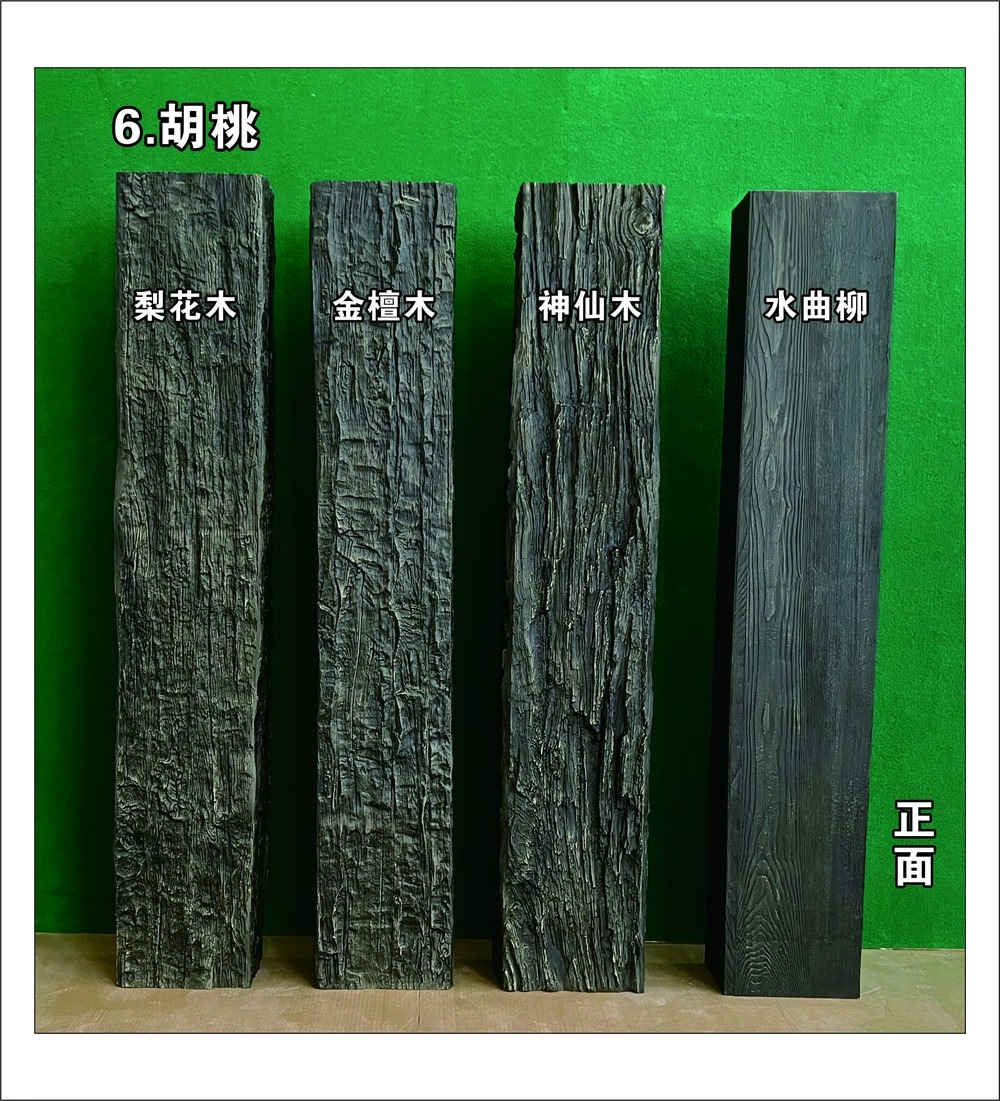
The boldest effect comes from contrast: dark walnut beams against a white ceiling, or vice versa. A beam that matches the ceiling color disappears into the plane and loses the bold effect.
Premium finishes for 12-inch beams
The 12-inch width has enough face area to show off premium finishes. Most residential projects at this profile use one of three finish tiers:
Tier 1 — Smooth painted — flat white, off-white, or matched to the ceiling color. The beam reads as architecture rather than wood. Common in modern, coastal, and Scandinavian interiors.
Tier 2 — Light or medium stain — natural oak, golden oak, driftwood, light walnut. The wood character shows without dominating. The all-purpose tier that works in craftsman, transitional, modern farmhouse.
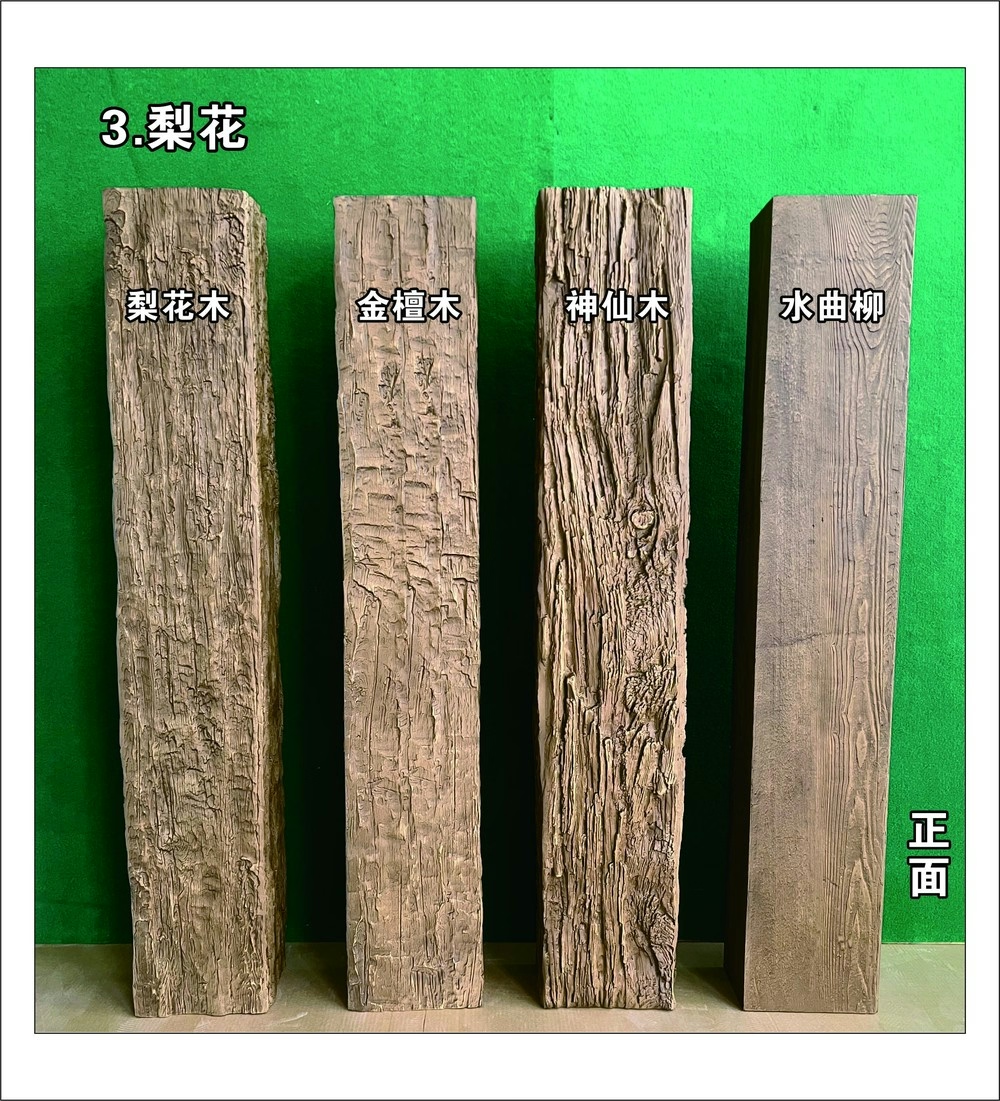
Tier 3 — Heavy texture, dark stain — deep walnut, ebony, reclaimed barn wood with strong tool marks and weathering. The premium tier for lodge, chalet, and rustic-luxe interiors.
Polyurethane takes all three tiers uniformly because the mold captures the texture detail at high resolution. A 12-inch PU beam with hand-hewn texture has the same relief depth piece to piece, which natural timber cannot achieve.
Sizing and profile combinations
The 12-inch width pairs with different depths:
- 8x12 — face wider than depth. More horizontal feel. Modern or transitional.
- 10x12 — slightly less wide than deep. More architectural. Transitional or craftsman.
- 12x12 — square cross-section. Traditional. The most common premium choice.
- 12x14 or 12x16 — much deeper than wide. Lodge, chalet, statement ceilings.
For most residential projects, the 12x12 profile at the 12-inch width is the standard. The 8x12 is the alternative when the design direction is more horizontal. The deeper profiles (12x14, 12x16) move into custom territory with longer lead times.
Mounting and weight
A 12-foot 12x12 PU beam weighs 30 to 38 pounds depending on hollow or foam-filled construction. Two-person lift. Mounting requires:
- Locating ceiling joists or installing continuous backing
- Pre-drilling the mounting block at 16-inch intervals
- Construction adhesive in a continuous bead
- 4-inch structural screws through pre-drilled holes
- 24 to 48 hours adhesive cure before loading fixtures
Drop mounting of 4 to 6 inches is standard for 12-inch beams because the wider face reads better with depth. Flush mounting can make a 12-inch beam look like wall trim stuck to the ceiling.
Trade specifications
For distributors and contractors:
- 12-inch widths are stock SKUs at most manufacturers
- Standard finishes ship in 10 to 18 days from Asia; 4 to 7 days from US/EU warehouses
- Custom finishes add 25 to 40 days
- Container load: ~400 to 500 beams at 12-foot length per 20-foot container
The 12-inch width is the upper limit of what most manufacturers stock in standard tooling. Anything wider requires custom molds and 60 to 90 day lead times.
A practical decision
A 12-inch premium width beam is the right call when the room has the volume to support it and the design calls for boldness. Most residential projects don't need this much beam—8x10 or 10x10 handles 80 percent of layouts. But when the room is large, the ceiling is tall, and the design direction is statement architecture, the 12-inch width delivers a visual impact that smaller profiles cannot match.
Spec it when the spec is correct. Don't force it when the room is wrong.
Technical References
ASTM standards cited in every specification
Test Data
Lab results from internal testing program
Updated 2026
Reviewed against current product specs

