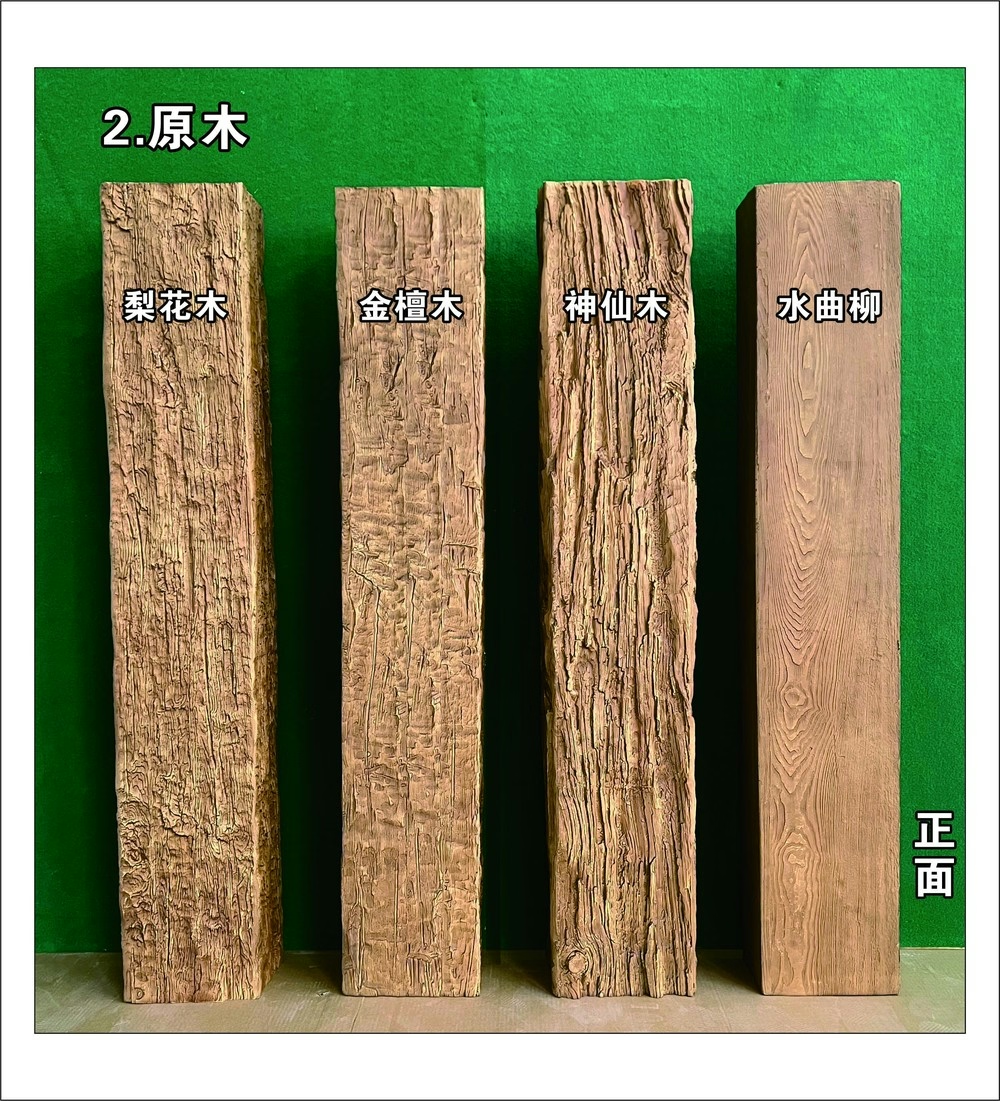
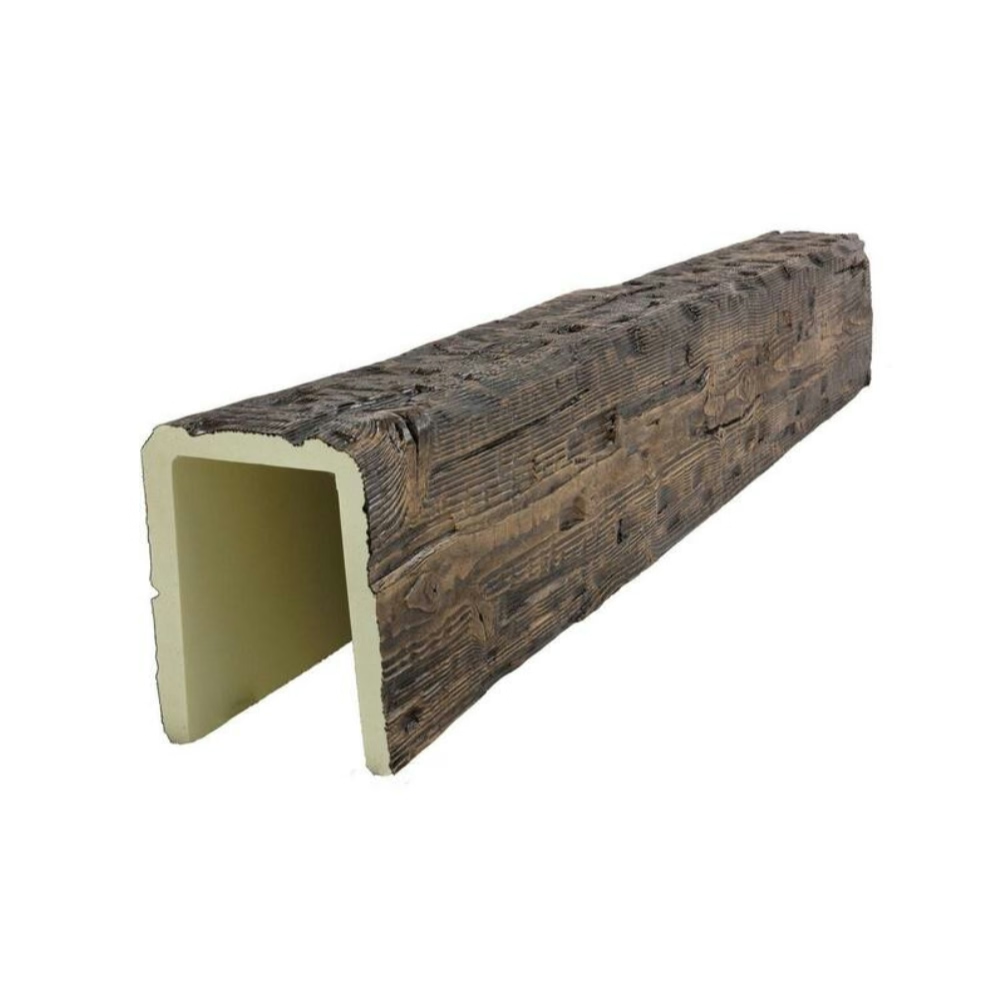
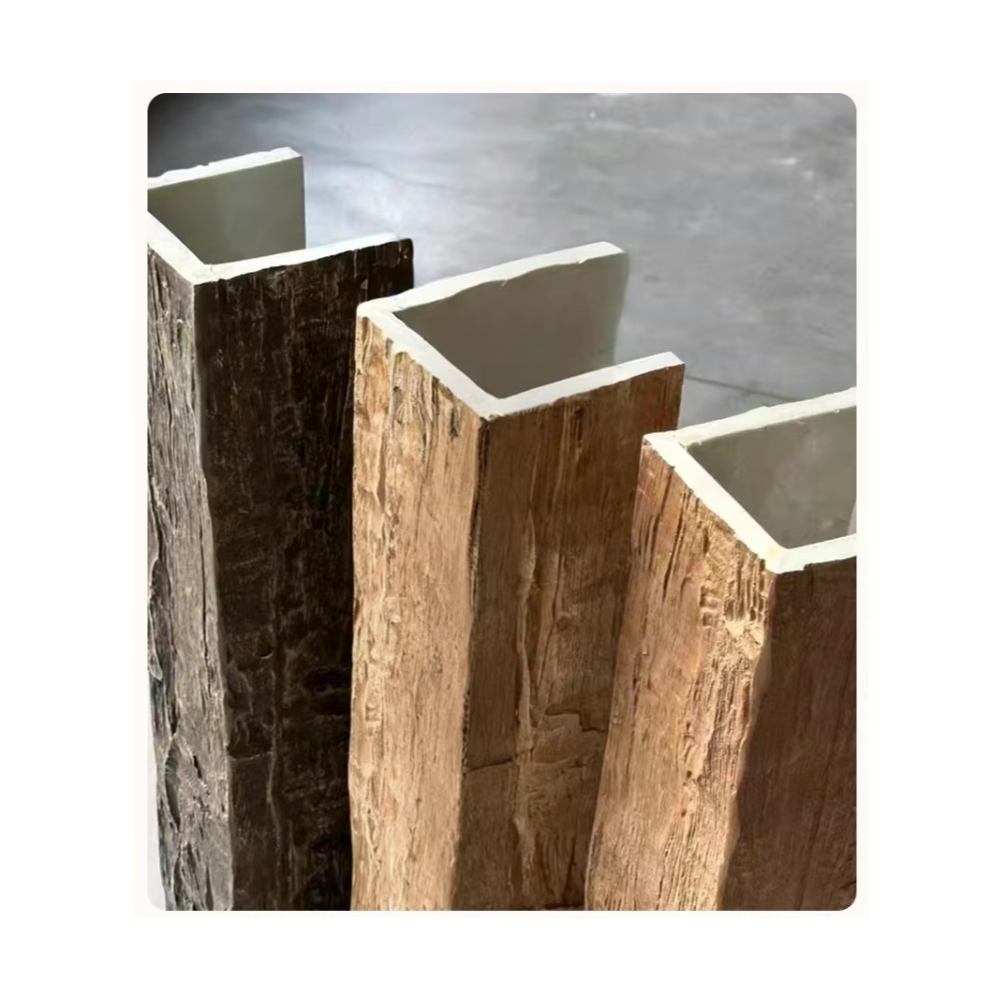
There's a difference between a faux beam that looks like faux and a faux beam that looks like timber. The difference is mostly texture. At the 12-inch width, where the beam has enough face area to show every detail, texture quality becomes the whole product.
What "high-simulation" actually means
High-simulation PU faux timber beams use a manufacturing process that captures wood grain and tool marks at high resolution from real timber reference pieces. The process:
- Source timber — a real wood beam (often reclaimed) is selected as the master reference
- Cast the master — a high-resolution mold is made from the real timber, capturing every detail of the grain, knots, tool marks, and weathering
- Inject polyurethane — high-density PU foam fills the mold under pressure, reproducing every surface detail
- Cure and finish — the molded beam is cured, trimmed, and finished with stain or paint
The result is a beam that has the same surface detail as the original timber, with the manufacturing consistency that polyurethane allows.
Why the 12-inch width benefits most
The 12-inch face area is large enough to show texture detail at a viewing distance. With smaller beams (4, 6, 8 inches), the eye sees the beam as a line. With a 12-inch beam, the eye sees the beam as a surface—and surfaces need texture to read as real wood.
Texture comparison at 12-inch width:
- Smooth or light grain — reads as painted wood or MDF trim from across the room
- Medium grain, light tooling — reads as wood but lacks character
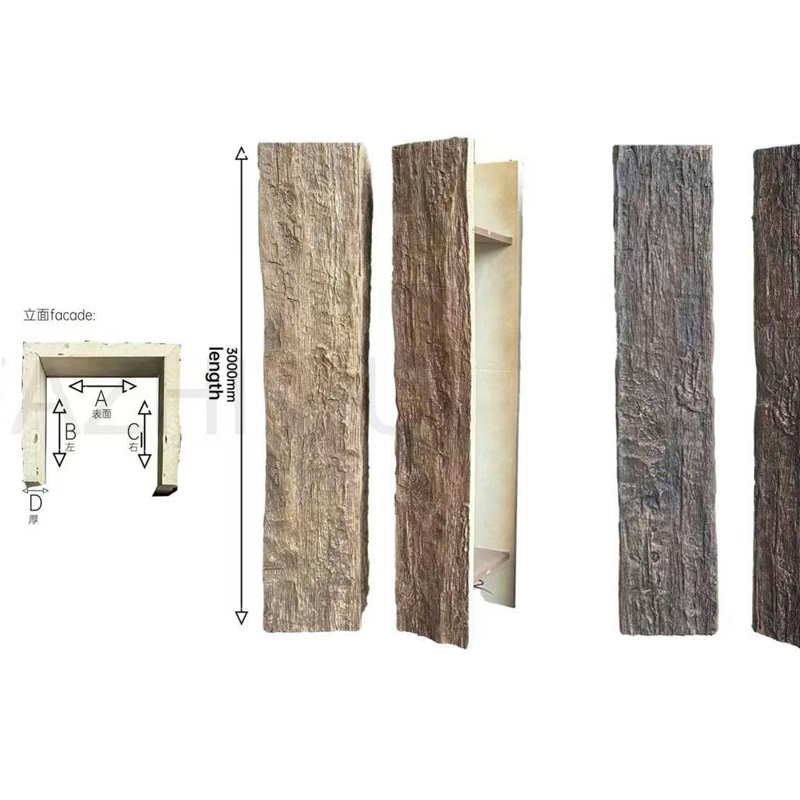
- Heavy grain, hand-hewn tooling — reads as authentic timber from any distance
The third tier is what "high-simulation" means at the 12-inch spec. The mold captures deep tool marks, knot patterns, weather checking, and grain variations that natural wood beams would have.
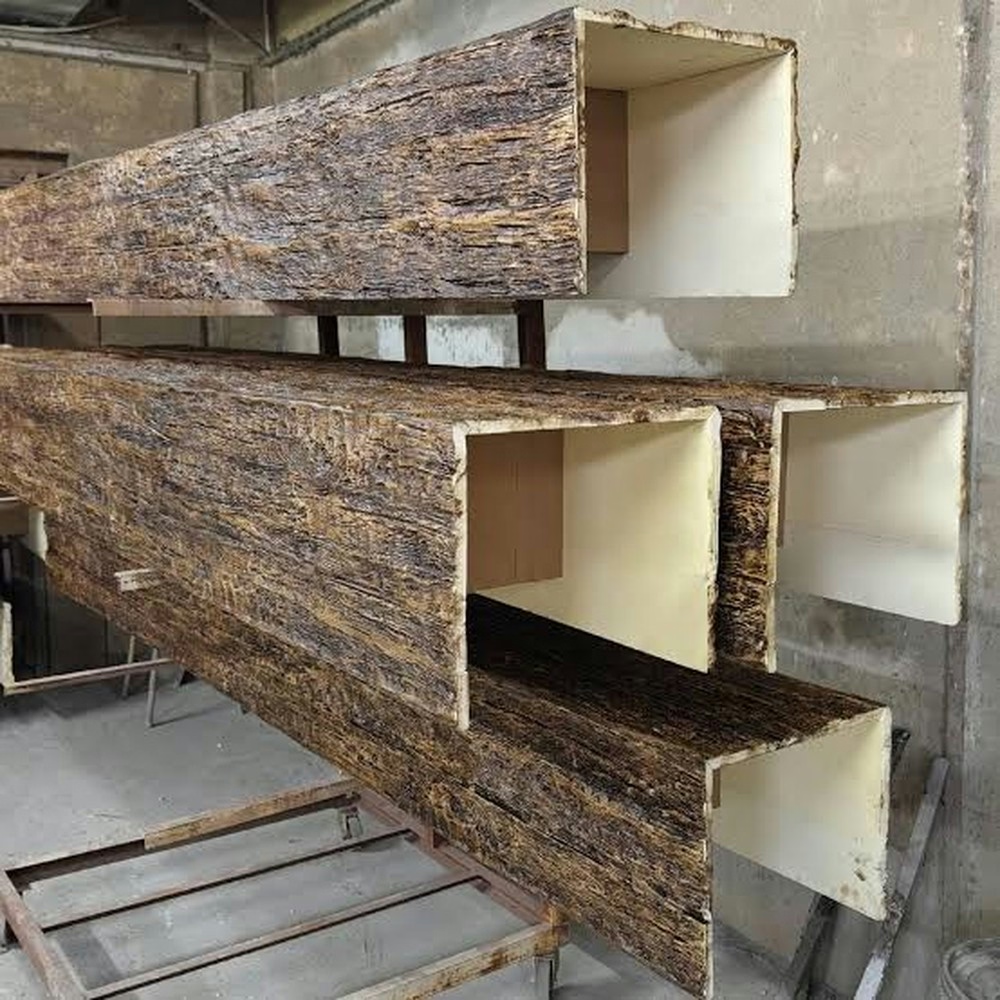
Texture options for bold styling
Three high-simulation texture options dominate 12-inch beam production:
Hand-hewn — deep gouge marks from broadaxe or adze, irregular spacing, rough surface relief. The most rustic texture. Used in lodge, chalet, mountain modern, and farmhouse interiors.
Rough-sawn — pronounced circular saw marks from milling, regular pattern, sharp edges. Used in craftsman, industrial, and modern farmhouse interiors.
Reclaimed barn wood — weathering, nail holes, oxidation stains, mixed grain patterns from years of use. The most character-rich texture. Used in vintage, transitional, and rustic-luxe interiors.
Each of these textures is captured at high resolution in the polyurethane mold. Piece to piece, the texture is consistent—something that natural reclaimed timber cannot achieve.
Bold styling: the design moves
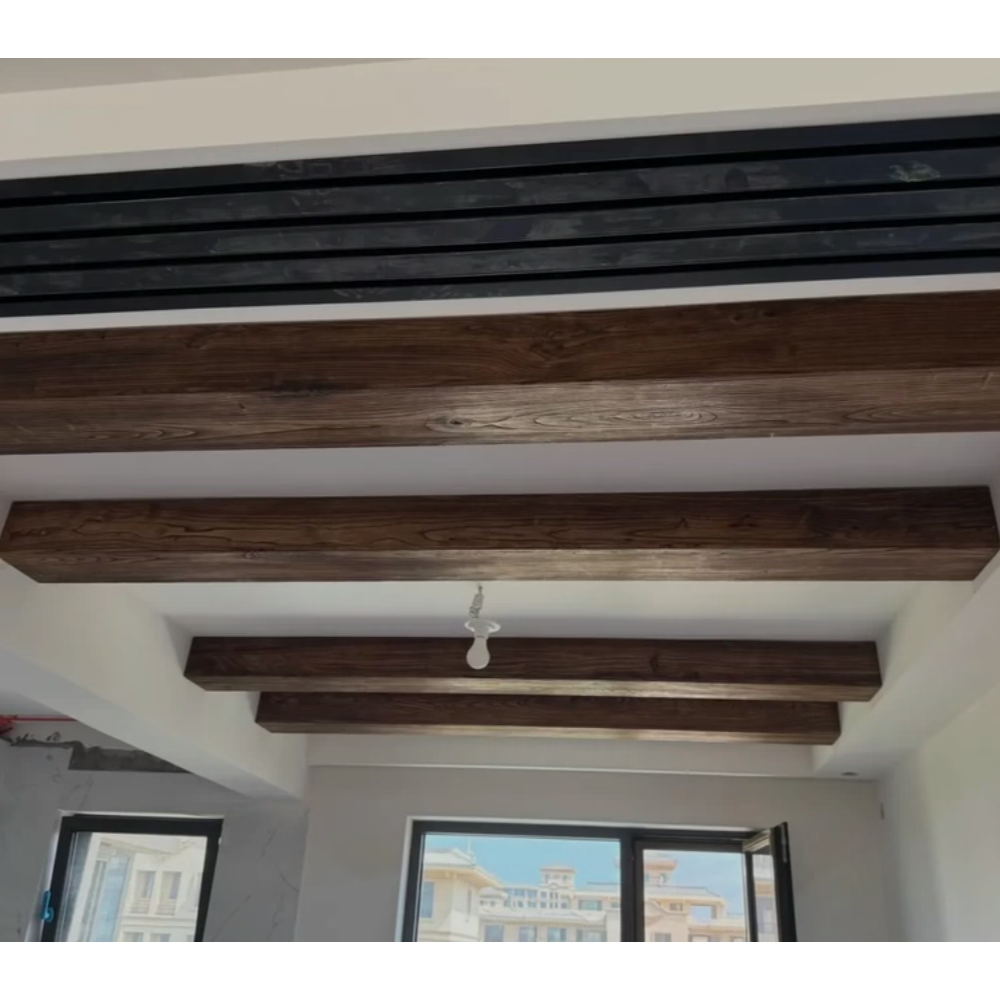
A 12-inch high-simulation beam becomes a bold styling element through contrast, placement, and lighting. The most effective approaches:
Contrast with ceiling color — dark walnut beam on white ceiling, or vice versa. The beam becomes a deliberate architectural element rather than blending in.
Continuation across multiple rooms — a single beam (or aligned beams) running from one room into another. The eye reads the whole floor plan as organized around the beam line.
Wrapping architectural features — the beam terminates against a fireplace wall, range hood, or feature wall and turns the corner. Used to frame key architectural moments.
Integration with lighting — recessed lighting between beams, pendants from beams, or LED accent lighting along beam edges. The beam becomes part of the lighting design rather than just structure.
How bold styling differs from regular installation
A bold styling installation usually involves:
- Fewer beams (one or two statement pieces rather than a grid)
- Higher contrast finish (dark stain on light ceiling or vice versa)
- More dramatic mounting (drop mounted 6 to 8 inches rather than flush)
- Architectural integration (wrapping corners, terminating at feature walls)
- Lighting integration (pendants, LED strips, recessed cans coordinated with beam layout)
A bold styling installation is a design choice, not just a construction choice. The beams become part of the room's identity rather than background detail.
Proportion rules for bold 12-inch beams
The 12-inch width is correct when:
- Ceiling height is 11 feet or more
- Room width is 14 feet or more in the beam direction
- The design direction is statement architecture (lodge, chalet, modern luxury, transitional)
Below these thresholds, the 12-inch beam starts to look oversized. Above them, you may want to bump to 14-inch widths for proportion.
For two-story great rooms with 18 to 22-foot ceilings, the 12-inch beam is often the minimum that reads correctly. Larger rooms with very tall ceilings may need 14-inch or 16-inch widths to maintain proportion.
Trade and sourcing notes
For distributors specifying 12-inch high-simulation beams:
- Stock vs custom — most manufacturers stock 12-inch widths in two or three texture options (typically hand-hewn and rough-sawn). Reclaimed barn wood texture is often a custom order.
- Lead time — stock 12-inch high-simulation beams ship in 14 to 21 days from Asia; 5 to 8 days from US/EU warehouses. Custom textures add 30 to 50 days.
- Pricing — high-simulation texture commands a 20 to 35 percent premium over smooth or light-grain finishes.
- Minimum order — most manufacturers require 50 to 100 linear feet minimum for high-simulation custom textures.
For project buyers, the 12-inch high-simulation beam is usually specified when the design has a clear statement direction. It's not a default specification—the design has to call for it.
Common pitfalls
A few mistakes show up with 12-inch high-simulation beams:
- Specifying smooth finish at 12-inch width — the wide face shows every imperfection, and smooth finish reads as fake at that scale
- Installing flush to ceiling — flush mounting makes the beam look like wall trim; drop mounting is required for the bold effect
- Wrong texture for the design direction — hand-hewn texture in a Scandinavian interior feels forced; smooth finish in a lodge interior feels underdressed
- Mismatched beams across rooms — different texture batches can have subtle variations; for whole-home projects, specify one batch
A practical rule
A 12-inch high-simulation PU faux timber beam delivers bold styling when the texture matches the design direction and the mounting gives it room to register. The width is large enough that texture quality is the dominant visual variable—spend the budget on the texture tier rather than the beam count.
In the right room, with the right texture and the right finish, a 12-inch high-simulation beam is the most convincing faux timber available today. The polyurethane substrate holds the mold-captured detail at scale that natural wood cannot match consistently.
Technical References
ASTM standards cited in every specification
Test Data
Lab results from internal testing program
Updated 2026
Reviewed against current product specs