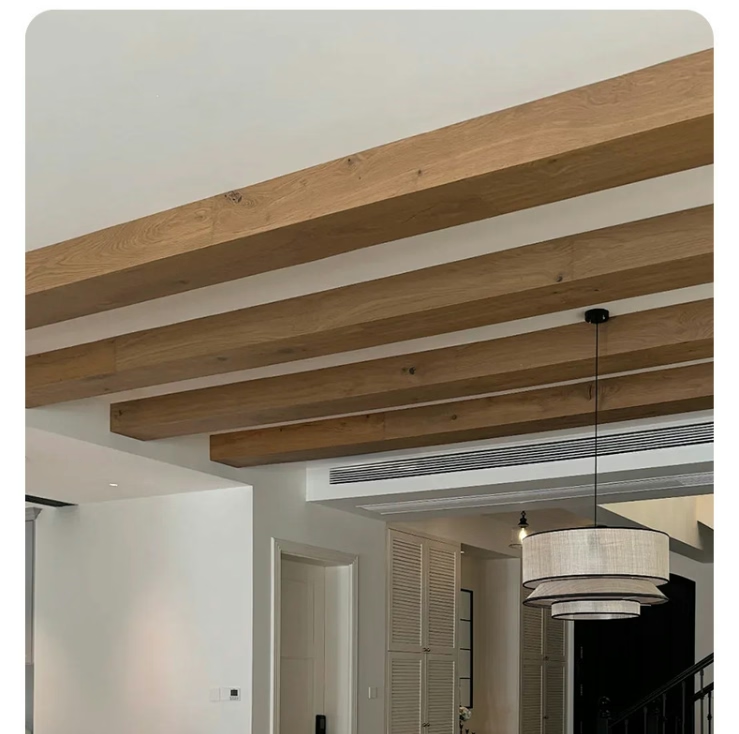
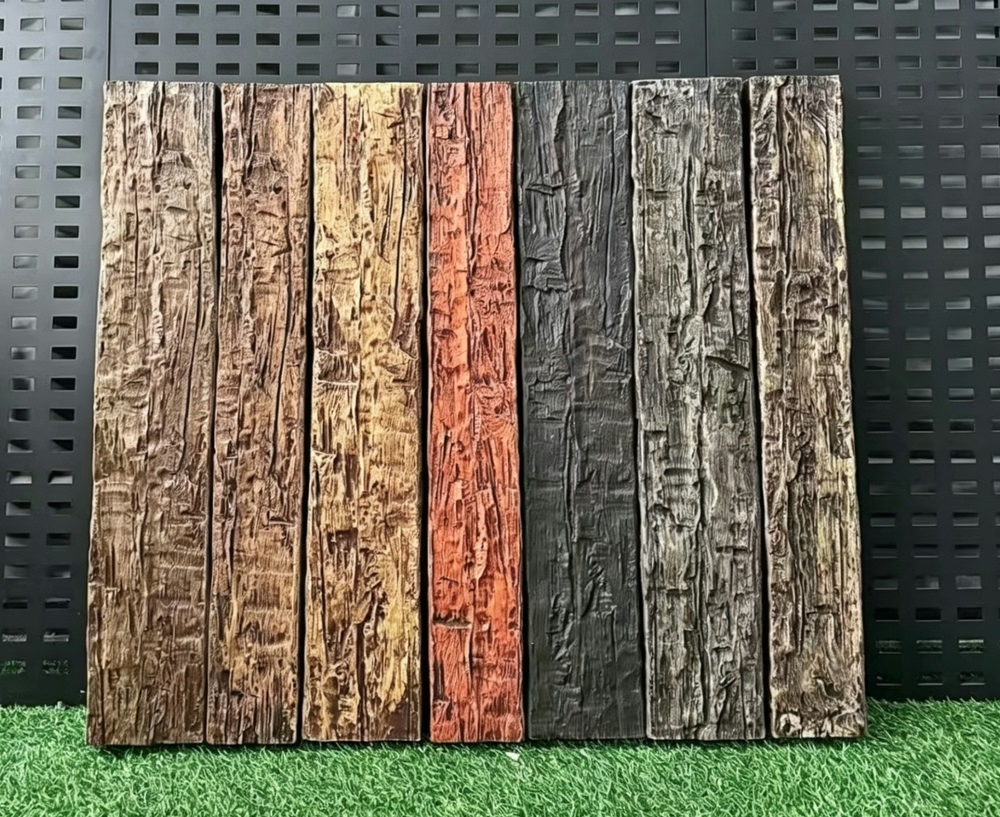
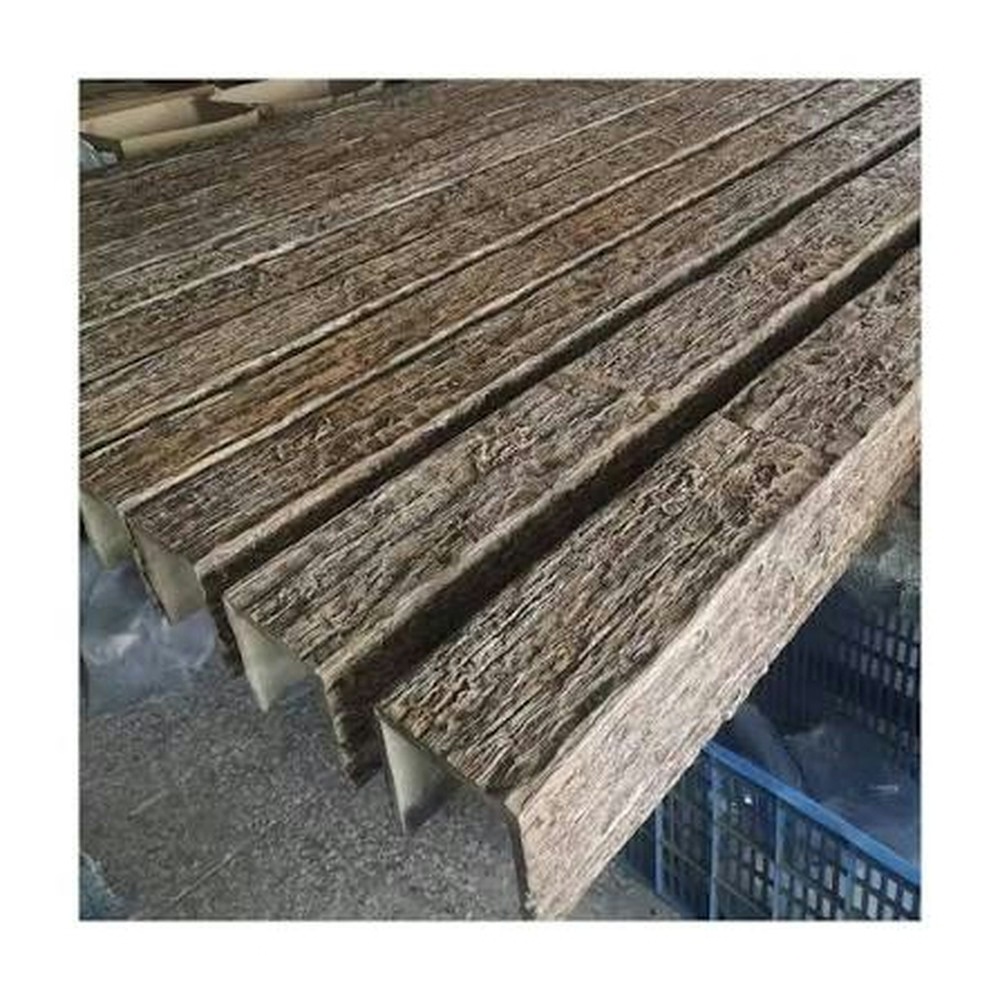
Anti-Mold Curved PU Faux Timber Beams for Humid Indoor Areas
Curved architectural elements add sophistication and visual interest to interior spaces, but curved surfaces present unique challenges in humid environments. Water vapor behaves differently on curved surfaces—condensation tends to bead and run rather than spreading as it would on flat ceilings, creating localized moisture concentrations that can overwhelm surface treatments. Anti-mold curved polyurethane faux timber beams address this specific challenge, providing architectural interest without biological vulnerability.
The Geometry of Moisture on Curved Surfaces
Flat ceilings experience relatively uniform condensation distribution when temperature conditions favor moisture formation. Curved surfaces behave differently: convex curves shed condensation effectively, while concave curves—arches, coves, and barrel vaults—collect moisture at low points where gravity and surface tension combine to create pooling.
This geometric moisture concentration creates localized conditions that exceed the protection that standard surface treatments provide. A beam profile that would perform adequately on a flat surface may develop mold colonies in the concave sections where moisture accumulates, even when adjacent convex sections remain clean.
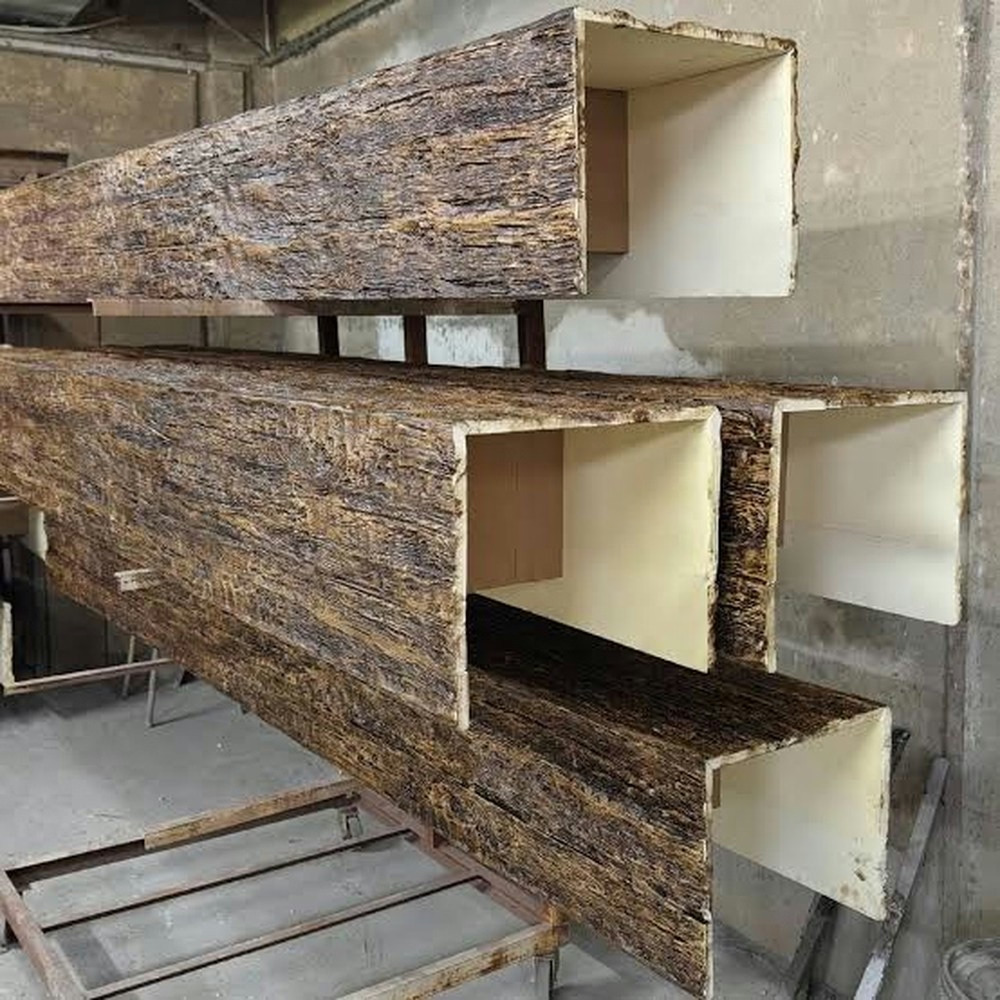
Manufacturing Curves in Polyurethane
The polyurethane molding process accommodates curved profiles through several manufacturing approaches. Shorter radius curves typically require分段模具 (segmented molds) that assemble to create the complete profile. Larger radius curves may be achievable through single-piece molding depending on manufacturing equipment capabilities.
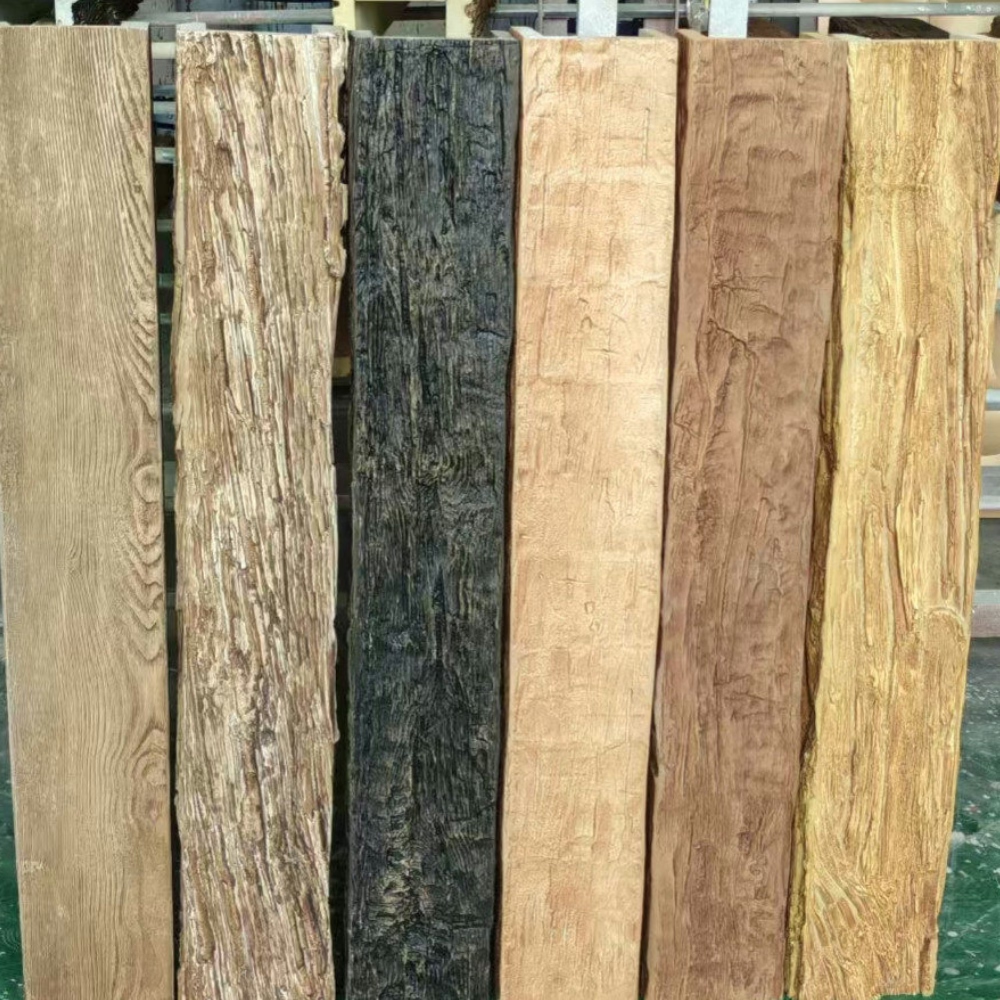
The texture matching challenge intensifies with curved profiles. Grain patterns that flow naturally across straight beams can appear distorted or awkward when wrapped around curves. Premium manufacturers address this through careful texture engineering that maintains natural appearance across curved surfaces, while budget products may display obvious texture repetition or awkward transitions.
Curved beams require more material than straight beams of equivalent length, increasing both manufacturing cost and shipping expenses. The dimensional complexity also affects mounting approach—standard brackets often cannot accommodate curved mounting surfaces without modification or custom fabrication.

Applications in Humid Indoor Spaces
Indoor pools, spa areas, and enclosed porches frequently employ curved ceiling geometry for aesthetic reasons that conflict with humid conditions. The same design intent that creates beautiful spaces also creates the moisture collection geometry that challenges material performance.
Anti-mold curved beams provide the design flexibility these spaces require without sacrificing performance. The antimicrobial treatment addresses biological concerns throughout the beam—including the vulnerable concave sections where moisture accumulates. This comprehensive protection enables architectural ambition without maintenance burden.
Indoor conservatories and sunrooms present similar challenges: large glass areas create humidity through plant transpiration and water evaporation, while architectural interest often includes curved roof elements. Curved anti-mold beams enable these spaces' design intentions while handling the humidity that living greenery inevitably generates.
Integration with Curved Architecture
Curved beams work most effectively when integrated with other curved architectural elements. Vaulted ceilings, arched openings, and curved walls create geometric harmony that extends throughout the space. Curved beams on otherwise flat ceilings can appear arbitrary—decoration imposed rather than architecture integrated.
Designers should consider how curved beams relate to the overall spatial geometry before specifying them. Curved beams work best in spaces where the ceiling form itself is curved, where beams follow and emphasize the architectural geometry rather than contradicting it.
Maintenance Considerations
Even anti-mold treated curved beams benefit from maintenance practices that minimize moisture exposure. Proper ventilation reduces humidity levels throughout the space, decreasing condensation intensity on all surfaces including curved beam profiles. Dehumidification provides additional moisture control in spaces where ventilation cannot adequately address humidity generation.
Regular visual inspection should include attention to the concave sections of curved beams, where moisture collection creates the most challenging conditions. Catching developing issues early enables simple intervention before remediation becomes complex.
Technical References
ASTM standards cited in every specification
Test Data
Lab results from internal testing program
Updated 2026
Reviewed against current product specs