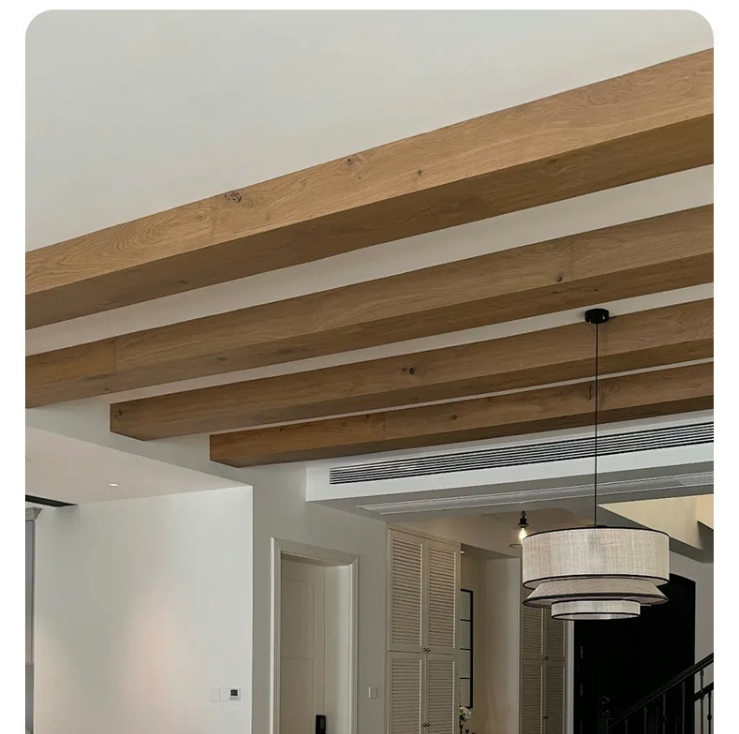
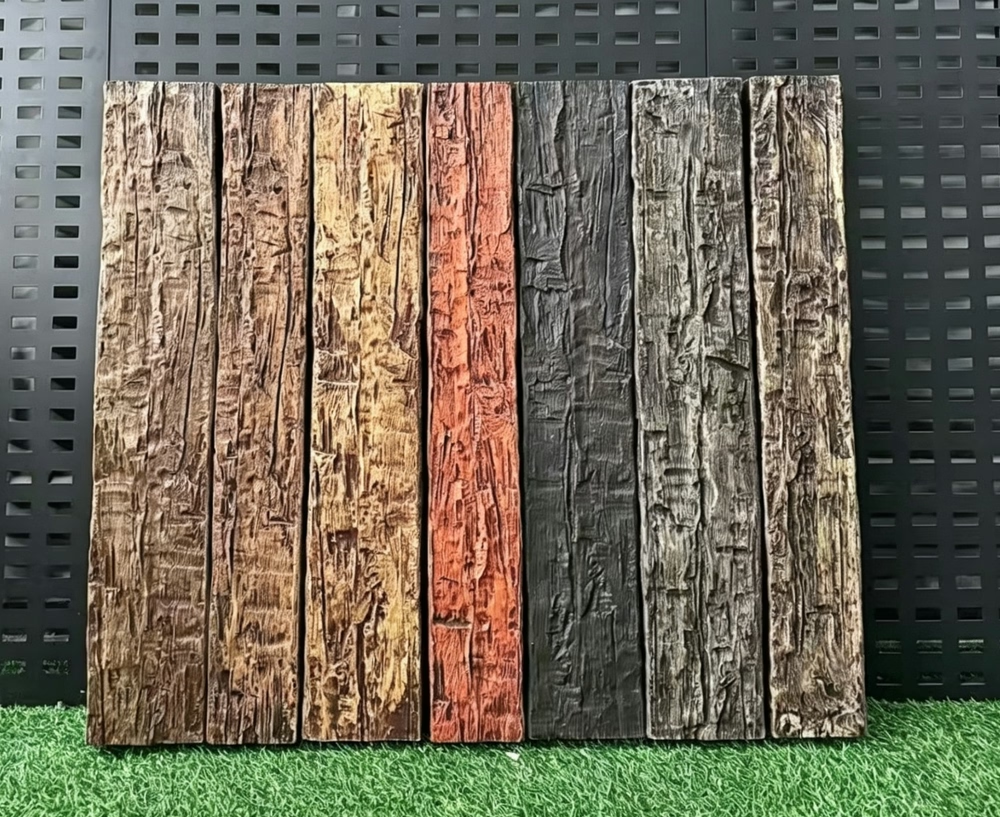
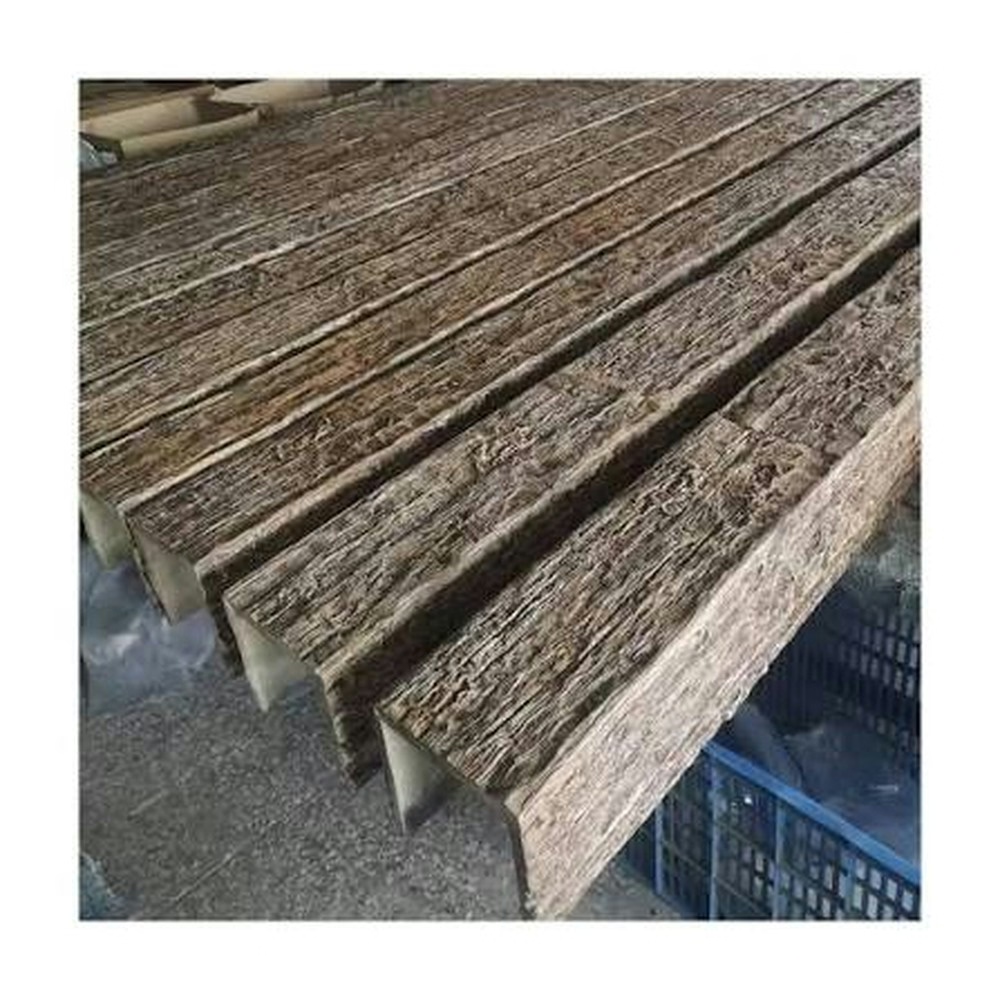
Antique Aged Wood Effect PU Faux Beams
The weathered, time-worn appearance of genuinely old timber carries an authenticity that new materials—whether authentic or synthetic—cannot easily replicate. Antique aged wood effect polyurethane faux beams attempt to capture this patina, providing ceiling installations with the character that normally requires decades of natural aging or the expense of reclaimed barn wood sourcing.
What Creates Authentic Antique Wood Appearance
Real antique wood develops its appearance through multiple overlapping processes that occur over extended time periods. Understanding these processes helps explain what quality manufacturing must accomplish:
Photochemical degradation from UV exposure breaks down wood surface cells, creating the silvery-grey tones that characterize heavily weathered surfaces. This effect penetrates only slightly into the wood—perhaps 1-2mm on heavily exposed surfaces—but creates the color shift that distinguishes aged from new.
Mechanical weathering from wind, rain, and thermal cycling erodes surface wood, particularly in softer earlywood zones. This erosion creates the slightly irregular surfaces that genuine old wood displays, with subtle variations that manufactured textures often lack.
Oxidation reactions alter wood chemistry over time, shifting colors toward warmer, more amber tones in protected areas while UV exposure creates grey tones in exposed zones. This combination produces the complex coloration that single-process artificial aging cannot replicate.
Insect and microbial activity, where present, creates distinctive patterns—small holes from beetle activity, surface tunneling from wood-boring organisms—that suggest history and organic origin.
Manufacturing Approaches to Aged Appearance
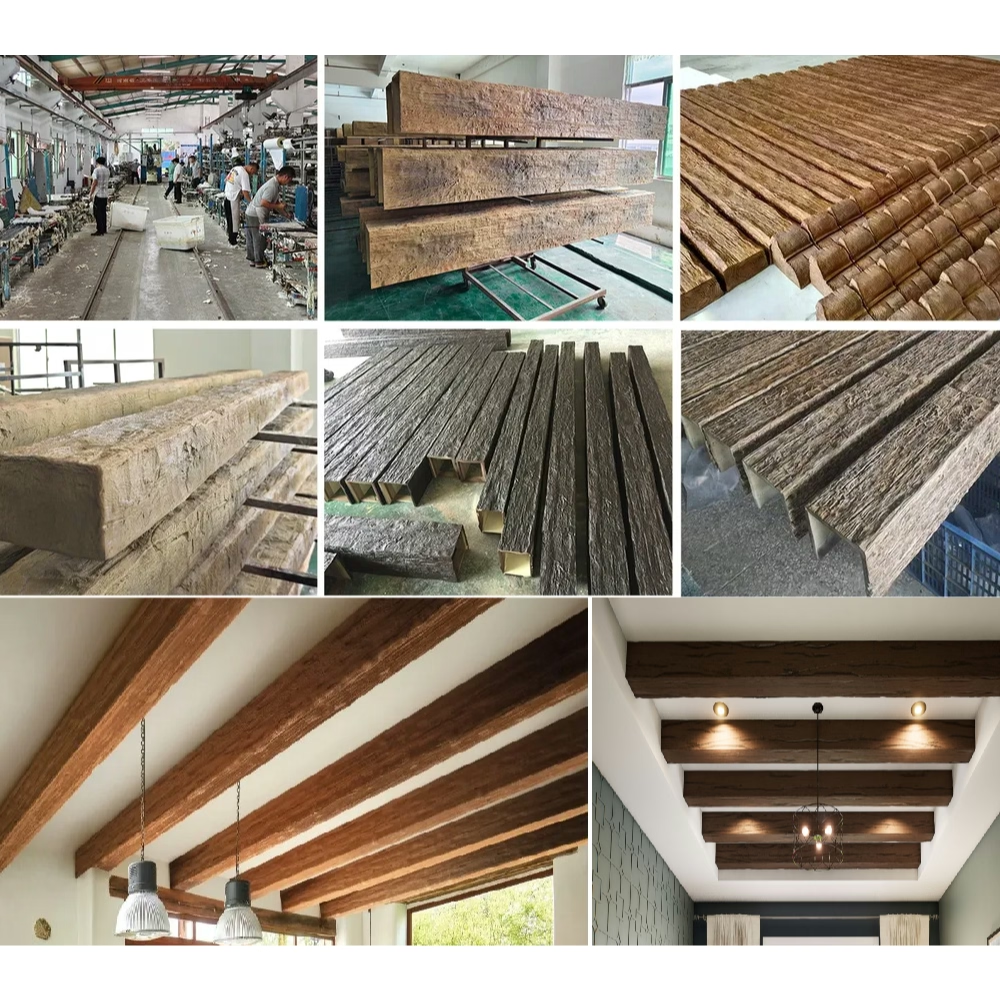
Quality manufacturers create antique appearance through multi-stage processes that address each aging component:
Base color development establishes the foundational wood tone—the species-appropriate coloring that the aging process will modify. This base must be accurate to the species being replicated, with correct grain patterns and natural color variation.
Aging treatment application introduces the modifications that time would create: selective color reduction in areas that would weather, patina development in protected zones, and texture modification that simulates surface erosion. These treatments often involve multiple applications with intermediate processing steps.
Detail enhancement addresses the small imperfections that genuine old wood displays: subtle surface checking, minor grain raising, and the localized variations that create authentic appearance when accumulated across the beam surface.
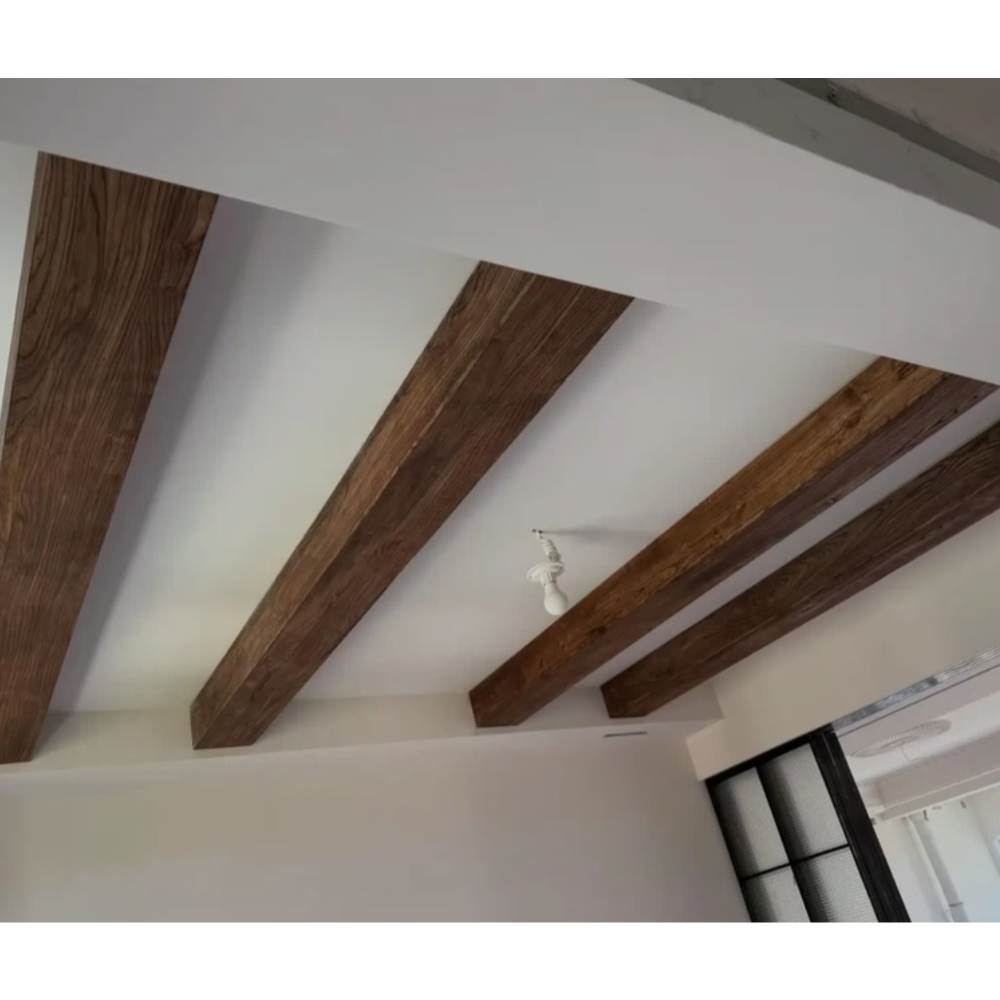
Application in Vintage Design Schemes
Antique wood effect beams serve design intentions that require character injection—spaces where new construction or modern finishes lack the accumulated history that older buildings possess naturally. These beams provide visual maturity that transforms contemporary spaces without requiring decade-long waits or reclaimed material expense.
Transitional interiors—spaces that balance contemporary function with traditional aesthetics—benefit from antique wood beams that introduce warmth and character without overwhelming clean-lined furnishings. The beams provide material grounding that prevents spaces from reading as purely modern while supporting contemporary lifestyle requirements.
Commercial applications in hospitality and retail frequently specify antique appearance beams to create atmosphere that suggests established character. Restaurants, hotels, and shops want customers to feel they've entered spaces with history and authenticity, even when the building is new construction.
Distinguishing Quality from Imitation
Not all antique-effect products achieve convincing authenticity. Budget alternatives often display one or more telltale signs of artificial production:
Uniformity across pieces suggests mass production without individual character. Genuine antique wood varies between pieces—the accumulated result of different exposures and conditions.
Repetitive texture patterns indicate mechanical production that repeats the same pattern rather than the organic variation that natural materials display.
Obvious artificial distressing—deep grooves, paint chipping, excessive wear marks—suggests deliberate aging rather than authentic history. Natural wear concentrates in functional zones, not uniform distribution across entire surfaces.
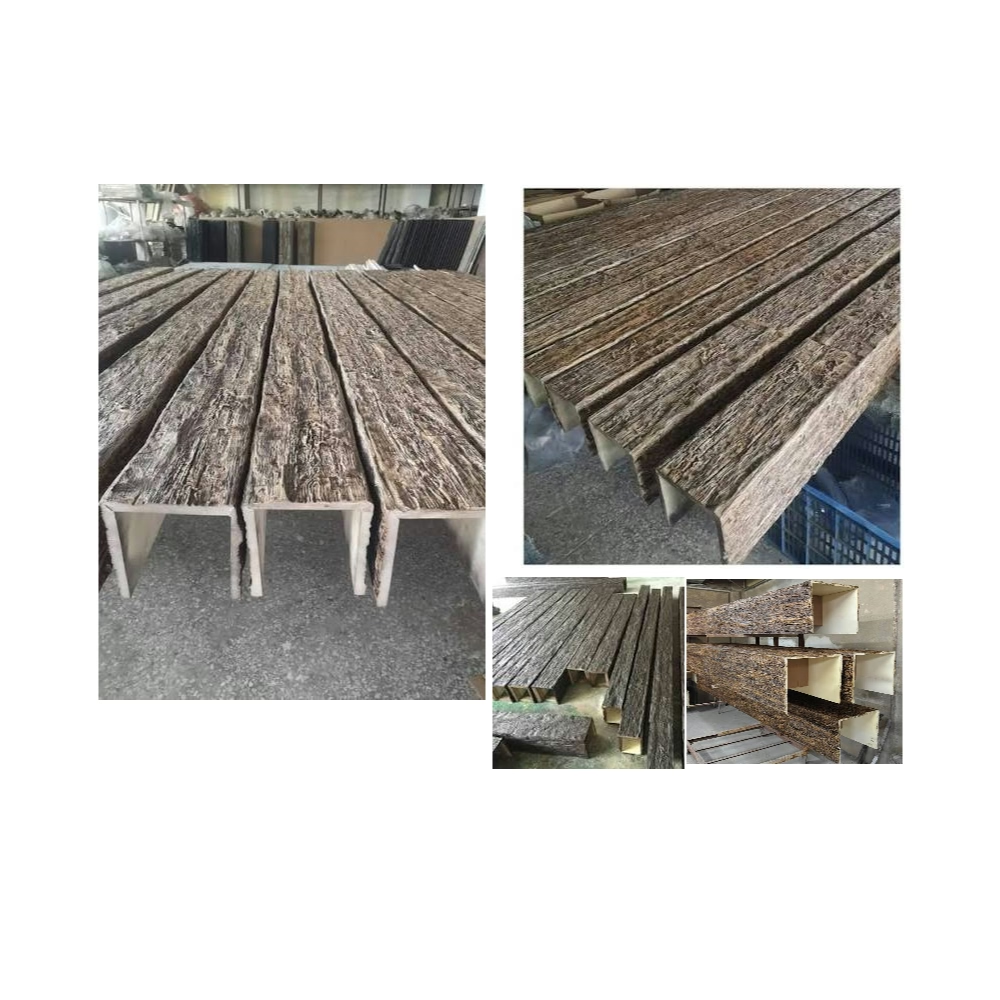
Quality products achieve convincing antique appearance through subtle, layered effects rather than dramatic single-process treatment. The difference becomes apparent when viewing authentic reclaimed materials beside quality faux alternatives—the faux should satisfy close inspection without obvious artificiality.
Technical References
ASTM standards cited in every specification
Test Data
Lab results from internal testing program
Updated 2026
Reviewed against current product specs