Antique Fir Wood Box Style PU Faux Beams for Vintage Classic Interiors
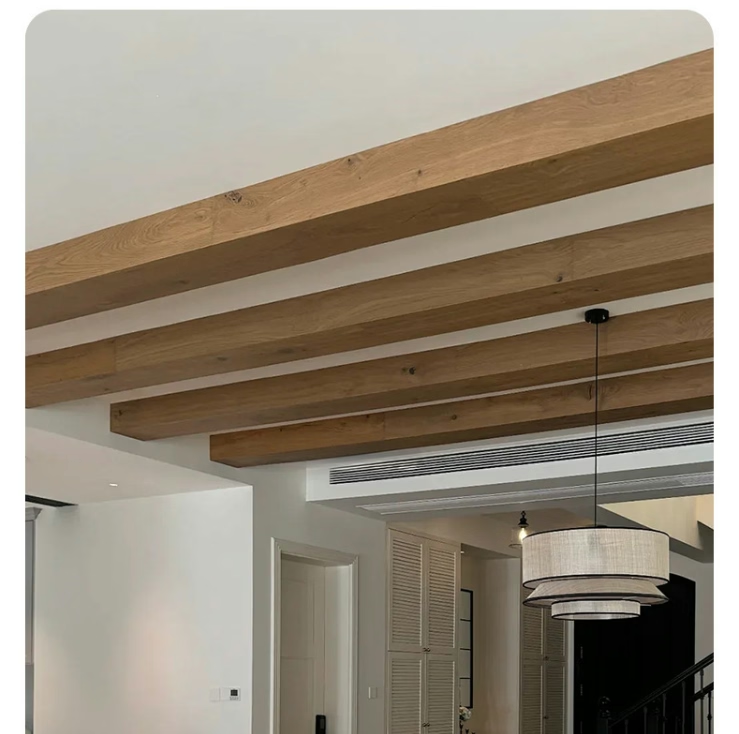
The box beam profile—constructed appearance rather than solid timber—creates design opportunities that solid beam profiles cannot accommodate. Polyurethane faux beams in antique fir box style leverage this construction approach while capturing the warmth and character that fir wood provides. Understanding how box style affects both appearance and installation helps buyers specify products that achieve intended results.
Box Beam Construction Advantages
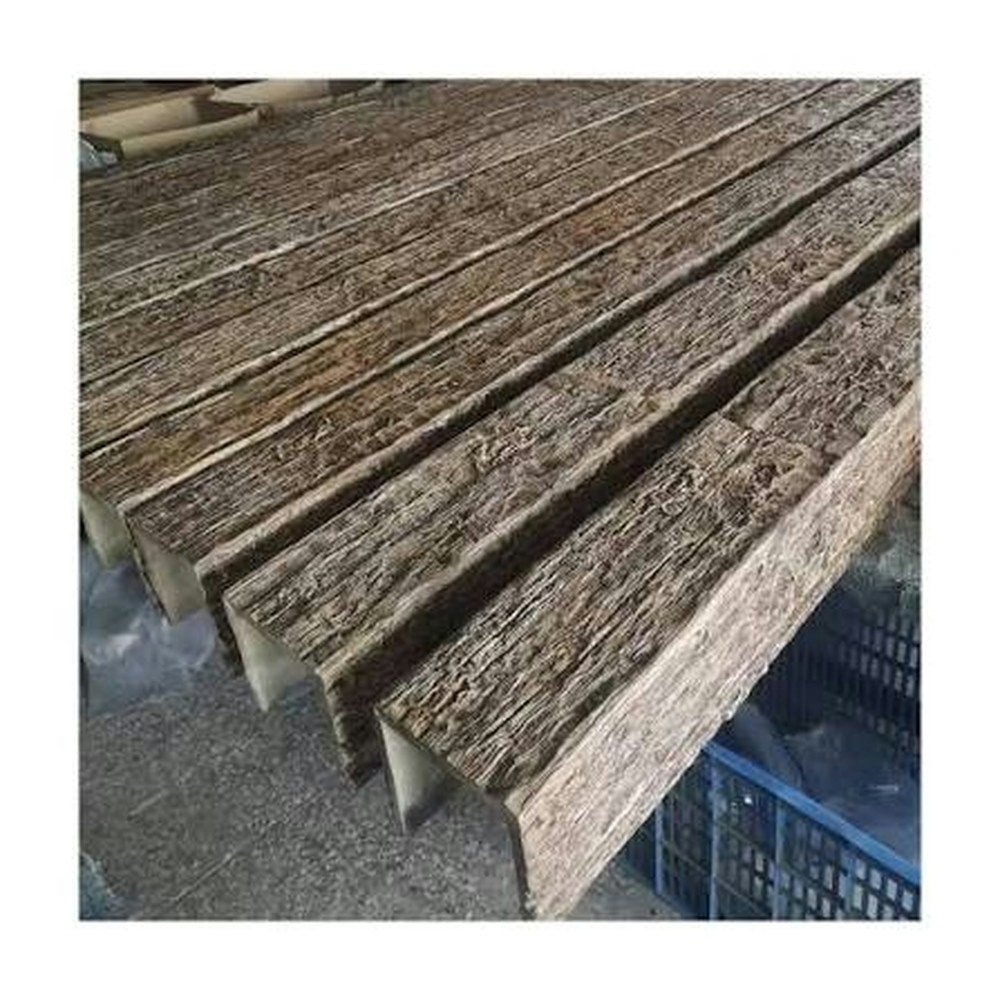
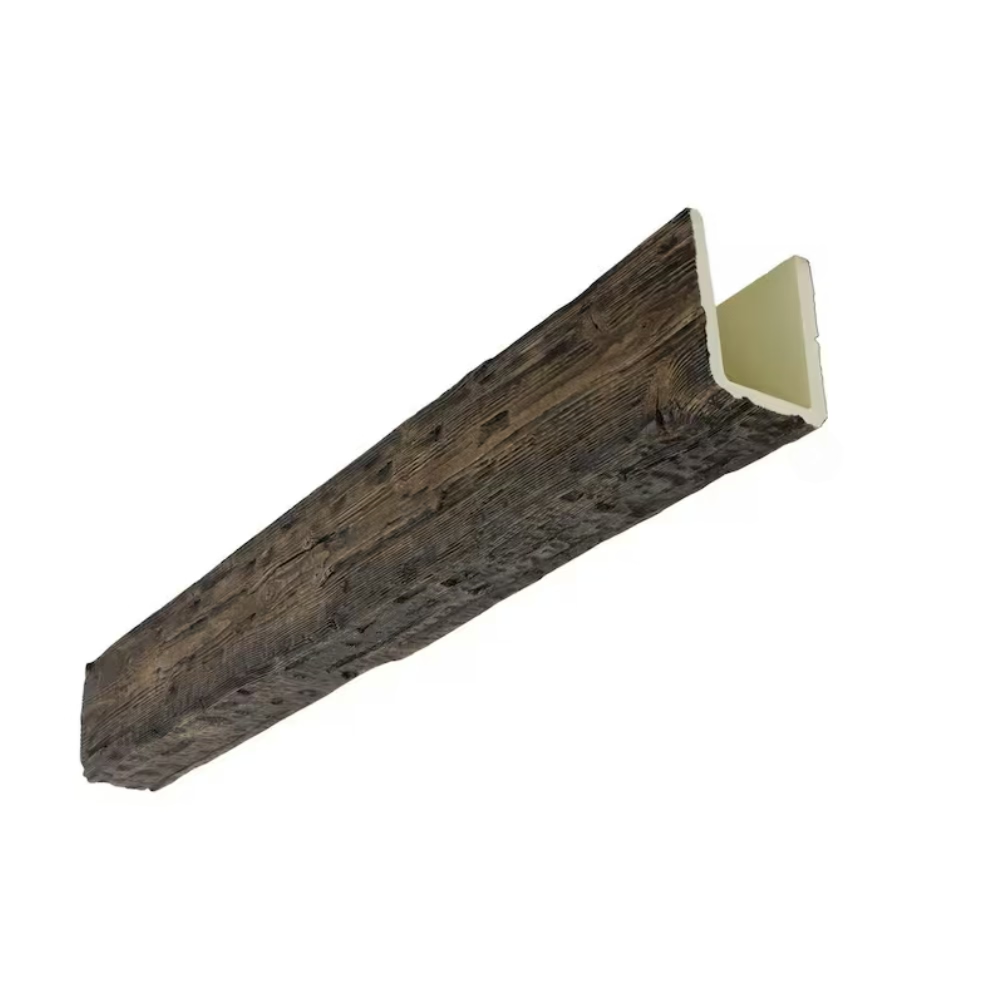
Box beam cross-sections offer several advantages over solid beam alternatives:
Dimensional consistency throughout the beam length ensures that what you see at the store matches what you install, with no surprises from hidden defects or natural wood variations. Natural wood bows, twists, and checks in ways that manufactured products eliminate.
Weight reduction from hollow construction makes box beams easier to handle during installation, reducing labor requirements and enabling mounting approaches that solid timber would preclude. This weight advantage becomes significant for longer beam runs where handling difficulty multiplies with length.
Mounting accessibility through the hollow core enables internal bracket systems that provide secure attachment without visible hardware. The internal cavity can accommodate wiring for lighting, structural blocking for heavy fixture mounting, and adjustment mechanisms that simplify alignment.
Achieving Authentic Fir Appearance in Box Style
Fir's visual characteristics must be replicated convincingly in polyurethane box beam construction:
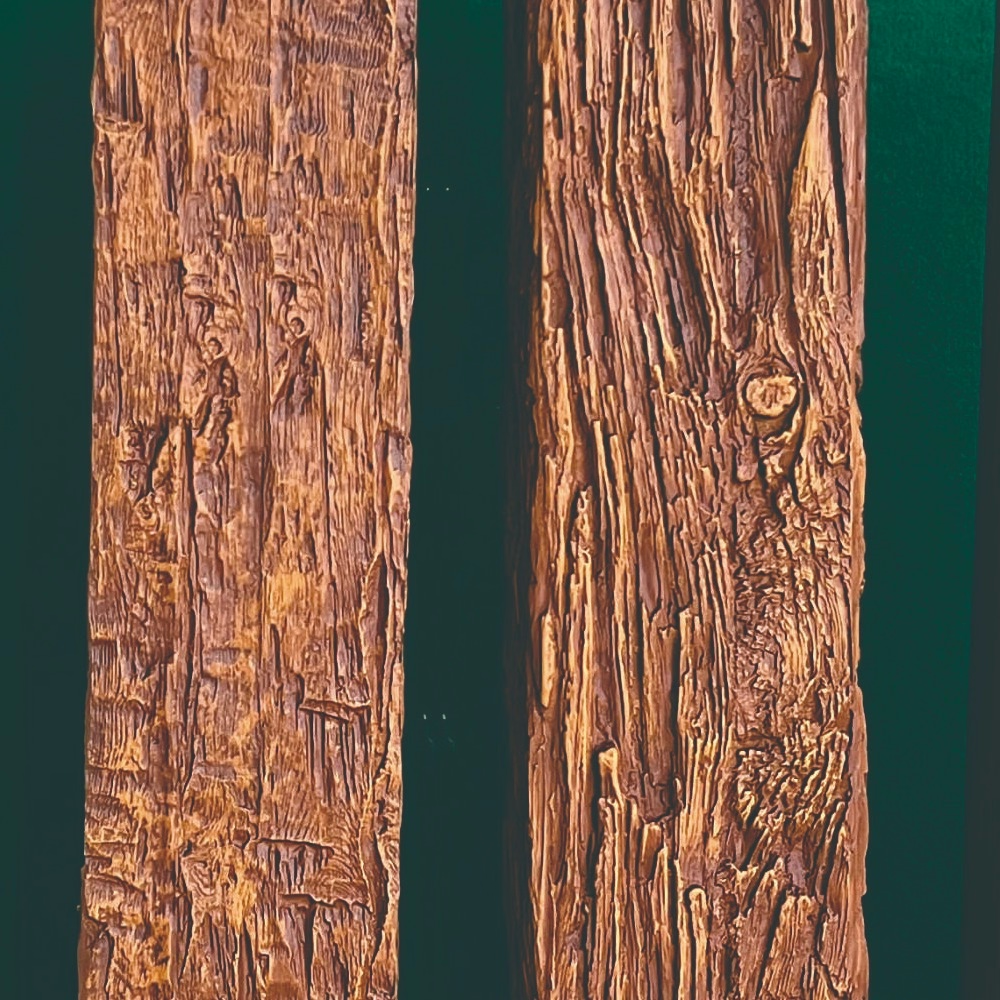
The grain pattern of old-growth fir—tight rings from slow growth, occasional figure zones, and consistent coloring—requires manufacturing processes that capture these details accurately. The grain should flow continuously across joints in box construction, maintaining the illusion of solid timber at all viewing distances.
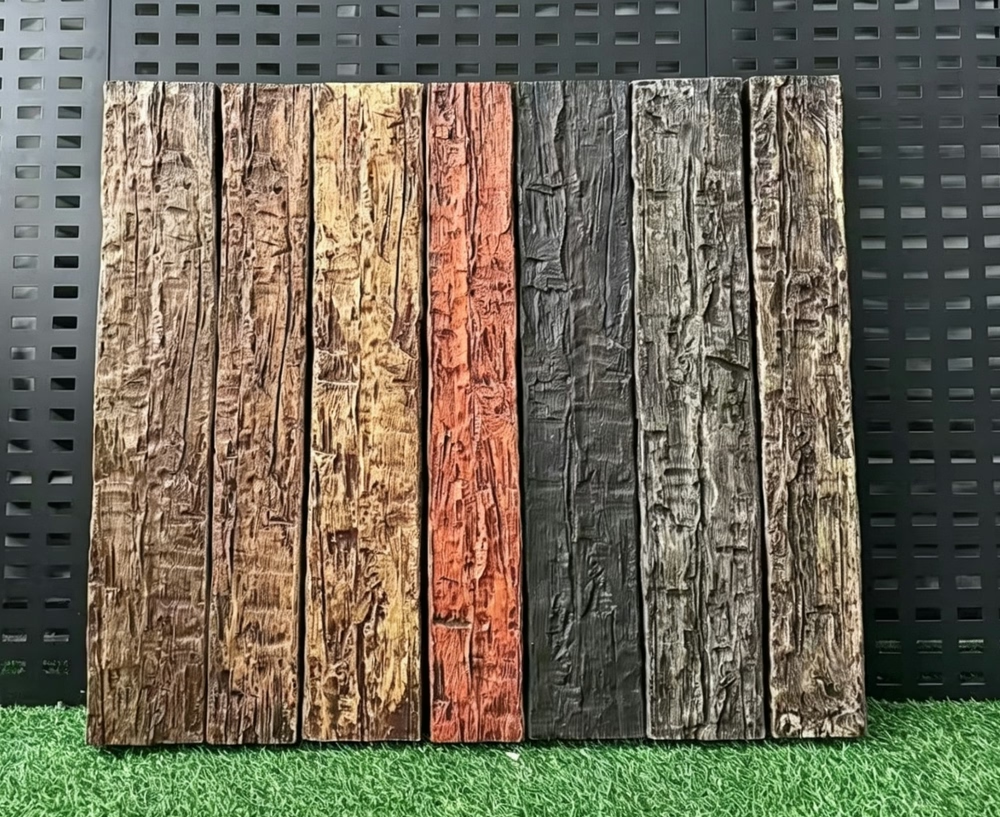
Color development in aged fir includes the warm reddish-brown tones that old fir displays, plus the subtle variations that genuine timber exhibits across surfaces. Factory finishing should replicate this variation rather than presenting flat, uniform coloring that looks painted rather than natural.
Texture quality in polyurethane reproduction should address both the generally smooth surface of fir (unlike the pronounced texture of species like oak or cedar) and the subtle aging effects that antique fir displays. Surface treatments should suggest light weathering rather than dramatic texturing.
Interior Applications for Fir Box Beams
Fir box beam aesthetics work across multiple interior applications:
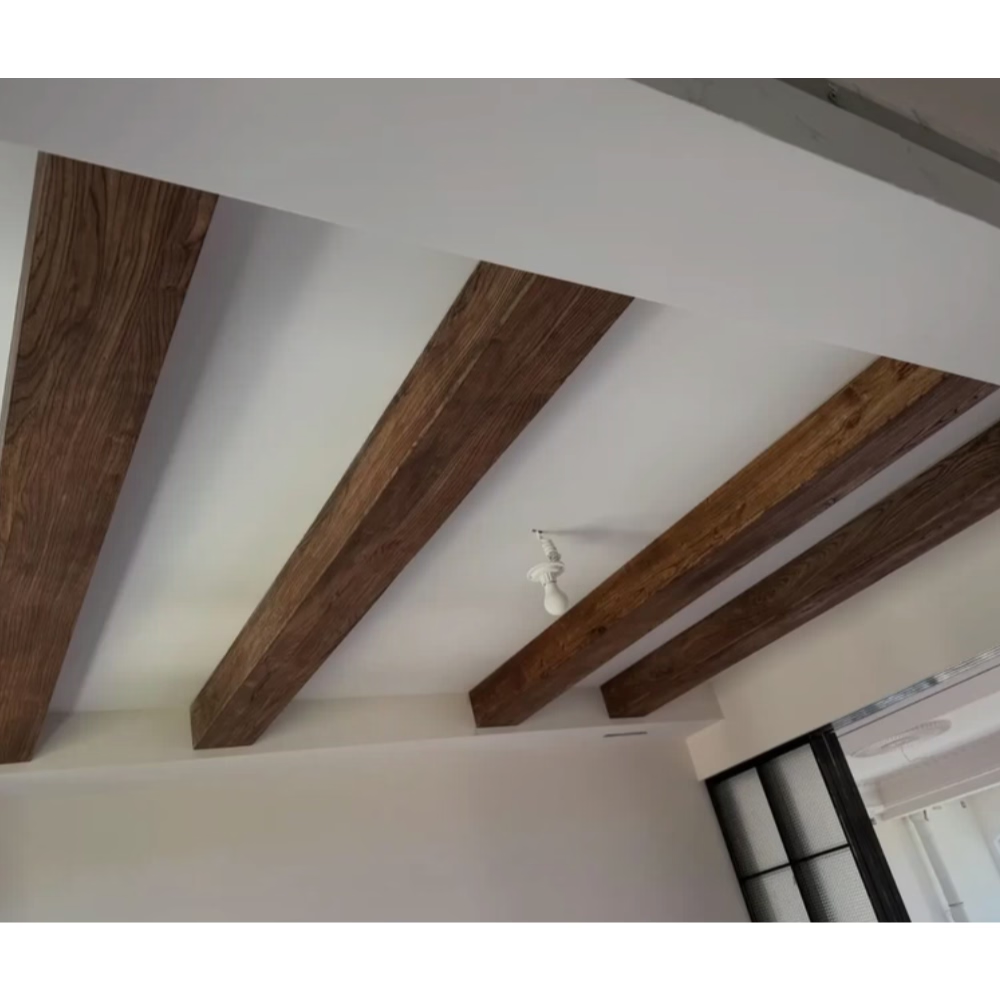
Great rooms with vaulted or exposed ceiling designs provide the substantial visual presence that box beams require to read effectively. Smaller rooms with limited ceiling height may not have sufficient scale to accommodate the visual weight that box beams impose.
Open plan spaces benefit from beams that define ceiling zones without requiring physical dividers. Box beams large enough to create meaningful shadow lines can organize circulation and activity zones through ceiling geometry alone.
Kitchens with beam-supported islands or pass-through counters can employ fir box beams to frame functional areas, providing visual separation that maintains the open character that modern kitchen design prefers.
Installation Considerations for Box Construction
Box beam installation differs from solid beam mounting in several important ways:
Internal mounting systems that use the hollow core require careful measurement and marking before hole cutting. Wiring runs and structural blocking placement must be planned before the beam is positioned.
Adhesive bonding gains importance with box construction because the hollow cross-section doesn't provide the mass that solid beams possess for mechanical fastening alone. Premium polyurethane adhesives specifically formulated for box beam applications provide the primary structural connection, with mechanical fasteners providing secondary support.
Alignment during installation must account for the dimensional precision that manufactured box beams provide. Unlike natural timber where some adjustment is inevitable, manufactured beams expect precise mounting points that must be marked and prepared carefully before installation begins.
Cost Considerations
Box beam construction generally costs less than equivalent solid timber profiles because material quantities are reduced by the hollow cross-section. This cost advantage enables larger beam dimensions at equivalent budgets, allowing design ambitions that solid timber pricing would prohibit.
However, box beams require more manufacturing steps than solid profile alternatives, which partially offsets material savings. The total installed cost comparison between box and solid alternatives depends on specific product lines, installation complexity, and shipping considerations that vary by project.
Technical References
ASTM standards cited in every specification
Test Data
Lab results from internal testing program
Updated 2026
Reviewed against current product specs