Anti-Swelling PU Faux Ceiling Beams for Humid & Temperature Changing Spaces
Spaces that experience significant humidity fluctuation and temperature variation create environmental stress that challenges many construction materials. Swelling, warping, and dimensional instability affect natural wood and some synthetic alternatives when exposed to these conditions. Anti-swelling polyurethane faux ceiling beams address these challenges specifically, providing dimensional stability that maintains installation integrity despite demanding environmental conditions.
Understanding Dimensional Instability
All materials respond to environmental conditions, but wood and wood-based products respond most dramatically:
Wood absorbs moisture when humidity rises, causing cells to expand and the material to swell. When humidity falls, moisture releases and the material contracts. This movement occurs continuously as humidity conditions change, creating dimensional instability that accumulates over time.
Temperature changes create similar effects through thermal expansion and contraction. While polymers generally respond more predictably to temperature than wood does, significant temperature swings still induce stress that lesser materials cannot accommodate.
The combination of humidity and temperature variation—common in spaces like enclosed porches, sunrooms, and partially-insulated areas—creates compound stress that accelerates dimensional problems. Materials that would handle either factor alone may fail when both occur simultaneously.
Anti-Swelling Technology
Quality polyurethane formulations address dimensional instability through several mechanisms:
Cross-linked polymer structure resists the moisture absorption that causes swelling in natural wood. This structure maintains consistent dimensions regardless of humidity exposure, eliminating the expansion-contraction cycle that stresses joints and fasteners.
Thermal stabilization through additive packages minimizes thermal expansion coefficients, reducing the dimensional response that temperature changes would otherwise create. This stabilization enables performance across temperature ranges that would challenge lesser materials.
Internal stress management through manufacturing quality control ensures that finished products are free from internal stresses that could manifest as warping or distortion over time. Quality production includes stress-relief steps that lesser manufacturing skips.
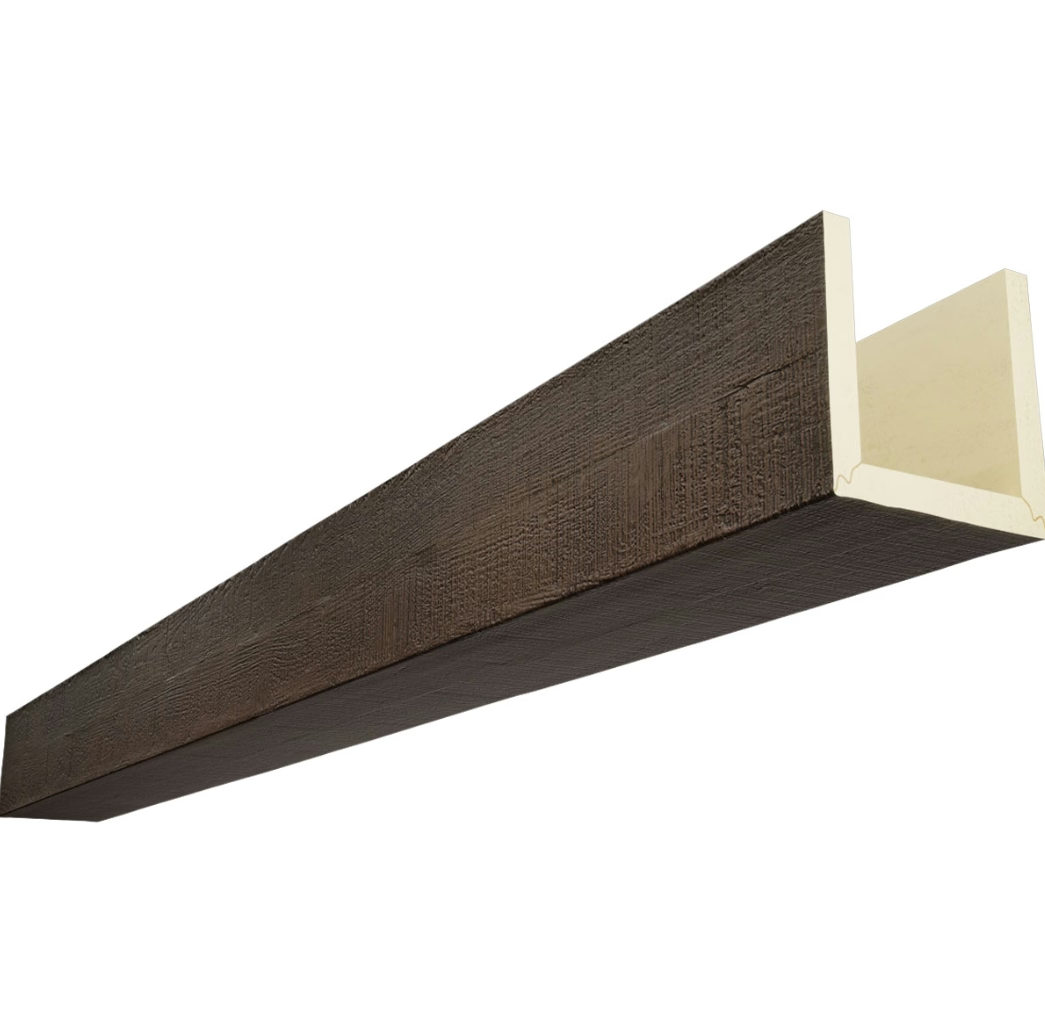
Applications in Challenging Environments
Anti-swelling beams serve applications where dimensional stability matters critically:
Enclosed porches experience temperature and humidity conditions between indoor and outdoor values, with significant fluctuation as exterior conditions change. Beams in these locations must handle dimensional stress without developing gaps, warping, or fastener failures.
Sunrooms with substantial glass area face extreme temperature variation between sun exposure and shade, creating dimensional stress cycles that challenge most materials. Anti-swelling formulations handle these conditions without the seasonal adjustment problems that natural wood exhibits.
Basements with humidity control present different challenges—typically stable temperature but persistent elevated humidity. Anti-swelling beams handle this stable-but-humid condition without the moisture-related problems that affect natural wood installations.
Garage-adjacent rooms and transitional spaces that bridge conditioned and unconditioned areas experience the full range of temperature and humidity variation that these adjacencies create.
Installation in Variable-Temperature Spaces
Even anti-swelling materials benefit from installation approaches that accommodate environmental stress:
Flexible adhesive systems that tolerate slight movement without debonding provide the accommodation that demanding environments require. Rigid adhesive systems may crack or release as materials expand and contract; flexible formulations move with dimensional changes rather than resisting them.
Ventilation design that reduces humidity extremes protects beam investments alongside other finishes. Spaces with adequate ventilation experience less dramatic humidity fluctuation than poorly-ventilated areas, reducing stress on all materials.
Temperature management through insulation and thermal mass reduces the extreme temperature swings that create dimensional stress. Anti-swelling beams handle more variation than natural wood, but minimizing the variation extends service life further.
Long-Term Performance Verification
Quality anti-swelling products should perform indefinitely without dimensional issues when properly installed. Warranty coverage that addresses swelling, warping, or dimensional instability provides manufacturer confidence that the technology works.
Buyers should verify that warranty coverage specifically addresses the dimensional stability claims being made—some warranties cover manufacturing defects but not environmental performance issues. Coverage language should clearly state protection against swelling, warping, and dimensional change under normal environmental conditions.
Technical References
ASTM standards cited in every specification
Test Data
Lab results from internal testing program
Updated 2026
Reviewed against current product specs