Arc Radius Custom PU Faux Curved Beams
Architectural curvature creates visual interest and spatial drama that flat planes cannot achieve. Arc radius custom polyurethane faux curved beams bring this dimensional variety to ceiling installations, providing authentic curved appearance through custom fabrication that accommodates specific project requirements.
Understanding Curved Beam Terminology
Curved beam specification involves specific terminology that ensures accurate communication between designers and manufacturers:
Radius describes the degree of curvature—the distance from a curve's center point to its surface. Tighter curves have smaller radii; gentler curves have larger radii. Specifying the radius correctly determines whether the manufactured beam fits the intended application.
Arc length defines how much of the complete circle the curved beam represents. A beam that curves 90 degrees covers a quarter circle; a semicircular beam covers 180 degrees. Arc length specification ensures proper material quantities.
Spring line identifies the theoretical horizontal plane from which curvature begins. This reference point affects mounting calculations and must be clearly defined for complex installations.
Custom Fabrication Process
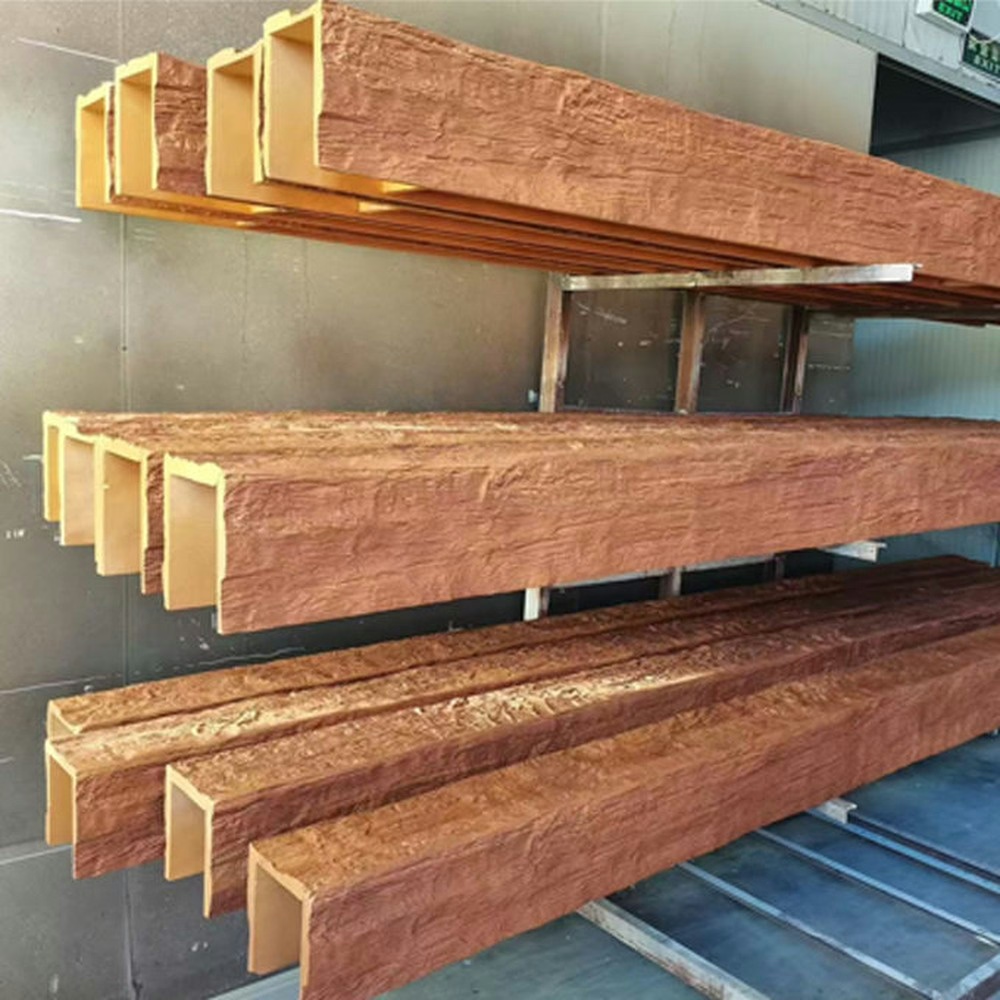
Quality curved beam manufacturing accommodates specific project requirements through custom fabrication:
Profile development creates the cross-sectional shape that the curved beam will follow. This profile must be accurate to intended appearance while remaining manufacturable in curved form.
Radius formation through heating and shaping or mold modification creates the curvature that the design requires. Manufacturing approaches vary by radius requirements, material thickness, and profile complexity.
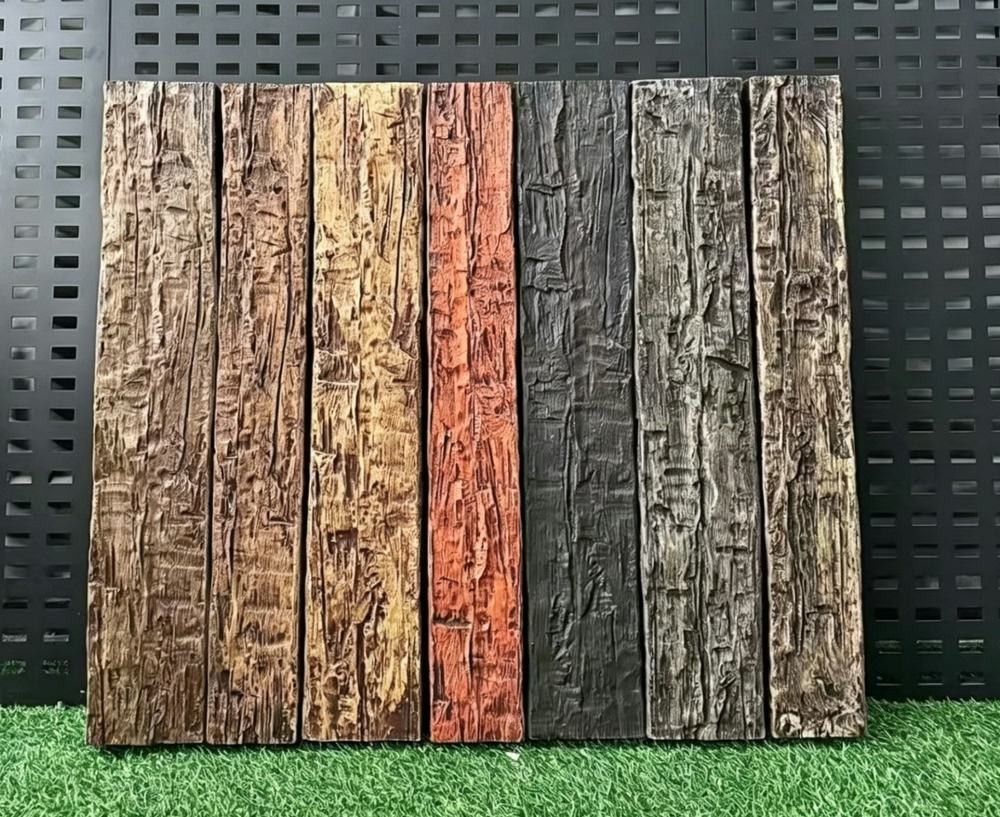
Texture continuity across curved surfaces requires manufacturing processes that maintain grain pattern flow through bends. Budget products often show texture distortion or repetition artifacts; quality fabrication preserves natural appearance throughout the curve.
Applications for Curved Beams
Curved beam installations serve multiple architectural purposes:
Barrel vault ceilings employ semicircular or segmental curves that create the enclosed, sheltering quality that vaulted spaces provide. Multiple curved beams can create the repeating vault pattern that historic architecture features.
Cove ceilings incorporate gentle curves that transition from vertical wall to horizontal ceiling plane, softening the harsh corner that right-angled construction creates. These applications require beams with very large radii—sometimes so gentle that the curvature barely registers.
Orbital and radial configurations employ curved beams that meet at central points, creating ceiling geometries reminiscent of domes or multifaceted vaulted systems. These complex installations require precise custom fabrication and careful installation planning.
Engineering Considerations for Curved Installations
Curved beams face different engineering challenges than straight alternatives:
Structural loading on curved surfaces distributes differently than on flat planes. While faux beams typically carry no structural load, the mounting system must accommodate the forces that gravity and the beam's curved weight distribution create.
Thermal stress in exterior applications concentrates at curves where material thickness varies relative to sun exposure angle. Quality exterior products address this through formulations formulated for curved geometry.
Clearance requirements for curved beams may exceed those for straight beams due to the spatial envelope that curvature requires. Installation planning must account for the additional space that curved elements occupy.
Cost and Timeline Implications
Custom curved fabrication costs more than standard straight beam production due to the specialized processes required:
Setup costs for custom fabrication amortize across production quantities, making individual pieces relatively expensive compared to standard products. The cost per piece decreases significantly as quantity increases.
Manufacturing time for custom curved beams exceeds standard product lead times, sometimes substantially for complex or tight-radius configurations. Project scheduling must account for extended fabrication periods.
Shipping curved beams requires special packaging and handling that adds cost compared to straight pieces that pack efficiently. The dimensional volume of curved pieces may also trigger oversize shipping charges.
Despite these cost implications, custom curved beams enable architectural ambitions that straight products cannot achieve. For projects where curved geometry serves essential design intent, the investment in custom fabrication delivers proportional value.
Technical References
ASTM standards cited in every specification
Test Data
Lab results from internal testing program
Updated 2026
Reviewed against current product specs