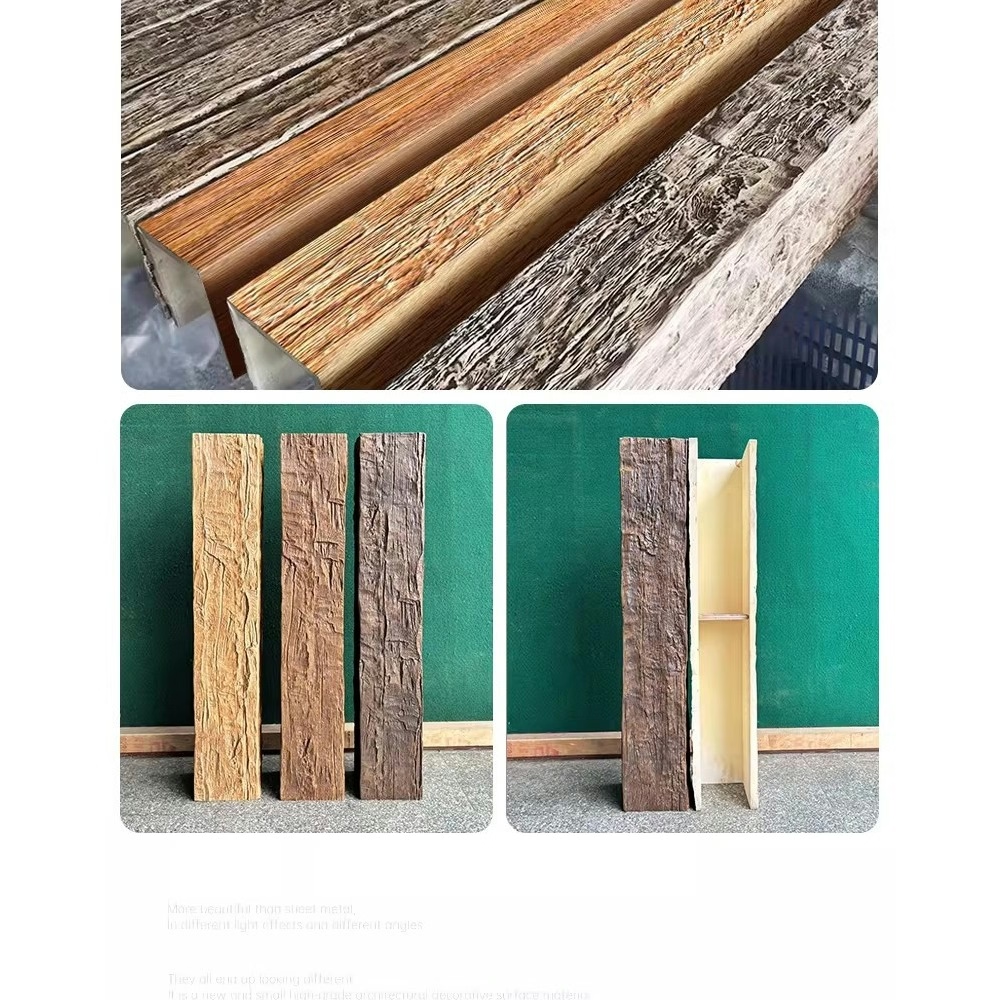
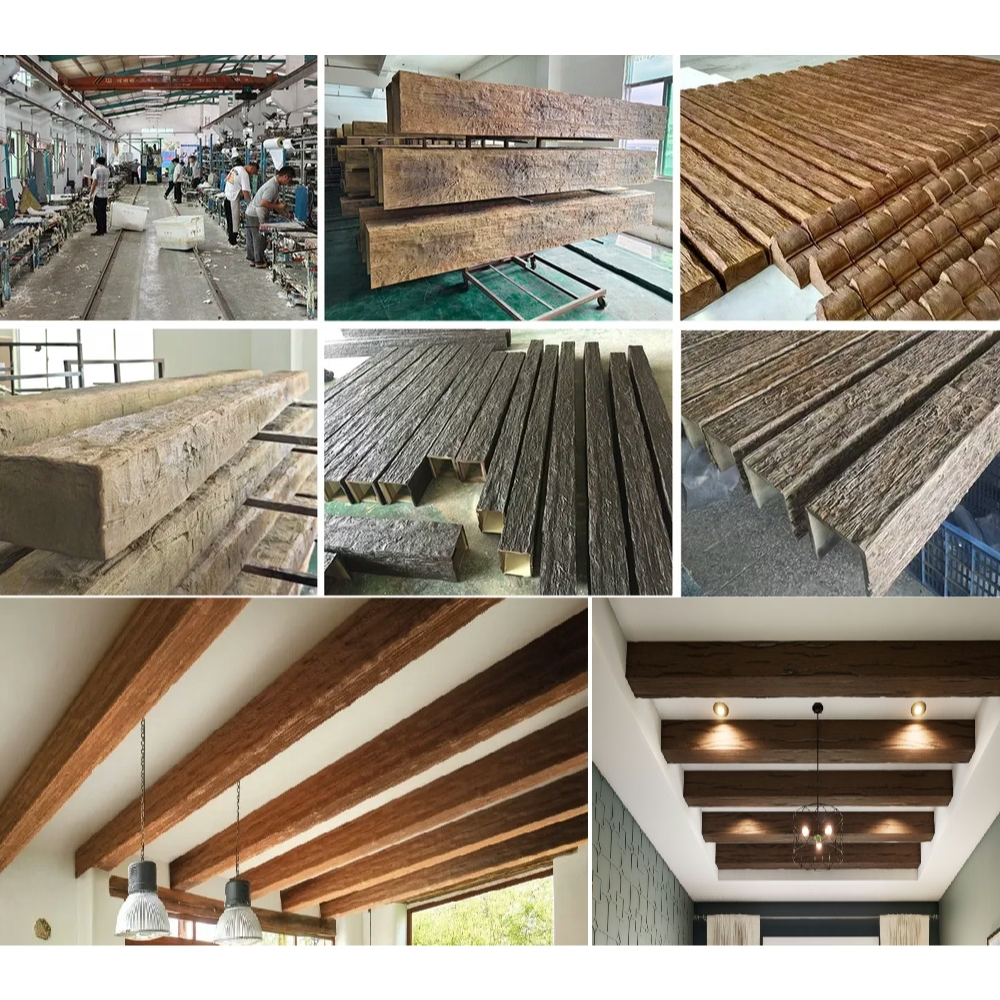
Smart home improvement combines technological capability with aesthetic enhancement. The 2026 approach to home upgrades recognizes that improvements should serve both functional and visual purposes, creating living environments that work better while looking better. Stylish faux wood beams contribute to smart improvements by adding architectural character while serving as infrastructure for technology integration, lighting coordination, and functional enhancement.
The smartest home improvements deliver multiple benefits simultaneously — visual transformation, functional improvement, and technology enablement. Faux beams exemplify this approach, providing architectural presence while creating opportunities for lighting integration, technology concealment, and spatial organization that enhance daily living.
Smart improvement concept categories
Smart home improvements with beams fall into several categories:
Aesthetic transformation improvements
Visual upgrade primary benefit:
- Adding architectural character to plain ceilings
- Creating focal points in standard rooms
- Establishing design language throughout homes
- Enhancing room ambiance through timber warmth
These improvements primarily serve aesthetic purposes while enabling functional benefits.
Functional enhancement improvements
Practical improvement primary benefit:
- Concealing wiring within beam cavities
- Integrating lighting into beam structures
- Hiding HVAC elements within beam profiles
- Organizing room functions through beam placement
These improvements primarily serve functional purposes while delivering aesthetic benefits.
Technology integration improvements
Smart capability primary benefit:
- Smart lighting within beam installations
- Speaker integration within beam cavities
- Sensor placement within beam structures
- Control system organization through beam placement
These improvements enable smart home capabilities while adding aesthetic value.
Room-by-room smart improvement ideas
Different rooms offer different smart improvement opportunities:
Living room smart improvements
Living room beam applications:
- Statement beam with integrated smart lighting
- Concealed wiring for entertainment systems
- Multi-zone lighting control through beam placement
- Smart speaker integration within beam profiles
- Automated shading coordination with beam aesthetics
Living room beams anchor smart living room capabilities.
Kitchen smart improvements
Kitchen beam applications:
- Task lighting integration within beam profiles
- Smart appliance control organization
- Concealed wiring for kitchen technology
- Under-cabinet lighting coordination
- Voice control integration near beam features
Kitchen beams support smart kitchen functionality.
Dining room smart improvements
Dining room beam applications:
- Chandelier smart control integration
- Lighting scene programming with beam coordination
- Entertainment system concealment
- Climate control sensor placement
- Audio system integration within beam structures
Dining room beams enable sophisticated dining experiences.
Bedroom smart improvements
Bedroom beam applications:
- Circadian rhythm lighting integration
- Smart blackout shade coordination
- Audio system integration for sleep sounds
- Climate control optimization
- Wake-up lighting through beam features
Bedroom beams support restful smart bedroom environments.
Home office smart improvements
Office beam applications:
- Task lighting optimization within beam profiles
- Video conferencing lighting integration
- Power and data organization through beam placement
- Acoustic treatment within beam installations
- Air quality monitoring integration
Office beams enable productive smart work environments.
Technology integration approaches
Several approaches serve technology integration:
Lighting integration
Smart lighting within beam structures:
- Recessed fixtures within beam cavities
- Linear LED strips along beam edges
- Adjustable color temperature capability
- Programmable lighting scenes
- Voice and app control compatibility
Smart lighting integration maximizes beam functional value.
Audio integration
Speaker systems within beam profiles:
- Hidden speakers within beam structures
- Multi-room audio coordination
- Voice assistant integration
- Sound quality optimization
- Aesthetic preservation with audio capability
Audio integration enhances entertainment and ambient sound.
Sensor integration
Smart sensors within beam placement:
- Motion sensors for automated lighting
- Temperature sensors for climate control
- Air quality monitoring
- Occupancy detection for energy management
- Security system integration
Sensor integration enables responsive smart home environments.
Wiring management
Cable organization through beam placement:
- Power wire routing within beam cavities
- Low-voltage wiring for smart controls
- Network cable organization
- Cable concealment for clean appearance
- Future expansion accommodation
Wiring management supports technology infrastructure.
Improvement planning methodology
Smart improvement planning follows systematic approach:
Assessment phase
Evaluate current conditions:
- Existing ceiling structure and condition
- Current technology capabilities
- Aesthetic baseline and improvement opportunities
- Functional pain points and improvement potential
Assessment identifies improvement opportunities.
Design phase
Plan improvement approach:
- Define aesthetic and functional goals
- Specify beam locations and characteristics
- Plan technology integration points
- Coordinate with other improvement elements
Design phase creates improvement blueprint.
Implementation phase
Execute improvement work:
- Install beams per design specifications
- Integrate technology systems
- Coordinate with electrical and low-voltage work
- Complete finishing and testing
Implementation delivers improvement results.
Optimization phase
Refine improvement function:
- Program smart systems for user preferences
- Adjust lighting scenes and automation
- Optimize audio and sensor performance
- Refine based on user experience
Optimization maximizes improvement value.

Specific smart improvement projects
Several specific projects illustrate smart improvement approaches:
Living room entertainment upgrade
Project components:
- Statement beam over entertainment area
- Integrated surround sound speakers
- Smart TV backlighting coordination
- Concealed wiring for clean appearance
- Voice control integration
This upgrade transforms entertainment experience.
Kitchen lighting transformation
Project components:
- Beam over island with integrated task lighting
- Adjustable color temperature for food preparation
- Under-cabinet lighting coordination
- Voice control for hands-free operation
- Scene programming for different activities
This upgrade enhances kitchen functionality.
Bedroom sleep environment
Project components:
- Vaulted bedroom beam treatment
- Circadian rhythm lighting integration
- Smart shade coordination
- Sleep-friendly audio integration
- Climate optimization through beam sensor placement
This upgrade supports better sleep quality.
Home office productivity
Project components:
- Office ceiling beam installation
- Video call optimized lighting
- Acoustic treatment within beam structures
- Power and data organization
- Air quality monitoring integration
This upgrade supports productive work.
Budget allocation for smart improvements
Smart improvement budgets typically allocate across:
Beam materials — 40-60% of improvement budget
Technology components — 20-35% of improvement budget
Installation labor — 15-25% of improvement budget
Finishing and accessories — 5-10% of improvement budget
These allocations balance aesthetic, technology, and installation elements.
Technology compatibility considerations
Smart improvement success requires compatibility:
Existing system integration — new improvements should work with existing smart home systems
Platform compatibility — technology choices should align with preferred platforms
Future expansion — improvements should accommodate future technology additions
Standards compliance — technology should meet relevant standards and certifications
Update capability — systems should support software updates and capability expansion
These considerations ensure long-term improvement value.
Seasonal and lifestyle considerations
Smart improvements can address seasonal and lifestyle needs:
Winter warmth — beam-integrated heating elements or warming lighting
Summer cooling — climate-responsive features within beam installations
Entertaining enhancement — scene programming for gatherings
Daily routine support — automated lighting and audio for daily activities
Wellness integration — features supporting health and wellbeing goals
These considerations help improvements serve actual living patterns.
Improvement value realization
Smart improvement value emerges through:
Daily use benefits — improvements serving routine activities
Guest experience — improvements enhancing hospitality
Property value — improvements supporting real estate value
Lifestyle quality — improvements enhancing daily living satisfaction
Long-term functionality — improvements serving needs over years
Realized value justifies improvement investment.
Professional consultation value
Smart improvement projects benefit from professional input:
Design professionals — aesthetic and functional integration
Technology specialists — smart system design and integration
Installation contractors — quality implementation
Electrical professionals — safe and code-compliant wiring
Building inspectors — code compliance verification
Professional consultation ensures improvement success.
2026 improvement trends
Current smart improvement directions:
Wellness integration — health and wellbeing features
Sustainability emphasis — environmental consideration in improvements
Aging-in-place support — features serving long-term accessibility
Entertainment enhancement — sophisticated audio-visual capabilities
Work-from-home optimization — productivity-supporting improvements
These trends inform smart improvement approaches.
Smart improvement specification
2026 smart home improvement ideas using stylish faux wood beams enable contemporary renovation approaches combining smart technology integration with timber aesthetics. The combination of aesthetic enhancement, functional improvement, and technology enablement makes faux beam specifications particularly appropriate for smart improvement projects. When projects require smart improvement combining visual appeal with technological capability, faux beam specifications deliver appropriate results.
Choose stylish faux wood beam specifications aligned with smart improvement goals for projects requiring both aesthetic transformation and functional enhancement.
Technical References
ASTM standards cited in every specification
Test Data
Lab results from internal testing program
Updated 2026
Reviewed against current product specs

