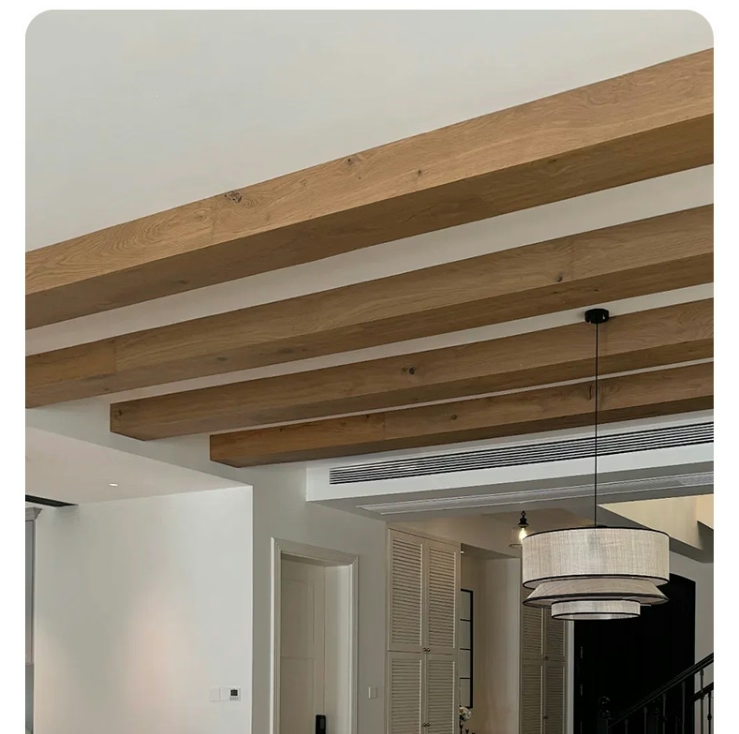
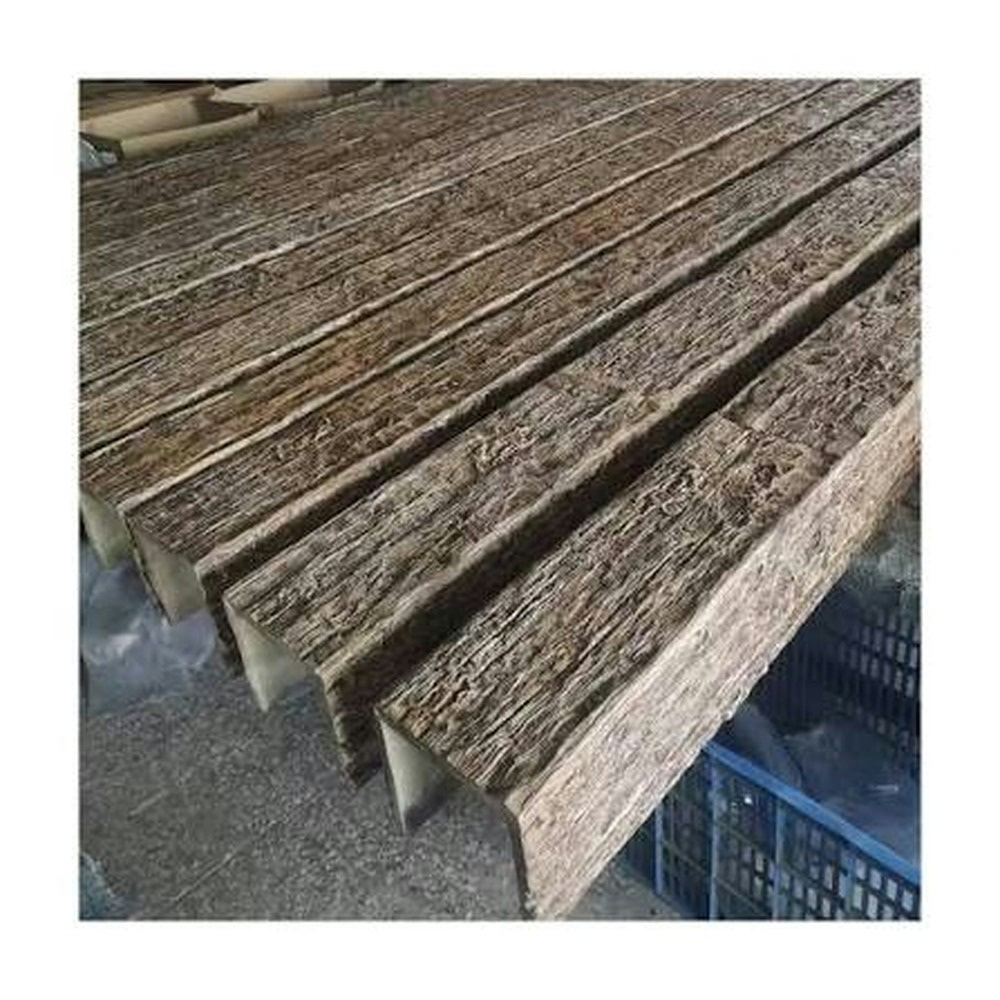
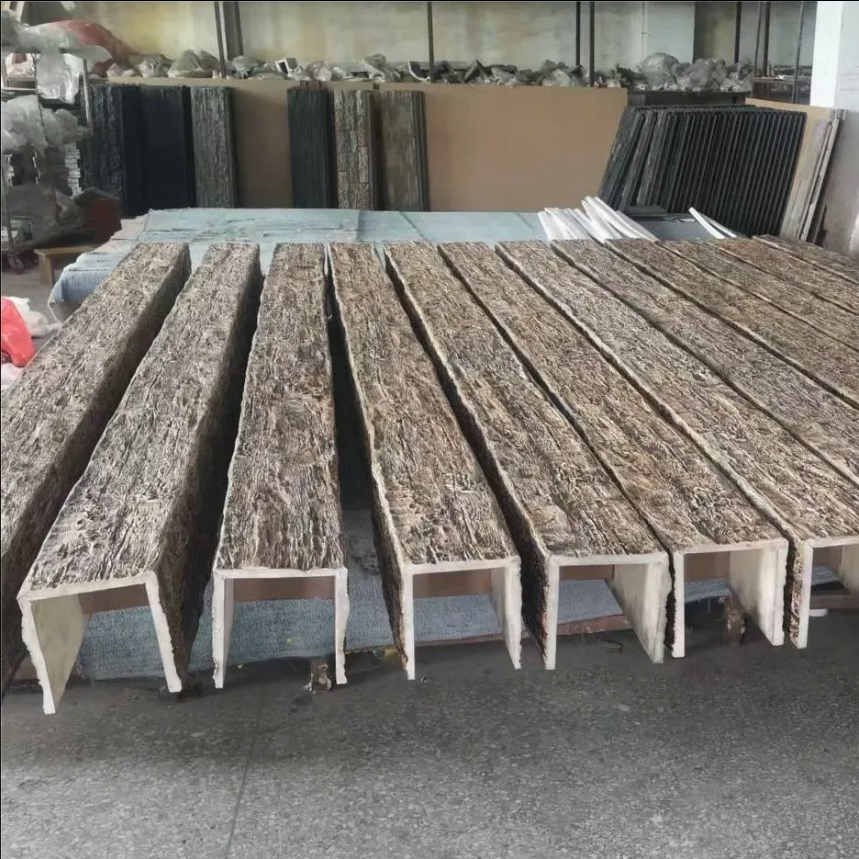
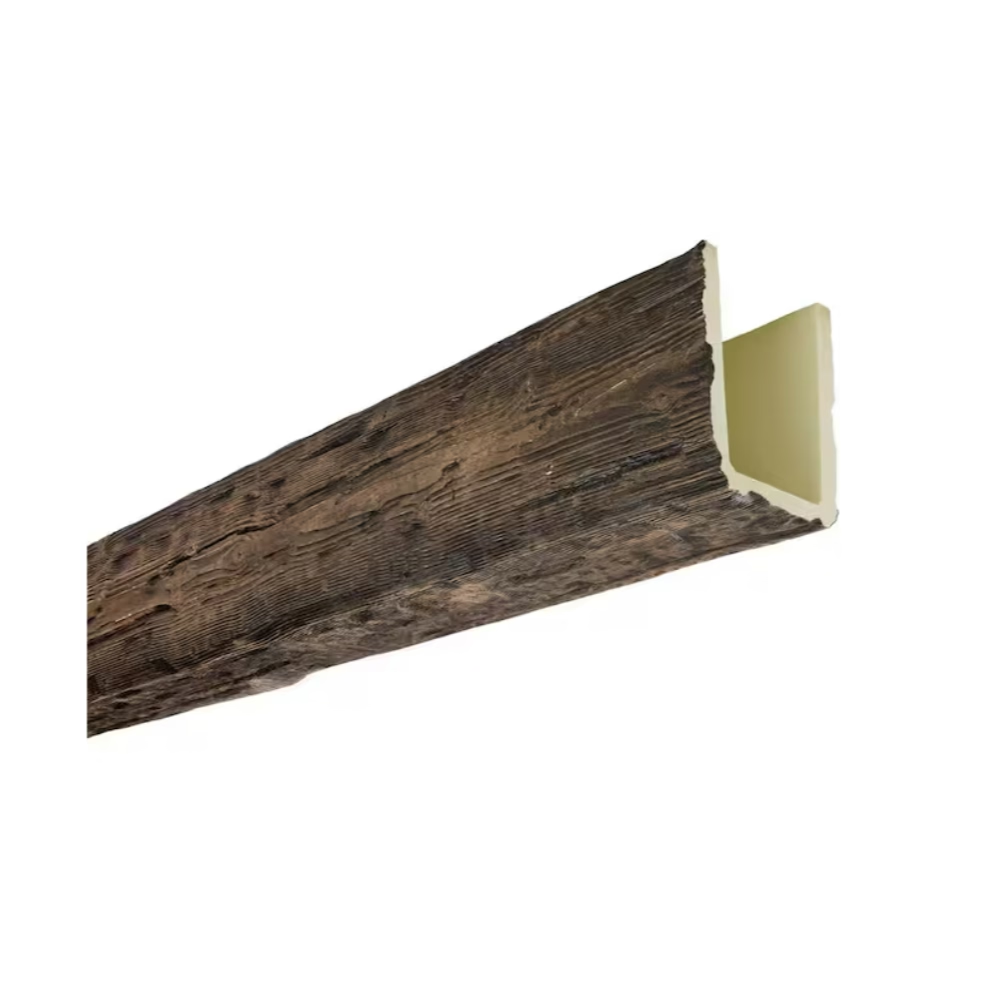
Bespoke Custom Wood Grain Texture Faux Wood Ceiling Beams
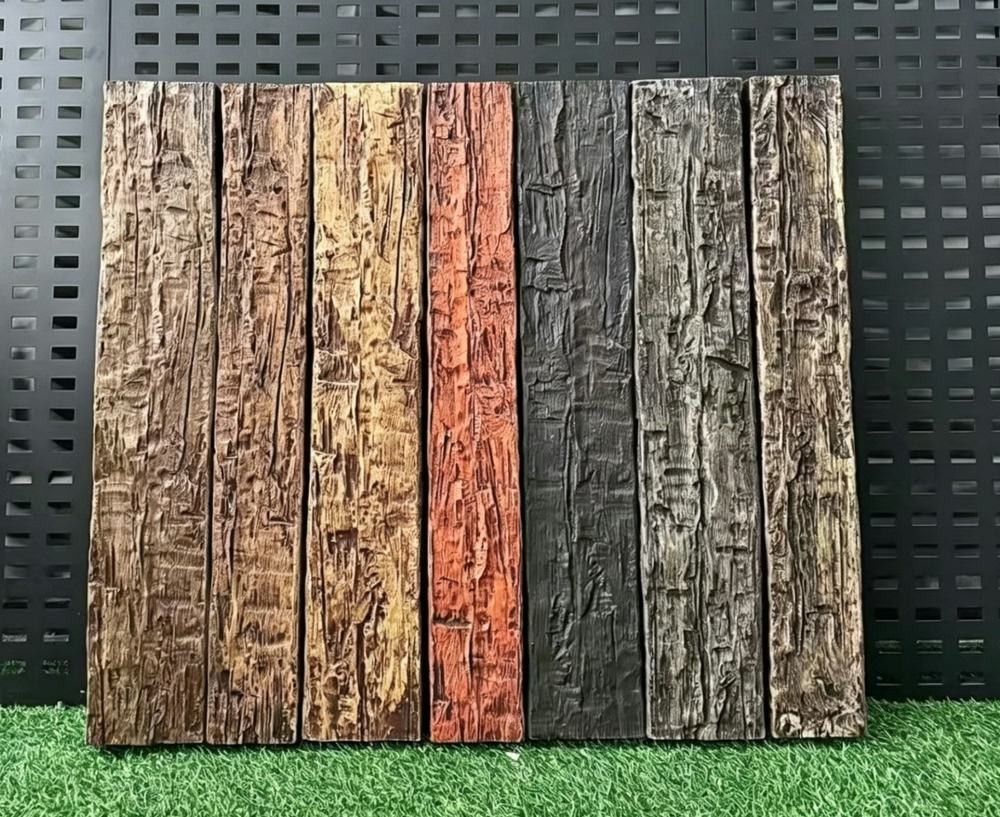
Wood grain represents the defining visual characteristic that distinguishes timber from other materials. Bespoke custom wood grain texture options enable polyurethane faux beam manufacturers to replicate specific wood species, match existing timber details, or create entirely original grain patterns that serve particular design intentions.
Wood grain develops through natural wood growth processes, with characteristics varying significantly between species. Oak displays prominent ray Fleck patterns and pronounced grain lines. Maple presents subtle, tight grain that creates smooth appearance. Walnut shows dramatic color variation between earlywood and latewood zones. Custom grain texture development captures these species-specific characteristics through careful reference study and mold preparation.
Reference acquisition for custom grain development employs several techniques. Physical wood samples provide direct mold-making opportunities, with impressions capturing exact surface details. High-resolution scanning technology creates digital surface maps that guide mold machining. Detailed photography enables skilled craftsmen to interpret grain characteristics and translate them into mold surface modifications.
Grain direction management affects both visual authenticity and manufacturing success. Grain should flow naturally along beam lengths, with appropriate figure patterns developing across grain orientation. Departures from natural grain flow—like straight parallel lines running across a beam—immediately signal artificial appearance. Custom grain development addresses directionality deliberately.
Knot reproduction requires particular attention for convincing authenticity. Knots represent branch attachment points where wood structure deviates dramatically from clear-grain areas. Natural knots display concentric growth rings, darkened color, and surrounding grain distortion that custom grain development must capture convincingly. Large, prominent knots create dramatic authenticity markers; smaller pin knots provide subtle authenticity that rewards close inspection.
Application scaling affects grain perception significantly. The same grain pattern that appears authentic on a small sample may appear exaggerated or coarse when scaled to full beam dimensions. Custom grain development includes scaling optimization that maintains appropriate detail levels for intended application dimensions.
Finish integration with custom grain surfaces requires technique adaptation. Stain penetration follows grain lines, creating natural color variation when properly applied. Grain filling for smooth finishes requires attention to both open and closed grain characteristics. Understanding these integration requirements ensures that custom grain surfaces accept finishes that enhance rather than compromise intended appearance.
Technical References
ASTM standards cited in every specification
Test Data
Lab results from internal testing program
Updated 2026
Reviewed against current product specs