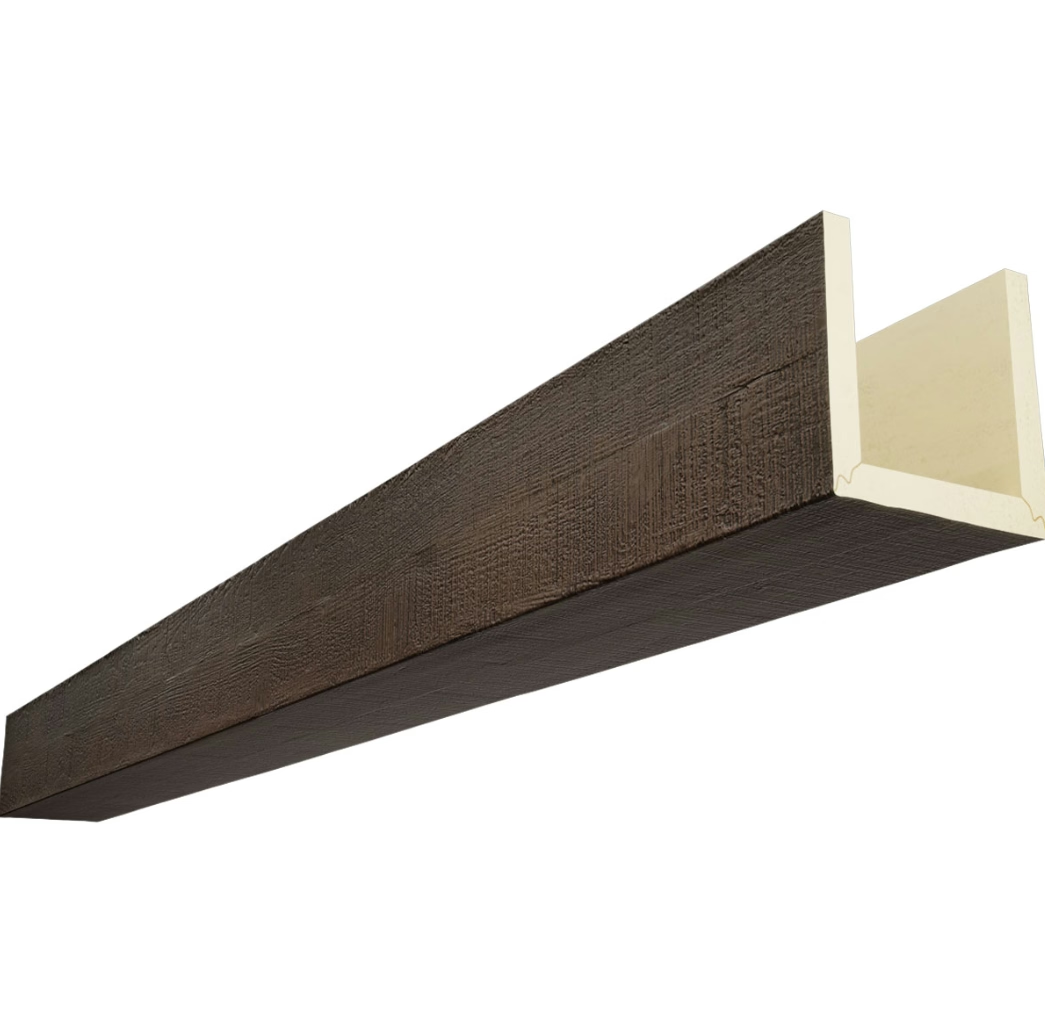
Multi-surface design requires consistent treatment across multiple visible planes. When structural elements present multiple visible faces that all require aesthetic treatment, the 3-face decorative beam configuration provides an efficient solution. By covering three faces of structural elements with consistent timber-look material, designers achieve unified aesthetic treatment without the expense of full four-face coverage where one face would be hidden anyway.
The decorative aspect emphasizes appearance quality alongside structural function. Where basic covering solutions might accept plain finishes, decorative specifications require enhanced textures, refined finishes, and aesthetic details that elevate the treatment beyond mere concealment. The result is structural element cladding that actively contributes to design quality rather than simply hiding utilitarian construction.
Multi-surface design applications
3-face decorative beams serve various multi-surface scenarios:
Beam-to-wall transitions
Where structural beams meet walls:
- Beam end treatments against wall surfaces
- Continuous timber appearance from beam to wall
- Decorative transition detailing
- Aesthetic integration of structural and finish elements
Beam-to-wall transitions benefit from 3-face treatment.
Beam-to-ceiling intersections
Where beams meet ceiling surfaces:
- Beam mounting against ceiling
- Three-face treatment for visible surfaces
- Decorative appearance on side and bottom
- Aesthetic ceiling integration
Beam-to-ceiling intersections commonly use 3-face coverage.
Corner structural elements
Beams at room corners requiring treatment:
- Multiple visible faces in corner configurations
- Three-face covering with decorative finish
- Corner detail aesthetic enhancement
- Unified treatment across visible surfaces
Corner elements benefit from 3-face covering.
Multi-directional structural runs
Structural elements visible from multiple angles:
- Beams at ceiling transitions
- Structural members at room boundaries
- Multiple visible faces requiring consistent treatment
- Unified design across visible surfaces
Multi-directional runs benefit from consistent 3-face treatment.

Decorative finish requirements
Decorative specifications require enhanced finishing:
Premium texture reproduction
Higher fidelity texture capture:
- Enhanced grain detail
- Refined character marks
- Authentic surface variation
- Premium appearance quality
Premium textures support decorative intentions.
Refined stain applications
Sophisticated color treatments:
- Multi-step staining processes
- Highlighted grain details
- Depth-creating color variations
- Professional finish quality
Refined stains elevate appearance quality.
Specialty finish options
Distinctive decorative treatments:
- Glazed finishes for depth
- Distressed character for age
- Weathered appearances for authenticity
- Custom matched finishes for coordination
Specialty finishes enable decorative sophistication.
Aesthetic integration strategies
3-face decorative treatments integrate with broader design:
Material coordination
Beam finishes coordinate with other elements:
- Match hardwood flooring tones
- Coordinate with cabinet wood species
- Relate to other timber elements
- Create material harmony throughout space
Material coordination creates unified design.
Color palette relationships
Beam colors support design palettes:
- Warm tones for traditional palettes
- Cool tones for contemporary schemes
- Neutral tones for versatile backgrounds
- Bold tones for statement applications
Color relationships strengthen design composition.
Style consistency
Beam treatments align with design style:
- Rustic textures for country aesthetics
- Refined finishes for formal interiors
- Modern treatments for contemporary spaces
- Authentic characters for period designs
Style consistency maintains design integrity.
Installation considerations for decorative applications
Decorative 3-face installation requires quality focus:
Surface preparation
Premium installation starts with preparation:
- Clean structural beam surfaces
- Smooth any irregularities
- Address any damage before covering
- Ensure optimal mounting conditions
Surface preparation affects finished appearance.
Precision alignment
Accurate positioning matters:
- Align covers with reference marks
- Verify level and plumb installation
- Coordinate with adjacent elements
- Maintain consistent reveal at edges
Precision alignment ensures quality results.
Quality fastening
Concealed or refined fastening:
- Countersunk fasteners for clean appearance
- Adhesive bonding supplementing mechanical attachment
- Strategic fastener placement
- Finished appearance without visible mounting hardware
Quality fastening maintains decorative appearance.
Specific decorative applications
3-face decorative beams serve various decorative scenarios:
Statement structural elements
Beams as designed focal points:
- High-visibility structural elements
- Decorative treatments enhancing presence
- Statement design features
- Premium appearance throughout
Statement elements benefit from decorative treatment.
Architectural feature emphasis
Structural elements as architectural features:
- Beam treatments highlighting structure
- Decorative finishes emphasizing character
- Architectural detail enhancement
- Design feature creation
Architectural features benefit from decorative coverage.
Style-specific installations
Treatments matching specific aesthetics:
- Rustic farmhouse beam treatments
- Modern industrial beam appearances
- Traditional formal beam aesthetics
- Contemporary clean-lined beam styling
Style-specific installations require appropriate finishes.
Period-appropriate treatments
Beams matching historical aesthetics:
- Colonial era beam appearances
- Victorian appropriate treatments
- Craftsman era beam character
- Mid-century modern beam styling
Period treatments require careful finish selection.
Coordination with other design elements
3-face decorative beams coordinate with:
Lighting integration
Beam and lighting relationships:
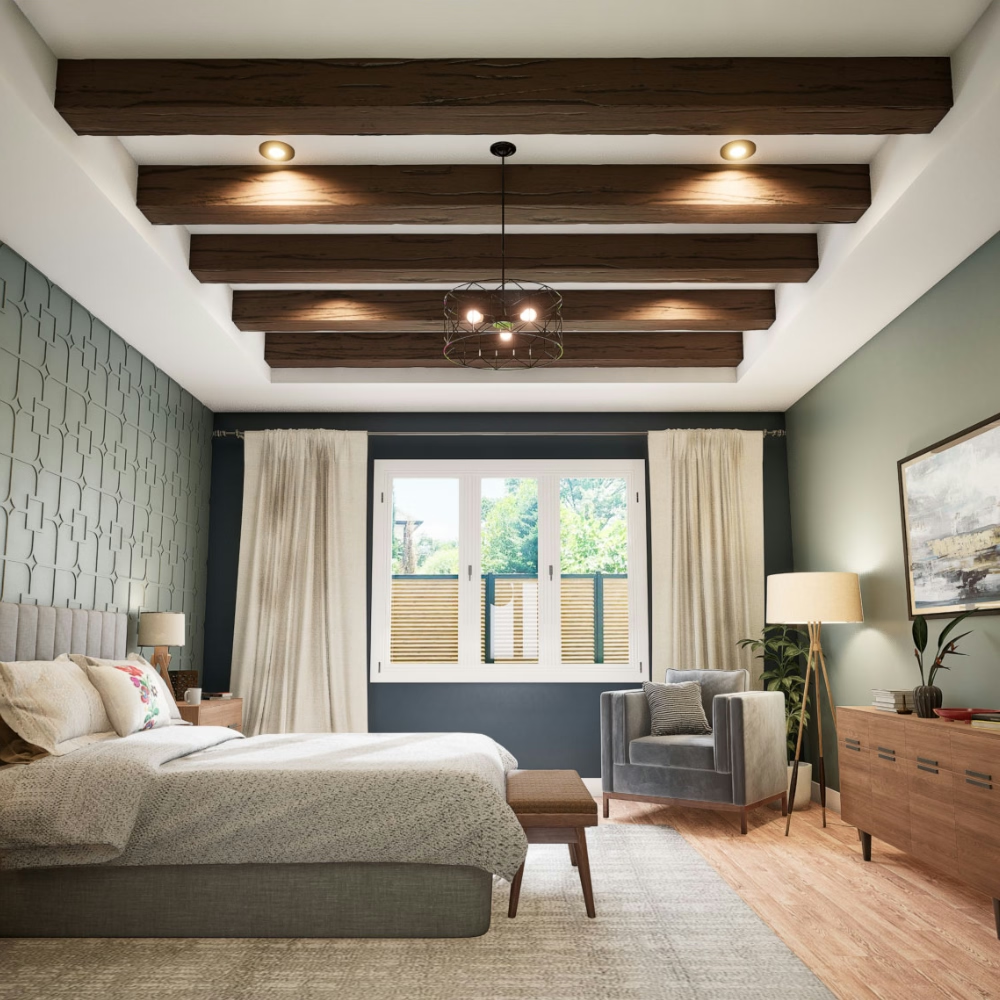
- Recessed lighting in beam areas
- Track lighting on beam surfaces
- Pendant mounting from beam positions
- Architectural lighting integration
Lighting integration enhances both elements.
Adjacent material transitions
Beam connections to other materials:
- Stone or masonry transitions
- Drywall intersections
- Wood paneling connections
- Metal element relationships
Transition coordination creates unified appearance.
Furniture and fixture placement
Beam positions relative to furnishings:
- Above key furniture pieces
- Coordinating with lighting fixtures
- Defining zones through placement
- Supporting room functional layout
Furniture coordination supports room function.
Cost considerations for decorative specifications
3-face decorative investment:
Material cost — $55-100 per linear foot for decorative finishes
Premium textures — add $25-45 per linear foot for high-fidelity treatments
Installation cost — $80-150 per beam for quality decorative installation
Project examples:
- Single decorative beam covering: $500-1,500 complete
- Multiple decorative beam treatments: $2,500-7,500 complete
- Comprehensive decorative project: $5,500-16,000 complete
Investment reflects decorative finish quality with three-face construction.
When decorative 3-face is appropriate
This specification suits projects where:
Multi-surface treatment needed — multiple visible faces require consistent aesthetic
Decorative quality valued — appearance quality matters beyond basic covering
Design integration desired — beams should contribute to design rather than hide
Premium finish justified — budget supports decorative specification
Style coordination required — beams need to match specific aesthetic intentions
For these situations, 3-face decorative beams deliver appropriate results.
When other specifications might serve better
Alternative approaches for different priorities:
Basic covering needed — situations where simple concealment suffices
Single-face treatment only — applications where one face is visible
Full four-face coverage — scenarios requiring complete beam encapsulation
Structural beam appearance — designs calling for actual structural beam exposure
Budget constraints — projects requiring more economical specifications
For these situations, different specifications address the requirements.
Multi-surface aesthetic achievement
3-face decorative PU faux timber beams for multi-surface aesthetic styling deliver consistent timber appearance across multiple visible surfaces with decorative finish quality. The combination of three-face coverage, decorative finish specifications, and aesthetic integration capability makes this specification appropriate for beam-to-wall transitions, corner structural elements, multi-directional structural runs, and statement structural treatments. When projects require multi-surface aesthetic treatment with decorative quality, 3-face decorative beam specifications deliver appropriate results.
Choose 3-face decorative beams for multi-surface aesthetic treatments requiring consistent timber appearance with refined finish quality.
Technical References
ASTM standards cited in every specification
Test Data
Lab results from internal testing program
Updated 2026
Reviewed against current product specs

