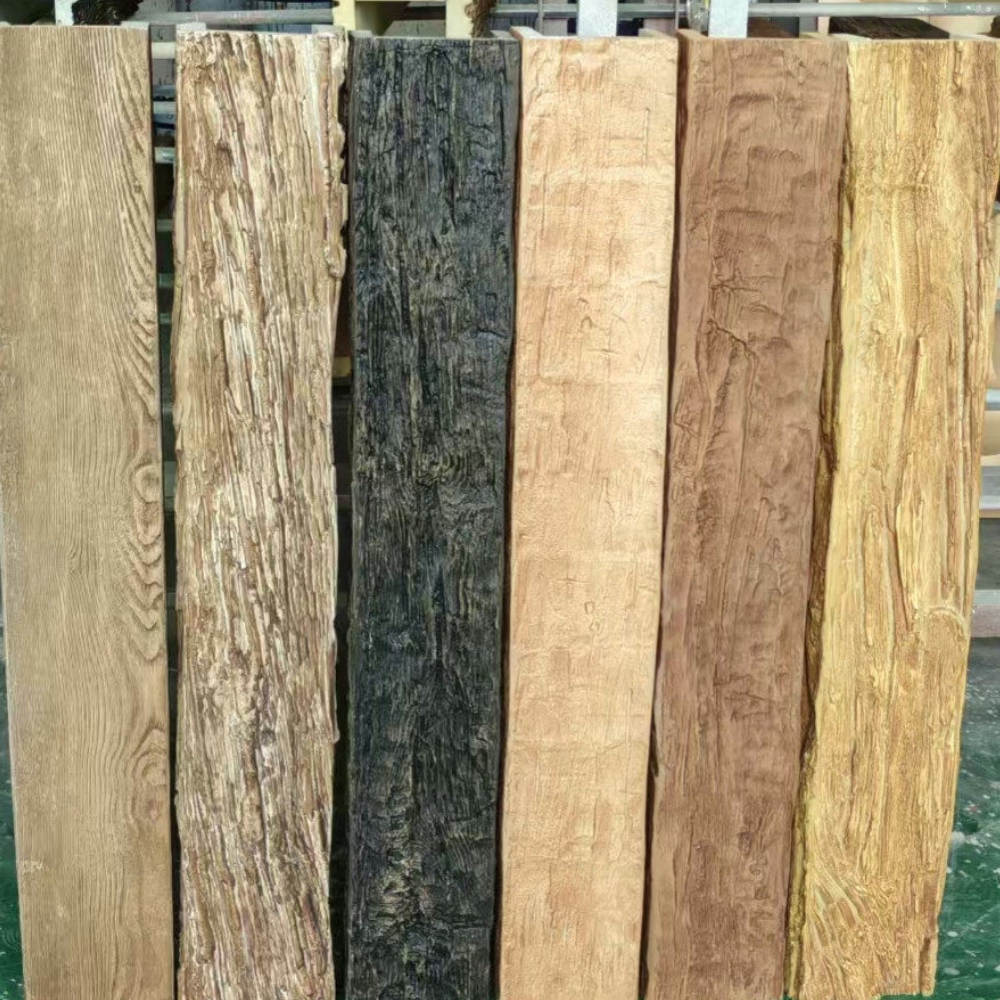
Styling consistency across multiple surfaces transforms structural elements from utilitarian necessities into design features. The 3-face decorative specification addresses this styling requirement by providing uniform timber appearance across the three faces of structural beams that remain visible after installation. This consistent treatment enables designers to incorporate structural elements as intentional aesthetic components rather than treating them as elements to hide.
Multi-surface styling requires more than covering; it demands finishing quality that supports design intentions. The decorative specification elevates basic beam covering into aesthetic contribution. Texture quality, finish refinement, and installation precision all combine to create styling treatment that enhances rather than merely conceals structural elements.
Multi-surface styling applications
3-face decorative beams serve various styling scenarios:
Open structural element aesthetics
Structural elements intentionally visible:
- Modern industrial aesthetics
- Architectural feature emphasis
- Structural honesty in contemporary design
- Visible structural celebration
Open structural elements require quality aesthetic treatment.
Transitional structural treatment
Structural elements blending with finishes:
- Structural elements transitioning to wall finishes
- Beam-to-ceiling smooth integration
- Material coordination across surfaces
- Unified appearance throughout space
Transitional treatment benefits from consistent styling.
Multi-room beam continuity
Beams visible from multiple rooms:
- Open-plan beam visibility across spaces
- Consistent appearance throughout
- Multi-surface styling consistency
- Unified aesthetic across room boundaries
Multi-room continuity benefits from consistent specifications.
Feature element highlighting
Structural elements as design features:
- Beam treatments as focal points
- Decorative structural celebration
- Aesthetic emphasis on structure
- Styling that draws attention positively
Feature highlighting requires decorative quality.

Decorative quality elements
Several factors distinguish decorative specifications:
Enhanced texture reproduction
Higher fidelity timber appearance:
- Refined grain detail
- Authentic character marks
- Premium surface variation
- Sophisticated texture depth
Enhanced textures support decorative quality.
Refined finishing techniques
Multi-step finishing processes:
- Base stain application
- Highlight and shadow creation
- Detail enhancement
- Protective top coat application
Refined finishing creates premium appearance.
Coordinated color treatment
Color selection supporting design:
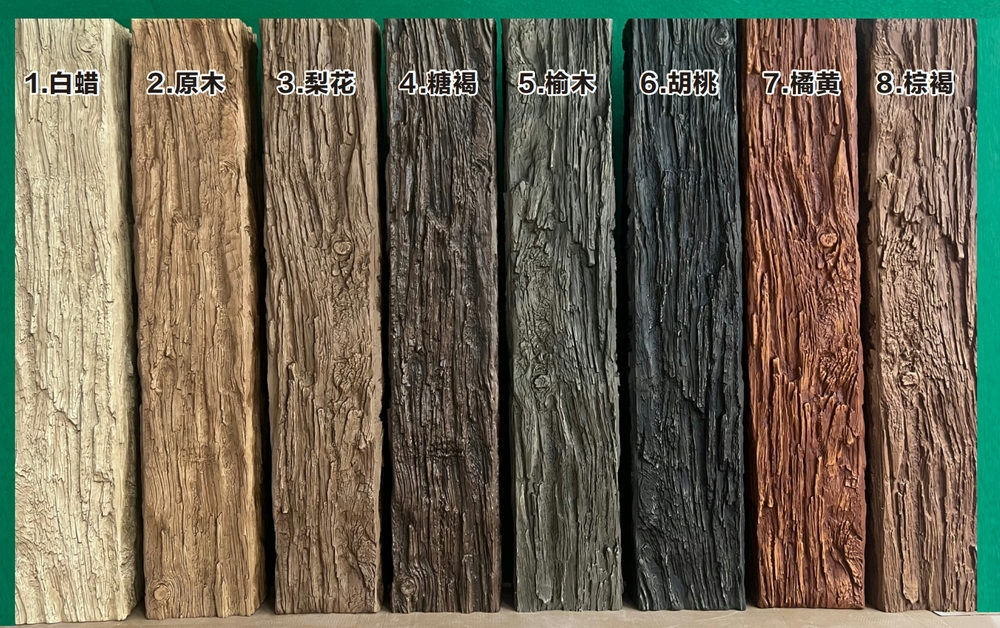
- Stain colors matching design palette
- Finish tones coordinating with materials
- Color depth and variation
- Professional color application
Coordinated color supports design integration.
Installation precision
Quality installation execution:
- Accurate alignment
- Consistent reveals and joints
- Clean fastener treatment
- Professional finishing standards
Installation precision maintains decorative quality.
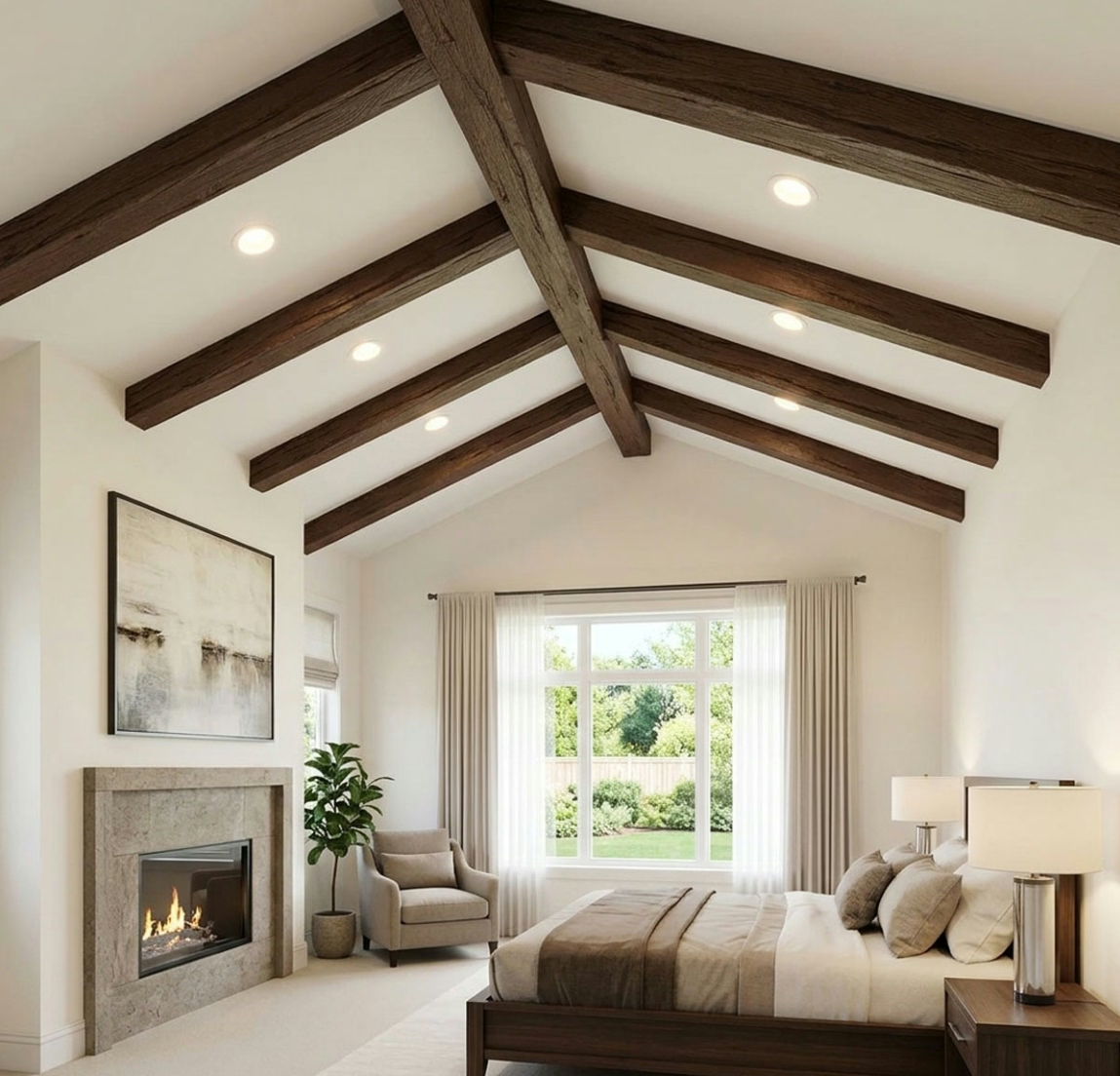
Styling strategies
Several approaches serve multi-surface styling needs:
Matched finish approach
Consistent finish across all surfaces:
- Same texture and color on all three faces
- Uniform appearance throughout
- Continuous timber aesthetic
- Simplified specification
Matched finish ensures consistency.
Variable finish approach
Different treatments on different surfaces:
- Bottom face with refined finish
- Side faces with moderate texture
- Intentional finish variation
- Sophisticated surface hierarchy
Variable finishes create design complexity.
Accent finish approach
Specific surfaces receiving accent treatment:
- Highlighted bottom face for emphasis
- Supporting side face treatment
- Coordinated accent relationship
- Designed finish hierarchy
Accent finishes create design emphasis.
Continuous appearance approach
Matching surrounding elements:
- Coordinate with adjacent wood elements
- Match flooring or millwork tones
- Continuous material appearance
- Integrated design language
Continuous appearance creates unified spaces.
Integration with design elements
3-face decorative beams integrate with:
Wall treatment coordination
Beam appearance relating to walls:
- Color coordination with wall palette
- Texture relationship to wall finishes
- Material echo with wall paneling
- Complementary or contrasting relationships
Wall coordination supports design integration.
Ceiling finish relationships
Beam coordination with ceiling:
- White ceiling contrast
- Painted ceiling harmony
- Textured ceiling relationships
- Color matching or contrasting
Ceiling relationships affect overall composition.
Floor material connections
Beam relationships to flooring:
- Hardwood floor tone matching
- Color coordination with floor stain
- Species relationship to floor wood
- Continuous material language
Floor connections create material continuity.
Furniture and fixture relationships
Beam coordination with furnishings:
- Wood tone relationships
- Style consistency
- Finish quality matching
- Design language unity
Furniture coordination completes design.
Quality installation requirements
Decorative 3-face installation requires:
Pre-installation preparation
- Surface cleaning and preparation
- Reference marking for alignment
- Material staging near installation
- Quality verification before mounting
Installation execution
- Adhesive application for primary bond
- Mechanical fastening for security
- Temporary support during cure
- Precision alignment maintenance
Finishing work
- Joint caulking at terminations
- Touch-up finishing as needed
- Final surface cleaning
- Quality verification
Quality installation maintains decorative standards.
Specific styling applications
3-face decorative beams serve various scenarios:
Modern farmhouse styling
Contemporary farmhouse beam treatments:
- Refined timber character
- Modern finish applications
- Farmhouse aesthetic with contemporary quality
- Updated traditional styling
Modern farmhouse benefits from decorative 3-face treatment.
Industrial modern styling
Contemporary industrial aesthetics:
- Clean-lined beam character
- Refined industrial finishes
- Modern material coordination
- Sophisticated industrial styling
Industrial modern benefits from decorative specifications.
Transitional styling
Blending traditional and contemporary:
- Balanced finish characteristics
- Versatile design language
- Both modern and traditional appeal
- Adaptable styling approach
Transitional styling works with decorative specifications.
Coastal styling
Beach house and coastal aesthetics:
- Weathered finish treatments
- Light, airy color palettes
- Natural material emphasis
- Coastal-appropriate character
Coastal styling benefits from appropriate decorative finishes.
Cost analysis
3-face decorative beam investment:
Material cost — $55-100 per linear foot for decorative finishes
Premium textures — add $25-45 per linear foot for high-fidelity treatments
Installation cost — $80-150 per beam for quality decorative installation
Project examples:
- Single decorative beam treatment: $500-1,500 complete
- Multiple decorative beam installations: $2,500-7,500 complete
- Comprehensive decorative project: $5,500-16,000 complete
Investment reflects decorative quality with three-face construction.
When decorative 3-face is appropriate
This specification suits projects where:
Multi-surface treatment required — multiple visible faces need consistent styling
Decorative quality valued — appearance quality beyond basic covering
Design integration needed — beams should contribute to overall design
Premium finishes justified — budget supports decorative specifications
Style coordination essential — beams need to match specific aesthetic intentions
For these situations, 3-face decorative specifications deliver appropriate results.
Multi-surface styling achieved
3-face decorative PU faux timber beams for multi-surface styling deliver consistent timber appearance across multiple visible surfaces with decorative finish quality. The combination of three-face coverage, decorative specifications, and styling integration capability makes this specification appropriate for open structural element aesthetics, multi-room beam continuity, feature element highlighting, and coordinated design treatments. When projects require multi-surface styling with decorative quality, 3-face decorative beam specifications deliver appropriate results.
Specify 3-face decorative beams for multi-surface styling requirements needing consistent timber appearance with decorative finish quality.
Technical References
ASTM standards cited in every specification
Test Data
Lab results from internal testing program
Updated 2026
Reviewed against current product specs