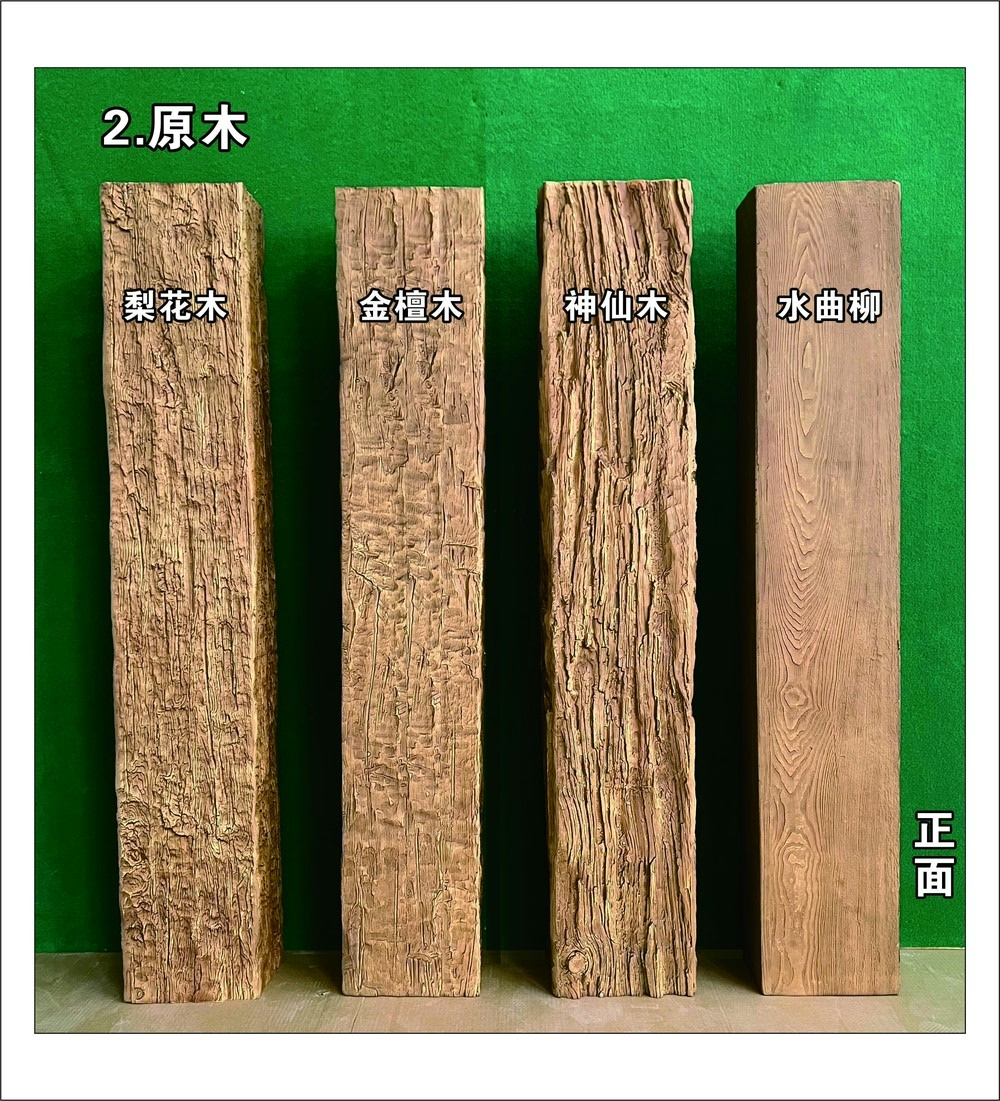
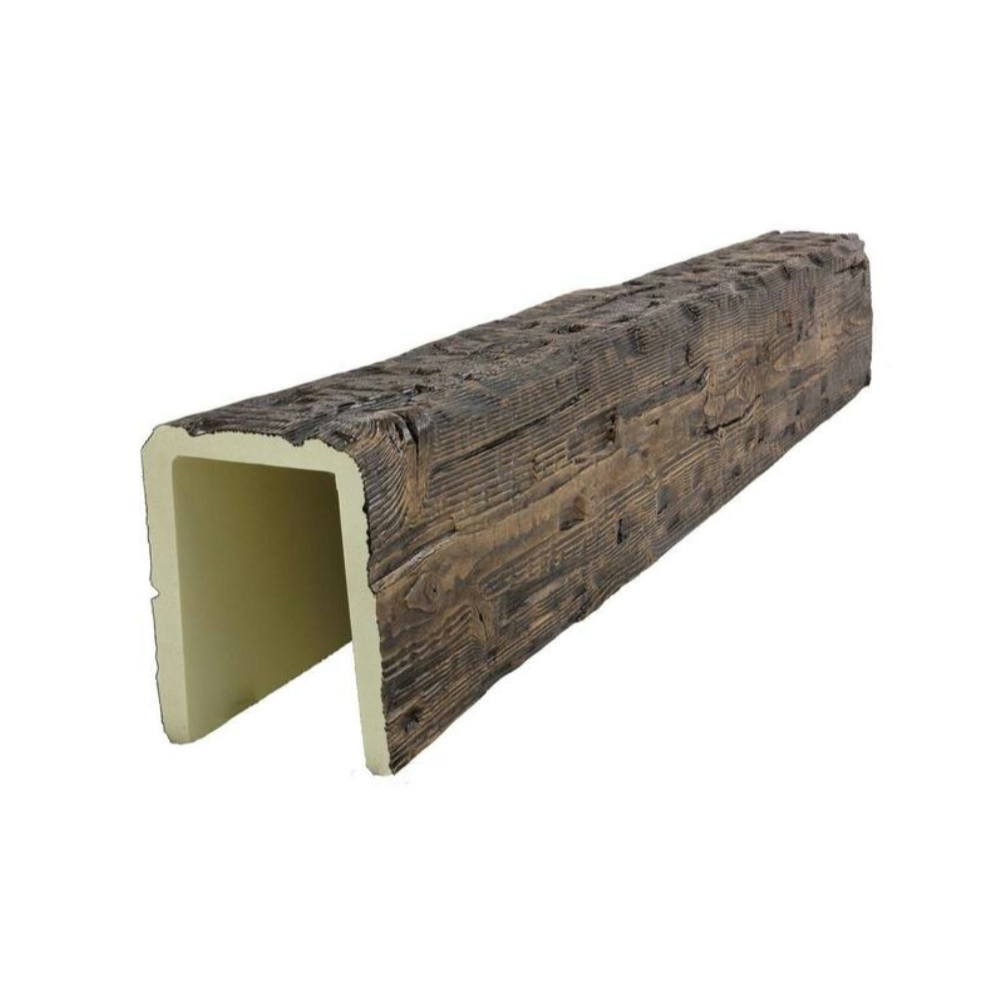
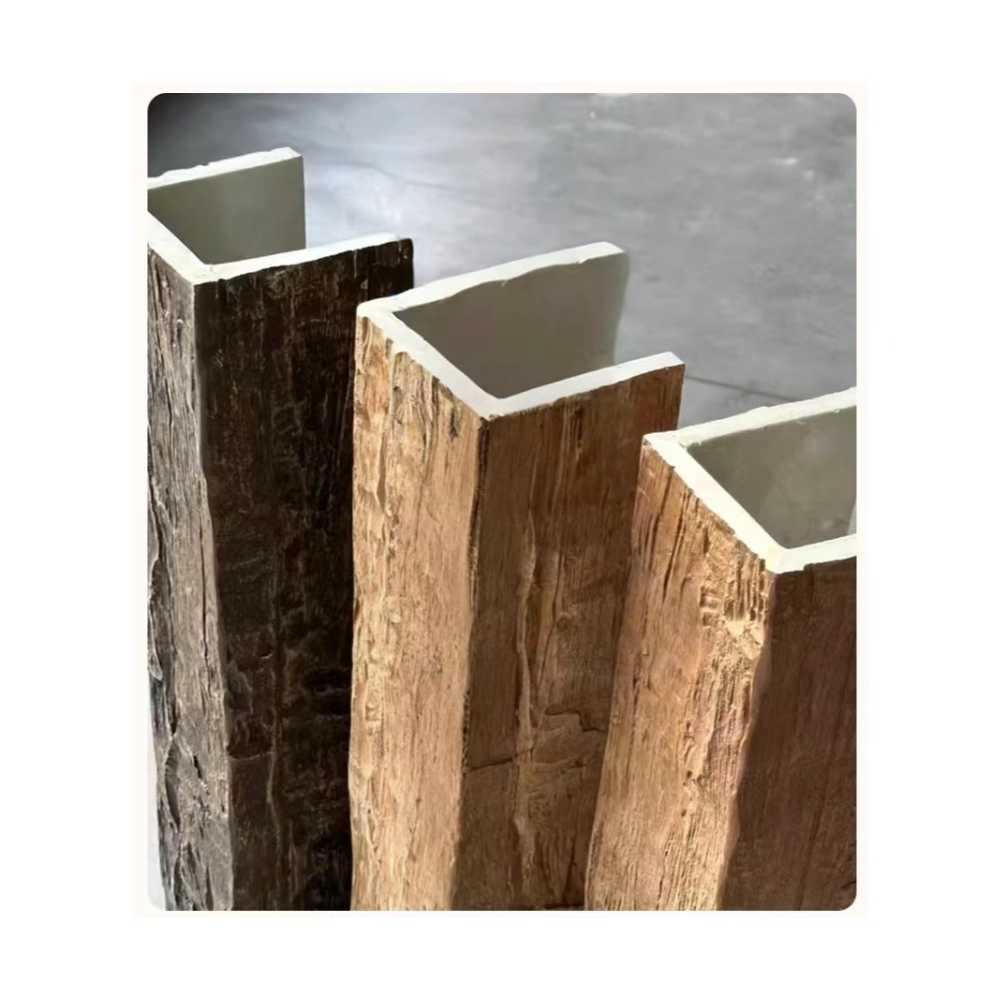
The 4-foot mini beam sits between the 2-foot accent beam and full-size 8-foot stock. It's a useful middle ground for projects that need more presence than a 2-foot beam but don't justify full-size beams. Understanding when the 4-foot length is the right call helps avoid over- or under-specifying.
What 4-foot mini beams do
4-foot mini beams handle several specific applications:
Mantel-length beams — short beam sections that serve as decorative mantels above fireplaces, range hoods, or feature walls. The 4-foot length covers most standard mantel applications.
Larger accent details — beam segments where a 2-foot beam would be too small but full-size beams would be excessive. Examples include feature wall accents, larger ceiling details, and display element framing.
Beam end treatments — short beam sections used at the end of longer beam runs, providing visual transition or termination detail.
Compact room applications — beams in powder rooms, small bathrooms, hallways, and compact offices where full-size beams would overwhelm but 2-foot beams would be too small.
Display and prop applications — beams used in retail displays, trade show booths, and showroom vignettes.
Sample and mock-up applications — designers and homeowners often use 4-foot samples to evaluate finishes and proportions before committing to full-size orders.
The 4-foot length handles applications where the 2-foot beam is too small and full-size beams are too much.
Where 4-foot mini beams work best
Faux mantel applications
The most popular 4-foot beam application is the faux mantel. A short beam mounted above a fireplace provides:
- Shelf surface for small decorative objects
- Architectural detail that anchors the fireplace wall
- Visual weight above the fireplace opening
- Coordinate finish with the fireplace surround
Specifications for typical faux mantel use:
- 4-foot length at 6x6 or 6x8 profile
- Medium weight (15 to 25 pounds) for manageable installation
- Mounted on concealed cleats or with decorative brackets
- Finish coordinated with the fireplace surround material

Range hood accents
Beam sections above kitchen range hoods:
- 4-foot length at 6x6 or 6x8 profile
- Mounted above or beside the range hood
- Coordinate finish with kitchen cabinetry
- Provides architectural framing for the cooking zone
Particularly popular in modern farmhouse and transitional kitchens where the range hood is a deliberate focal point.
Compact bathroom ceiling details
Small bathroom ceilings where a single beam provides architectural detail:
- 4-foot beam perpendicular to the room's long axis
- 4x6 or 6x6 profile for proportional fit
- Light finish to maintain bathroom brightness
- Often combined with moisture-resistant considerations
A single 4-foot beam in a small bathroom provides architectural interest without overwhelming the compact space.
Hallway ceiling rhythm
Multiple 4-foot beam segments at regular intervals down a hallway:
- Creates ceiling rhythm in long corridors
- Light finishes to keep narrow spaces feeling open
- Coordinate with hallway lighting design
- Provides architectural detail in spaces that often lack it
The 4-foot segments are easier to install than full-length beams and can be arranged at any spacing.
Beam end treatments
Short beam sections at the ends of longer beam runs:
- Provide visual termination of the beam line
- Create intentional transition to walls or other architectural elements
- Often used with corbels, straps, or decorative brackets
- Match the finish and profile of the main beam
Display and retail applications
Beams used in retail displays, exhibition booths, and showroom vignettes:
- 4-foot sections are portable and reconfigurable
- Provide finished beam appearance for displays
- Coordinate with overall display design
- Often used as product display supports
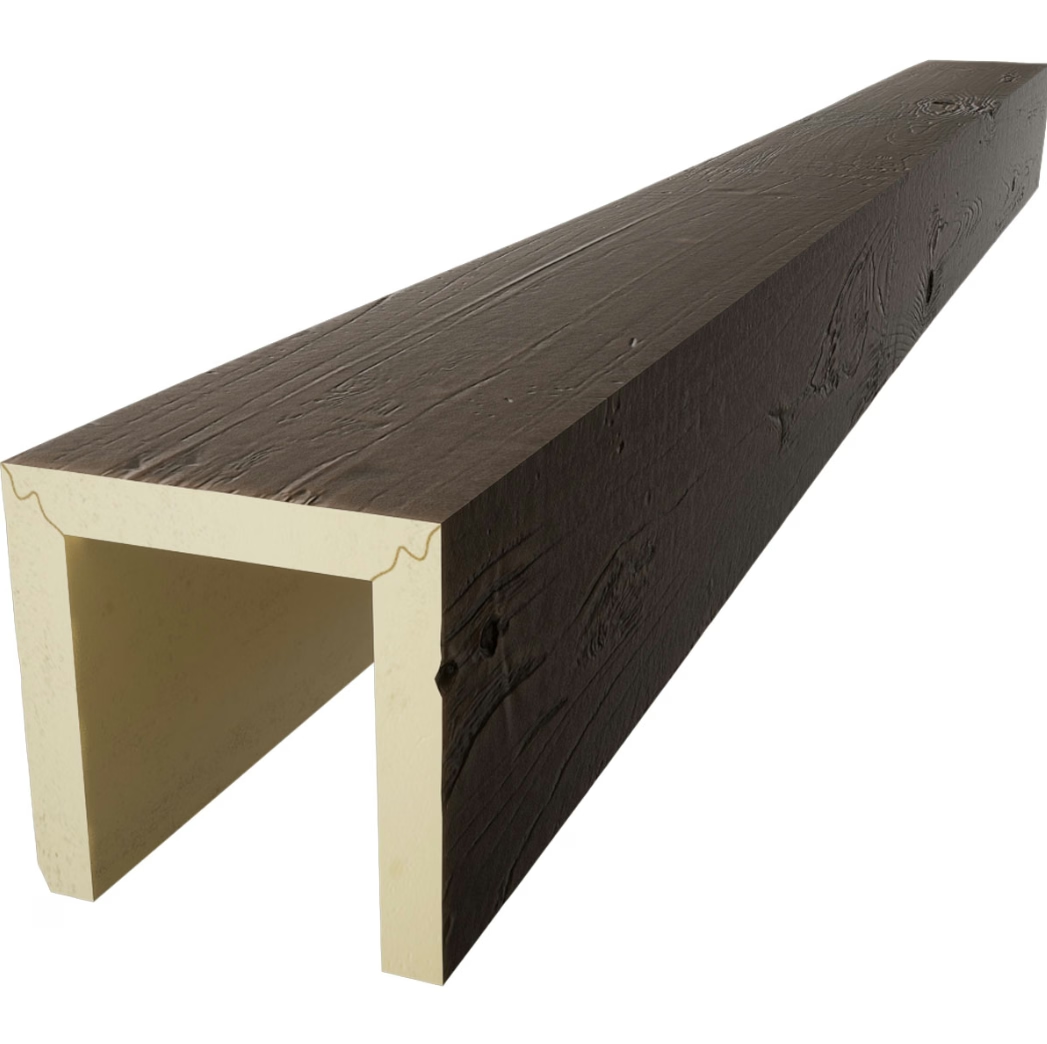
Profile selection for 4-foot beams
4-foot beams typically use smaller profiles than full-size beams:
- 4x6 — smallest profile, for delicate applications and very compact spaces
- 6x6 — versatile profile, the most common 4-foot beam size
- 6x8 — slightly larger profile, for applications needing more visual weight
Larger profiles (8x8 and above) at 4-foot length look proportionally wrong because the beam starts to look like a stub of full-size stock rather than a deliberately scaled element.
Weight considerations
4-foot beam weights by profile:
| Profile | Approximate Weight |
|---|---|
| 4x6 | 4 to 6 pounds |
| 6x6 | 6 to 9 pounds |
| 6x8 | 8 to 12 pounds |
All 4-foot beams are one-person installations. DIY-friendly.
Finish selection for 4-foot beams
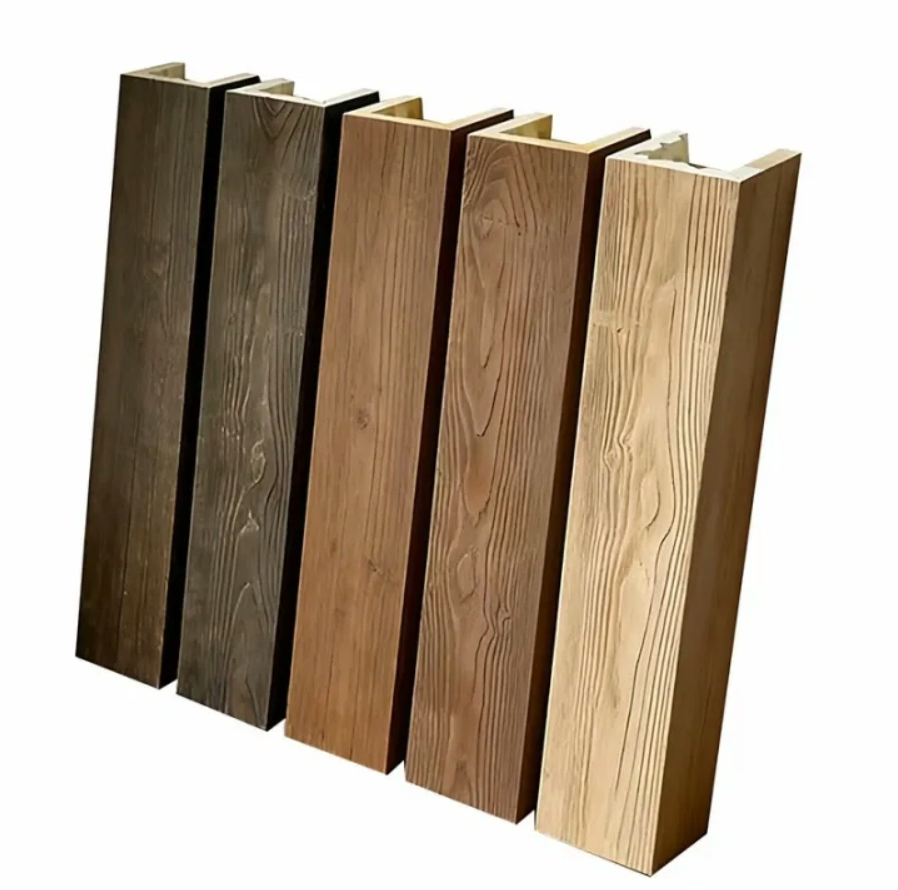
4-foot beams typically use lighter finishes and smoother textures than full-size beams:
- Light oak, natural pine, whitewashed finishes for Scandinavian and modern applications
- Light to medium walnut for transitional applications
- Smooth or light-grain texture rather than heavy hand-hewn
The finish should match or coordinate with the room's other wood elements. A mini beam with a different finish than the surrounding millwork or furniture looks like an afterthought.
Mounting 4-foot beams
4-foot beam installation is straightforward:
- One-person installation (lightest beam under 5 pounds)
- Construction adhesive in continuous bead on mounting surface
- Mechanical fasteners optional for very small beams; recommended for heavier 6x8 profiles
- Cure time: standard 24 to 48 hours before loading
For mantel applications, concealed cleats or decorative brackets provide both mounting support and design detail.
Common 4-foot beam projects
Powder room upgrade
A 4-foot beam mounted above the powder room mirror or sink adds architectural detail to a space that usually lacks it. Pair with a coordinated mirror frame and vanity cabinet finish.
Small bathroom ceiling detail
A single 4-foot beam at the ceiling center, perpendicular to the room's long axis, breaks up the flat ceiling plane. Use moisture-resistant finishes and proper ventilation.
Kitchen hood accent
Two 4-foot beam sections flanking a range hood create a deliberate architectural frame. Coordinate with cabinet finish and counter material.
Bookshelf or display accent
4-foot beam sections mounted above built-in bookshelves, display cabinets, or entertainment centers. Provides visual weight above the millwork.
Faux mantel above electric fireplace
A 4-foot beam serves as the mantel above an electric fireplace insert. Provides shelf surface and architectural detail without the cost of a built-in mantel.
Ceiling fan beam
Replace a ceiling fan with a 4-foot beam and integrated pendant fixture. Creates a deliberate focal point with cleaner aesthetic.
Where 4-foot beams don't work
Mini beams aren't appropriate for primary ceiling applications:
Main ceiling feature in a regular room — a single 4-foot beam in a 12x14 bedroom looks like a mistake
Specified at full-size profiles — the proportions look wrong at short lengths
Combined with heavy texture — deep hand-hewn looks forced on a small beam
Mixed with full-size beams at the same profile — proportions clash unless carefully coordinated
For primary ceiling applications, use full-size beams. 4-foot beams complement, they don't substitute.
Trade and sourcing notes
For distributors and contractors:
- 4-foot mini beams are typically stocked as standard SKUs at most manufacturers
- Often sold in bundles of 4 to 10 pieces for accent applications
- Lead time: 5 to 10 days from Asian factories; 2 to 4 days from US/EU warehouses
- Per-piece pricing is higher per linear foot than longer stock (setup costs spread over less material)
- Common SKUs: 4-foot at 4x6, 6x6, and 6x8 profiles in standard finishes
For project planning, 4-foot beams are often specified alongside full-size beams as accent and detail elements. Coordinated ordering ensures finish matching.
A practical rule
4-foot mini PU faux wood beams are the right call for accent details and small space applications where 2-foot beams are too small and full-size beams are too much. The 4-foot length handles mantel-length applications, compact room accents, and detail work. Specify 4-foot when the application calls for slightly more presence than a 2-foot beam provides; use full-size beams for primary ceiling features.
Technical References
ASTM standards cited in every specification
Test Data
Lab results from internal testing program
Updated 2026
Reviewed against current product specs