A decade ago, sustainability language in the architecture world revolved around energy performance and water conservation. Those remain important, but the conversation has matured. Today, materials selection carries nearly equal weight in determining whether a project earns its targeted certification. Architects specifying decorative beams in commercial projects increasingly turn to polyurethane because the material checks multiple certification criteria simultaneously.
Modern global architecture operates on a different scale from residential design. Projects span continents, involve international supply chains, and pursue certifications that signal environmental commitment to global tenants and investors. Polyurethane beams support those ambitions in ways that traditional timber beams struggle to match. The lightweight profile reduces transportation emissions. The certified low-emission formulations support indoor air quality credits. The long service life reduces lifecycle impact. Each advantage contributes to specific certification points when documented properly.

The Changing Standards of Global Architecture
Sustainability in global architecture is no longer a niche concern. Major commercial developers, hospitality brands, and corporate tenants now require third-party certification as a baseline expectation. The result is a market where buildings without meaningful sustainability credentials struggle to attract premium tenants and command competitive rents.
LEED and the Materials Credits
The LEED rating system, operated by the U.S. Green Building Council, awards points across multiple categories including Materials and Resources, Indoor Environmental Quality, and Innovation. Polyurethane beams contribute to points in several categories when specified thoughtfully.
Materials credits for low-emission products, regional sourcing, and certified manufacturers all align with polyurethane beam specifications. Indoor Environmental Quality credits reward materials with low volatile organic compound emissions, which quality polyurethane products satisfy. Innovation credits can be earned by specifying materials with documented Environmental Product Declarations.
The specific point values depend on the LEED version, the project type, and the documentation quality. A well-prepared submittal package can often claim five to ten LEED points attributable to beam selection alone.

BREEAM and International Frameworks
BREEAM, the Building Research Establishment Environmental Assessment Method from the United Kingdom, evaluates sustainability across similar categories with different emphasis weighting. The framework is widely used in European markets and increasingly in Asian markets.
Polyurethane beams contribute to BREEAM credits for materials efficiency, lifecycle impact reduction, and indoor air quality. Regional sourcing in European markets often favors European polyurethane manufacturers, which can support additional credits for short supply chains.
WELL Building Standard
The WELL Building Standard focuses specifically on human health and wellness in buildings. Materials contribute to WELL features related to air quality, thermal comfort, and acoustic performance.
Polyurethane beams with documented low-emission formulations support WELL Air and Thermal Comfort features. Their stable thermal performance also contributes to consistent indoor temperatures when used with appropriate HVAC integration.
Transportation Efficiency Across Global Supply Chains
Architectural projects increasingly source materials globally, which makes transportation efficiency a meaningful sustainability consideration. Polyurethane beams carry an obvious advantage in this category that compounds across long distances.
Weight Comparison in Container Shipping
A standard 40-foot shipping container can hold approximately 25 to 30 polyurethane beams at typical residential dimensions. The same container holds only 8 to 12 comparable timber beams because of weight restrictions. That two-to-three-times density advantage means the same shipping capacity carries more decoration when polyurethane beams are specified.
The fuel consumption per beam-mile is proportionally lower for polyurethane. Across transoceanic shipments from manufacturing hubs in Asia or Europe to North American destinations, the transportation emissions reduction can amount to several kilograms of CO2 per beam.
Air Freight and Emergency Replacement
Projects with tight timelines sometimes require air freight for replacement or supplemental materials. Air freight rates are weight-based, which makes polyurethane beams dramatically more economical to ship by air when needed. The same weight advantage translates into lower air freight emissions per beam.
For emergency replacements in operating buildings, this advantage becomes a practical rather than just sustainability benefit. Projects can ship small quantities to address damage without the enormous cost premium that timber shipments would carry.
Regional Manufacturing Strategies
Polyurethane beam manufacturers operate in most major world markets. North American, European, Middle Eastern, and Asian production capacity exists for projects that want to source regionally. The regional manufacturing map continues to expand as demand grows.
Specifying regional polyurethane production supports sustainability goals in multiple ways beyond transportation. It supports local manufacturing employment, reduces dependency on distant supply chains, and simplifies quality control through shorter supplier relationships.
Indoor Air Quality Performance
Global commercial projects now require careful attention to indoor air quality. Building tenants, especially in healthcare and education sectors, expect documented low-emission materials throughout occupied spaces.
Greenguard and Similar Certifications
The Greenguard certification program tests products for volatile organic compound emissions and grants certification to products that meet stringent thresholds. Multiple polyurethane beam manufacturers carry Greenguard certification for their products, with emissions far below the certification thresholds.
Other similar programs operate in different markets. The German Blue Angel, the Finnish M1 classification, and various national indoor air quality standards all provide comparable assurances. Specifiers should match the certification program to the project requirements rather than defaulting to assumptions.
Off-Gassing Comparisons to Real Timber
Quality polyurethane beams produce very low off-gassing after manufacture. The factory finishes are fully cured before shipment, and the closed-cell polymer structure does not release significant quantities of volatile compounds during service life.
Timber beams can also perform well on indoor air quality when sourced and finished appropriately. But the variation in timber sources, finish materials, and preservative treatments creates more uncertainty. Specifiers committed to documented low-emission materials often find polyurethane beams easier to certify than timber alternatives.
Healthcare and Education Applications
Hospitals, clinics, schools, and daycare facilities demand the strictest indoor air quality standards. Materials specified for these projects must demonstrate low emissions, no allergenic content, and no chemical treatments that could compromise vulnerable occupants.
Polyurethane beams with appropriate certifications serve these applications well. The combination of low emissions, no required preservatives, and easy cleanability addresses the primary concerns of healthcare and education specifiers.
Lifecycle Performance in Commercial Applications
Commercial projects typically plan for longer service lives than residential projects. The lifecycle performance of polyurethane beams supports those longer planning horizons without requiring the maintenance cycles that other materials demand.
Service Life in Operating Buildings
Polyurethane beams installed in commercial interiors routinely last 25 to 30 years without significant appearance change. The factory finish survives the cleaning regimens that commercial buildings require. The polymer structure resists the wear patterns that high-traffic environments produce.
Timber beams in commercial settings often require refinishing on 10-year cycles to maintain appearance standards. The cumulative cost, disruption, and material consumption of those refinishing events reduces the lifecycle advantage of timber over time.
Tenant Improvement Adaptability
Commercial buildings undergo frequent tenant improvements as different occupants configure and reconfigure their spaces. Materials that adapt to those changes without requiring replacement deliver better lifecycle value.
Polyurethane beams can be removed, stored, and reinstalled in new configurations. They can be refinished with minor touch-up work between tenants. They tolerate being relocated without structural damage. Timber beams are heavier, more difficult to handle, and more prone to damage during relocation.
Maintenance Resource Requirements
Building maintenance teams spend measurable time on beam maintenance activities. Polyurethane beams reduce that time commitment to occasional dusting, freeing maintenance staff for higher-value work. Over decades, the labor savings become substantial.
The maintenance reduction also reduces the cleaning chemicals, applicators, and disposal materials that would otherwise enter the supply chain. Those reductions show up in lifecycle assessments and certification documentation.
Acoustic Considerations in Large Spaces
Large architectural spaces often present acoustic challenges that material selection can address or exacerbate. Polyurethane beams contribute modestly to acoustic performance when properly integrated.
Sound Diffusion Properties
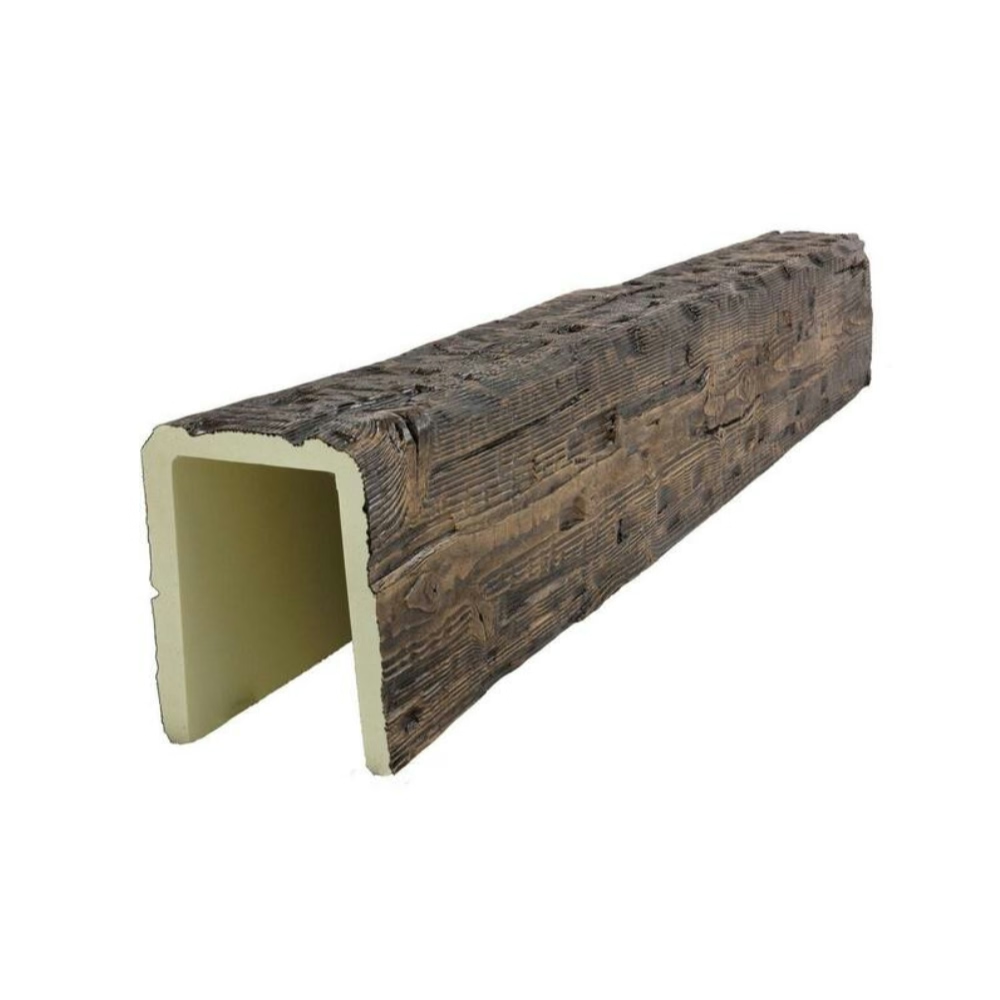
Beam surfaces, especially deeply textured profiles, scatter sound waves in ways that reduce echo and reverberation. Polyurethane beams with hand-hewn or rough-sawn textures perform similarly to timber beams of comparable texture.
The acoustic benefit increases with beam density, beam profile depth, and the number of beams in the space. Open-plan commercial spaces with multiple polyurethane beams often achieve noticeable acoustic improvement without requiring additional acoustic treatment.
Integration With Acoustic Ceiling Systems
Polyurethane beams work alongside acoustic ceiling tiles, baffles, and sound-absorbing panels to create comprehensive acoustic environments. The beams themselves contribute to the visual identity of the space while the acoustic components handle the technical requirements.
Coordinating the beam layout with the acoustic system layout early in design prevents the kind of conflicts that arise when ceiling elements compete for the same space. Architects who specify both beams and acoustic treatments should request integrated shop drawings before installation begins.
Limits of Polyurethane Acoustic Performance
Polyurethane beams do not provide significant sound absorption. They diffuse sound rather than absorbing it. Spaces requiring strong sound absorption, such as recording studios or large lecture halls, need dedicated acoustic treatment in addition to or instead of decorative beams.
Specifiers should avoid claiming acoustic absorption performance for polyurethane beams unless they have specific test data to support such claims. The realistic expectation is diffusion and visual richness, not absorption.
Aesthetic Integration in Diverse Architectural Styles
Modern global architecture spans an enormous range of styles. Polyurethane beams adapt to most of them because the manufacturer catalogs include profiles suitable for almost every aesthetic tradition.
Timeless Traditions That Translate Well
Tuscan villa, French country, English manor, Spanish colonial, modern farmhouse. Each of these traditions has a recognizable beam style that polyurethane manufacturers produce as standard catalog items. Architects can specify familiar aesthetics without ordering custom tooling.
The replication quality has improved dramatically with modern mold technology. The grain detail, the weathering characteristics, and the finish depth approach authentic timber appearance even at conversational distance.
Contemporary and Minimalist Applications
Modern architecture often calls for cleaner beam profiles than traditional styles provide. Smooth box beams, rectangular profiles, simple geometric forms. Polyurethane manufacturers offer these profiles in the same quality tier as their traditional offerings.
The minimalist profiles particularly suit commercial applications where the goal is subtle architectural enhancement rather than dramatic aesthetic statement. A smooth walnut-finish polyurethane beam across a hotel lobby ceiling provides warmth without competing with other design elements.
Custom Profiles for Signature Projects
Signature architectural projects often require beam profiles that no standard catalog offers. Custom mold manufacturing can produce one-off profiles for projects of sufficient scale. The cost premium for custom tooling reduces as project size increases.
For the largest projects, custom polyurethane profiles can be specified at costs comparable to or below equivalent custom timber work. The lead time also tends to be shorter because polyurethane mold production is faster than custom timber sourcing and milling.
Cost Considerations for Global Projects
Cost analysis for global architectural projects must account for material cost, transportation cost, installation cost, and lifecycle cost. Polyurethane beams perform favorably across all four categories for most projects.
Material Cost Across Markets
Polyurethane beam prices vary by region, profile, and finish specification. North American and European markets tend to have higher prices than Asian markets because of labor and overhead cost differences. Custom finishes and oversized profiles carry premiums in all markets.
Bulk procurement at the project level often unlocks pricing tiers that single-order purchases cannot access. Developers with active construction pipelines can negotiate framework agreements with polyurethane manufacturers that produce consistent pricing across multiple projects.
Transportation Cost Considerations
The lighter weight of polyurethane beams reduces shipping cost across all modes. Ocean freight savings are particularly significant for projects sourcing from distant manufacturing hubs. Regional sourcing for projects in major markets often eliminates ocean freight entirely.
Customs duties vary by destination country and by the specific polyurethane product classification. Architects and procurement teams should verify duty rates before committing to international sourcing. Some markets have favorable duty treatment for building materials that support domestic construction activity.
Installation Cost Economics
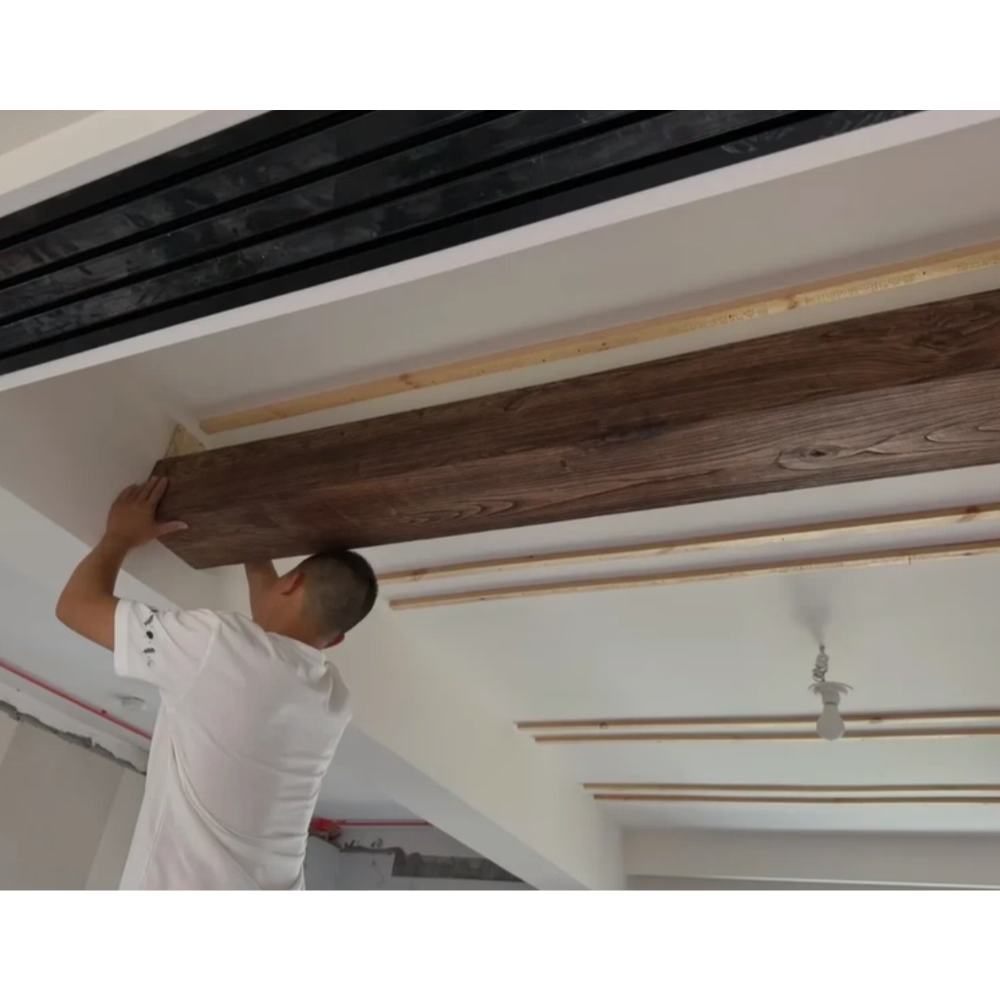
Polyurethane beams install faster than equivalent timber beams. The combination of lighter weight, manufactured consistency, and pre-finished surface reduces installation labor cost substantially. For projects with thousands of linear feet of beam, the labor savings become significant.
The labor reduction also reduces the skilled tradesperson demand on projects that already face labor shortages. Polyurethane beams can be installed by general carpentry crews without requiring specialized finishing expertise, which simplifies scheduling and reduces dependency on scarce trades.
Bringing It All Together for Modern Global Projects
Modern global architecture operates at the intersection of design ambition, sustainability requirements, cost discipline, and certification targets. Polyurethane beams serve projects that need to satisfy all four considerations simultaneously without compromising any single one.
The material is not a perfect solution. It carries petrochemical feedstock origins, end-of-life disposal challenges, and aesthetic limitations that some projects legitimately object to. But for projects that prioritize demonstrated sustainability certifications, lifecycle performance, transportation efficiency, and indoor air quality, polyurethane beams deliver measurable advantages over traditional timber alternatives.
Architects and developers who understand both the genuine advantages and the legitimate concerns make better material choices. That nuanced understanding is what the global architecture industry increasingly demands from its specification decisions. The result is buildings that perform better, last longer, and earn the sustainability credentials that global markets increasingly require.
Technical References
ASTM standards cited in every specification
Test Data
Lab results from internal testing program
Updated 2026
Reviewed against current product specs


