Green building is no longer a niche category reserved for showcase projects. It has become a baseline expectation for new construction across residential, commercial, and institutional sectors. Developers who once treated sustainability as optional now plan their projects around certification targets from the earliest design stages. The shift has reshaped the materials supply chain because every material in a green building project must demonstrate alignment with the certification framework.
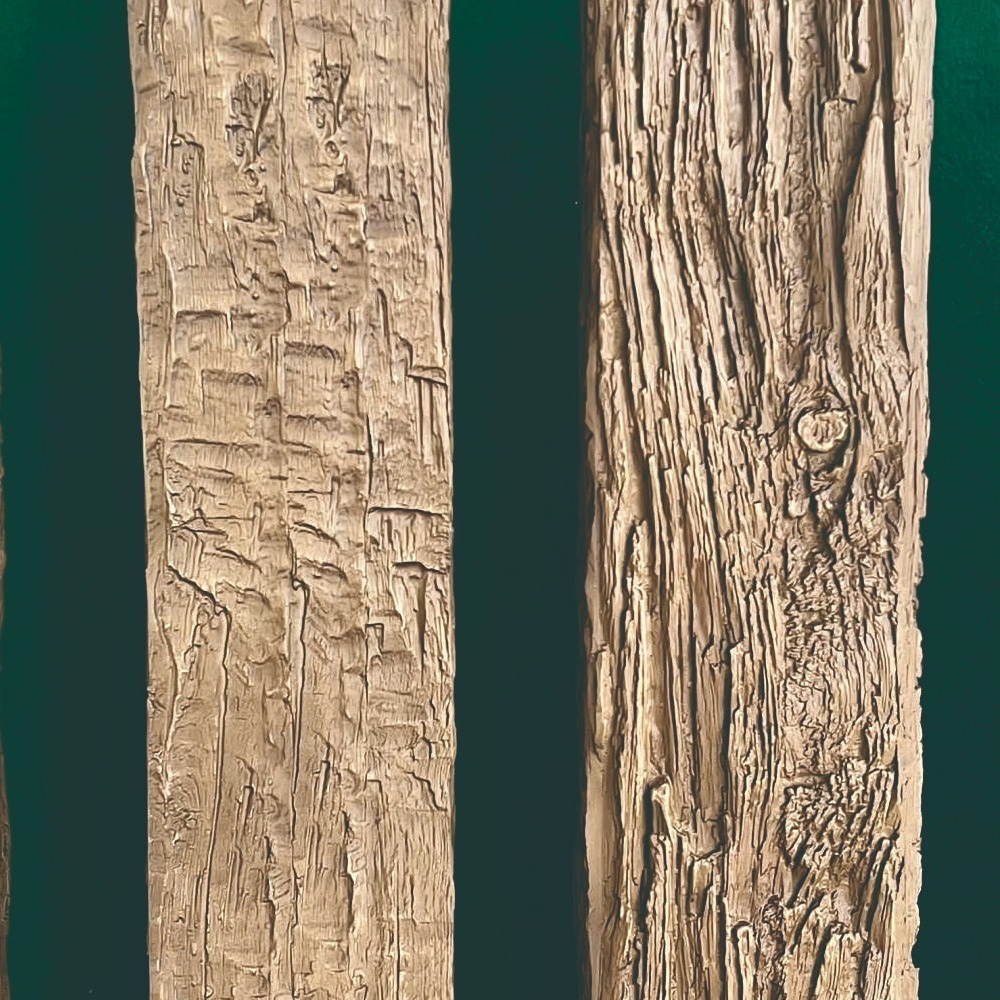
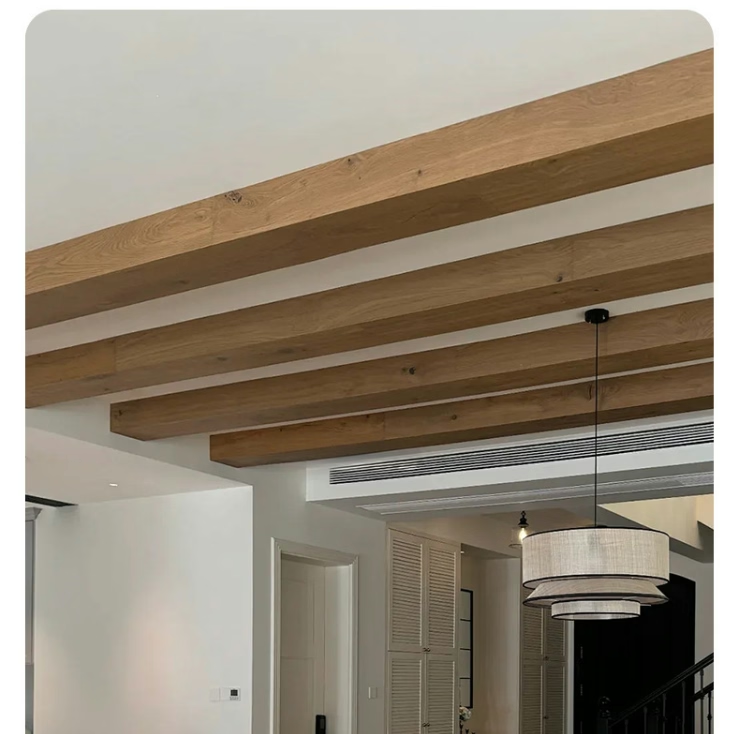
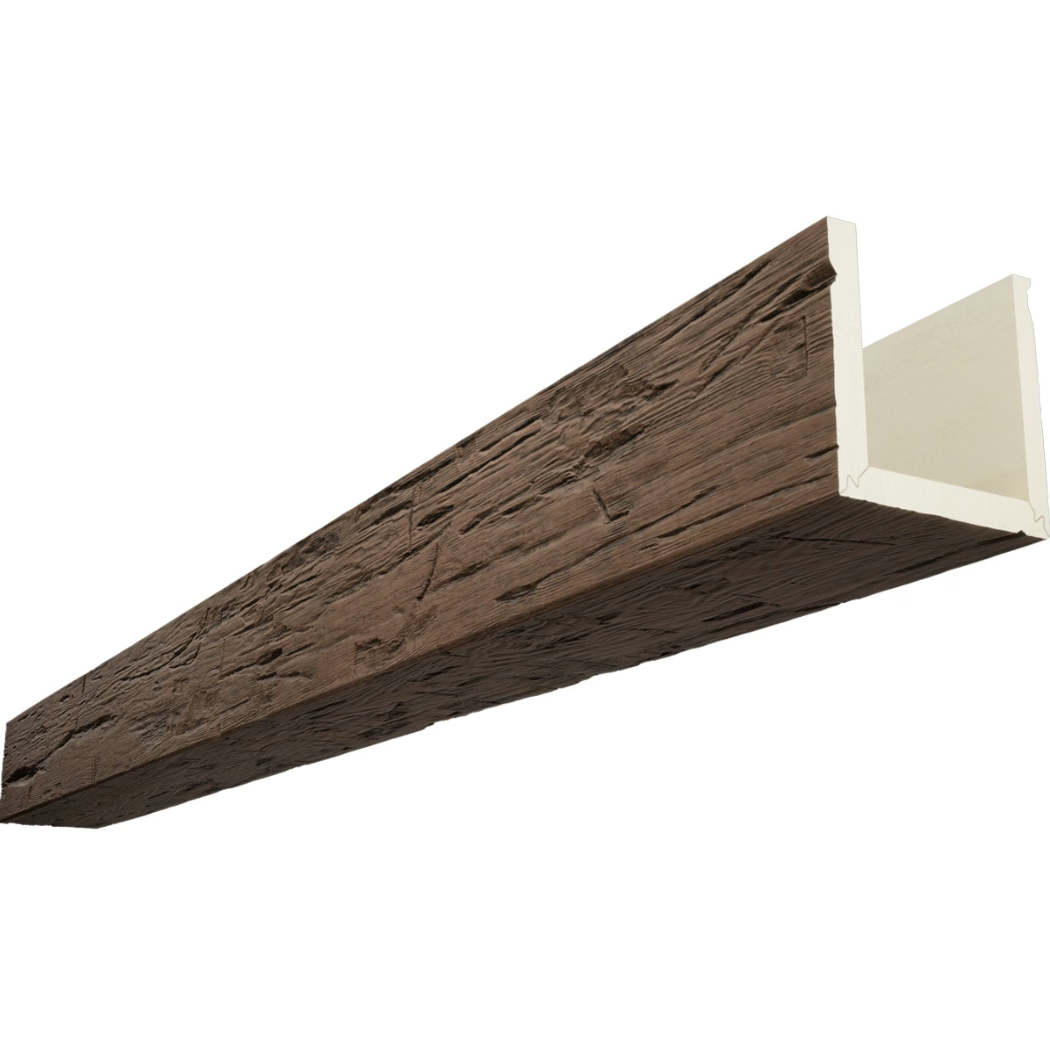
Polyurethane faux beams have carved out a specific role in green building projects. They are not the most prominent material in any project, but they appear in most decorative interior applications and contribute to multiple certification categories. The cumulative contribution matters in projects pushing toward Gold, Platinum, or equivalent certification tiers where every point counts.

The Major Green Building Frameworks
Several competing frameworks define what counts as green building. Each has its own version, point structure, and certification thresholds. The major frameworks share common categories but differ in weighting and verification rigor.
LEED in North America
Leadership in Energy and Environmental Design, the dominant North American framework, evaluates projects across credit categories including Sustainable Sites, Water Efficiency, Energy and Atmosphere, Materials and Resources, Indoor Environmental Quality, and Innovation in Design.
Polyurethane beams contribute most directly to Materials and Resources credits and Indoor Environmental Quality credits. The specific contribution depends on documentation quality, regional sourcing, and product certifications. A well-documented polyurethane beam specification can contribute four to eight LEED points across the relevant categories.
BREEAM in Europe
The Building Research Establishment Environmental Assessment Method evaluates similar categories with different priorities. Health and Wellbeing, Energy, Materials, and Innovation credits all potentially receive contributions from documented polyurethane beam specifications.
European projects often benefit from regional polyurethane manufacturers who provide shorter supply chains and locally relevant documentation. The BREEAM framework rewards regional sourcing more explicitly than LEED, which sometimes makes European polyurethane sources more advantageous than imports.
WELL Building Standard
WELL focuses specifically on occupant health and wellbeing rather than environmental impact broadly. The framework evaluates air, water, nourishment, light, fitness, comfort, and mind categories.
Polyurethane beams with documented low emissions and material transparency contribute to WELL Air and WELL Materials features. For projects targeting WELL certification alongside LEED or BREEAM, polyurethane beams support both frameworks simultaneously.
Green Star and Other Regional Systems
Australia operates the Green Star framework. Canada has its own green building standards. Japan, Singapore, and other markets have developed region-specific frameworks that respond to local climate and market conditions.
Polyurethane beam specifications need adjustment for each framework, but the fundamental contributions remain similar. Material transparency, low emissions, and sustainable sourcing support most frameworks that evaluate those criteria.
How Polyurethane Beams Earn Specific Credits
The credits that polyurethane beams contribute to are specific and quantified. Understanding the credit mechanics helps specifiers optimize their beam selections for maximum contribution.
Building Product Disclosure Credits
LEED v4.1 awards credits for products that disclose environmental impacts through Environmental Product Declarations, health impacts through Health Product Declarations, or sourcing through certifications from recognized organizations.
Polyurethane beams with published EPDs and HPDs contribute directly to these credits. The credit value depends on the number of qualifying products in the project. Specifying polyurethane beams with complete documentation alongside other documented products maximizes the project's credit earnings.
Low-Emitting Materials Credits
Indoor air quality credits reward materials that emit low levels of volatile organic compounds. Products certified by Greenguard, Indoor Air Comfort, or similar programs qualify.
Most polyurethane beams from quality manufacturers meet low-emitting material thresholds. The certification verifies compliance and supports credit claims. Products without certification may still qualify but require additional documentation and testing to demonstrate compliance.
Regional Sourcing Credits
Regional sourcing credits reward materials manufactured within a defined radius of the project site. The radius varies by framework but typically falls between 500 and 1,000 miles.
Polyurethane beam manufacturing exists in most major markets. Specifying regional manufacturers supports regional sourcing credits while also reducing transportation emissions. The dual benefit makes regional sourcing attractive for projects targeting both certification and carbon reduction goals.
Innovation Credits
Innovation credits reward practices and products that exceed standard credit requirements or that demonstrate innovative approaches to sustainability. Polyurethane beam specifications can support innovation credit claims when paired with creative documentation approaches.
Examples include comprehensive lifecycle assessments, novel bio-based formulations, or enhanced transparency reporting. The innovation credit path requires documentation creativity but can capture additional points beyond the standard credit categories.
Practical Specifying Strategies
Specifying polyurethane beams for green building projects requires strategic thinking about which products, which manufacturers, and which documentation approaches maximize certification contribution.
Selecting Manufacturers With Robust Documentation
The first strategic decision involves manufacturer selection. Some polyurethane beam manufacturers produce extensive documentation including EPDs, HPDs, Declare labels, Greenguard certifications, and country-of-origin verification. Others produce minimal documentation.
Choosing manufacturers with robust documentation compounds across all subsequent decisions. Each documentation type that the manufacturer provides contributes to multiple credit categories. The same beam specified from a well-documented manufacturer earns more credit than the same beam from a manufacturer with minimal documentation.
Pairing Beams With Complementary Products
Polyurethane beams rarely contribute to certification credit categories alone. They work best alongside other documented products that accumulate credit contributions across categories.
Specify polyurethane beams alongside documented flooring, paint, adhesives, and other finish materials. The combination of documented products throughout the project creates the documentation density that maximizes credit earnings. Beams that meet certification thresholds contribute nothing without complementary products that also meet thresholds.
Documenting Installation Practices
LEED and similar frameworks award some credits for installation practices rather than material composition alone. Construction waste management, low-emitting installation adhesives, and recycling of installation scraps all contribute.
The installation documentation strategy should align with the material documentation strategy. A project that documents both beam specifications and installation practices captures credit value from both dimensions, multiplying the certification contribution.
Engaging Certification Consultants Early
Green building certification involves complex credit calculations that benefit from professional expertise. Engaging a LEED AP, BREEAM AP, or equivalent credentialed consultant early in the design process maximizes credit earnings.
The consultant identifies credit opportunities that material specifications alone may not capture. They review submittal packages for documentation gaps, suggest alternative materials where credit thresholds are not met, and prepare the application documentation that supports final certification.
Case Studies Across Building Types
Polyurethane beam contributions to green building vary across building types. Understanding the variation helps specifiers optimize choices for specific project categories.
Single-Family Residential
Residential projects pursuing LEED for Homes, ENERGY STAR, or net-zero certification commonly include polyurethane beams in living areas, kitchens, and primary bedrooms. The beams contribute to material credits and indoor air quality credits.
For high-end residential projects, the cost premium for documented polyurethane products tends to be modest. The certification contribution justifies the modest premium by supporting broader project certification targets that increase property value.
Multifamily Residential
Multifamily projects work at scales where wholesale polyurethane procurement becomes practical. The documentation depth that suits large projects also serves smaller multifamily projects when the same manufacturer serves both.
Multifamily certification often focuses on energy performance and water efficiency, with materials categories providing supplementary credit. Polyurethane beams contribute enough to matter but rarely drive certification tier decisions in multifamily projects.
Hospitality and Hotels
Hotel projects pursue green certification aggressively because sustainability credentials attract guests willing to pay premium rates. Polyurethane beams appear in lobby installations, restaurant spaces, conference rooms, and select guest room applications.
Hotel projects often specify higher-quality polyurethane products because the visual richness supports the brand positioning. The higher product quality usually comes with stronger documentation, which compounds the certification contribution.
Office and Commercial
Office buildings pursuing LEED Platinum or BREEAM Outstanding include polyurethane beams as part of sophisticated material specifications. The specifications often extend to beam finishes that complement other materials throughout the interior.
Office projects usually involve LEED AP consultants from design phase through construction. The consultants coordinate beam specifications with broader material documentation to maximize credit earnings across all categories.
Healthcare and Education
Healthcare and education projects emphasize indoor air quality above other sustainability considerations. Polyurethane beams with strong low-emission certifications support the strictest indoor air quality standards.
These projects also face budget pressures that limit premium material selection. The cost-effectiveness of quality polyurethane beams compared to alternatives supports both certification goals and budget discipline.
Retail and Restaurants
Retail and restaurant projects apply polyurethane beams in signature installations and feature areas. The aesthetic contribution often matters more than the documentation contribution, though major brands specify well-documented beams to align with corporate sustainability commitments.
Retail projects at scale, particularly national chains, can leverage wholesale procurement to access higher-tier documentation without paying premium pricing. The scale advantage translates into better documentation per dollar spent.
Common Pitfalls in Green Building Beam Specifications
Several pitfalls catch specifiers who treat polyurethane beams as routine materials rather than certification-grade products. Avoiding these pitfalls protects the certification contribution.
Inadequate Documentation Early in Design
Documentation requirements vary by certification framework, and the documentation that supports one framework may not support another. Specifying products without verifying documentation compatibility with the target framework creates problems late in the design process.
Early verification of documentation prevents late-stage substitutions that disrupt the design and create cost overruns. The verification step takes minutes and saves weeks of project disruption.
Missing Region of Manufacture for Sourcing Credits
Regional sourcing credits require verification of manufacturing location. Polyurethane beams manufactured in different countries than the project site may not qualify for these credits even if the manufacturer provides other documentation.
The region of manufacture sometimes differs from the region of distribution. Buyers should request manufacturing location documentation rather than assuming that domestic distribution implies domestic manufacturing.
Inconsistent Specifications Across Product Categories
Specifying polyurethane beams with full documentation while selecting other products with minimal documentation dilutes the certification contribution. Mixed documentation depth across materials prevents the project from meeting credit thresholds that require multiple qualifying products.
The consistent documentation strategy requires review of all product categories, not just beams. Working with a knowledgeable consultant who reviews the full material palette prevents consistency gaps.
Overlooking Installation Documentation
Credits for construction practices require separate documentation from material specifications. Failing to document installation practices means missing credits that materials alone cannot provide.
The installation documentation includes waste management plans, low-emitting adhesive specifications, recycling records, and crew training documentation. Each item supports specific credit categories that complement the material contributions.
Last-Minute Substitutions
Substituting beam products late in the construction process often introduces products without proper certification documentation. The substitution may appear cost-effective in the moment but creates certification gaps that prevent credit claims.
Substitutions should always include verification that the substitute product carries equivalent or superior documentation. The verification adds minutes to the substitution process and prevents hours of certification rework.
Long-Term Maintenance and Certification Renewal
Some green building certifications require ongoing compliance throughout the operational life of the building. Polyurethane beams contribute to ongoing compliance through their low-maintenance characteristics.
Reduced Maintenance Over Service Life
Polyurethane beams require minimal maintenance throughout their service life. The factory-applied finishes hold their appearance without refinishing. The polymer structure resists wear and damage. The reduced maintenance requirement reduces operational costs while supporting ongoing certification compliance.
Real timber beams in green building projects often require periodic refinishing that involves chemicals, materials, and labor inconsistent with ongoing sustainability standards. Polyurethane beams avoid that ongoing burden.
Operational Performance Documentation
Some certification frameworks require ongoing performance documentation rather than design-stage verification alone. Polyurethane beam performance supports ongoing documentation through their predictable operational characteristics.
Maintenance logs, cleaning records, and condition surveys all contribute to operational documentation. The simplicity of polyurethane beam maintenance makes documentation straightforward. Real timber beam documentation requires more detailed tracking because maintenance needs vary based on actual conditions.
End-of-Service-Life Considerations
Green building projects now consider end-of-service-life impacts during design. Polyurethane beam disposal pathways at end of life affect long-term sustainability assessments.
Manufacturers offering take-back programs for polyurethane beams support end-of-life sustainability claims that some frameworks recognize through specific credits. The take-back programs are not universal, but they are expanding.
Integration With Broader Sustainability Strategies
Polyurethane beams contribute most to green building projects when integrated with broader sustainability strategies rather than treated as standalone material selections.
Energy Performance Integration
Polyurethane beam installations can support energy performance goals through thermal mass effects and reduced HVAC distribution complications. The integration requires coordination between beam specification and HVAC design that some projects achieve and others overlook.
The thermal mass of polyurethane beams is modest compared to concrete or masonry, but the absence of thermal bridging through solid timber framing supports consistent insulation values. The energy performance contribution is small but measurable.
Water Efficiency Integration
Polyurethane beams do not directly affect water efficiency, but their installation practices can. Installation adhesives, cleaning solvents, and surface treatments all involve water considerations that sustainable practice addresses.
Coordinating beam installation with broader water efficiency strategies maximizes the combined sustainability contribution. The combination of material and installation choices often surprises project teams with the cumulative certification impact.
Waste Reduction Integration
Construction waste reduction credits reward projects that minimize landfill contributions during construction. Polyurethane beams contribute to waste reduction because they arrive pre-finished and ready to install without fabrication scraps.
The pre-finished nature eliminates the cut-off and sawdust waste that timber beam installation generates. The waste reduction benefit supports specific credit categories while also reducing project disposal costs.
Conclusion: A Small Material With Significant Certification Value
Polyurethane faux beams occupy a small place in green building material palettes, but they contribute to multiple certification categories with documentation well beyond what their modest scale suggests. The cumulative certification contribution frequently determines whether a project reaches the next tier of certification or falls one point short.
For projects pushing toward ambitious sustainability targets, polyurethane beam specifications deserve the same careful attention as major structural and mechanical systems. The documentation depth, regional sourcing strategies, and installation practice coordination collectively produce certification contributions that elevate the entire project.
The future of green building will likely bring more stringent documentation requirements, expanded credit categories, and increased emphasis on operational performance. Polyurethane beams are well positioned to meet those future requirements because the underlying material characteristics support the documentation depth that emerging frameworks will demand.
Technical References
ASTM standards cited in every specification
Test Data
Lab results from internal testing program
Updated 2026
Reviewed against current product specs