Elegant Vintage French Country Style Faux Wood Ceiling Beams
There's a particular quality of light in old Provence farmhouses. The kind that slants through uneven shutters and lands on a ceiling of rough-sawn beams that have been collecting dust and stories for two hundred years. That look is what people mean when they ask for "French country" in a new home.
Genuine two-hundred-year-old beams aren't an option for most renovation projects. But faux wood beams have gotten good enough that the visual goal is completely reachable. The trick is understanding what makes the style feel authentic instead of costume-y.

What Defines the French Country Ceiling
French country style gets misused as a catch-all for anything rustic and European. The actual tradition is more specific. It comes from rural homes in Provence, the Dordogne, and the Loire valley, where available materials shaped the architecture.
Reclaimed Local Timber
Original French country beams were whatever grew nearby. In Provence that meant chestnut and oak, often air-dried in the open for years before being installed. The beams show saw marks from pit-sawing, knots that never got trimmed out, and surfaces that have been weathered by centuries of wood smoke from the kitchen fire below.
The color is rarely uniform. Sun-bleached patches give way to darker areas where soot and oil have soaked in. Hand-hewn facets catch light at slightly different angles than the surfaces next to them.
Honest Construction
French country buildings rarely hid their structure. The beams were the ceiling. If the homeowner wanted more finish, they'd whitewash between the beams and leave the timber exposed. If the homeowner was poorer, the beams got a wash of lime paint and that was the entire decorative treatment.
This practicality is what gives the style its charm. Nothing is overworked. Everything looks like it does its job and happens to be beautiful.
Patina as a Design Element
Newly installed beams in French country style should look like they've been there for generations. That patina is essential. A perfectly uniform beam in a warm oak tone reads as a new construction. A beam with variation across its length, in tone and texture, reads as inherited.
Why Faux Beams Work for This Style
Authentic reclaimed timber is beautiful but comes with significant complications. For most projects, faux wood is the practical choice.
Consistency in Look and Availability
Reclaimed beam suppliers exist, but their inventory is finite. Sourcing enough matching timber for an entire ceiling of French country beams might mean buying from three different salvage yards and hoping the various beams relate to each other.
Faux wood beams come out of molds designed to capture the character of aged timber. Every beam in a production run matches the others. If you need 200 linear feet of beam for a ceiling, you'll get 200 linear feet of beam that look like they came from the same old barn.
Predictable Installation
Reclaimed timber varies in dimension. Some pieces are slightly cupped. Others have irregular ends. Fitting these into a clean ceiling layout takes a skilled carpenter with patience.
Faux beams are dimensionally consistent. They butt together cleanly. They meet walls at predictable angles. The installation crew can work efficiently because every piece behaves the same way.
No Pest or Stability Worries
Old timber occasionally carries old problems. Powderpost beetles, old nail holes, and hidden rot can show up in reclaimed material. Faux beams eliminate these concerns entirely. They won't host insects, won't develop new rot, and won't check or split as they acclimate to indoor humidity.
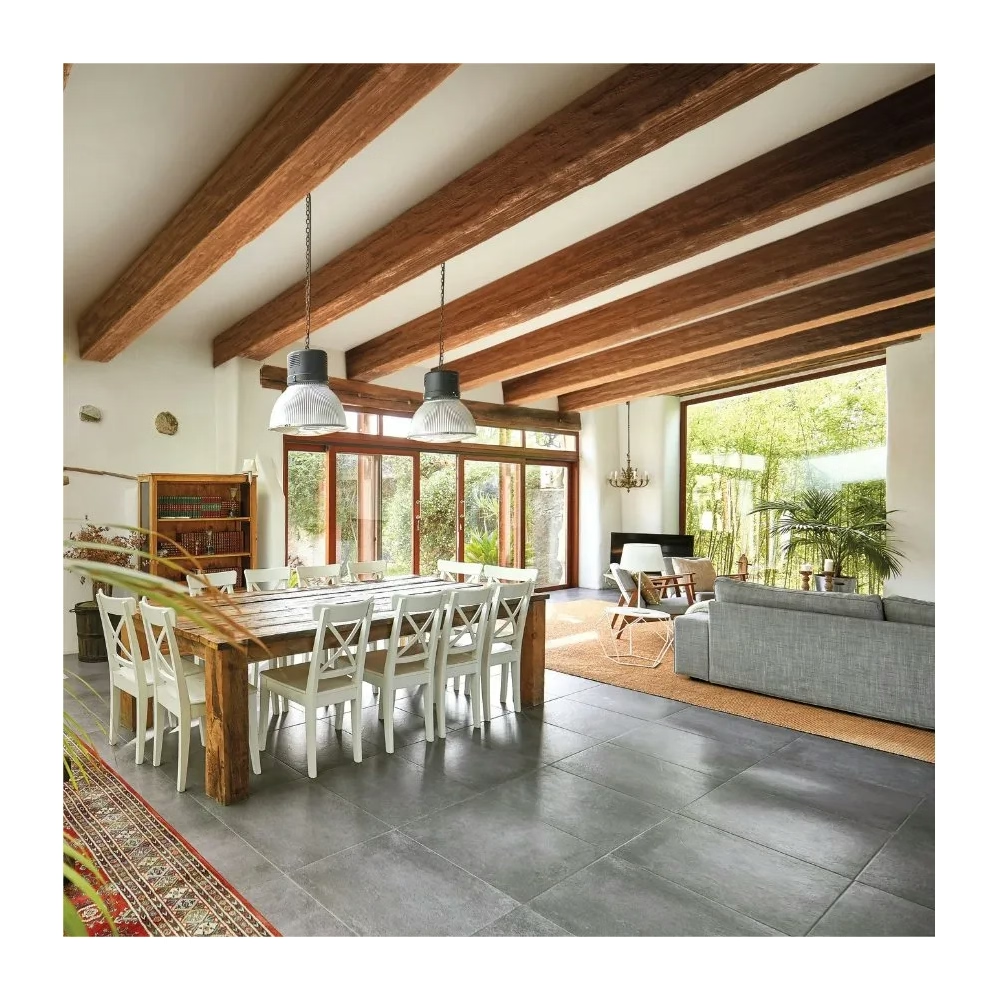
Profiles That Capture the Style
French country beams aren't delicate. They're substantial. The most authentic-looking profiles share a few characteristics.
Substantial Cross-Section
A 6x8 or 8x10 faux beam reads as authentic French country. Smaller profiles feel more like American farmhouse or industrial chic. The chunkier the cross-section, the more the eye reads the beam as a structural element that was always meant to be exposed.
In rooms with nine or ten-foot ceilings, oversized beams create the compression that makes old farmhouses feel cozy. In rooms with taller ceilings, even larger beams preserve the proportional relationship.
Visible Texture Variation
Smooth faux beams work for contemporary styles. French country demands texture. Look for faux beams that include:
- Hand-hewn facets along the sides
- Saw marks visible on the bottom face
- Knots and grain patterns that vary along the length
- Slight irregularities in surface depth
The texture shouldn't be so aggressive that it looks like carved foam. It should suggest the evidence of old tools working the wood.
Softened Edges
Old beams have softened corners. Sharp edges round off after generations of contact with hands, brooms, and the occasional ladder. Faux beams with slightly eased edges feel more authentic than crisp rectangular profiles.
Color and Finish Choices
Color matters more in French country than in most beam styles because the look depends on apparent age rather than apparent newness.
Pale Driftwood Tones
The most popular French country finish is a soft driftwood tone. It suggests years of weathering and gentle cleaning. Undertones lean toward gray rather than orange or red. Avoid anything that reads as fresh lumber; the whole point is that the beam looks like it's been in place longer than the house has been modernized.
Warm Aged Oak
For homes with darker floors or richer wall colors, an aged oak tone works better than driftwood. The beam should still show variation and patina. A uniform golden oak stain reads as 1990s oak trim, not as a two-hundred-year-old Provencal beam.
Lime-Washed Look
Some French country interiors feature beams that have been whitewashed or lime-washed. This treatment softens the timber color toward chalk white while leaving the texture and grain visible. It pairs beautifully with stone walls and worn tile floors.
Faux beams accept lime wash easily. The paint goes on unevenly on purpose, with more coverage on some faces and less on others.
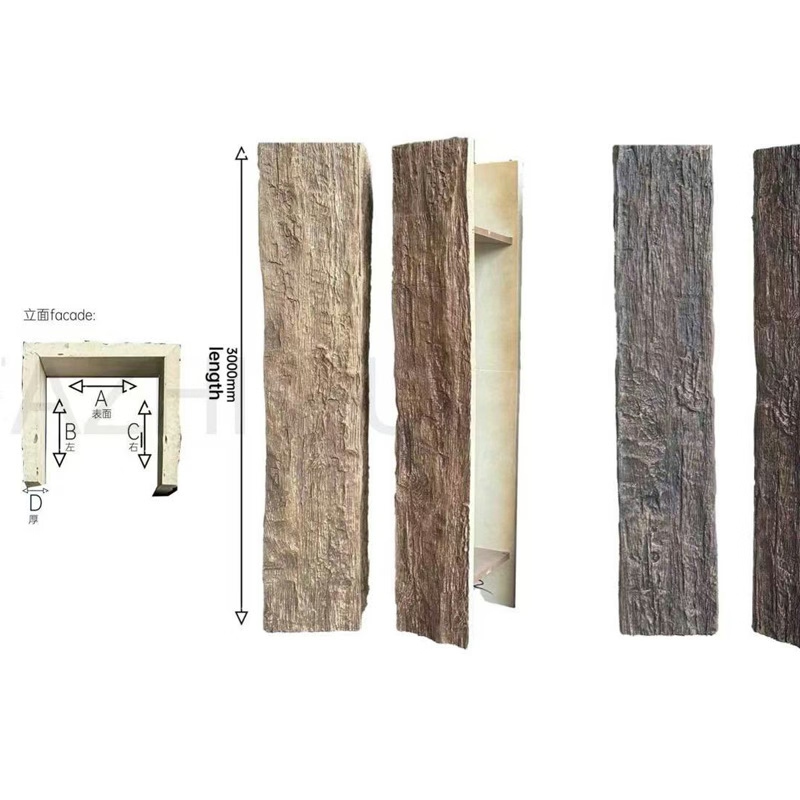
Installation Patterns That Feel Right
The pattern of beams matters as much as the beam profile itself.
Wide Spacing on Plaster or Plank Ceilings
Original French country homes often had ceilings of plaster between widely spaced beams. In modern installations, faux planks between the beams can suggest this effect. The planks should look like aged pine or chestnut, never like new lumber.
Cross Beam Headers at Major Openings
Where two rooms meet through a wide opening, consider a transverse beam that bridges the opening. This reinforces the impression that the structure is honest and exposes the construction logic of the home.
Corbels Where Beams Meet Walls
Carved or molded corbels at the ends of beams suggest that the beams were once load-bearing. They add detail and break up the line where the beam meets the wall.
Honest Advice on Where to Spend
A French country ceiling doesn't need every beam to be top-of-the-line. The aesthetic forgives imperfection. Spend on:
- The right color and finish, since this is what people actually see
- Quality corbels, which become focal points in the design
- One or two feature beams in a dining room or great room with the best available texture
Save on beam sections in less prominent spaces like hallways and closets. They'll be seen less often and from less flattering angles.
Living With the Result
A French country ceiling should look like it has always been there. Within a year of installation, the faux beams should settle into the room. The homeowner's daily routine—cooking, cleaning, opening windows—will add small touches of authentic life. The beams will feel less like a recent installation and more like a feature of the home itself.
That's the goal. When visitors stop noticing the ceiling and start noticing the light, the furniture, and the views, the design has done its job.
Technical References
ASTM standards cited in every specification
Test Data
Lab results from internal testing program
Updated 2026
Reviewed against current product specs


