
The minimalist aesthetic that emerged from Scandinavia and spread through Germany, the Netherlands, and much of Northern Europe in the past decade is more specific than the word "minimal" suggests. It is not empty or cold. It is calibrated, soft, and deeply attentive to material quality. Light plays a central role, with pale surfaces bouncing daylight deeper into rooms. Wood appears, but usually in gentle, low-contrast tones. When faux timber beams enter this kind of interior, they need to read as quiet texture rather than dominant feature.
That requirement has reshaped what European buyers ask for from polyurethane beam suppliers. The dark walnut beams that remain popular in North American rustic designs often look jarring in a Stockholm apartment or a Hamburg townhouse. European specifiers increasingly ask for bleached oak, whitewashed pine, raw maple, and pale ash finishes, often with a soft matte sheen rather than the satin gloss that suited traditional faux wood looks.
What makes a beam feel "European minimalist"
Three qualities tend to define the look. The first is tonal restraint. A beam in this setting should be within a narrow range of the surrounding ceiling or wall color, so the eye reads it as part of the architecture rather than as a separate decorative element. The second is proportion. Minimalist interiors favor thinner, taller beam profiles that emphasize verticality rather than the chunky, low-slung proportions common in rustic settings.
The third is surface quality. Glossy faux finishes read as plastic and artificial under the cool, even light common in northern European homes. A matte or low-sheen surface lets the texture register without reflecting glare. Polyurethane beams in light finishes with subtle hand-rubbed variation handle this aesthetic better than uniform high-gloss replicas.
These three qualities together produce a ceiling where beams feel like quiet architectural elements rather than themed decor. The result is calm, considered, and distinctly European rather than imported from another design vocabulary.
Color families that work
The most consistently requested finishes for this aesthetic fall into a few families. Whitewashed oak takes the warm grain of oak and softens it with a milky overlay, producing a beam that reads as light beige or warm white with gentle wood character visible beneath. Scandinavian interiors favor this finish because it adds texture without competing with surrounding neutrals.
Bleached pine or ash is another popular choice. These are naturally pale woods that the faux beam replicates without the bleaching process. The resulting tone sits between cream and soft grey, sometimes with a hint of green or yellow depending on the wood species. Ash especially has a quiet vertical grain that suits the elongated beam profiles common in minimalist ceilings.
For projects that want a touch more warmth, raw maple or natural birch finishes add just enough honey tone to anchor the room without darkening it. These are particularly common in German and Austrian interiors where the natural material palette leans toward honey and straw tones. Pairing them with white walls and pale textiles produces a soft, layered effect that still reads as minimalist.


Profile and proportion preferences
Where American rustic ceilings often showcase heavy 8x10 or even 10x10 beams, European minimalist projects typically request 4x6, 4x8, or occasionally 5x10 profiles. The thinner profiles read more as architectural detail than as structural showpiece. They suggest the line of a beam without demanding the visual weight of a primary feature.
Length is another consideration. European ceilings in apartments and townhouses are often smaller than their American suburban counterparts. Beams that run across an entire 6-meter ceiling feel substantial; beams that stop short of the wall feel designed. The latter approach, sometimes called "floating" beam placement, has become a hallmark of minimalist interiors, where the beam reads as a discrete object placed against the ceiling rather than a structural member.
For longer rooms, multiple shorter beams placed at consistent intervals can produce a rhythm that emphasizes horizontal flow. For taller ceilings, vertical beam segments can extend from horizontal beams down the wall, creating a subtle framing effect. Both approaches share the goal of giving the eye a clear, calm structure to follow.
How manufacturers replicate pale finishes convincingly
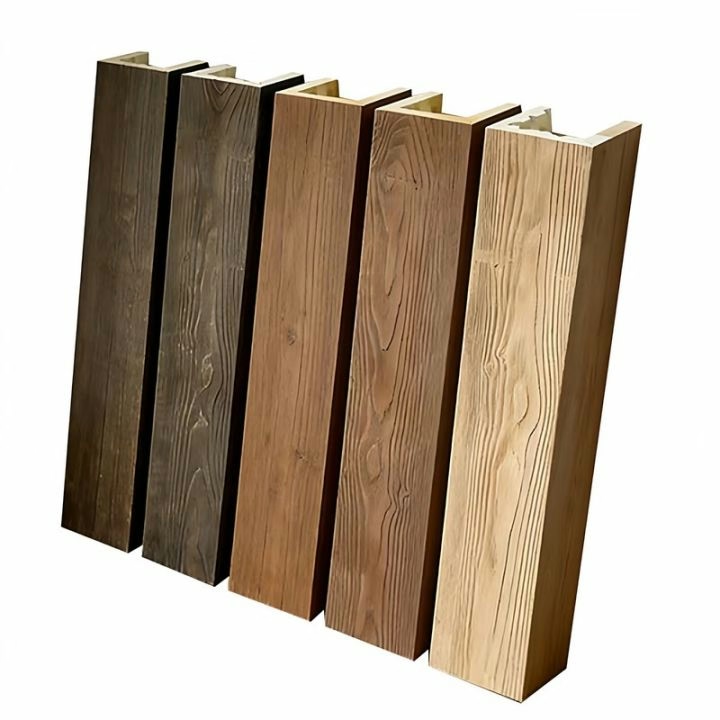
Achieving a convincing light faux timber finish on polyurethane requires more than just adding white pigment. The challenge is keeping the wood character visible. A beam sprayed with uniform white paint looks like plastic; a beam where the grain and knots remain subtly visible underneath a translucent wash looks like whitewashed timber.
The production process typically involves a base stain that simulates the natural wood color, followed by a glazes or washes that lighten the surface. Grain patterns are then either molded into the original surface or added through a tinted wash that settles into the embossed grain texture. Skilled operators vary the glaze density across each beam so that no two pieces look identical, mimicking the way real whitewashed timber varies slightly from board to board.
Matte topcoats protect the finish while preserving the soft, non-reflective appearance. High-traffic show homes and rental apartments often request an additional clear coat with anti-mark additives to keep the pale surface clean, since dust and fingerprints show more readily on light finishes than on darker ones.
Common application contexts
Light faux timber beams appear throughout European minimalist projects, but a few contexts dominate. Open-plan living and dining areas use them to subtly define functional zones without walls, with a beam above the dining table or kitchen island signaling a transition in use. The beams blend with white or pale grey ceilings while adding just enough warmth to keep the space from feeling sterile.
Master bedrooms in newly built European apartments often feature a single light beam running across the ceiling above the bed. The beam serves as a soft focal point and gives the room a sense of grounding. In some designs, the same beam wraps down one wall as a headboard extension, creating continuity between architecture and furniture.
Commercial settings have also adopted the look. Boutique hotels, design studios, and concept retail spaces in Copenhagen, Amsterdam, and Berlin use light faux beams to add character without the dated feel of heavier timber treatments. The beams photograph well for social media, an important consideration for hospitality and retail environments where visual identity drives bookings and foot traffic.
Sizing and stock considerations for importers
Importers supplying the European minimalist market should stock a different mix than suppliers focused on North American rustic demand. The bestseller profile is often a 4x6 beam in lengths of 3, 4, and 5 meters, the dimensions that fit typical European ceiling spans without excessive waste. Longer custom runs are available but less common.
Finish samples matter more than usual in this market. European buyers tend to want physical samples of three or four pale finishes before committing, because the appearance under different lighting conditions can vary significantly. A finish that looks ideal in a showroom may look cold or yellow in a north-facing apartment, so experienced importers send sample boards that buyers can view in the actual installation space.
Lead times are also tighter than in the rustic segment. European minimalist projects often move quickly through design and procurement phases, especially in residential developments where multiple units share the same specification. A stock program that holds finished beams in popular sizes and pale finishes allows immediate dispatch, which is often the difference between winning and losing a contract.
Why this trend continues to grow
The European minimalist aesthetic has held its appeal for over a decade, and signs point to continued growth rather than a passing trend. Demographic shifts toward urban apartment living, increasing emphasis on natural light, and rising interest in sustainable materials all reinforce the look. Light faux timber beams fit neatly into this trajectory because they offer warmth and texture without visual noise.
For exporters, the opportunity is significant but specific. Succeeding in this segment requires more than dark walnut beams in extra-long lengths. It requires pale finishes, matte surfaces, slimmer profiles, and short lead times for the European market. Suppliers who adjust their stock and sample programs to match these preferences find a customer base willing to pay a premium for design accuracy and timely delivery.
Technical References
ASTM standards cited in every specification
Test Data
Lab results from internal testing program
Updated 2026
Reviewed against current product specs


