Interior designers who specify faux beams regularly understand that trade pricing makes a real difference to project economics. The gap between retail and designer pricing can be 20 to 40 percent, which on a multi-beam project represents thousands of dollars in margin that can either fund design enhancements or improve the bottom line. Manufacturers and distributors have responded by creating structured designer discount programs that reward professionals who specify their products.
These programs are not charity. They exist because designers influence purchasing decisions in ways that manufacturers cannot reach directly. A designer who specifies a particular faux beam brand on a project plan effectively commits the homeowner or developer to buying that brand. The manufacturer gets a sale it would not otherwise have, and the designer earns a margin that recognizes their role in generating that sale.
For designers, accessing these programs involves understanding what each manufacturer offers, meeting the qualification criteria, and maintaining the relationship over time. The best programs provide more than just discount pricing. They include samples, technical support, marketing materials, and project consultation that helps designers specify the right products and use them effectively.
Typical designer discount structures
Designer discount programs generally fall into three categories. The first is a simple percentage discount off list pricing, available to any designer who registers with the program. Typical discounts range from 20 to 35 percent, applied at the time of order. This structure is simple to administer and easy for designers to understand.
The second category is tiered pricing based on annual volume. Designers who specify a certain dollar value or unit count per year unlock better pricing than entry-level participants. A designer specifying 50 beams per year might get 25 percent off, while one specifying 200 beams per year might get 35 percent off. The tiers encourage loyalty and reward high-volume specifiers.
The third category is project-based pricing for large or unique installations. A designer working on a hotel lobby or custom estate might negotiate pricing specific to that project, based on the volumes involved and the design specifications. Project pricing often provides the deepest discounts but requires negotiation for each opportunity.
Some programs combine elements of multiple categories. A baseline discount applies to all registered designers, with additional tier benefits based on annual volume and special project pricing available by negotiation. This structure accommodates designers at different stages of practice, from emerging professionals just starting to specify products to established firms with ongoing relationships.
Qualification criteria
Designers typically need to demonstrate legitimate professional practice to access trade pricing. The most common requirement is proof of business registration or professional certification. A design firm with a registered business, an interior design degree, or membership in a professional association like ASID, IIDA, or the equivalent national body in other countries usually qualifies.
Some programs require a minimum level of business activity, measured in annual revenue, number of projects, or years in practice. A brand-new design practice with no completed projects may not qualify, while an established firm with a track record of work gets immediate access. The threshold is usually set low enough that genuine working designers qualify but high enough to exclude hobbyists or non-professionals.
Tax documentation is often required. Designers operating as businesses need to provide a tax ID number or business registration document. This allows the manufacturer to report sales tax correctly and provides a paper trail for the designer's own accounting. Designers who operate as sole proprietors under their personal name may need to register a business entity to access some programs.
Portfolio review is less common but still appears in some programs. The manufacturer may ask for examples of past work that includes faux beam installations. This helps them understand the designer's style and ensure that their products are a good fit for the projects being specified. For designers without a portfolio of beam projects, providing general design work and explaining their interest in beams may suffice.
Benefits beyond pricing
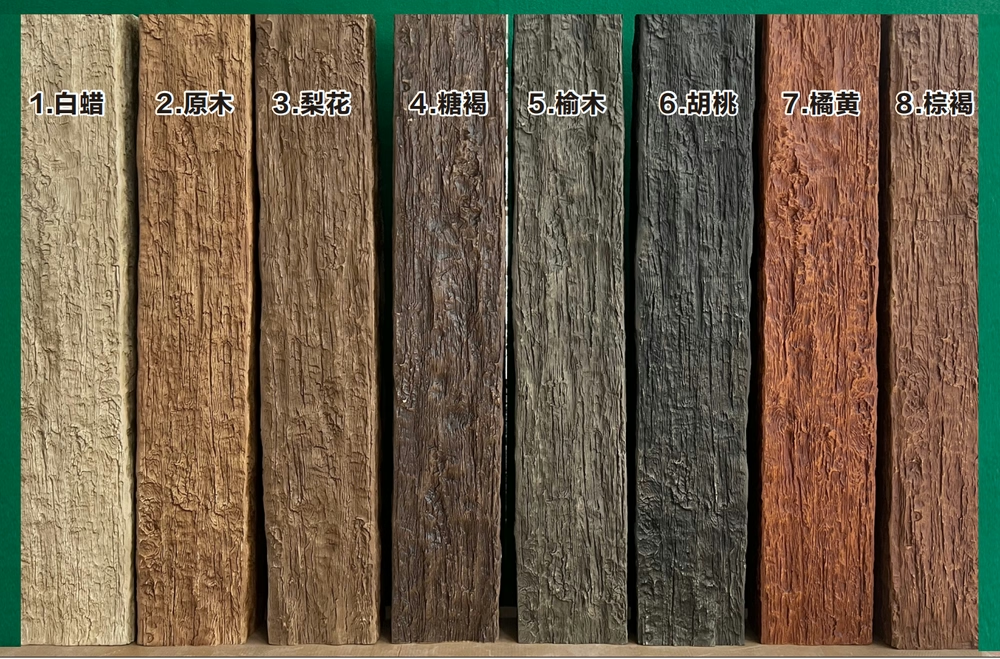
Discount programs offer value beyond just lower prices. Sample policies are a significant benefit. Many programs provide complimentary samples to designers for client presentations and project specifications. Rather than paying retail for samples that may or may not result in orders, designers can request the specific finishes and profiles they need to show clients.
Technical support is another valuable benefit. Manufacturers who offer designer programs often provide direct access to technical staff who can help with product selection, specification documentation, and installation guidance. For designers working on complex projects, this support can save hours of research and reduce the risk of specifying the wrong product.
Marketing materials help designers promote their work and educate clients. Branded brochures, finish cards, specification sheets, and digital assets allow designers to present a professional image when discussing faux beams with clients. Some manufacturers provide custom marketing materials featuring the designer's own project photography, which is useful for the designer's portfolio and future marketing.
Early access to new products is a benefit that emerges from established designer relationships. Manufacturers often preview new finishes, profiles, or product lines with their designer network before broader release. This allows designers to specify cutting-edge products and differentiate their offerings from competitors who wait for general availability.
How to apply for designer programs
The application process varies by manufacturer, but several steps are common. Most programs start with an online registration form on the manufacturer's website. The form typically asks for business information, professional credentials, and contact details. Some programs require additional documentation uploaded as part of the registration.
After submission, the manufacturer reviews the application and either approves it, requests additional information, or declines. Approval often takes a few days to a few weeks, depending on the program's verification process. Once approved, the designer receives a welcome package with program details, discount codes or account credentials, and instructions for placing orders.
Some programs require annual renewal or ongoing activity to maintain status. A designer who registers but never places orders may find their account deactivated after a period of inactivity. Placing at least one order per year, or meeting minimum volume thresholds, typically keeps the account in good standing.
For designers who specify faux beams from multiple manufacturers, registering with several programs is normal. Each program offers different benefits and pricing, and the right choice depends on which manufacturer's products best fit each project. Maintaining active status across multiple programs takes some administrative effort but provides access to a wider range of options.
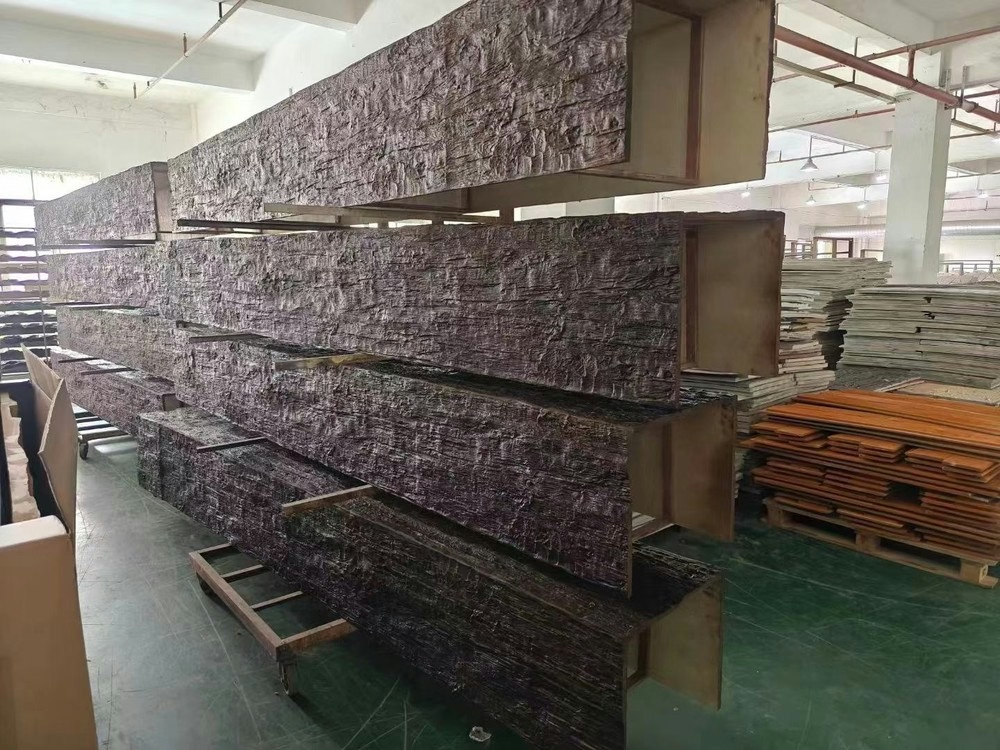
Comparing programs across manufacturers
Not all designer programs offer the same value. Some have generous discounts but limited product ranges. Others have moderate discounts but excellent technical support. Comparing programs involves looking at the total package, not just the headline discount percentage.
Discount depth is important but not the only factor. A 40 percent discount on a product the designer rarely uses provides less value than a 25 percent discount on a product specified frequently. The designer should evaluate each program based on how the manufacturer's product line fits their actual project work.
Sample policies vary widely. Some programs provide unlimited complimentary samples, while others limit samples to a certain dollar value per year. The sample policy matters because designers often need multiple finish and size options for client presentations. Programs with restrictive sample policies can slow down the design process.
Shipping costs affect the real value of any discount. A 30 percent discount with free shipping provides better value than a 35 percent discount with the designer paying shipping costs. The total landed cost, including shipping and any applicable taxes, gives a clearer picture of the actual savings.
Technical and design support can be the differentiator between programs that look similar on pricing. A manufacturer who provides detailed specification documents, CSI-formatted product data, and responsive technical staff is easier to work with than one who provides competitive pricing but limited support. For designers specifying complex installations, this support has real value.
Maintaining good standing
Once approved for a designer program, maintaining good standing requires some ongoing attention. Timely payment for orders placed is essential. Many programs extend credit terms to designers, and paying invoices on time keeps that credit available. Late payments can result in credit hold, delayed shipments, or even account deactivation.
Communication with the manufacturer's representative or account manager helps maintain the relationship. Periodic check-ins, project updates, and feedback on products all contribute to a stronger working relationship. Manufacturers who know their designer clients and their project types can provide better service and often extend additional benefits as the relationship matures.
Submitting project documentation when requested helps manufacturers track the impact of their designer programs. Photos of completed installations, project descriptions, and designer credits in marketing materials all contribute to the manufacturer's understanding of how their products are being used. Manufacturers often reciprocate by featuring designer projects in their own marketing, providing exposure that benefits both parties.
Continuing education is increasingly part of designer programs. Manufacturers offer webinars, factory tours, and CEU courses that help designers stay current on product capabilities and applications. Participating in these opportunities demonstrates professional engagement and often unlocks additional benefits like early product access or invitation-only events.
Negotiating additional value
Designers who build strong relationships with manufacturers can often negotiate benefits beyond the standard program offerings. Exclusive finishes developed specifically for the designer's projects, custom sizing beyond standard production ranges, and priority production scheduling during busy periods are all possibilities for designers who can demonstrate value to the manufacturer.
Co-marketing arrangements benefit both sides. A designer who features the manufacturer's product prominently in marketing materials, social media, or press coverage provides exposure that the manufacturer values. In exchange, the manufacturer may fund joint marketing efforts, provide enhanced samples, or extend additional discounts on the designer's projects.
Referral relationships are another avenue. A designer who introduces the manufacturer to potential commercial clients, large residential projects, or institutional opportunities is providing value beyond just specifying the product. Manufacturers often recognize these referrals with additional discounts, project-specific pricing, or other benefits that strengthen the relationship.
The most successful designer-manufacturer relationships evolve over years into genuine partnerships. The designer becomes a trusted voice in product development, providing feedback that shapes future offerings. The manufacturer becomes a reliable resource that supports the designer's practice. Both sides benefit from the collaboration in ways that purely transactional relationships cannot achieve.
Technical References
ASTM standards cited in every specification
Test Data
Lab results from internal testing program
Updated 2026
Reviewed against current product specs