
The international market for polyurethane faux beams has grown substantially as global trade in building materials has expanded. Buyers in Europe, the Middle East, Southeast Asia, and the Americas source beams from manufacturing centers in Asia, evaluating suppliers across quality, price, logistics, and service dimensions. The buyers who succeed in these markets understand that "high quality" for international trade means something specific and verifiable, not just a general claim.
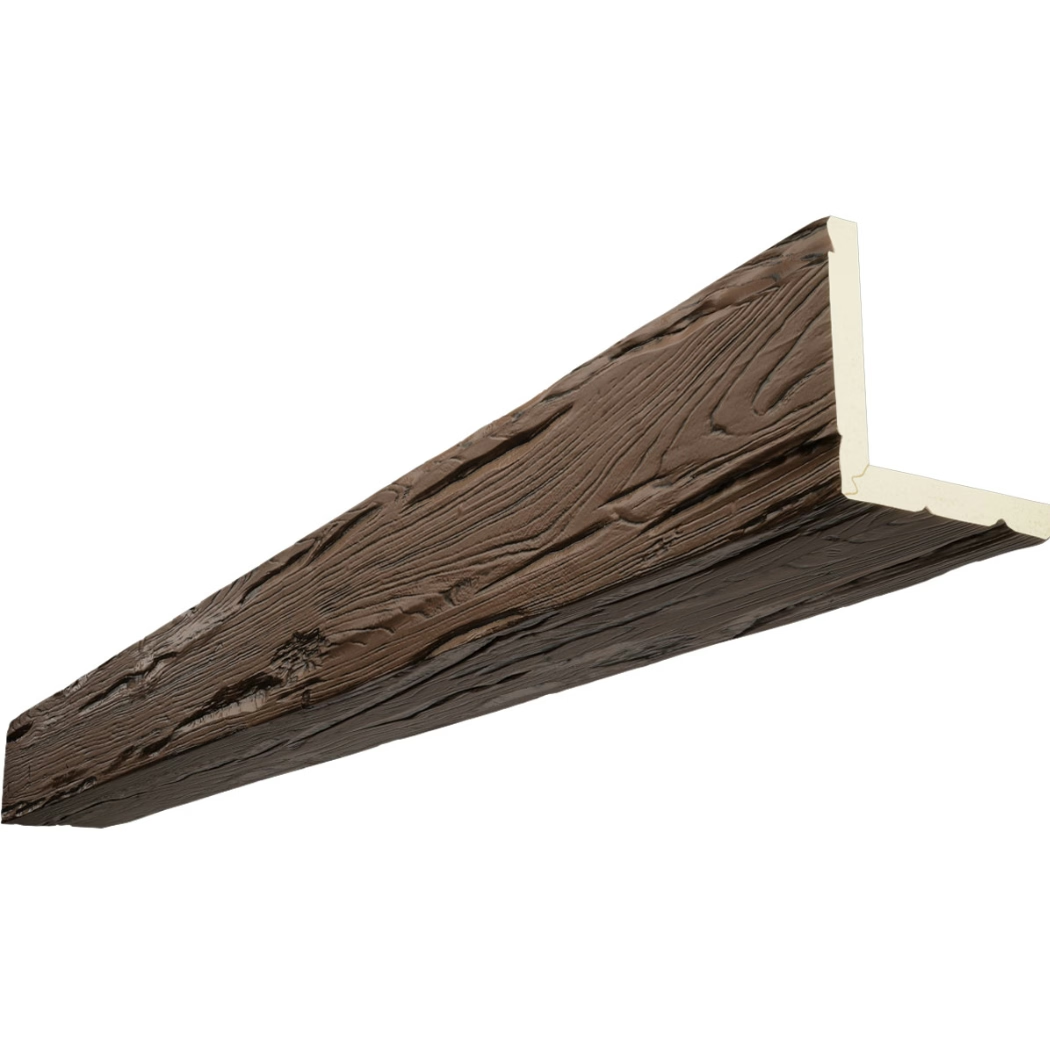
High-quality export beams share certain characteristics that distinguish them from products that merely look acceptable on initial inspection. They are manufactured to tolerances that ensure consistency across large orders. They are finished to standards that survive international logistics without damage. They are packaged to protect against the rigors of ocean freight and multiple handlings. And they are documented in ways that satisfy customs authorities and provide buyers with the information they need to make informed purchasing decisions.
For buyers evaluating international suppliers, distinguishing genuine export-quality beams from inferior products requires knowing what questions to ask and what evidence to request. For suppliers hoping to serve international markets, understanding what export buyers actually want enables better positioning and stronger customer relationships.
Dimensions of export quality
Quality in the context of international trade has several dimensions. The first is manufacturing quality, which refers to how accurately the beams are produced. Consistent cross-sectional dimensions, straight and true long edges, and proper hollow depth are all part of manufacturing quality. Beams that vary significantly from piece to piece create installation problems that domestic buyers might absorb but international buyers will reject.
The second dimension is finish quality. The faux wood texture must be evenly applied with no thin spots, runs, or color variation within a piece or across a production run. The finish must be fully cured before packaging so that it does not continue to off-gas or change color during transit. The topcoat must be hard enough to resist the scuffs and scratches of handling but flexible enough to avoid cracking.
The third dimension is packaging quality. As discussed in the export-grade context, packaging must be designed for international logistics, not just domestic handling. The difference between adequate domestic packaging and proper export packaging can be the difference between arriving in sellable condition and arriving as a damage claim.
The fourth dimension is documentation quality. Accurate, complete documentation that meets international standards prevents customs delays and enables buyers to clear goods efficiently. Documentation quality reflects the supplier's understanding of international trade requirements and their commitment to serving buyers professionally.
How buyers evaluate quality remotely
International buyers cannot personally inspect every beam before purchase. They evaluate quality through a combination of samples, third-party inspections, and documentation review. Understanding this evaluation process helps both buyers and sellers communicate more effectively.
Physical samples are the starting point. Most international buyers request samples before placing substantial orders. The samples should represent the quality of the production run, not special selections that are better than what will actually ship. Sending superior samples and shipping inferior goods is a short-term strategy that destroys long-term relationships.
Third-party inspection services provide independent verification of quality at the supplier's location. Services like SGS, Bureau Veritas, and Cotecna inspect shipments at the factory before loading, checking product quality, quantity, packaging, and marking against the purchase order specifications. International buyers who have experienced quality problems in the past often require third-party inspection as a condition of payment.
Quality certifications provide additional assurance. ISO 9001 for quality management, ISO 14001 for environmental management, and product-specific certifications like fire performance ratings give buyers confidence that the supplier operates to recognized standards. Suppliers who invest in certifications signal their commitment to quality and their willingness to be accountable to international buyers.
Common quality issues in international shipments
Dimensional inconsistency is the most frequently cited quality complaint in international beam trade. Beams that appear to be the same size when measured individually may not fit together correctly when installed. This problem is more apparent with projects requiring multiple beams that must align precisely, such as coffered ceiling grids or installations with exposed beam ends that will be viewed together.
Finish inconsistency between pieces in the same shipment is another common issue. Beams from one production run that show visible differences in color, sheen, or texture create obvious problems in the installed result. This is especially problematic for projects where multiple beams are visible in the same space. Finish consistency requires careful quality control during production and possibly sorting and matching before shipment.
Finish damage during transit results from inadequate packaging or from the inherent vulnerability of certain finish types to shipping stress. Beams with deep embossed textures, matte finishes, or light colors show handling marks more readily than smooth, dark finishes. Understanding which finish types are most vulnerable enables appropriate packaging responses.
Packaging failures cause a range of problems. Crushing damages outer cartons and the beams inside. Water damage occurs when packaging absorbs moisture during ocean transit through humid conditions or tropical rain. Improper palletization leads to unstable stacking that collapses under the weight of container contents.
Quality control processes that prevent problems
Incoming material inspection verifies that raw materials meet specifications before they enter production. Polyurethane resin, catalyst, pigments, and packaging materials all affect final product quality. A factory that skips incoming inspection risks manufacturing problems that are harder to detect after production.
In-process quality control during production catches defects early. Monitoring pour consistency, mold temperature, and demolding conditions identifies problems before they become widespread. The best factories use statistical process control to track quality parameters and detect trends before out-of-spec product accumulates.
Final inspection of finished beams verifies that the product meets specifications before packaging. The inspection rate for export orders should be higher than for domestic orders, reflecting the higher cost of defects that reach the buyer. A 100 percent inspection of critical dimensions and finish quality is not excessive for premium export orders.
Random selection and destructive testing provides additional quality assurance. Testing beam strength, finish adhesion, and other performance characteristics on samples pulled from production confirms that the product will perform as specified. Results from destructive testing inform quality improvement efforts and provide data for customer specifications.

Working with buyers on quality requirements
Clear communication about quality requirements prevents most quality disputes. The purchase order should specify not just dimensions and quantities but also acceptable tolerance ranges, finish standards, and packaging requirements. Vague quality requirements like "good quality" or "standard export quality" are invitations to dispute.
Pre-shipment approval processes give buyers confidence before goods leave the factory. Sending photos, video, or samples of the actual shipment for buyer approval before loading allows corrections if something is wrong. The cost of reshooting or reshipping is far less than the cost of rejecting a shipment that has already arrived at destination.
Quality specifications should be bilateral. The buyer specifies what quality they expect, and the supplier confirms that they can meet those specifications at the quoted price. A supplier who agrees to specifications they cannot meet creates problems for both parties. Honest communication about capabilities prevents these situations.
When quality problems occur, prompt and professional resolution maintains the relationship. Acknowledging the problem, proposing a solution, and following through on commitments demonstrates that the supplier takes quality seriously. Disputing legitimate quality complaints or delaying resolution damages relationships more than the original quality problem.
Building quality reputation in international markets
Suppliers who consistently deliver quality build reputations that attract new customers through referrals. Word spreads in international trade communities about which suppliers are reliable and which ones cut corners. A reputation for quality is an asset that appreciates over time as the supplier's network grows.
Documentation of quality achievements builds credibility. Test reports, inspection certificates, and customer testimonials provide evidence that can be shared with prospective buyers. A supplier who can show years of consistent quality data is more credible than one who makes quality claims without supporting evidence.
Participation in industry events and trade shows provides opportunities to demonstrate quality in person. Physical samples, factory visit invitations, and direct conversations allow prospective buyers to assess quality directly. The investment in these activities pays off in relationships that generate orders for years.
Long-term relationships with international buyers create stability that benefits both parties. A buyer who trusts a supplier's quality will give them the benefit of the doubt when problems occur and will continue ordering even when competitors offer lower prices. This loyalty is built over years of consistent quality delivery.
Future trends in international quality expectations
International buyers are becoming more sophisticated in their quality expectations and more demanding in their requirements. Transparency about manufacturing practices, including labor conditions and environmental compliance, is increasingly requested. Suppliers who can demonstrate responsible manufacturing practices have a competitive advantage.
Digital documentation and tracking is becoming standard in international trade. QR codes linking to production data, photos, and test results allow buyers to verify quality claims independently. Suppliers who invest in digital quality infrastructure will be better positioned to serve demanding international customers.
Sustainability requirements are expanding in key markets. Buyers in Europe and North America increasingly expect documentation of environmental compliance, recycled content, and end-of-life recyclability. Suppliers who anticipate these requirements rather than reacting to them will be better positioned for future market opportunities.
Quality consistency at scale is the frontier challenge. A factory that produces excellent samples may struggle to maintain that quality when order volumes increase tenfold or a hundredfold. Building quality systems that scale with business growth requires investment in equipment, training, and process control that separates professional suppliers from opportunistic traders.
Technical References
ASTM standards cited in every specification
Test Data
Lab results from internal testing program
Updated 2026
Reviewed against current product specs


