Creating Visual Connections
Successful interior design creates relationships between elements. When accent walls meet treated ceilings, the connection should feel intentional.
Decorative beams provide this connection.
Understanding the Relationship
Why Walls and Ceilings Matter
Walls and ceilings form the room's bounding surfaces:
- These planes frame everything within
- Their treatment establishes room character
- Disconnected treatment creates visual conflict
When both receive attention, the relationship matters.
The Beam as Bridge
Ceiling beams bridge wall and ceiling:
- They contact the ceiling plane
- They terminate at or near walls
- They create visual continuity
This bridging makes beams the ideal connection point.
Coordination Strategies
Color Harmony
Color creates connection:
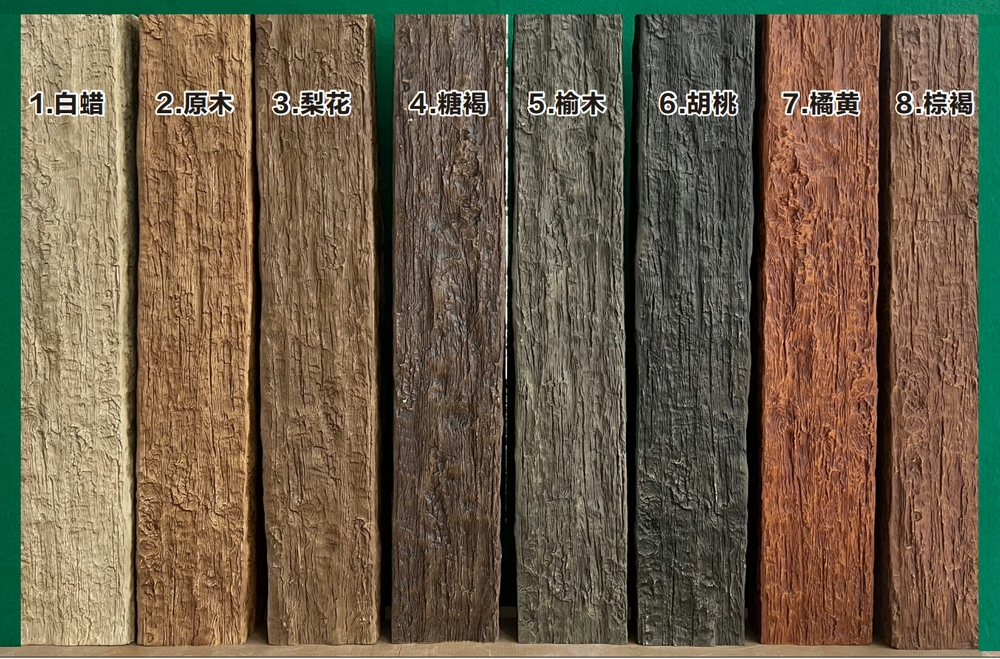
- Beam finish relating to accent wall
- Contrasting or matching deliberately
- Palette that unifies treated surfaces
Color coordination makes the relationship feel designed.
Material Continuity
Material choices affect connection:
- Wood beams with wood accent wall
- Textured beams with textured wall treatment
- Finish that echoes wall materials
Material continuity strengthens the visual bond.
Scale Proportion
Treatment scale should relate:
- Large accent wall with substantial beams
- Small accent panel with modest beams
- Proportion that creates harmony
Disconnected scale undermines the relationship.
Design Approaches
Echoing the Wall
Beam treatment echoes wall treatment:
- Accent panel on one wall
- Beams crossing the ceiling above
- The wall treatment continues visually upward
This creates unified treatment from separate elements.
Contrasting Deliberately
Some designs benefit from contrast:
- Bold accent wall, subtle beam treatment
- Strong wall color, natural beam finish
- Contrast that defines rather than connects
Intentional contrast can work when the intent is clear.
Partial Coordination
Not every wall needs connection:
- One accent wall coordinates with beams
- Other walls remain neutral
- The relationship creates focal interest
Partial coordination focuses attention effectively.
Complementary design between accent walls and ceiling beams creates visual relationships that make spaces feel designed. The key is intentionality—making choices that create connection rather than accident. When wall and ceiling treatments relate, the result is greater than the sum of parts.
Technical References
ASTM standards cited in every specification
Test Data
Lab results from internal testing program
Updated 2026
Reviewed against current product specs


