Plain ceilings communicate nothing. They exist as passive barriers between occupied space and the structure above. When guests enter a room with a featureless flat ceiling, they see blank space. When they enter a room with exposed beams, they see intention, craft, and character. The transformation from one to the other represents one of interior design's highest-impact improvements per dollar invested.
Faux beams deliver this transformation reliably. Where real timber would require structural engineering, specialized installation, and significant weight considerations, polyurethane beams mount directly to existing ceilings with minimal difficulty. The visual result rivals authentic timber while the practical execution accommodates virtually any budget and skill level.
Why plain ceilings feel inadequate
The psychology of ceiling perception:
Visual emptiness — large flat surfaces feel incomplete without detail
Lost opportunity — the largest surface in the room contributes nothing
Foundation of space — ceilings establish room character; plain ceilings establish bland character
Comparison factor — treated ceilings in other spaces raise expectations
Design failure — architects specify beautiful elevations and forget the fifth wall
Plain ceilings fail to support the spaces they bound.
Beam placement strategies for transformation
Different placements achieve different effects:
Full parallel treatment
Regularly spaced beams across the entire ceiling:
- Creates rhythmic pattern throughout the room
- Establishes consistent architectural language
- Works best in rooms with simple geometry
- Maximum transformation impact
Full treatment works particularly well in dining rooms, living rooms, and master bedroom suites.
Partial treatment
Beams covering only part of the ceiling:
- Defines specific zones without full commitment
- Highlights functional areas (dining, conversation)
- Creates visual interest without overwhelming
- More budget-friendly than full treatment
Partial treatment suits open-plan spaces and rooms with multiple functions.
Single statement beam
One prominent beam as focal point:
- Marks transition or defines area
- Less commitment than full treatment
- Works well in minimal spaces
- Strong architectural statement
Single beams work effectively over kitchen islands, dining tables, and bed positions.
Cross-grid pattern
Perpendicular beam sets creating squares or rectangles:
- Coffered ceiling appearance
- Traditional architectural detail
- More complex installation
- Dramatic visual impact
Cross-grid patterns create the most formal and architectural appearance.
Choosing beam profiles for impact
Profile size affects transformation intensity:
Substantial profiles for dramatic change
Large beams create immediate impact:
- 6x8, 8x8, and larger profiles
- Visible from any position in the room
- Establish strong architectural presence
- Require proportional ceiling height
Large profiles transform dramatically but require appropriate scale.
Moderate profiles for balanced change
Medium beams add character without overwhelming:
- 4x6 and 6x6 profiles
- Work in most residential ceiling heights
- Effective at moderate cost
- Appropriate for most room sizes
Moderate profiles provide the best balance of impact and proportion.
Compact profiles for subtle enhancement
Small beams add detail without major commitment:
- 4x4 and smaller profiles
- Work in lower ceiling situations
- Budget-friendly option
- Good for first-time beam installations
Compact profiles introduce the beam aesthetic with minimal risk.
Texture and finish selection
Surface appearance determines character:
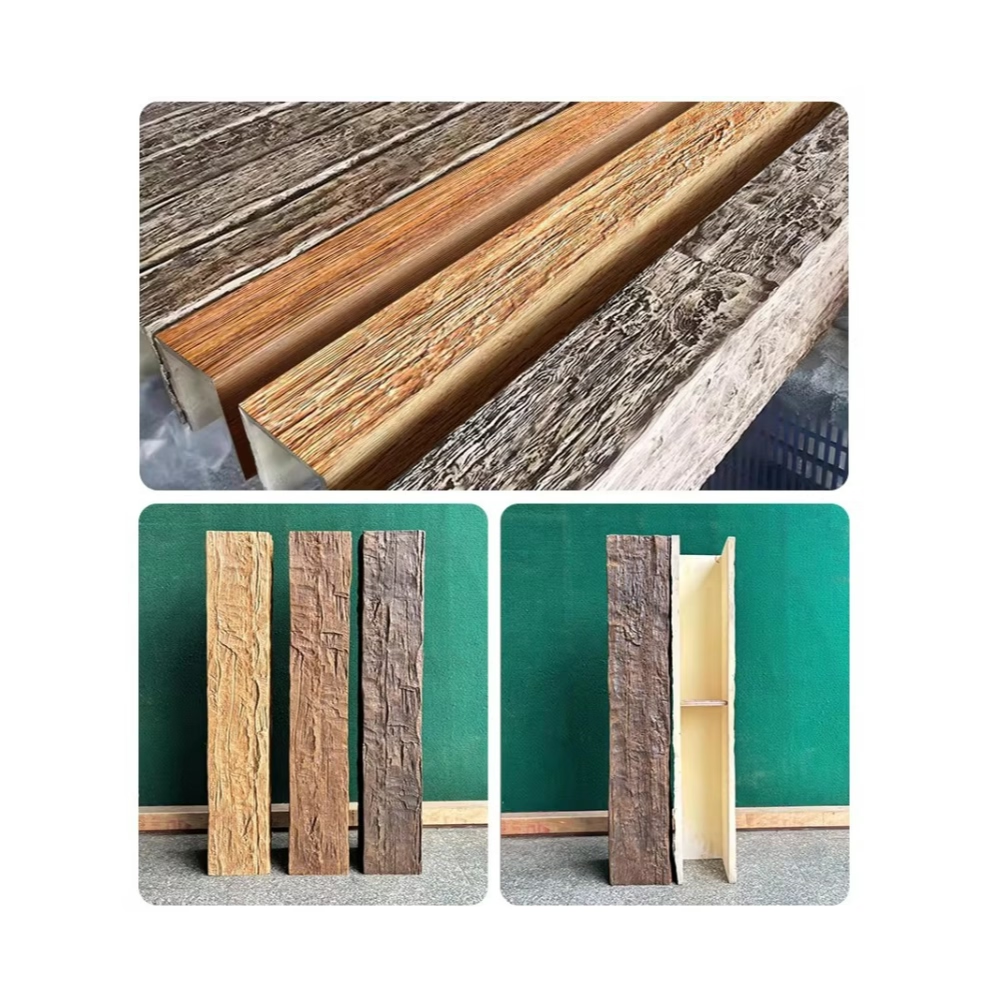
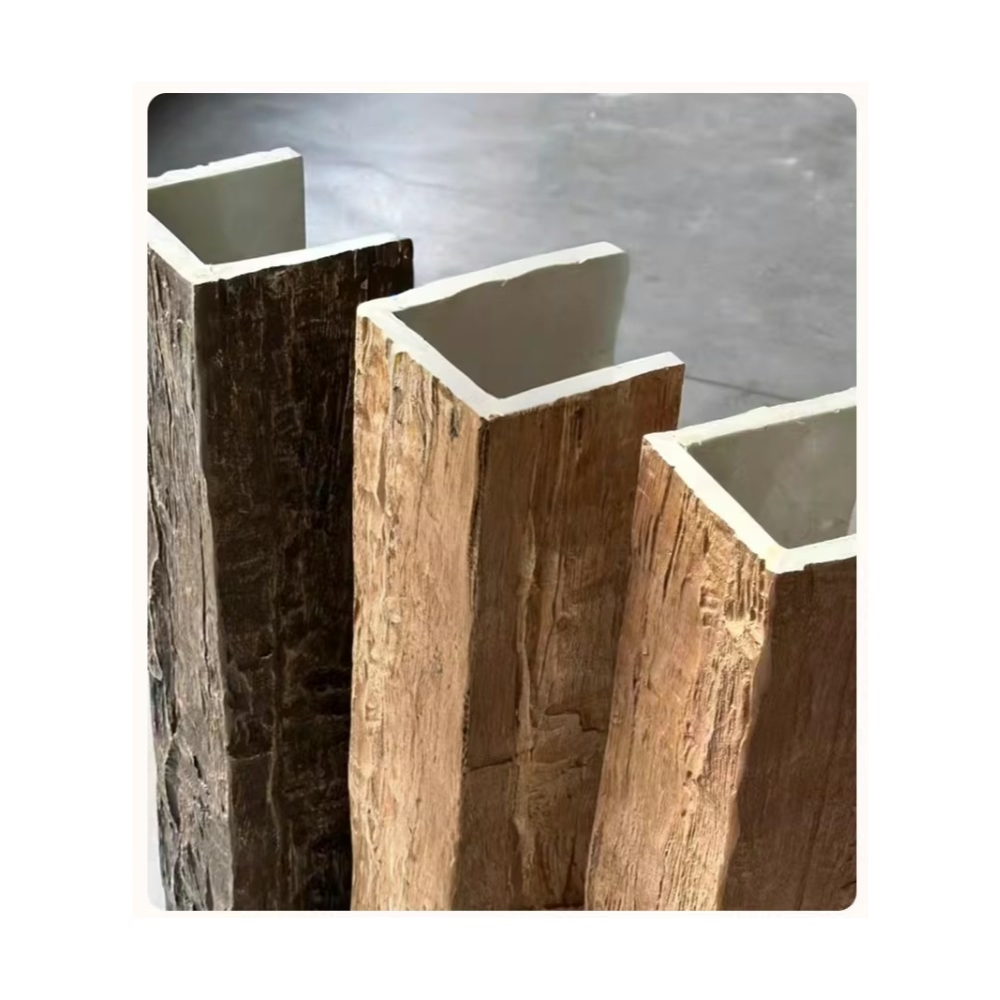
Rustic textures
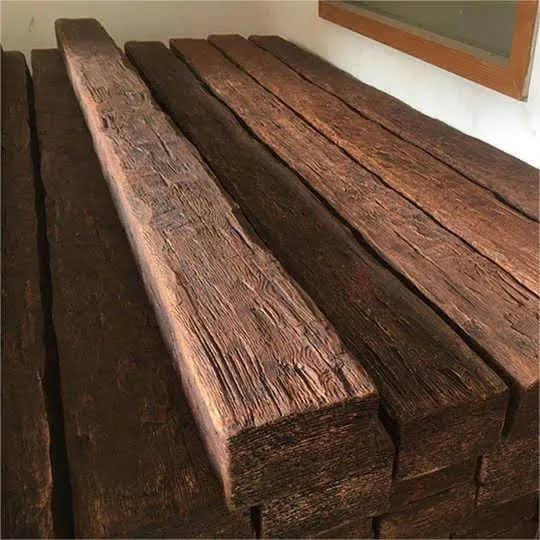
Hand-hewn, rough-sawn, and weathered surfaces:
- Country and farmhouse aesthetics
- Authentic traditional character
- Works with natural wood finishes
- Ages gracefully
Rustic textures add warmth and authenticity.
Refined textures
Smooth, straight-grain surfaces:
- Contemporary and modern aesthetics
- Clean architectural appearance
- Works with painted or stained finishes
- Suits formal spaces
Refined textures provide character with contemporary sensibilities.
Distressed textures
Aged and worn appearance:
- Vintage and antique aesthetics
- Suggests established character
- Works with antique reproduction finishes
- Creates immediate age impression
Distressed textures accelerate the appearance of maturity.
Transformation scenarios
Beams solve specific ceiling problems:
Flat drywall ceilings
The most common transformation opportunity:
- Minimal preparation required
- Standard mounting methods work
- Complete visual transformation
- High impact per dollar invested
Drywall ceilings are ideal candidates for beam installation.
Popcorn ceilings
Beams cover dated texture beautifully:
- Avoids messy removal
- Creates architectural interest
- Modernizes without renovation
- Adds value to the space
Beam installation on popcorn ceilings avoids abatement costs.
Sloped ceilings
Beams enhance rather than fight the slope:
- Follow slope orientation
- Emphasize architectural character
- Work with or against slope direction
- Create visual interest in challenging spaces
Sloped ceilings often benefit from beam treatment.
High ceilings
Beams add scale-appropriate detail:
- Reduce apparent height proportionally
- Create human-scaled interest zone
- Add warmth to large volumes
- Define functional zones
High ceilings benefit from beams that create proportional interest.
The transformation solution
Adding unique architectural character to plain ceilings with faux beams represents the most effective single improvement for overhead spaces. The transformation is immediate, dramatic, and permanent. Whether the space is a modern open-plan living area, a traditional dining room, or a contemporary kitchen, beams deliver the architectural presence that plain ceilings lack.
The decision is not whether beams will help — they always help. The decision is which profile, texture, and placement will best serve the specific space.
Technical References
ASTM standards cited in every specification
Test Data
Lab results from internal testing program
Updated 2026
Reviewed against current product specs


