Every renovation dollar should work toward either increased property value or improved quality of life. Ceiling beam installations accomplish both. The visual transformation is immediate and dramatic. The financial return compounds over time through increased property value, faster sales, and reduced maintenance costs compared to real timber. This analysis quantifies the investment case for faux wood ceiling beams across different project types.
The numbers vary by market, project scope, and execution quality. But the fundamental equation holds consistently: beam upgrades deliver measurable returns that justify the investment.
Quantifying aesthetic value
Visual transformation defies precise measurement but demonstrates consistent patterns:
Perceived space increase — beams add architectural interest that makes rooms feel larger
Character addition — plain ceilings become memorable spaces with beam treatment
Light quality improvement — beams create shadow and dimension that enhances lighting design
Design sophistication — beam installations signal quality and attention to detail
These qualitative improvements translate directly into quantifiable financial outcomes through property value and sales velocity metrics.
Property value impact
Real estate professionals consistently value beam-ceiling treatments:
National averages
Based on real estate industry data:
Mid-range markets — ceiling beam installation adds 3-5% to comparable property values
High-end markets — premium installations add 5-8% to comparable property values
Luxury properties — authentic timber aesthetics can add $50,000-100,000 to listing prices
Flip projects — beam upgrades consistently increase after-repair value by 150-200% of installation cost
Market-specific considerations
Local conditions affect returns:
- Comparable sales in the neighborhood
- Buyer demographic preferences
- Regional architectural styles
- Inventory levels and buyer competition
Consult local real estate professionals for market-specific estimates.

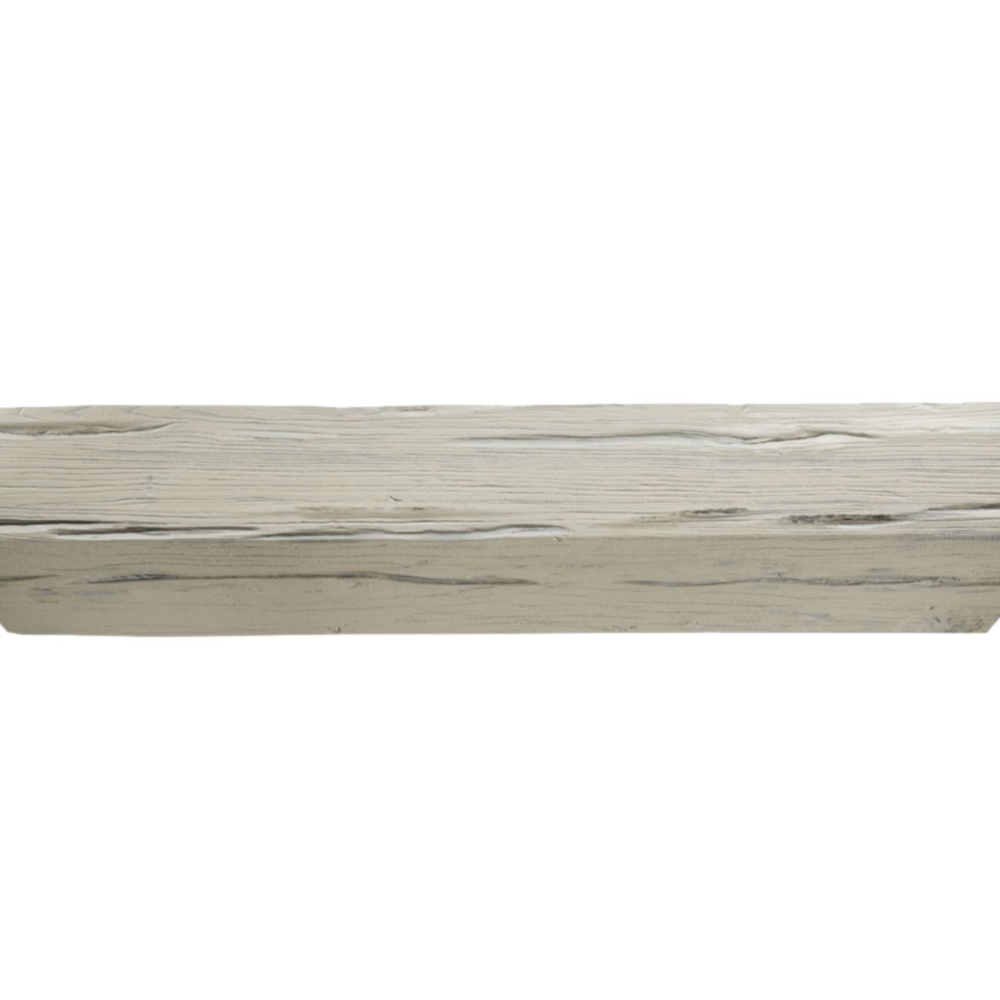
Sales velocity benefits
Faster sales save money:
Carrying cost reduction — each month a property sits costs 1-1.5% of its value
Price negotiation leverage — distinctive features justify asking prices
Marketing advantage — beam ceilings photograph beautifully and attract buyer interest
Competitive differentiation — in competitive markets, upgrades determine which properties sell
Properties with beam ceiling treatments typically sell 20-40% faster than comparable untreated properties.
Maintenance cost comparison
Faux beams versus real timber involves ongoing cost differences:
| Cost Factor | Real Timber | Faux PU Beams |
|---|---|---|
| Initial cost (6x6, 12ft) | $150-300 | $80-150 |
| Annual maintenance | $50-100 | $0-10 |
| Refinishing (10-year cycle) | $500-1,500 | $0-200 |
| Repair/replacement | $200-500 | $0-50 |
| 20-year total | $2,400-5,000 | $800-1,200 |
Over 20 years, faux beam maintenance costs are 60-80% lower than real timber.
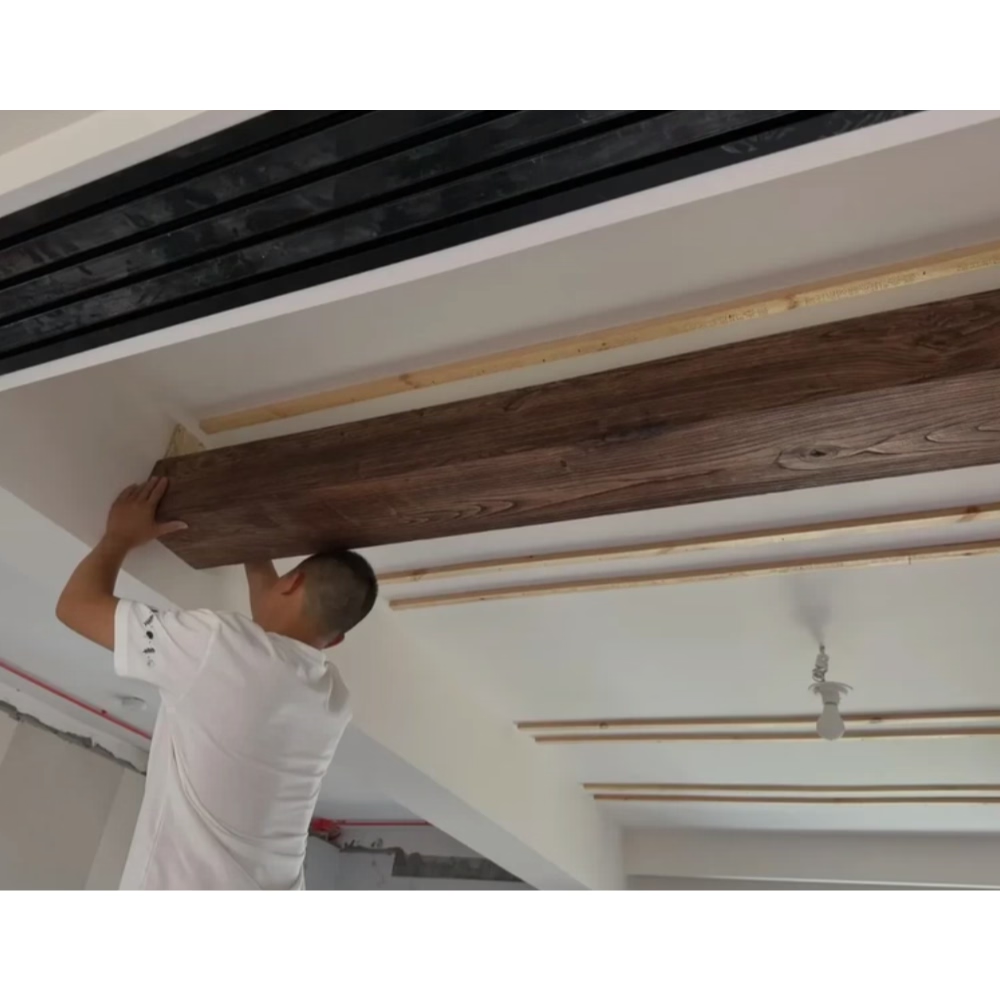
Project type ROI analysis
Flip renovation projects
Maximum ROI potential:
Investment — $2,000-8,000 for complete beam installation Value add — $8,000-20,000 depending on property value and market ROI — 150-300% return on installation cost
Beam upgrades consistently rank among the highest-ROI improvements for flip projects.
Owner-occupied upgrades
Quality of life plus value:
Investment — $3,000-15,000 for comprehensive installation Value add — 3-6% of property value Amortized value — $150-500 monthly value over 10-year ownership Quality of life — subjective but significant improvement in daily living environment
Owners benefit from both financial appreciation and daily enjoyment.
Rental property upgrades
Revenue enhancement potential:
Investment — $2,000-6,000 for installation Rent increase — $100-300 monthly for beam-ceiling treatments Payback period — 12-24 months Ongoing benefit — reduced vacancy and faster re-leasing
Beam treatments differentiate rental units in competitive markets.
New construction
Premium positioning opportunity:
Investment — $5,000-25,000 depending on specifications Price premium — $15,000-75,000 in comparable markets Differentiation — beam ceilings distinguish properties in crowded markets
Builders use beam specifications to justify premium positioning.
Cost-benefit methodology
Evaluate your specific project:
Step 1: Estimate installation cost
Gather quotes covering:
- Beam materials at specified profile and length
- Professional installation if needed
- Related finishing and accessory costs
- Contingency for unexpected requirements
Step 2: Estimate value impact
Research comparable properties:
- Find recent sales with and without beam treatments
- Calculate average value differential
- Adjust for market conditions and property type
- Consult real estate professional for validation
Step 3: Calculate ROI
ROI = (Estimated Value Add - Installation Cost) / Installation Cost × 100%Step 4: Consider non-financial benefits
Add subjective value:
- Daily enjoyment of improved space
- Pride in distinctive home
- Reduced maintenance burden
- Flexibility for future design changes
Market timing considerations
When market conditions favor upgrades:
Seller's markets — limited inventory increases importance of property differentiation
Buyer's markets — distinctive features help properties sell faster and at higher prices
New construction — differentiate from comparable new builds in any market
Renovation trends — beam ceilings remain popular in current design preferences
The investment case holds across market cycles, though absolute returns vary.
A sound investment in most markets
Aesthetic and financial ROI of faux wood ceiling beam upgrades proves positive in most market conditions. The combination of immediate visual transformation, measurable property value impact, reduced maintenance costs, and enhanced sales velocity creates compelling investment returns. For renovation projects of any type, beam installations warrant serious consideration as high-ROI improvements that serve both financial and quality-of-life objectives.
Calculate your specific project returns using the methodology above, then make an informed decision based on actual numbers.
Technical References
ASTM standards cited in every specification
Test Data
Lab results from internal testing program
Updated 2026
Reviewed against current product specs