The Budget Reality
Every renovation faces budget constraints. But budget doesn't mean cheap—it means strategic.
Understanding where to spend and where to save makes every dollar work harder.
Where Budget Beams Make Sense
Appropriate Applications
Budget beams work when:
- Rental property improvements
- Quick aesthetic upgrades
- Test projects before commitment
- Spaces with lower traffic
- Temporary installations
Match product to purpose.
Spaces to Use Budget Options
Budget beams suit:
- Bedrooms and private spaces
- Low-traffic areas
- Secondary rooms
- Spaces with short ownership
- Investment properties
High-visibility areas need premium quality.
When Premium Makes Sense
Budget beams fail when:
- Permanent primary residence installations
- High-traffic commercial spaces
- Areas requiring durability
- Spaces with close inspection
- Professional photography
Know when quality matters.
Strategic Budget Selection
Profile Economy
Smaller profiles cost less:
- 4×6 instead of 6×8
- 5×7 instead of 8×10
- Narrower widths reduce material
- Same visual impact with less profile
Scale appropriately.
Length Optimization
Standard lengths save money:
- 8-foot beams cost less than 12-foot
- Match lengths to room dimensions
- Minimize cutting waste
- Order to fit, not to cut
Planning reduces waste.
Finish Strategy
Primed-only saves significantly:
- Apply paint yourself
- Same quality as factory finish
- Lower per-unit cost
- More color options
Paint is cheaper than premium finish.
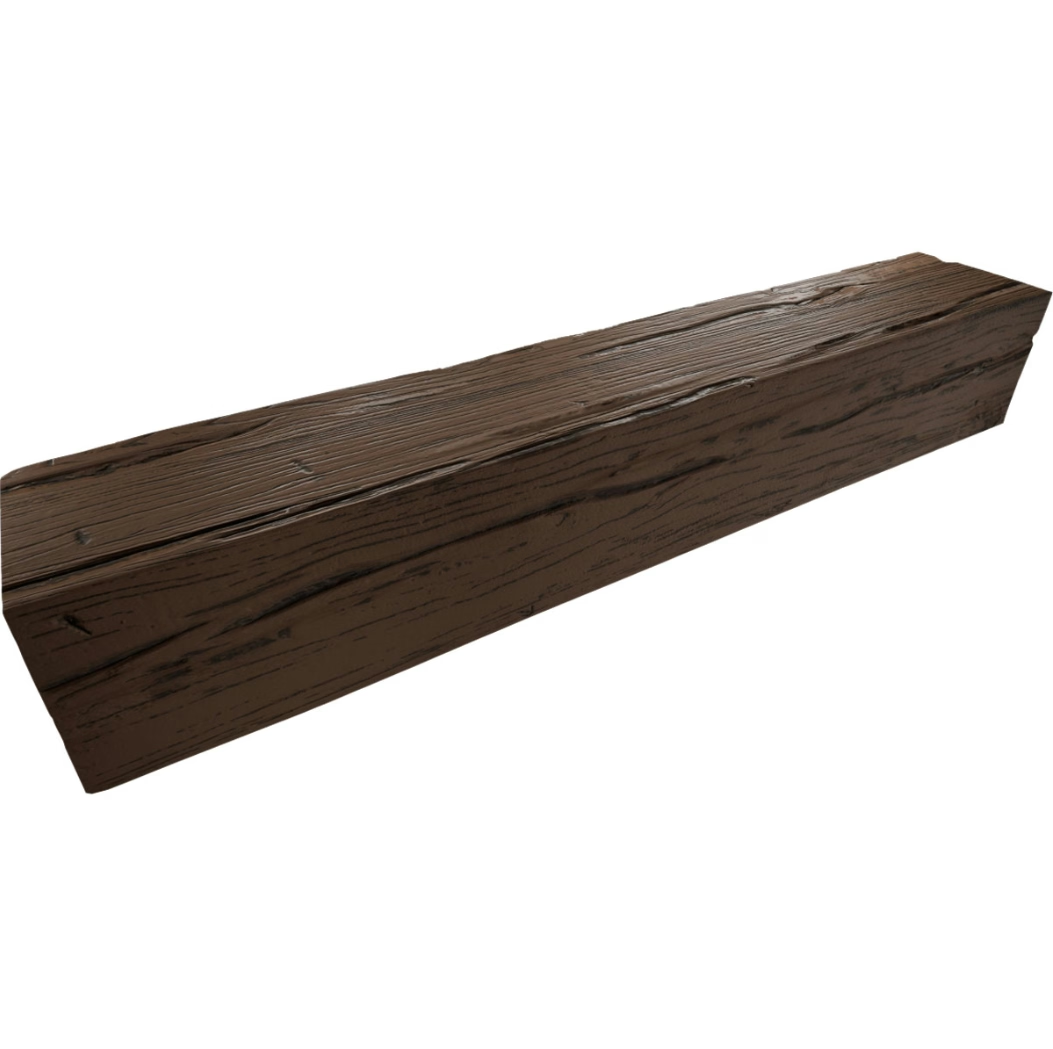
Installation Savings
DIY Approach
Professional installation doubles cost:
- Most homeowners can install
- Two people handle most beams
- Basic tools sufficient
- Weekend projects achievable
DIY saves labor cost entirely.
Blocking Efficiency
Minimize blocking complexity:
- Standard 24-inch spacing
- Standard lumber sizes
- Simple installations only
- Avoid complex mounting
Complex blocking costs extra.
Finish Savings
DIY finishing saves:
- Paint yourself, not contractor rates
- Simple paint faster
- One coat if quality primed
- Touch-up manageable
Professional finishing adds significant cost.
Quality vs. Price Balance
Acceptable Trade-offs
Budget beams accept:
- Minor texture inconsistencies
- Standard (not premium) density
- Basic (not premium) finishes
- Standard (not premium) accuracy
Quality remains functional.
Unacceptable Trade-offs
Never compromise:
- Structural integrity
- Fire safety ratings
- Load capacity for fixtures
- Basic appearance quality
Core requirements are non-negotiable.
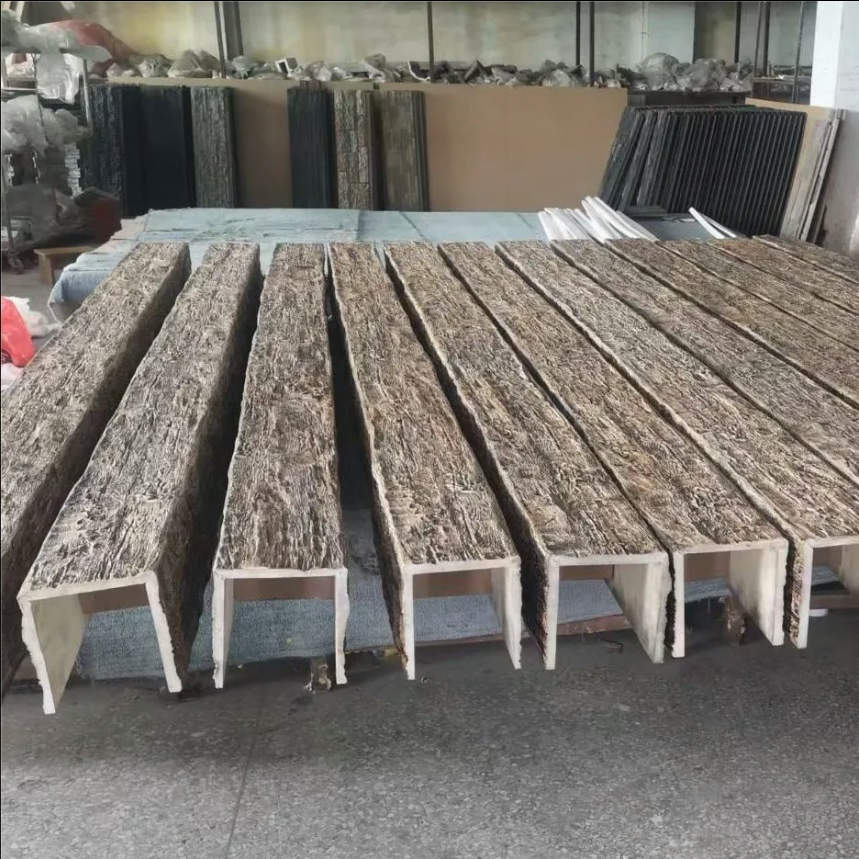
Finding Budget Options
Supplier Selection
Budget sources include:
- Home improvement stores
- Online marketplaces
- Overstock suppliers
- Builder liquidations
Compare across sources.
Quantity Discounts
Volume reduces per-unit cost:
- Order all beams together
- Combine with other buyers
- Negotiate contractor rates
- Watch for sales
Volume matters.
Timing Purchases
Seasonal pricing varies:
- Winter slower for suppliers
- Holiday sales exist
- Clear inventory discounts
- Plan ahead for savings
Patience pays.
Common Budget Mistakes
Buying Too Cheap
The cheapest option often fails:
- Frequent replacement needed
- Poor appearance costs more
- Installation problems multiply
- Satisfaction suffers
Cheapest isn't cheapest overall.
Ignoring Total Cost
Material price isn't total cost:
- Installation complexity
- Finish quality
- Durability and lifespan
- Replacement timing
Calculate true cost.
Premium for Wrong Applications
Spending too much where unnecessary:
- Fancy beams in rentals
- Premium finish in secondary rooms
- Professional install for simple projects
- Complex mounting for temporary use
Match spending to application.
Budget faux beams work when applied strategically. Know where quality matters and where budget options suffice. DIY installation and primed finishes save significantly. The goal is value—not the cheapest option, but the best result per dollar spent.
Technical References
ASTM standards cited in every specification
Test Data
Lab results from internal testing program
Updated 2026
Reviewed against current product specs