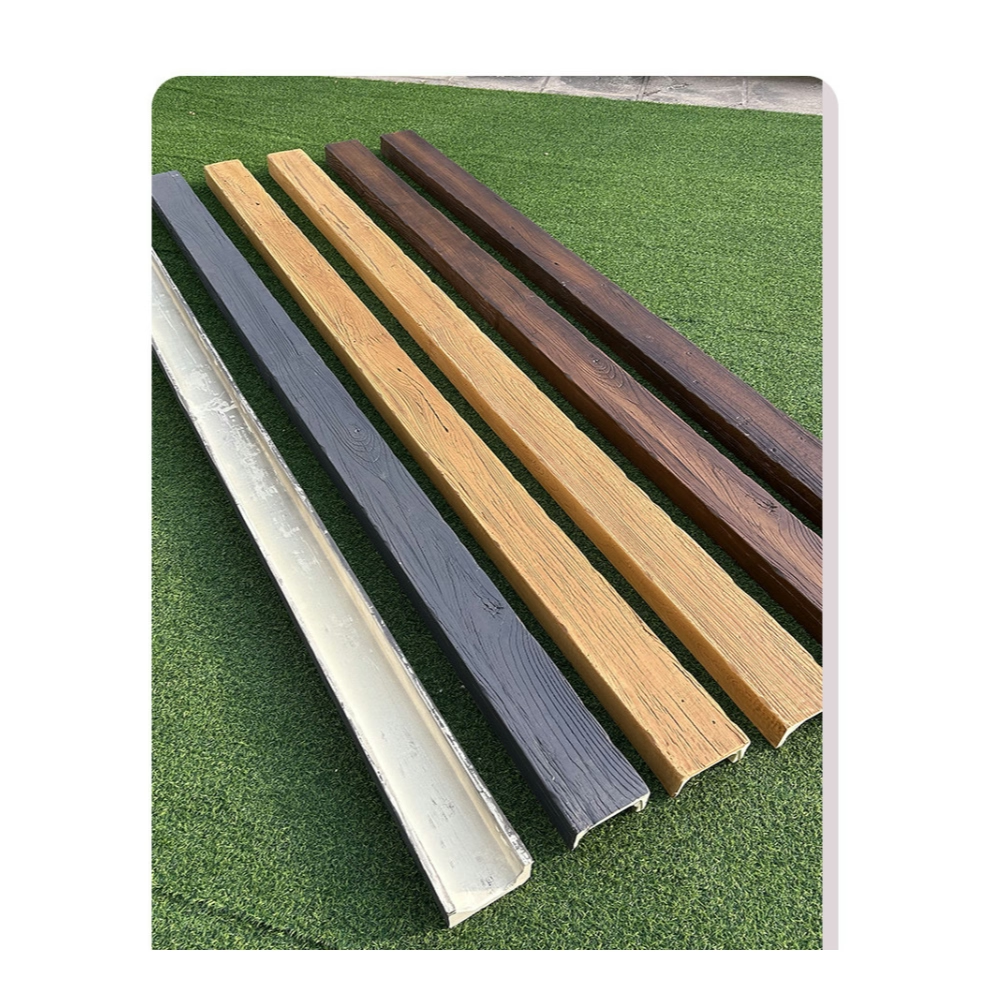
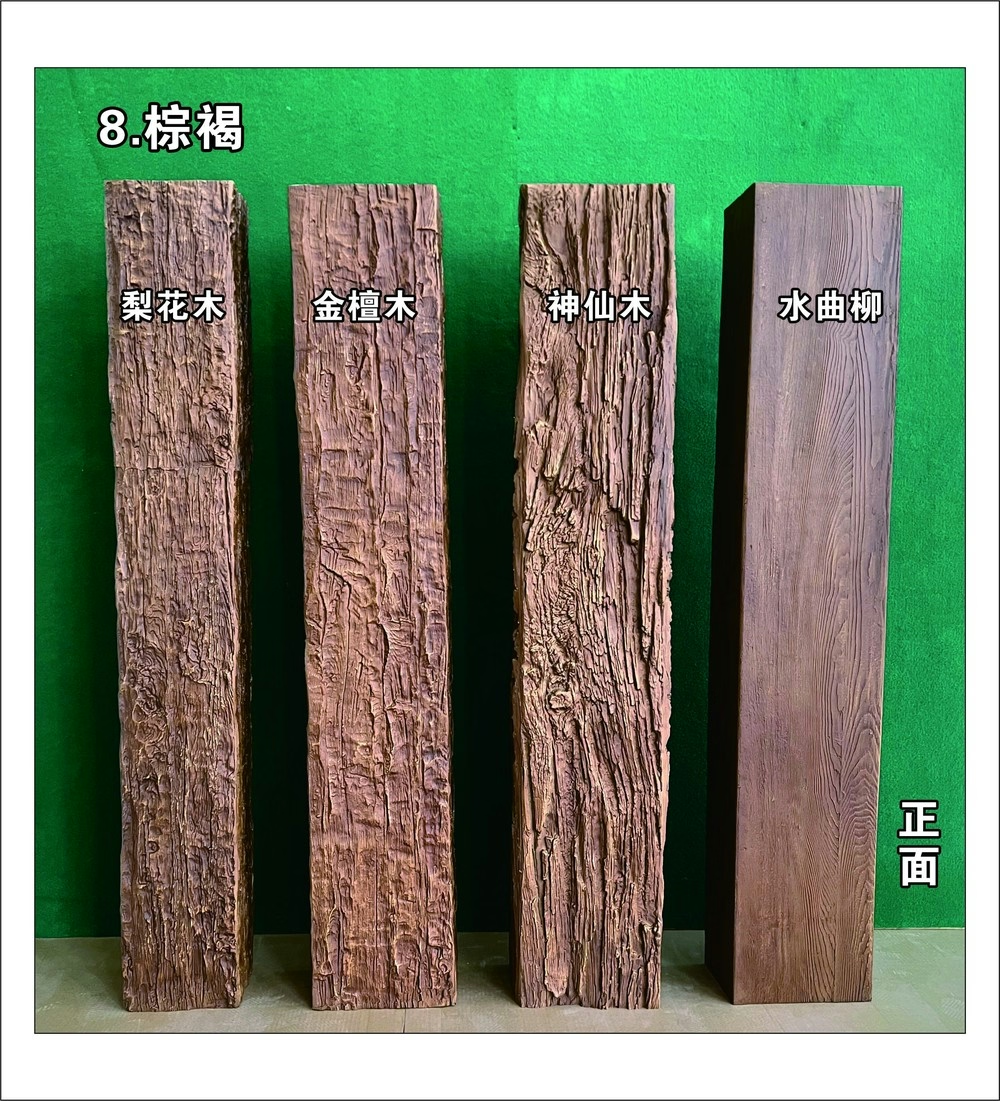
When Sarah upgraded her 1970s ranch home last spring, she had her heart set on exposed timber beams across the living room ceiling. The contractor gave her the news every homeowner dreads: the existing ceiling structure couldn't support real wood. Installing structural reinforcement would add thousands to the project and require permits. She nearly abandoned the whole idea until she discovered ultra-lightweight polyurethane faux wood beams. Within a single weekend, her ceiling was transformed, and no one who visits can tell the difference between her new beams and the original solid timber she always wanted.
This scenario plays out in homes and commercial spaces across the world every day. The demand for warm, rustic timber aesthetics conflicts directly with the physical reality of traditional wood beams. Real oak, Douglas fir, or reclaimed barn wood beams weigh between 8 and 15 pounds per linear foot, depending on species and moisture content. A single 10-foot beam in solid walnut can exceed 150 pounds. Ceiling structures, especially in older homes, were rarely designed to bear that kind of distributed load. Ultra-lightweight PU faux wood beams resolve this fundamental tension by delivering the visual impact of timber without the structural burden.
The Weight Problem with Traditional Timber Beams
Structural engineers generally recommend that ceiling-installed decorative beams add no more than 5 to 8 pounds per square foot to a ceiling's dead load. A real timber beam spanning 12 feet with a 6-inch by 8-inch profile can easily exceed this threshold. The consequences of ignoring this constraint range from cosmetic ceiling damage like cracking and sagging to catastrophic structural failure in extreme cases. Beyond the structural concerns, heavy beams demand specialized installation hardware, multiple installers, and often the use of cranes or lift equipment for ceiling heights above 10 feet.
Contractors who specialize in timber frame construction know this intimately. A standard installation crew for real timber beams typically includes three to four workers, heavy-duty mounting brackets, and steel support cables. The labor alone for handling and positioning heavy beams can account for 30 to 40 percent of the total installation cost. Add in the expense of structural assessment and reinforcement, and a timber beam ceiling project can quickly exceed budget by 200 to 300 percent compared to initial estimates.
The lightweight alternative offered by PU faux wood beams changes every variable in this calculation. These hollow-shell beams typically weigh between 1 and 2.5 pounds per linear foot, representing an 80 to 90 percent reduction compared to solid timber of equivalent dimensions. A 12-foot beam that would weigh 120 pounds in solid oak can weigh as little as 15 to 20 pounds in high-density polyurethane. This dramatic weight reduction is not a compromise in quality; it is a deliberate engineering advantage that makes beautiful ceilings achievable in virtually any building.

Engineering Behind Ultra-Lightweight Faux Beam Construction
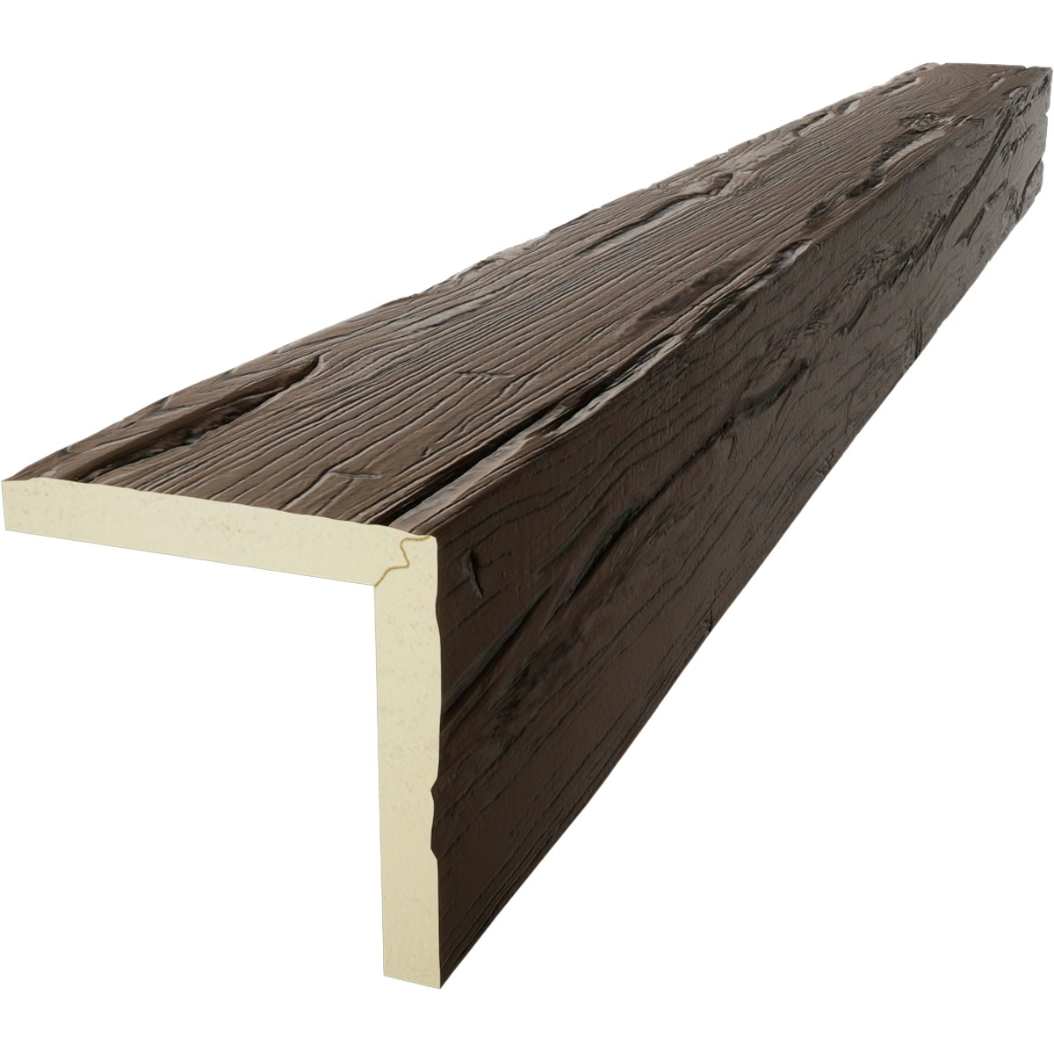
High-density polyurethane foam used in premium faux beam manufacturing starts as a liquid mixture of polyol and diisocyanate compounds. When these compounds react in a precision mold under controlled temperature and pressure, they expand and cure into a rigid foam with a closed-cell structure. The resulting material has a density typically ranging from 30 to 60 pounds per cubic foot, which is roughly one-quarter to one-third the density of solid pine. The hollow interior of the beam, formed by a twin-wall or ribbed internal structure, further reduces weight while maintaining remarkable rigidity.
Manufacturers achieve this structural stability through careful internal architecture. Most quality faux beams feature a network of interior ribs and supports that resist bending, torsion, and compression while keeping the overall mass minimal. This construction method is conceptually similar to the engineering principle behind I-beam steel construction, where material is distributed to maximize resistance to load while minimizing weight. The exterior skin of the beam, whether smooth or embossed with wood grain texture, provides additional structural rigidity and surface durability.
The mounting system for ultra-lightweight beams is correspondingly simple. Where solid timber beams require heavy steel brackets bolted directly into ceiling joists or rafters, faux beams can be installed using a variety of lightweight hanging methods. French cleats, keyhole brackets, and adhesive bonding are all viable options depending on the specific product design and ceiling substrate. Many manufacturers design their beam profiles with integrated mounting channels that accept standard hardware, streamlining the installation process considerably.
Safety Advantages for Residential and Commercial Spaces
The safety profile of lightweight beams extends beyond structural considerations. In commercial spaces such as restaurants, hotels, and retail environments, ceiling fixtures must often meet fire safety regulations. Premium PU faux wood beams are available with fire-retardant additive formulations that achieve Class A or Class B fire ratings, meaning they resist flame spread and do not contribute significantly to fire propagation. These ratings are determined through standardized testing procedures established by organizations such as ASTM International, and they provide peace of mind for property owners and managers.
The reduced risk of injury during handling is another meaningful safety advantage that often goes unmentioned. Back strains and muscle injuries are among the most common workplace hazards in construction and renovation. Heavy materials like solid timber beams present a significant ergonomic risk, especially in residential settings where homeowners attempt their own installations without professional equipment. A 12-foot beam weighing 140 pounds cannot be safely lifted by one or even two people without risk. The same beam at 18 pounds can be managed by a single person using proper technique, dramatically reducing the potential for injury.
In multi-story buildings, the reduced point-load impact of lightweight beams also benefits the overall structure. When multiple beams are installed across a ceiling, the cumulative weight of solid timber can create concentrated loads at support points that stress the building's frame over time. Lightweight faux beams distribute their minimal mass across the mounting hardware without creating meaningful additional load. This characteristic makes them particularly well-suited for upper-floor installations in apartment buildings, condominiums, and historical structures where preserving the original building fabric is a priority.
Installation Methods That Save Time and Money
The most compelling practical advantage of ultra-lightweight faux beams is the speed at which they can be installed. Professional installers consistently report that PU faux beam projects complete in one-quarter to one-third of the time required for equivalent solid timber installations. For a living room with a 16-foot ceiling span requiring four beams, a professional crew might need an entire day with solid timber. The same project with lightweight faux beams can often be completed in two to three hours, depending on the complexity of the ceiling layout and any decorative detailing.
This time savings translates directly into cost savings for clients. Labor represents the largest single cost component in most renovation projects, and the contractor's time on site drives that cost. By choosing lightweight faux beams, homeowners and commercial property managers can achieve their design goals at a fraction of the labor cost. The reduced need for specialized equipment also eliminates equipment rental fees, delivery charges, and the logistical complexity of maneuvering oversized timber through residential doorways and stairwells.
For the DIY homeowner, the accessibility of lightweight beam installation opens up design possibilities that would otherwise require professional involvement. Basic hand tools are sufficient for most faux beam projects. A tape measure, level, saw (either miter saw or hand saw), drill or driver, construction adhesive, and appropriate mounting hardware are all that most installations demand. Online tutorials and manufacturer installation guides walk through each step in detail, and the forgiving nature of the material means that minor measurement errors can be corrected without costly material damage.
Choosing the Right Beam Profile for Your Space
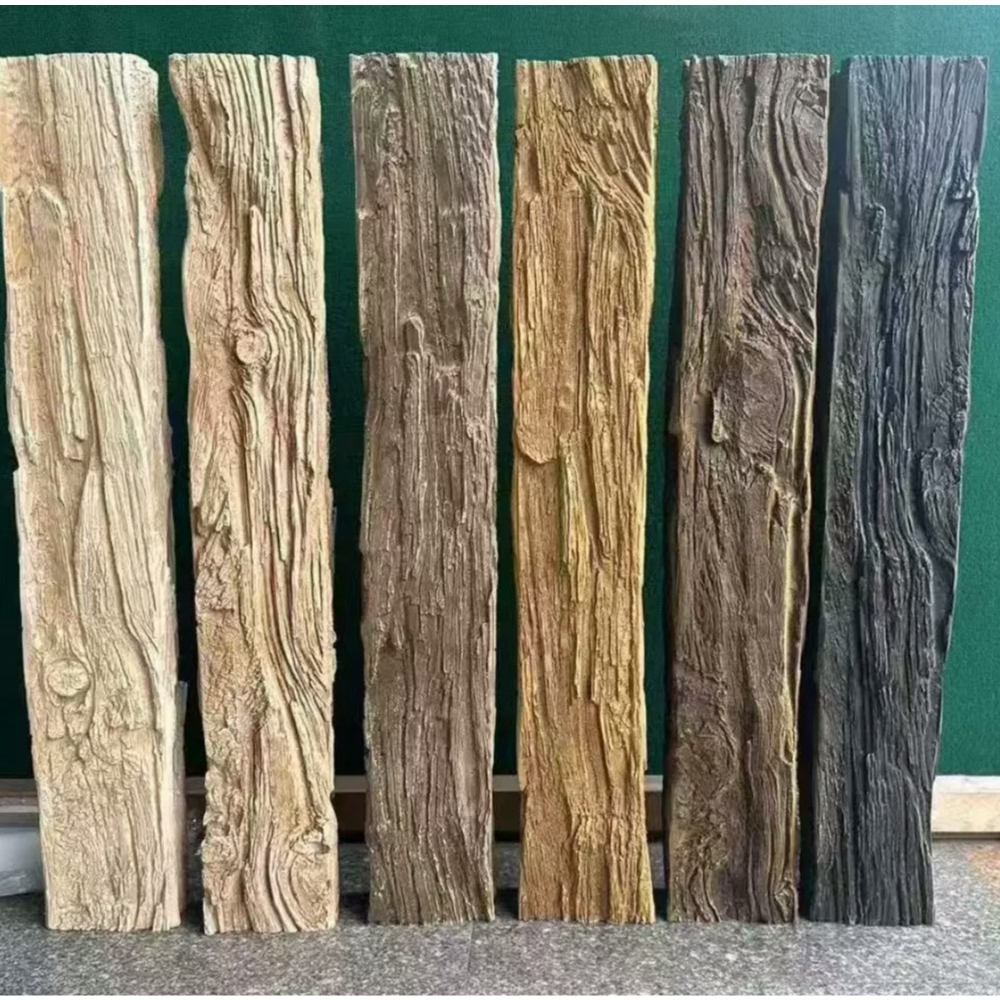
Beam profile selection depends on both aesthetic goals and practical constraints. Common profiles range from simple rectangular boxes to ornate coffered designs with multiple decorative layers. The choice of profile affects not only the visual result but also the perceived scale of the space. Wide, deep beams create a dramatic, substantial look that suits large, open-concept rooms with high ceilings. Narrower, more subtle beams work well in smaller rooms or in spaces where the beams should complement rather than dominate the architectural character.
Color and finish options in PU faux beams have expanded dramatically in recent years. Modern manufacturing techniques can replicate the natural color variation of real wood, from the pale blonde tones of fresh-cut pine to the deep amber warmth of aged oak and the rich chocolate brown of walnut. Staining and painting are also straightforward with PU materials, as the surface accepts standard wood stains, paints, and clear coats without special primer requirements in most cases. This finish flexibility allows designers and homeowners to match existing woodwork or create deliberate contrast in the space.
Long-Term Performance and Maintenance Considerations
Once installed, ultra-lightweight PU faux wood beams require virtually no maintenance compared to real timber. Natural wood beams demand periodic inspection for signs of insect damage, moisture infiltration, and structural degradation. They may require refinishing every five to ten years depending on exposure to sunlight and humidity fluctuations. PU faux beams are inherently resistant to insects, moisture, and the surface checking and cracking that affects natural wood over time. Occasional dusting or cleaning with a damp cloth is typically all that is needed to maintain their appearance for decades.
The thermal expansion and contraction characteristics of polyurethane are well understood and managed through proper product design. Quality manufacturers engineer their beams with expansion joints and flexible mounting systems that accommodate the natural movement of the material through seasonal temperature cycles. This attention to thermal performance ensures that beams maintain their dimensional stability and surface appearance regardless of climate conditions, from humid subtropical environments to dry, temperature-variable continental regions.
For foreign trade buyers sourcing products for distribution across diverse climate zones, this performance consistency represents a significant advantage. Unlike natural wood products whose performance varies significantly based on source species and growing conditions, PU faux beams manufactured to consistent specifications will perform uniformly across markets. This predictability simplifies inventory management, reduces warranty claims, and supports strong relationships with end-use customers who receive consistent quality in every purchase.
Technical References
ASTM standards cited in every specification
Test Data
Lab results from internal testing program
Updated 2026
Reviewed against current product specs