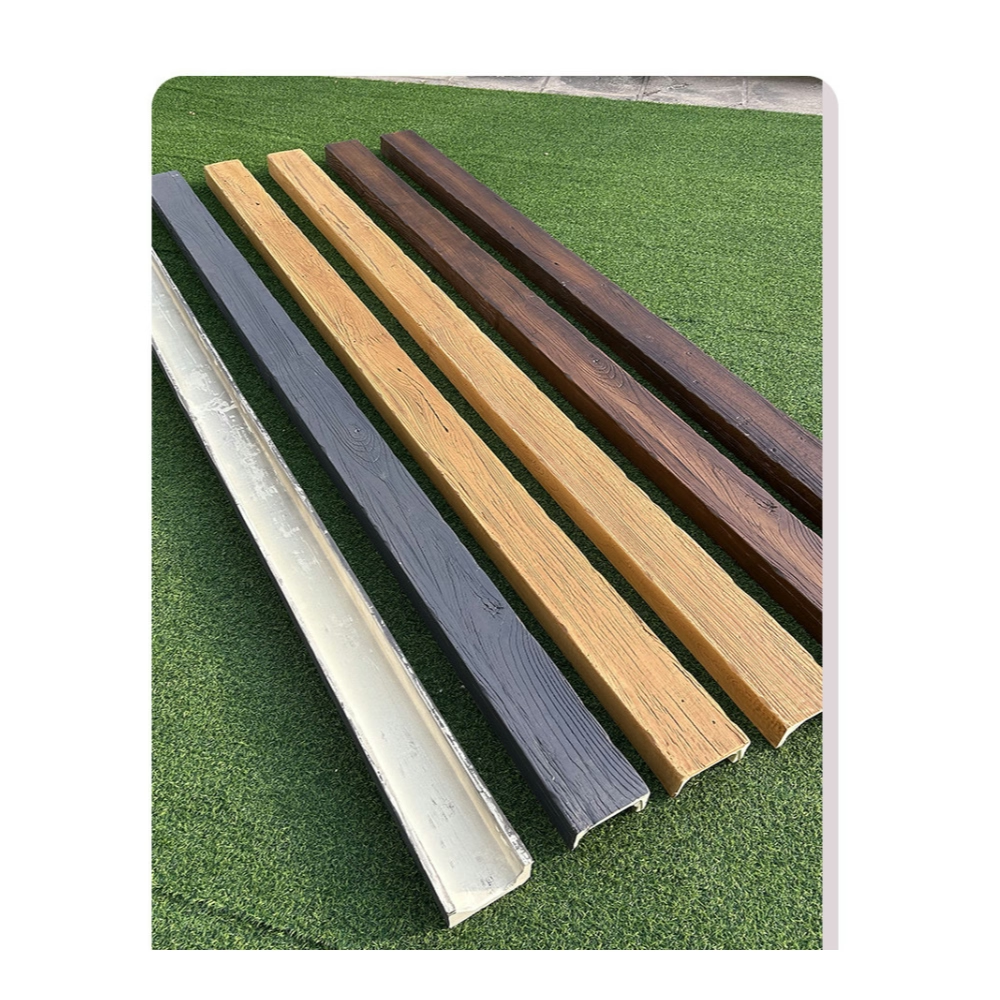
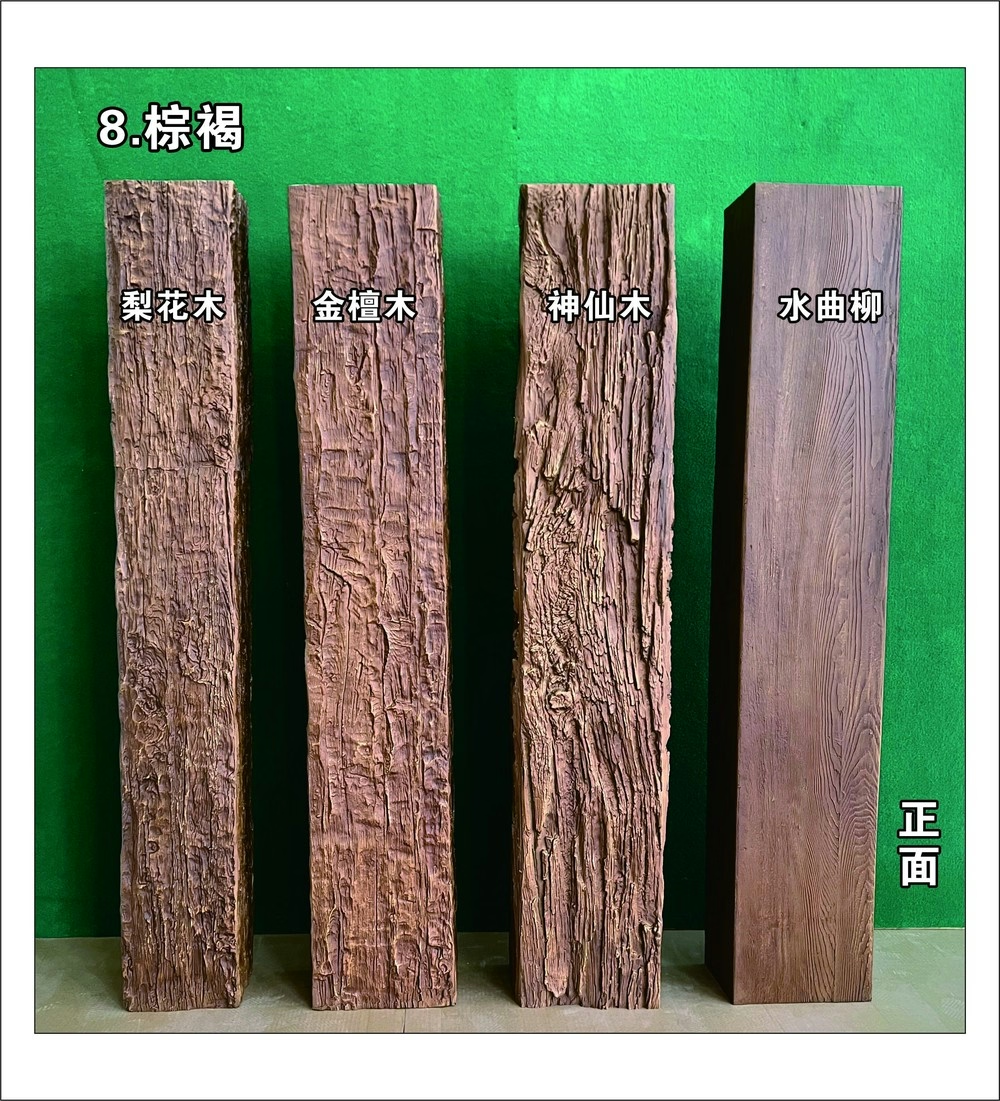
Every contractor knows the projects that quietly drain profitability. They are not the dramatic failures or contentious client disputes; they are the routine jobs where the scope seems reasonable but the actual labor hours consistently exceed estimates. Ceiling beam installation with solid timber has historically occupied this category. The time required to receive delivery, stage heavy beams, assemble lifting equipment, position and secure each beam, and clean up afterward adds up in ways that are difficult to recover from standard per-project pricing. The result is either margin compression for the contractor or budget overruns for the client, and often both.
Ultra-lightweight PU faux beams have emerged as the contractor's choice for ceiling renovation precisely because they eliminate the labor variables that make solid timber installations unpredictable. When a single person can safely handle every beam, when no specialized lifting equipment is required, and when mounting hardware is simple and forgiving, the installation timeline becomes consistent and controllable. Projects complete on schedule, contractors maintain their margins, and clients receive their transformed spaces without the disruption and delays that characterize traditional construction.
Quantifying the Labor Advantage
The labor savings from choosing lightweight faux beams over solid timber begin at the moment of delivery. Solid timber beams arrive on flatbed trucks and require forklifts or specialized boom trucks to unload. The delivery area must be accessible to heavy equipment, and the beams must be staged in a location where they will not be damaged by moisture, impact, or excessive handling before installation. Each of these requirements adds steps, costs, and potential failure points to the project logistics.
Lightweight faux beams arrive in compact packaging optimized for standard freight handling. A single worker can unload a full project's worth of beams from a delivery van using basic hand-dollies or hand-carrying for individual pieces. The packaging is weather-resistant and designed for indoor storage in standard warehouse or garage conditions. No specialized receiving procedures, no heavy equipment, no site preparation are required.
Installation labor savings compound throughout the project. A typical residential ceiling beam project with solid timber might require two to three workers operating in coordinated sequence: one to position and hold the beam, one or two to manage fasteners and alignment, and potentially a third to operate any required lifting equipment. The same project with lightweight faux beams can often be completed by a single worker who handles all positioning, alignment, and fastening without assistance. This reduction from a three-person team to a one-person operation represents a 60 to 70 percent reduction in labor hours on a per-beam basis.
The finishing phase of beam installation also benefits from lightweight materials. Solid timber end grain and cut surfaces require sealing or painting to match the finished faces, a detail-oriented task that adds time and skill requirements. Faux beam end caps and trim pieces provide clean, finished appearances without the need for on-site finishing. Any minor surface damage that occurs during handling or installation can be repaired with standard wood filler and touch-up finish, a quick and straightforward process that requires no specialized finishing skills.

Implications for Project Pricing and Client Value
The labor efficiency of lightweight faux beam installation creates a meaningful opportunity for both contractors and clients. Contractors can offer competitive pricing on beam installation projects while maintaining healthy margins, because the actual labor hours required are substantially lower than the estimates that govern pricing for solid timber projects. The predictability of the installation process also reduces the risk of cost overruns that damage client relationships and contractor reputation.
Clients benefit from faster project completion, lower total cost, and reduced disruption to their daily lives. A ceiling beam project that would have required three days of work with solid timber can often be completed in a single day with lightweight faux beams. For families living in the home during renovation, this reduction in construction time is significant: fewer days of dust barriers, noise, displaced furniture, and disrupted routines. For commercial clients such as restaurant or retail operators, a one-day installation versus a three-day installation can mean the difference between maintaining revenue and losing thousands of dollars in closed-floor revenue.
The simplified logistics of faux beam projects also reduce the administrative burden on both contractors and clients. Heavy timber projects require coordination with crane services, traffic control for street parking of delivery vehicles, structural engineering consultations, and permit applications for structural modifications. Lightweight faux beam projects involve none of these requirements. The mounting hardware is standard and requires no engineering certification. The installation creates no structural load that would trigger permit requirements in most jurisdictions. The project can proceed from material delivery to finished installation in a streamlined sequence that minimizes coordination complexity.
Training and Skill Requirements
The accessibility of lightweight faux beam installation extends to skill requirements as well as physical labor. A contractor's crew that includes workers with varying experience levels can all contribute meaningfully to a faux beam project, with experienced workers handling layout and alignment while less experienced workers manage material handling and hardware installation. This flexibility in crew composition allows contractors to deploy their workforce more efficiently and to train junior workers on beam installation techniques without the risk and equipment demands associated with heavy timber handling.
For individual homeowners taking on beam installation as a DIY project, the skill requirements are similarly accessible. A person with basic carpentry experience — the ability to measure accurately, use a level, cut with a saw, and drive screws — possesses all the skills needed to install lightweight faux beams successfully. The forgiving nature of the mounting systems means that minor errors can be corrected without material damage, unlike solid timber where a miscut or poorly positioned fastener can ruin an expensive beam.
Manufacturers and distributors typically provide detailed installation guides and video tutorials that walk through each step of the process, from initial measurement and layout through final finishing and cleanup. These resources further lower the barrier to successful installation, empowering both professionals and homeowners to achieve results that meet or exceed the quality standards of traditional construction methods.
Workflow Optimization for Professional Installers
Professional installers who specialize in ceiling beam projects have developed workflow optimizations that maximize the efficiency advantages of lightweight materials. Pre-installation preparation, including accurate measurement, layout marking, and hardware staging, sets the stage for rapid execution. By completing all planning work before the first beam is lifted, the actual installation proceeds as a smooth, continuous process without interruption for measurement or decision-making.
The modular nature of most faux beam product lines also supports efficient workflow. Beams that come in standard lengths with available cutting to custom dimensions allow installers to optimize material utilization and minimize waste. Pre-finished products eliminate on-site finishing steps. Integrated mounting systems that ship with the beams reduce time spent sourcing and preparing hardware. Each of these efficiencies compounds, resulting in installation times that are a fraction of what solid timber would require.
The business case for contractors to adopt lightweight faux beams as their standard ceiling beam offering is compelling and growing stronger as product quality continues to improve. Clients receive beautiful, durable results faster and more affordably. Contractors maintain profitable margins on projects that have become predictable and manageable. The result is a positive-sum outcome where everyone in the transaction benefits, which is the foundation of sustainable business relationships and strong referral networks.
Technical References
ASTM standards cited in every specification
Test Data
Lab results from internal testing program
Updated 2026
Reviewed against current product specs