Architecture has always been a discipline of shapes and shadows. The play of light across surfaces, the depth created by projecting elements, the way a simple form can cast a complex shadow that changes throughout the day — these are the materials of the architect's craft. Ceiling beams have served this shadow-making function for centuries, with their profile shape determining the quality and character of the shadows they cast. The rectangular beam produces a clean, geometric shadow along its length. The corbelled beam produces more complex, layered shadows. And the U-shaped beam, with its open underside channel, creates a distinctive visual effect that sets it apart from any other profile type.
U-shaped faux beams are a relatively recent addition to the range of available ceiling beam profiles, made practical by the design flexibility of polyurethane molding. While solid timber U-shaped beams are theoretically possible, the challenges of hollowing timber to create the channel while maintaining structural integrity and clean lines have historically made them rare and expensive. Polyurethane construction, with its ability to mold complex cross-sectional profiles in a single manufacturing step, makes U-shaped beams as accessible and affordable as any standard profile.
The Visual Character of U-Shaped Beams
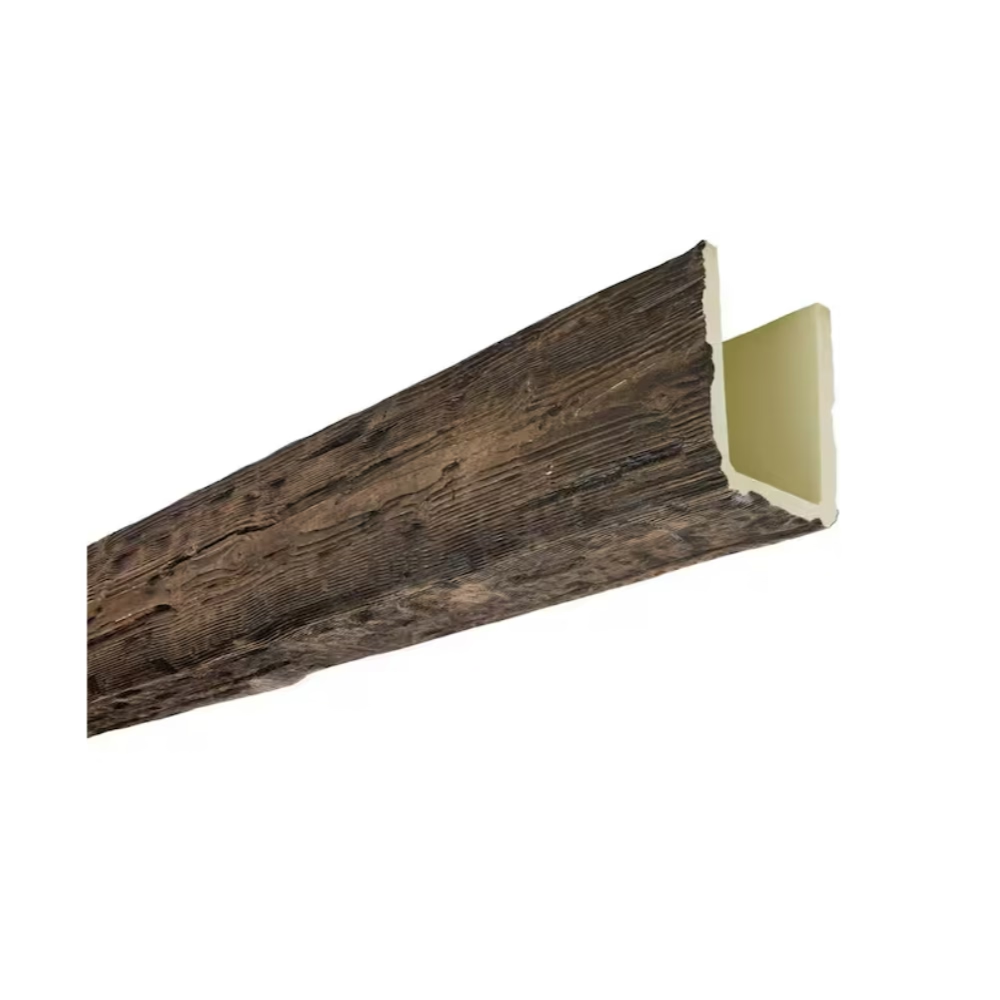
The defining visual characteristic of a U-shaped beam is the hollow channel running along its underside. Unlike a solid rectangular beam, which presents a flat bottom face to the room, the U-shaped beam has an open channel that creates a sense of depth and dimensionality. This channel casts its own internal shadows that change with the angle of ambient light, adding visual interest that a flat-faced beam cannot provide. The effect is particularly striking in rooms with strong natural light from windows or skylights, where the changing position of the sun throughout the day animates the beam's internal channel with moving shadows.
The U-shaped profile also creates a more substantial visual presence than a solid rectangular beam of equivalent exterior dimensions. The open channel appears darker than the surrounding ceiling surface, creating the impression that the beam has more mass and occupies more visual space than its physical dimensions would suggest. This perceptual amplification is a significant design advantage in rooms where the ceiling height limits the practical depth of installed beams: a shallower U-shaped beam can create the same visual impact as a deeper solid beam, allowing for ceiling-appropriate scale in rooms with lower ceilings.
The internal channel of U-shaped beams also provides a practical function in installations where recessed lighting or other fixtures are desired. The channel can accommodate small LED strip lights, compact downlight fixtures, or speaker systems without the complex mounting arrangements required for lighting in solid beam installations. This integration of functional elements within the beam's form is a design opportunity that architects and interior designers increasingly exploit to create ceiling treatments that are as functional as they are beautiful.
Structural Design of Hollow U-Channel Construction
The engineering of U-shaped hollow beams must account for the structural demands of ceiling installation while maximizing the weight reduction benefits of hollow construction. The cross-sectional geometry of a U-channel presents both advantages and challenges compared to solid rectangular profiles of equivalent dimensions. The U-shape provides good resistance to bending loads in the vertical plane (the primary loading direction for ceiling beams) due to the distribution of material at the top flanges. However, the open channel reduces torsional rigidity compared to a closed rectangular profile.
Manufacturers address the torsional challenge through internal rib design. Ribs running along the interior of the beam, typically spaced at regular intervals, stiffen the U-channel against twisting while adding minimal weight. The result is a beam that handles and performs adequately in ceiling applications, where torsional loads are minimal compared to the downward gravitational load the mounting system bears. Premium U-shaped beams are tested to verify adequate performance under installation and service loads, with specifications including maximum allowable span, recommended mounting spacing, and fastener pull-out resistance.
The wall thickness of the U-channel skin is optimized to balance surface durability, weight, and manufacturing efficiency. Walls that are too thin may be vulnerable to damage during handling or installation. Walls that are too thick add unnecessary weight without proportional structural benefit. Quality manufacturers use finite element analysis and physical testing to determine optimal wall thickness for each beam profile, achieving the best balance of performance and practicality for the intended application.

Installation Considerations for U-Shaped Beams
Installing U-shaped beams requires attention to the same fundamental principles as other faux beam types, with a few profile-specific considerations. The hollow channel running along the beam's underside means that any mounting hardware installed through the beam's bottom face must be driven into the solid ribs rather than the hollow channel walls. Standard hollow-wall anchors designed for drywall are not appropriate; construction adhesive and screws driven through the top flange or web of the beam are the preferred fastening methods.
When using U-shaped beams with integrated lighting, the electrical installation should be completed before the beam is permanently mounted. Running wiring through the channel, connecting and testing lighting fixtures, and addressing any issues before the beam is secured to the ceiling avoids the frustration of working in confined spaces after installation. Many installers run a small bead of construction adhesive along the top surface of the channel after wiring is complete, which seals the channel against dust accumulation while leaving the lighting accessible for maintenance through the fixture openings.
Alignment and leveling of U-shaped beams requires slightly more care than solid rectangular beams because the open channel creates a more visually apparent reference surface. Any deviation from level or any inconsistency in spacing will be visible as the channel appears to wander across the ceiling. Taking extra time during the layout and mounting phases to ensure precise alignment is well worth the effort, as the finished result rewards attention to detail with a clean, professional appearance.
Applications and Design Pairings for U-Shaped Beams
U-shaped beams are particularly effective in contemporary and transitional interior design schemes where the clean lines and geometric profile complement modern furniture, minimal ornament, and open architectural forms. The hollow channel introduces a subtle complexity to the ceiling that prevents it from feeling too austere, adding warmth and character without the rustic associations that sometimes accompany more traditional solid timber beam profiles.
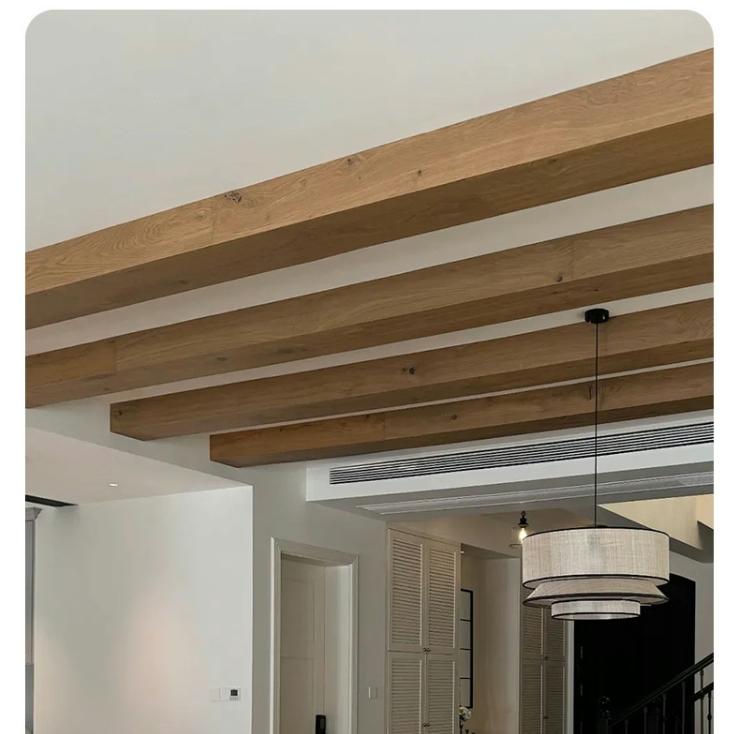
Pairing U-shaped beams with modern pendant lighting is a natural combination that architects frequently exploit. The beam's channel can house the wiring and mounting hardware for pendant fixtures, with the fixtures themselves suspended at varying heights to create visual interest. The contrast between the geometric precision of the U-channel and the organic forms of textile or glass pendant shades creates a dynamic tension that elevates both elements.
In commercial settings, U-shaped beams work well in offices, retail spaces, and hospitality venues that aim for a contemporary aesthetic with natural material warmth. The hollow channel provides an excellent pathway for recessed LED strip lighting that can be programmed to change color temperature or intensity throughout the day, creating ambient lighting effects that support productivity, relaxation, or atmosphere as the space's function requires.
Technical References
ASTM standards cited in every specification
Test Data
Lab results from internal testing program
Updated 2026
Reviewed against current product specs


