A timber beam without knots is like a face without character. The knots that appear in natural wood are not defects to be avoided but defining features that tell the story of the tree's growth, its response to seasons of rain and drought, its battles with wind and age. In architectural design, knot details in ceiling beams are sought-after elements that bring authenticity and organic character to a space. They ground the room in natural history and prevent the sterile perfection that can make modern interiors feel generic and soulless.
For faux wood beam manufacturers, reproducing knot details convincingly is one of the most demanding challenges in surface reproduction. A knot is not a simple surface feature; it is a complex three-dimensional structure with distinctive geometry, color gradients, and surrounding grain distortion that varies from knot to knot within a single board. Capturing this complexity convincingly requires mold-making techniques of exceptional precision and finishing skills of equal refinement. The results achieved by premium manufacturers are remarkable, with knot details that possess the same visual and tactile character as those found in natural timber.
The Anatomy of a Natural Wood Knot
To understand how knot detail is reproduced in faux beams, it helps to understand what a knot actually is in the living tree. A knot begins as a branch that grows from the trunk. As the tree adds annual rings over the years, the branch base becomes surrounded by wood tissue. When a board is cut from the tree, the cross-section of that branch base appears as the characteristic circular or oval knot. The wood grain surrounding the knot curves around it, creating the distinctive swirled pattern that is one of wood's most recognizable visual features.
The color of a knot typically differs from the surrounding wood. Knots are usually darker, denser, and often more highly figured than the adjacent clear wood. This difference results from the different orientation of the wood fibers in the knot area and the concentration of extractive compounds that the tree deposits to seal off the branch connection. In species like oak, knots display rich, dark coloration with distinctive figuring. In pine, knots are often resinous with lighter-toned halos. In walnut, knots present as intensely dark concentrations of figure against the warm brown background.
The aging of a knot also affects its appearance. In older timber, knots may have developed checks (small cracks radiating from the knot center), color changes due to oxidation, and surface differences from the surrounding wood. Reclaimed timber often features particularly dramatic knot character, as the aging process has intensified every feature of the wood's natural beauty. Reproducing these aged knot details requires not just accurate geometry but also the surface character and coloration that develop over decades or centuries of natural aging.
Mold Making for Knot Detail Reproduction
Creating a mold that captures knot detail begins with the selection of suitable knot samples. Manufacturers search timber yards, specialty lumber suppliers, and occasionally reclaimed timber sources for boards that display exceptional knot character — knots that are well-formed, with clear concentric ring structure and attractive surrounding grain patterns. The selection process is rigorous: only a small fraction of available knot-bearing boards will meet the standards required for premium knot mold creation.
The selected knot sample is prepared for molding by cleaning, stabilizing any loose areas, and treating the surface to ensure clean mold release after casting. Precision silicone molding compounds are then applied in multiple layers, with each layer allowed to cure fully before the next is added. This careful layering captures the full depth and complexity of the knot's surface topography, including the fine detail of the grain swirls and any surface checking or natural imperfections that add character.
The resulting mold must be handled and maintained with care, as the fine detail in knot areas is more vulnerable to damage than the flatter, more robust clear wood areas of the mold surface. Premium manufacturers invest in mold maintenance programs that include regular inspection, cleaning, and repair of any damaged detail areas. This investment in ongoing quality maintenance reflects the premium value that knot-detailed beams command in the market.
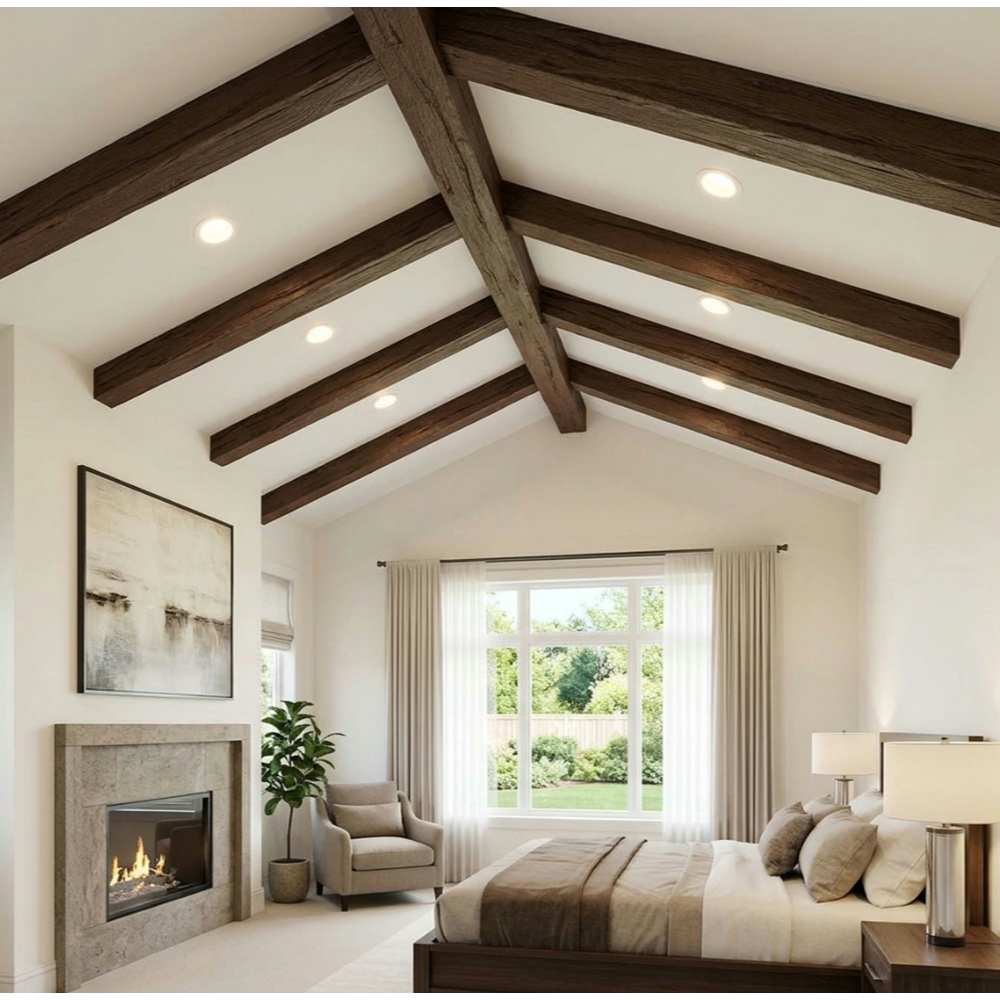
Finishing Knot-Detailed Beams
The finishing of knot-detailed beams presents challenges that are distinct from finishing clear-grain beams. The dense, often resinous nature of natural knots affects how stain and finish adhere to the surface. In natural wood, the knot may absorb stain differently than the surrounding clear wood, creating the characteristic darker coloration that distinguishes knots from their surroundings. In polyurethane faux beams, the surface absorption characteristics are uniform throughout, so the finishing process must artificially replicate the differential absorption that occurs naturally in timber.
Premium finishers achieve this effect through a combination of techniques. Base staining is followed by targeted color application in knot areas, using fine brushes or airbrush equipment to apply darker tones precisely within the knot boundaries. This hand-applied coloring is feathered at the edges to create natural-looking transitions between the knot and the surrounding wood. Multiple thin layers of color build depth and complexity, mimicking the way natural wood coloration varies through the depth of the surface rather than sitting as a flat painted layer.
The final topcoat application must account for the slightly different surface texture in knot areas. The denser, more highly figured grain of the knot often presents a smoother surface than the surrounding clear wood, which affects how the topcoat sheen appears. Premium finishers test topcoat application on knot areas specifically, adjusting application technique and topcoat formulation to achieve consistent sheen across the entire beam surface. The result is a knot detail that looks as convincing in raking light as it does under direct illumination, maintaining its character at every viewing angle and light condition.
For designers specifying knot-detailed beams, the investment in premium-quality reproduction is strongly recommended. Economy knot details often appear as flat, painted circles that lack the dimensional quality and natural variation of genuine knot character. The subtle differences between premium and economy knot reproduction are immediately apparent to anyone familiar with natural timber, making product quality selection a critical specification decision for projects where authenticity is paramount.
Technical References
ASTM standards cited in every specification
Test Data
Lab results from internal testing program
Updated 2026
Reviewed against current product specs


