There is a particular satisfaction in specifying a material that succeeds on every dimension simultaneously. A product that looks exceptional, costs less than alternatives, installs more easily, and maintains itself for decades without attention is the dream of every designer and the reality of premium polyurethane faux beams with authentic wood grain reproduction. These beams represent a convergence of aesthetic achievement and practical engineering that has made them one of the most rapidly adopted ceiling treatment categories in both residential and commercial construction.
The secret to this convergence lies in the material properties of polyurethane combined with the sophisticated surface reproduction techniques developed specifically for faux wood applications. Polyurethane's dimensional stability, low density, and excellent moldability create the structural foundation. Advanced embossing, staining, and finishing processes create the visual and tactile surface. Together, these capabilities produce a product that satisfies the highest aesthetic standards while delivering practical performance that natural timber cannot match.
The Polyurethane Advantage in Ceiling Applications
Polyurethane as a structural material offers several inherent advantages that make it particularly well-suited for ceiling beam applications. Its density is approximately one-quarter to one-third that of solid pine, which means a beam of identical visual dimensions weighs a fraction as much. This weight reduction simplifies every aspect of the installation: material handling, mounting hardware requirements, structural demand on the ceiling substrate, and safety during installation. Each of these simplifications cascades into cost savings and reliability improvements that benefit everyone involved in the project.
The dimensional stability of polyurethane across temperature and humidity ranges eliminates the movement-related problems that affect natural timber. Solid timber in conditioned interior spaces typically maintains stable dimensions, but any fluctuation in humidity causes measurable expansion and contraction that stresses joints, loosens fasteners, and eventually manifests as visible checking or warping. Polyurethane's low hygroscopic response means that even substantial humidity changes produce negligible dimensional change, ensuring that the beam maintains its as-installed appearance and fit indefinitely.
Manufacturability is another inherent advantage that benefits both producers and consumers. Natural timber beams are subject to the variability of the material: no two boards are identical, and wood from different trees, regions, or even different parts of the same tree will exhibit different characteristics. This variability is part of timber's charm but creates challenges for consistent specification and installation. Polyurethane beams are manufactured to tight tolerances, ensuring that every beam in an order matches the specification precisely. This consistency simplifies inventory management for distributors, accurate estimation for contractors, and predictable results for designers and homeowners.
Species Selection and Grain Character
The range of wood species available in PU faux beams spans the most commonly specified ceiling beam timbers, with options typically including oak in various finishes, pine in natural and painted variants, walnut, cherry, ash, and species-specific rustic or reclaimed reproductions. Each species is reproduced with attention to the defining visual characteristics that distinguish it: the ring-porous boldness of oak, the fine, even texture of pine, the rich figuring of walnut, the warm tones of cherry.
Species selection should be guided by the design context rather than personal preference alone. The beam species should complement rather than compete with other wood elements in the space. In rooms with oak flooring, oak beams reinforce rather than clash. In spaces with walnut furniture, walnut beams extend the material vocabulary. In rooms with no other significant wood elements, the beam species sets the tone for the entire space, making the selection a foundational design decision that influences every subsequent material choice.
The texture scale within each species should also be considered in relation to beam dimensions and room scale. Large beams in a large room can accommodate bold, coarse grain textures without appearing over-textured. Smaller beams in more intimate spaces benefit from finer grain textures that remain appropriate to the room's scale. This relationship between grain texture scale and beam scale is one of the subtler aspects of authentic wood grain reproduction, and premium manufacturers typically offer multiple texture scales within each species specifically to support this contextual matching.
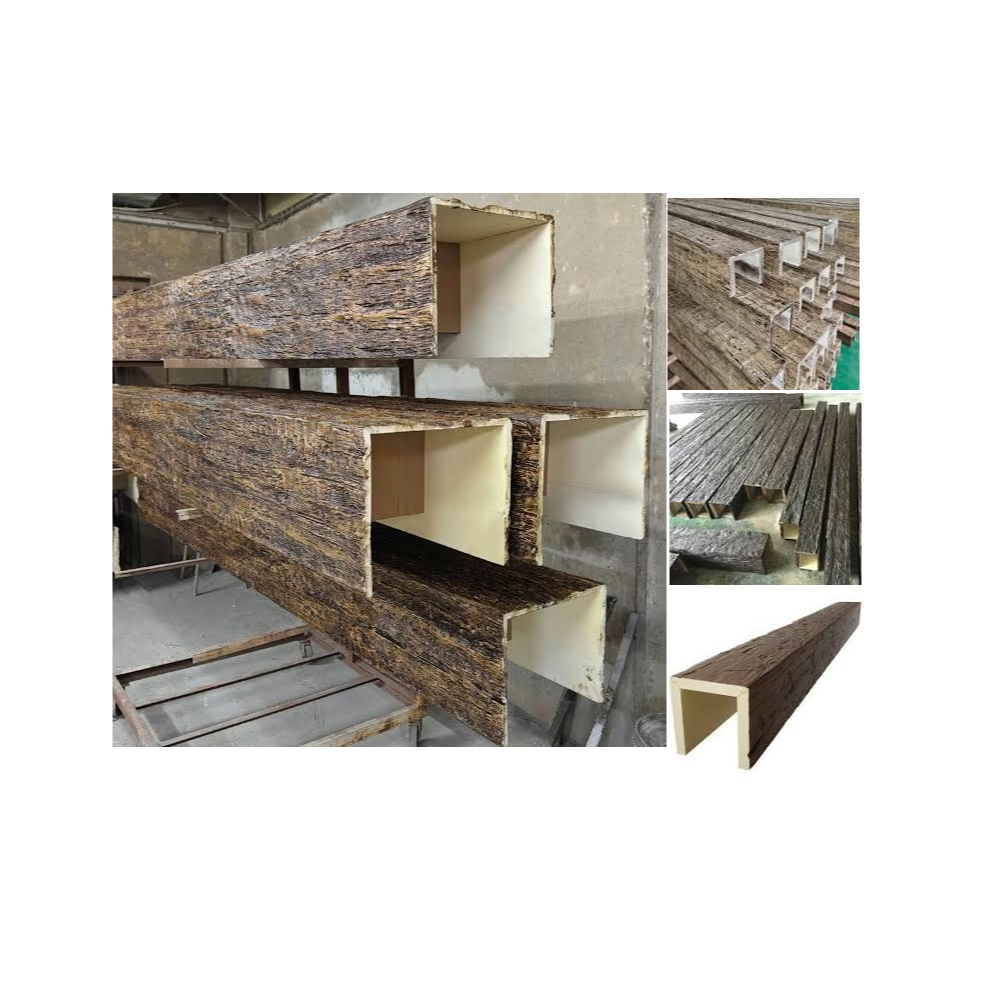
The Finished Installation: Aesthetic and Practical Results
The aesthetic result of a premium PU faux beam installation is indistinguishable from an equivalent natural timber installation when viewed under normal conditions. The surface texture, grain pattern, color depth, and light interaction all meet the standards established by the natural material. Visitors to the space experience the warmth and character of timber ceiling beams without any awareness that they are looking at a manufactured product. This is the intended result: not a compromise, not an imitation, but an authentic achievement of the design goal.
Practically, the installation outperforms natural timber across every relevant metric. The beams will not warp, crack, or check over time. They will not be damaged by insects or moisture. They will not require refinishing. They will not develop loose joints or compromised fasteners as the material ages. The ceiling that looked perfect on installation day will look the same years later, with no intervention required beyond occasional dusting or cleaning.
This combination of aesthetic excellence and practical reliability is why polyurethane faux beams have become the default choice for ceiling beam installations across the global market. They deliver what designers want, what clients need, and what the building conditions allow. The result is better spaces, more accessible design, and a standard of ceiling treatment that was previously achievable only in high-budget projects with favorable structural conditions. Premium PU faux beams have democratized beautiful ceiling design in a way that no previous material category has achieved.
Technical References
ASTM standards cited in every specification
Test Data
Lab results from internal testing program
Updated 2026
Reviewed against current product specs


