Home staging exists to help properties sell faster and for more money. The professional stager's toolkit includes furniture arrangement, color correction, lighting enhancement, and strategic accessorizing. Increasingly, ceiling treatment has joined this toolkit, with polyurethane faux beams emerging as a high-impact, quick-install option that transforms unremarkable ceilings into memorable architectural features.
Why Stagers Focus on Ceilings
Real estate photography and in-person tours both emphasize the ceiling. Wide-angle lenses, used to capture full rooms, naturally include the ceiling in every shot. Buyers walking through homes look up. A plain ceiling that receives no attention is a missed opportunity.
The challenge is that ceilings are difficult to stage without construction. Painting a ceiling is possible but rarely dramatic. Adding millwork typically requires carpentry skills and significant time. Faux beams occupy a middle ground: they create substantial visual impact with installation that skilled stagers can manage in hours rather than days.
The return on investment for beam staging is favorable. A beam installation that costs a few hundred dollars in material and labor can contribute thousands in perceived value. The math works because buyers respond to architectural detail, and ceilings are an underexploited surface for detail.
Ceiling Types That Benefit from Beams
Not every ceiling benefits from beams. Stagers develop an eye for properties where beams will add value versus those where they would be out of place.
Vaulted ceilings with exposed framing: These ceilings already have visual interest but may lack warmth. Beams add wood tones and texture that soften the space.
Flat ceilings with generous height: Ceilings above 9 feet often feel empty. Beams add visual weight and organization without reducing perceived height.
Open-plan great rooms: These large, open spaces benefit from beam-based zoning that creates visual separation between functional areas.
Living rooms with uninteresting architecture: A room with basic trim, standard doors, and no architectural interest is a candidate for ceiling elevation.
Bedroom ceilings over primary beds: A beam crossing above the bed creates a sense of canopy and shelter that enhances the master suite.
Conversely, ceilings that are already richly detailed, ceilings in very small rooms, or ceilings with significant architectural features that would conflict with beams are less appropriate candidates.
Quick-Install Strategies for Stagers
Stagers work under time pressure. Properties must be staged quickly between listing and showing. Beam installations for staging follow efficient protocols:
Assess first: Evaluate the ceiling height, room dimensions, and overall style. Determine the most effective beam placement before committing to the approach.
Simple is faster: Single beams or simple parallel configurations install faster than elaborate grid patterns. Start with the simplest approach that delivers meaningful impact.
Use temporary attachment where appropriate: For properties not yet listed or for stagers who service multiple properties, temporary attachment methods allow beam reuse. Adhesive with removable backing, or clips that engage existing trim, speed installation and removal.
Coordinate with lighting: Battery-powered LED puck lights or stick-on LED strips can be installed in beam junctions without electrical work. This adds dramatic effect quickly.
Minimize patching: Install beams over existing surfaces rather than cutting in. Repainting and patching takes time and may require trades.
The goal is maximum impact per hour of installation. A single well-placed beam that transforms the room is more valuable than an elaborate installation that takes days.
Style Selection for Staging
Staging beam style should align with the property's target buyer and price point.
Modern/transitional properties: Clean box beams in light wood tones or matte black work well. Avoid ornate profiles that clash with contemporary aesthetics.
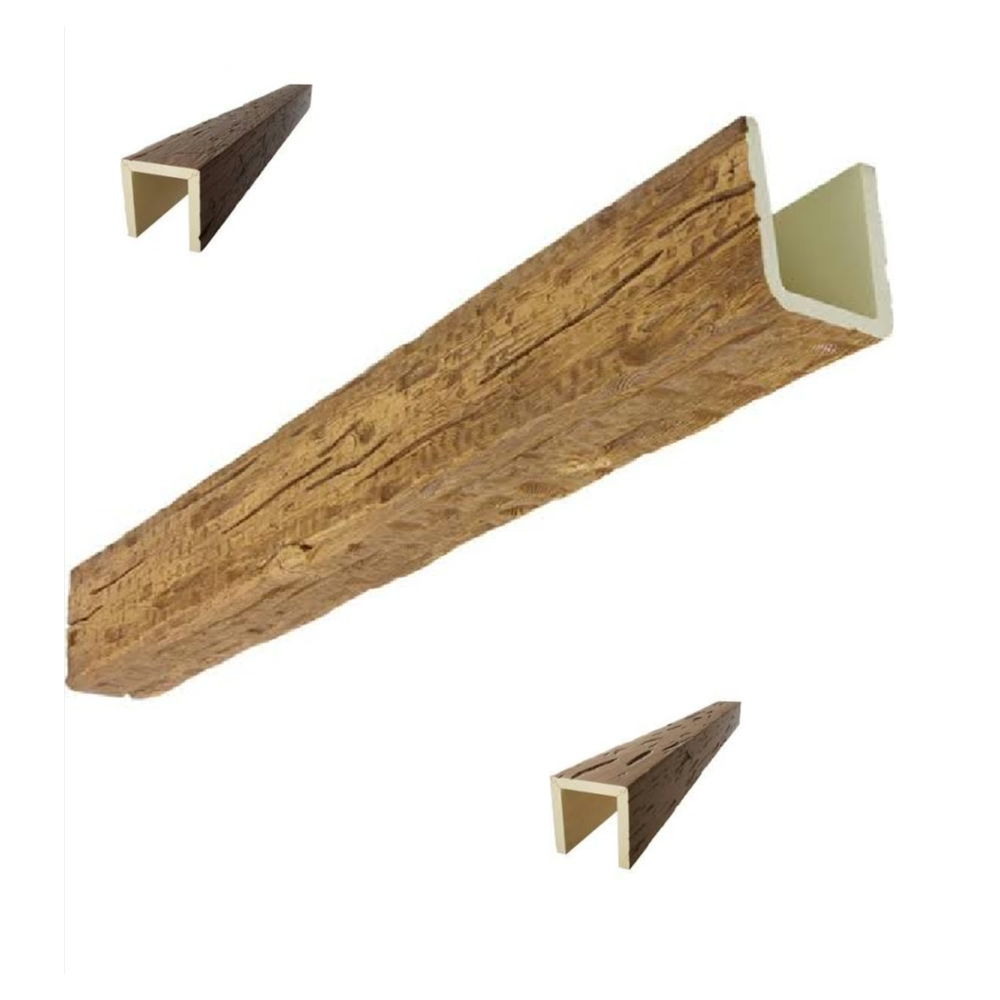
Traditional/family homes: Warm wood tones in classic profiles appeal to buyers seeking character and craftsmanship. Hand-hewn or coffered profiles add traditional charm.
Farmhouse/industrial: Darker finishes, possibly with painted options, work in homes with established rustic or industrial vocabulary.
Luxury properties: Substantial beams with coordinating accessories (corbels, straps, medallions) signal quality. The investment in detail communicates that no corners were cut.
The beam style should feel appropriate to the property, not fashionable in the abstract. A modern box beam in a 1920s Tudor looks wrong. A traditional profile in a new construction colonial looks right.

Photography Considerations
Professional real estate photography captures the staged space for online listings and marketing materials. Beams should be positioned and finished with photography in mind.
Light-colored beams reflect light: In darker rooms, lighter beams help brighten the space. In already-bright rooms, darker beams add drama.
Beam direction affects perceived room size: Beams running the long dimension of a room make it feel longer. Beams running the short dimension make it feel wider.
Shadow lines photograph well: The shadow created where the beam meets the ceiling is visible in photographs and adds depth that flat ceilings lack.
Lighting integration matters: Photographs show how beams interact with light. Recessed lighting between beams, or uplighting on beams, adds dimension that shows in photos.
Stagers should preview beam placement in photographs before committing. A composition that looks good in person may photograph poorly, and vice versa.
Rental vs. Permanent Installations
Some staging applications call for temporary installation that allows beam removal after the property sells.
Rental installations use beams that can be removed without damage to the property. These might include:
- Beams mounted to existing trim with clip systems
- Beams attached with adhesive that releases with heat
- Beams sized to sit on top of existing crown moulding without attachment
Permanent installations are appropriate for properties that will be staged and sold, where the beams add value that the new owner will appreciate. These installations follow standard attachment methods.
Stagers should clarify with the listing agent or homeowner whether temporary or permanent installation is desired. The decision affects beam selection, attachment method, and overall approach.
Budget Allocation for Staging Beams
Staging budgets vary based on property value and staging scope. A reasonable allocation for beam staging is:
| Property Value | Suggested Beam Budget |
|---|---|
| Under $400K | $200–$400 |
| $400K–$700K | $400–$800 |
| $700K–$1M | $800–$1,500 |
| $1M–$2M | $1,500–$3,000 |
| Over $2M | $3,000–$6,000+ |
This budget covers material, basic accessories, and installation time. Higher-value properties can support more elaborate installations, and buyers at higher price points respond more strongly to architectural detail.
The budget should be considered an investment with measurable return. Stagers and listing agents track which staging elements correlate with faster sales and higher sale prices. Beams consistently perform well in these analyses.
Working with Suppliers as a Stager
Stagers who use beams regularly should develop relationships with suppliers who understand their needs:
Fast turnaround: Properties may need staging on short notice. Suppliers who can ship quickly are valuable.
Sample programs: Stagers benefit from keeping sample beams on hand to show homeowners and to verify finishes.
Consignment options: For expensive beams used across multiple properties, consignment or return programs reduce inventory cost.
Technical support: Installation advice, particularly for challenging ceiling configurations, helps stagers handle unusual situations.
A good supplier relationship makes the difference between staging that flows smoothly and staging that creates stress.
Measuring Impact
Stagers should track the impact of beam installations on sale outcomes. Metrics to track include:
- Days on market before and after beam installation
- Sale price relative to asking price
- Buyer feedback on ceiling features
- Photography performance (views, engagement) for listings with beam ceilings
This data builds the case for beam staging and helps stagers refine their approach over time.
The Staging Advantage
Home staging with faux beams is one of the most cost-effective architectural upgrades available. The material cost is modest, the installation is manageable, and the impact is significant.
For stagers looking to differentiate their services and add value for listing agents, beam staging offers a clear competitive advantage. The ability to transform a plain ceiling into a selling feature in a single afternoon is a powerful capability.
The key is developing the judgment to know when beams will help and when alternative staging approaches are more appropriate. When the conditions are right, beam staging consistently delivers results that justify the investment.
Technical References
ASTM standards cited in every specification
Test Data
Lab results from internal testing program
Updated 2026
Reviewed against current product specs