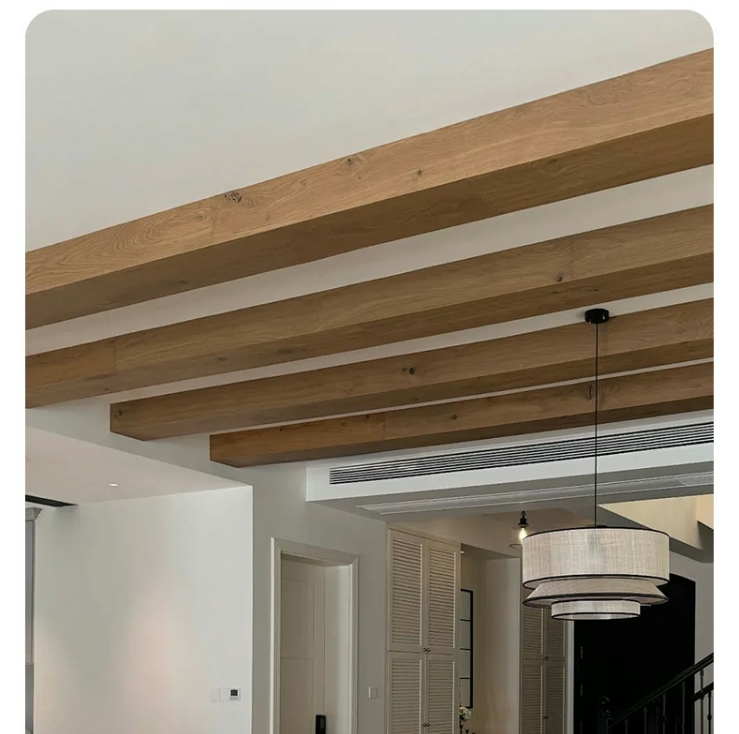
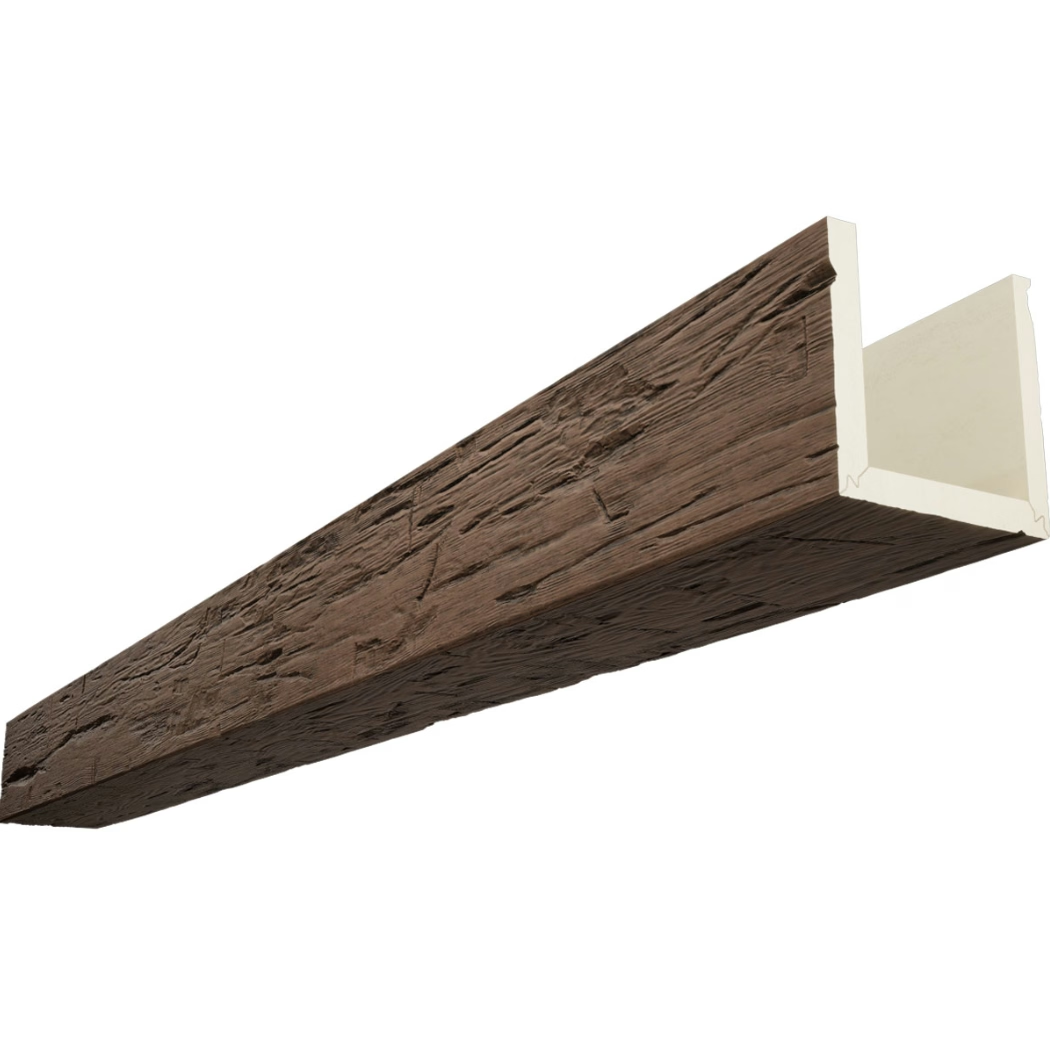
Pergolas and gazebos have been garden architecture staples since antiquity. These structures define outdoor spaces, provide shade, support climbing plants, and create architectural focal points in landscapes. Traditional construction uses real timber, which provides authentic aesthetics but requires ongoing maintenance and has limited service life in outdoor conditions. Polyurethane faux wood beams offer an alternative that captures timber aesthetics while eliminating most of the maintenance burden.
The Timber Pergola and Gazebo Tradition
Timber construction suits pergolas and gazebos for several reasons:
Material authenticity: Real wood in an outdoor garden context feels appropriate. The organic material connects to the landscape.
Craft tradition: Timber joinery has centuries of precedent in garden structures. Traditional details—mortise and tenon joints, carved capitals, shaped rafters—suggest skilled craftsmanship.
Scalability: Timber can be cut and assembled on site to any configuration. Custom shapes and sizes are achievable.
Availability: Timber is widely available from local suppliers in most markets.
These advantages come with significant disadvantages: maintenance requirements, insect vulnerability, moisture damage, and limited service life in harsh conditions.
Why Real Timber Fails Outdoors
Real timber in outdoor conditions faces challenges that ultimately compromise appearance and structure:
Moisture cycling: Wet-dry cycles cause timber to expand and contract, leading to checking, splitting, and movement.
UV degradation: Sunlight breaks down the lignin that holds wood fibers together, causing graying, chalking, and surface erosion.
Insect damage: Termites, carpenter ants, and wood-boring beetles can damage or destroy timber structures.
Fungal decay: Moist conditions support fungal growth that rots wood from the inside.
Maintenance burden: Preventing these problems requires regular sealing, staining, and inspection—ongoing work that many property owners find burdensome.
These issues affect all timber species to varying degrees, even pressure-treated lumber.
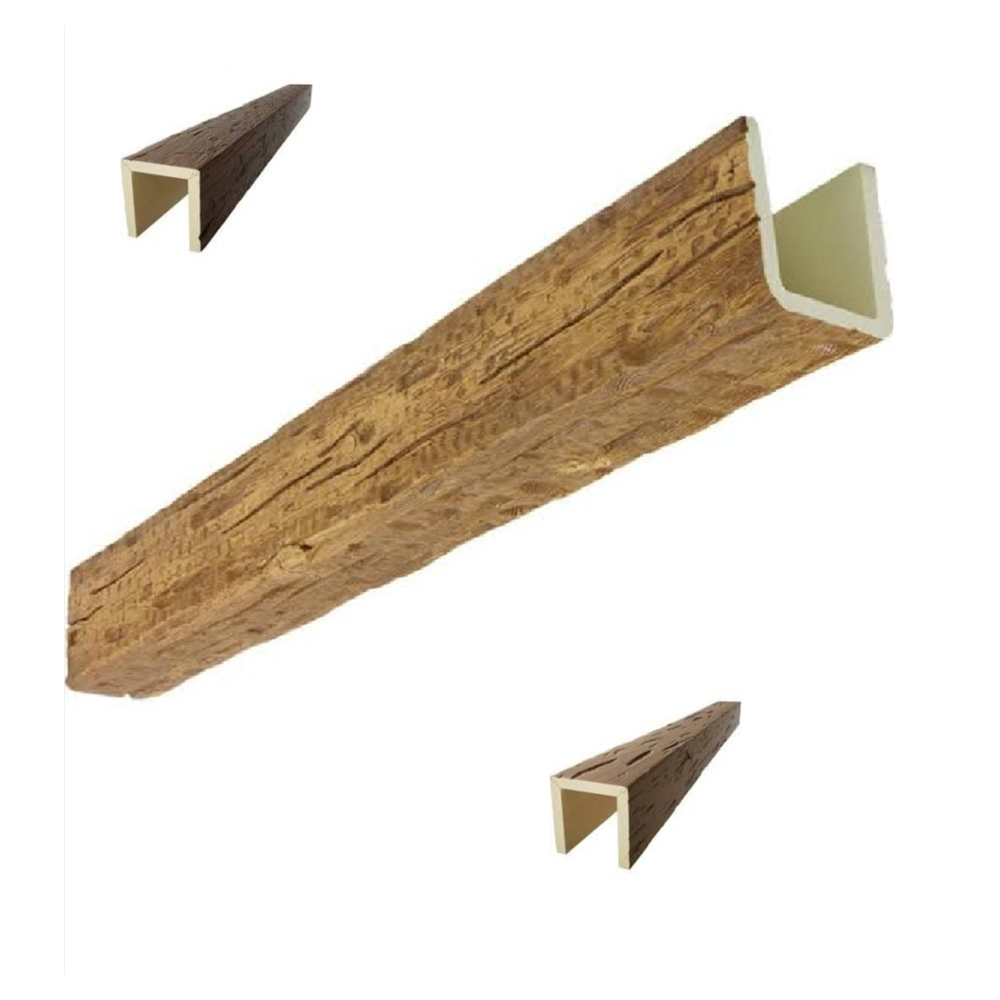
The Polyurethane Alternative
Polyurethane faux wood beams address the failure modes of real timber:
Moisture resistance: Closed-cell polyurethane does not absorb water. There is no expansion, contraction, or moisture-related movement.
UV stability: Quality polyurethane formulations include UV inhibitors that resist degradation. The material maintains its appearance for years.
Insect resistance: Polyurethane is not a food source for insects. There is no insect damage risk.
Fungal resistance: The material does not support fungal growth. No rot, no mold, no decay.
Zero maintenance: No sealing, no staining, no periodic inspection. The appearance is permanent.
These advantages make polyurethane particularly well-suited for outdoor structures where maintenance access may be limited.
Pergola Applications
Pergolas are open-roof structures with vertical posts supporting an open lattice or beam roof. They define outdoor spaces without fully enclosing them.
Beam and Rafter Systems
Traditional pergola rafters are cross-beams that span between posts. Polyurethane faux rafters:
- Span between posts in the same manner as timber
- Support climbing plants without the rot risk of real wood
- Maintain appearance through seasons without maintenance
- Can be cut and installed with standard tools
Header and Trim Beams
Horizontal header beams at the top of pergola posts establish the structure's visual boundary. Polyurethane headers:
- Create substantial visual weight at the post tops
- Accept decorative end treatments and cut profiles
- Coordinate with rafter elements for complete appearance
Shade Lath Systems
Some pergola designs incorporate closely-spaced lath elements for increased shade. Polyurethane lath:
- Provides shade similar to real lath
- Maintains appearance without warping or cupping
- Can be installed in continuous runs
Gazebo Applications
Gazebos are freestanding structures with complete roofs, typically octagonal or circular in plan. They offer enclosed shade and shelter while maintaining open sides.
Gazebo Roof Beams
Gazebo roofs typically feature radial beams or rafters meeting at a central hub. Polyurethane rafters:
- Radiate from center with consistent spacing
- Support the roof structure without weight concerns
- Maintain consistent appearance over time
Decorative Rafter Ends
Gazebo rafters often feature exposed or decorative ends. Polyurethane rafter ends:
- Can be shaped to any profile
- Maintain detail without weathering
- Accept paint or stain as needed
Balustrade and Trim
Gazebo structures include railings, balustrades, and decorative trim. Polyurethane trim:
- Coordinates with beam and rafter elements
- Resists outdoor conditions
- Maintains appearance without maintenance
Structural Considerations
Faux wood beams for pergolas and gazebos are not structural elements. They replicate appearance, not load capacity.
Proper structure: The underlying structure must be properly engineered for the loads it carries—roof weight, wind, snow, plant material.
Adequate posts: Vertical posts must be appropriately sized and properly embedded or attached for the application.
Foundation: The structure must have appropriate foundations—footings, piers, or slabs—that resist frost heave and settlement.
Faux beam elements are applied to or supported by this structural framework. They do not replace the structure.
Finish Options for Outdoor Use
Outdoor faux beams require finishes appropriate for exterior conditions:
Exterior-rated finishes: Verify that the finish system is rated for outdoor use. Interior finishes will fail rapidly outdoors.
UV resistance: Finishes should include UV inhibitors to resist chalking, fading, and degradation.
Color retention: Light colors fade less than dark colors. Consider this when selecting finish.
Paintable options: Some products accept paint for custom color matching. Paint adds a maintenance requirement but offers unlimited color options.
Natural weathering: Some products are designed to weather naturally, developing a patina over time. This may be desirable or not depending on the design intent.
Integration with Landscape Design
Outdoor structures should be integrated with the landscape:
Plant integration: Pergolas traditionally support climbing plants—roses, wisteria, grapevines. Polyurethane beams support plants without rot risk, but may require additional support for heavy vines.
Material coordination: Beam color and texture should complement other landscape materials—stone, brick, concrete.
Scale relationships: Beam sizing should relate to the overall structure and the landscape setting. Oversized beams in a small garden can overwhelm; undersized beams in a large setting can look trivial.
Lighting integration: Outdoor lighting—uplights, string lights, lanterns—should be coordinated with beam positions.
Climate Considerations
Different climates affect outdoor structures differently:
Sun belt regions: High UV exposure accelerates degradation. UV-stable materials are essential.
Humid climates: Moisture and mold are concerns. Polyurethane's resistance is advantageous.
Cold climates: Freeze-thaw cycles affect some materials. Verify cold-weather performance.
Coastal regions: Salt air accelerates corrosion and degradation. Additional protection may be required.
Specify products appropriate for the specific climate rather than generic outdoor products.
Cost-Benefit Analysis
Comparing faux beams to real timber for outdoor structures:
| Factor | Real Timber | Polyurethane Faux |
|---|---|---|
| Initial cost | Lower | Higher |
| Maintenance | Annual sealing, staining | None |
| Service life | 10–20 years | 25+ years |
| Insect damage risk | High | None |
| Appearance retention | Poor | Excellent |
| Total life-cycle cost | Higher | Lower |
The initial cost of polyurethane is higher, but the total life-cycle cost is often lower due to eliminated maintenance.
Making the Outdoor Structure Last
A pergola or gazebo is an investment in outdoor living space. The structure should be designed to last with minimal maintenance.
Polyurethane faux beams make this possible. They provide the aesthetic that makes outdoor structures attractive while eliminating the maintenance that real timber requires.
For landscape architects, designers, and property owners, polyurethane offers a practical path to lasting outdoor structures that enhance the landscape for years without the burden of ongoing maintenance.
Pergola Design Patterns
Several established patterns guide pergola design:
Traditional pergola: Horizontal rafters crossing perpendicular to support beams. Creates an open grid pattern that provides dappled shade.
Modern pergola: Clean horizontal beams with minimal ornamentation. Creates a contemporary aesthetic appropriate for modern landscapes.
Arched pergola: Beams curved across the span to create an arched roof profile. Adds visual interest and can improve shade coverage.
Louvered pergola: Angled slats replace traditional rafters. Allows adjustment of shade levels by rotating the slats.
Each pattern creates a different visual effect and provides different levels of shade. The choice should align with the desired function and aesthetic.
Gazebo Roof Styles
Gazebos come in several roof styles:
Pyramid roof: A simple pyramid shape. Easy to construct and effective at shedding water.
Hip roof: Slopes on all four sides meeting at a central point. Traditional and elegant.
Conical roof: A curved or dome-shaped roof. Creates a distinctive silhouette.
Flat roof: A modern option with minimal pitch. Often used in contemporary landscape design.
The roof style affects both appearance and function. Steeper pitches shed rain more effectively. Flat roofs maximize overhead clearance.
Plant Support Integration
Many pergolas and gazebos are designed to support climbing plants:
Climbing roses: Require sturdy support for heavy canes. Polyurethane beams provide excellent nail and wire support without rot risk.
Wisteria: Vigorous vines that become extremely heavy over time. Ensure structural support can accommodate mature plant weight.
Grapevines: Productive and attractive. Provide sturdy horizontal support for grape production.
Clematis: Light enough for most pergola designs. Blooms profusely with proper support.
Plant support adds visual interest and functional purpose to outdoor structures. Plan for plant weight and training requirements during design.
Maintenance-Free Benefits
The maintenance-free nature of polyurethane provides specific benefits:
No annual sealing: Real timber requires annual sealing to maintain weather resistance. Polyurethane eliminates this ongoing cost.
No staining or refinishing: The finish remains consistent for years without touch-up work.
No pest control: Real timber attracts termites and other wood-boring insects. Polyurethane provides no food source for pests.
Easy cleaning: Occasional washing with a garden hose maintains appearance. No special treatments required.
These benefits are particularly valuable for commercial installations where ongoing maintenance requires scheduling and budget allocation.
Commercial Landscape Applications
Commercial properties benefit from maintenance-free outdoor structures:
Hotel courtyards: Outdoor dining and gathering spaces require attractive appearance with minimal upkeep. Polyurethane structures deliver both.
Restaurant patios: Pergolas define outdoor dining areas and provide shade. Maintenance-free materials reduce operational burden.
Corporate campuses: Employee outdoor spaces benefit from attractive structures without facilities management overhead.
Public gardens: High-traffic public spaces require durable, maintenance-free materials that look good year-round.
Commercial applications benefit from the long service life and reduced maintenance requirements of polyurethane.
Professional Installation Considerations
Outdoor beam structures benefit from professional installation:
Structural engineering: Ensure the underlying structure is designed for actual loads including plants, wind, and snow.
Proper anchoring: Outdoor structures face wind loads that require secure connection to foundations or footings.
Level and plumb: Professional installers ensure posts are level and beams are properly aligned.
Water management: Proper flashing and drainage prevent water infiltration at connections.
Professional installation ensures that outdoor structures perform safely and look good for years.
The Investment Value
Outdoor structures represent significant landscape investments. The materials and installation costs justify thoughtful specification and quality installation.
Polyurethane faux beams protect this investment by eliminating the maintenance cycle that degrades real timber structures. The initial premium over timber pays back through extended service life and eliminated maintenance costs.
For property owners, the value is in a beautiful outdoor space that remains attractive with minimal effort. For commercial properties, the value is in reduced operational burden and consistent appearance.
A well-designed outdoor structure enhances the landscape for decades. Polyurethane helps ensure that the structure looks as good at year twenty as it did at year one.
Technical References
ASTM standards cited in every specification
Test Data
Lab results from internal testing program
Updated 2026
Reviewed against current product specs