
Style is not a luxury—it is a language that spaces use to communicate their character. A stylish room does not happen by accident; it results from deliberate choices made at every scale, from furniture selection to lighting design to ceiling treatment. Polyurethane faux wood beams offer one of the most direct paths to stylish ceilings, transforming plain surfaces into architectural statements that elevate the entire room.
Understanding Stylish Ceilings
A stylish ceiling does several things:
Establishes character: The ceiling sets the tone for the room. A beam ceiling suggests warmth, craftsmanship, and attention to detail.
Creates visual hierarchy: The ceiling is the highest surface in the room. Treating it commands attention without competing with other elements.
Adds perceived value: Stylish ceilings are associated with quality construction and thoughtful design. They increase the perceived value of the space.
Ages gracefully: Unlike trends that date quickly, classic beam ceiling treatments remain appropriate across changing styles.
These qualities make stylish ceilings a sound investment in interior design.
The Psychology of Ceiling Design
Ceilings affect how people experience spaces in ways that are often subconscious:
Perceived height: Ceiling treatment affects perceived height. Beams can make low ceilings feel higher or higher ceilings feel more intimate, depending on the treatment.
Spatial warmth: Warm materials—wood tones, rich textures—make spaces feel more inviting. Cool materials—metal, glass, white surfaces—feel more sterile.
Visual complexity: More complex ceiling treatments create visual interest that engages attention. Simpler treatments recede.
Acoustic comfort: Textured ceilings and beam configurations affect acoustics, contributing to or detracting from acoustic comfort.
Designers who understand these effects can manipulate them deliberately to create specific spatial experiences.
Creating a Stylish Ceiling Strategy
A stylish ceiling results from a strategy, not from individual decisions. Before selecting beams, establish:
Room Function
The ceiling treatment should support the room's function:
- Living rooms benefit from warmth and visual interest that encourages relaxation
- Dining rooms benefit from elegance and formality that supports the dining experience
- Kitchens benefit from warmth that balances hard surfaces
- Bedrooms benefit from intimacy and comfort that supports rest
- Commercial spaces benefit from character that supports brand identity
Overall Design Vocabulary
The ceiling should fit within the overall design vocabulary:
- Contemporary spaces favor clean lines, simple profiles, and restrained decoration
- Traditional spaces favor rich materials, classical details, and formal composition
- Transitional spaces blend contemporary and traditional elements
- Rustic spaces favor natural textures, irregular surfaces, and earthy tones
Proportion and Scale
Ceiling treatment must relate to the room's proportions:
- Large rooms support larger beams and more elaborate treatments
- Small rooms require proportional restraint
- High ceilings can accommodate substantial beams
- Low ceilings require careful sizing to avoid compression
Beam Selection for Style
Beam selection is the primary design decision:
Profile as Style Indicator
The beam profile communicates style:
Box profiles communicate contemporary simplicity. Clean edges and flat surfaces suggest modern efficiency.
Stepped profiles suggest transitional design. The stepped detail adds interest without complexity.
Chamfered profiles add subtle refinement. The beveled edge softens without ornament.
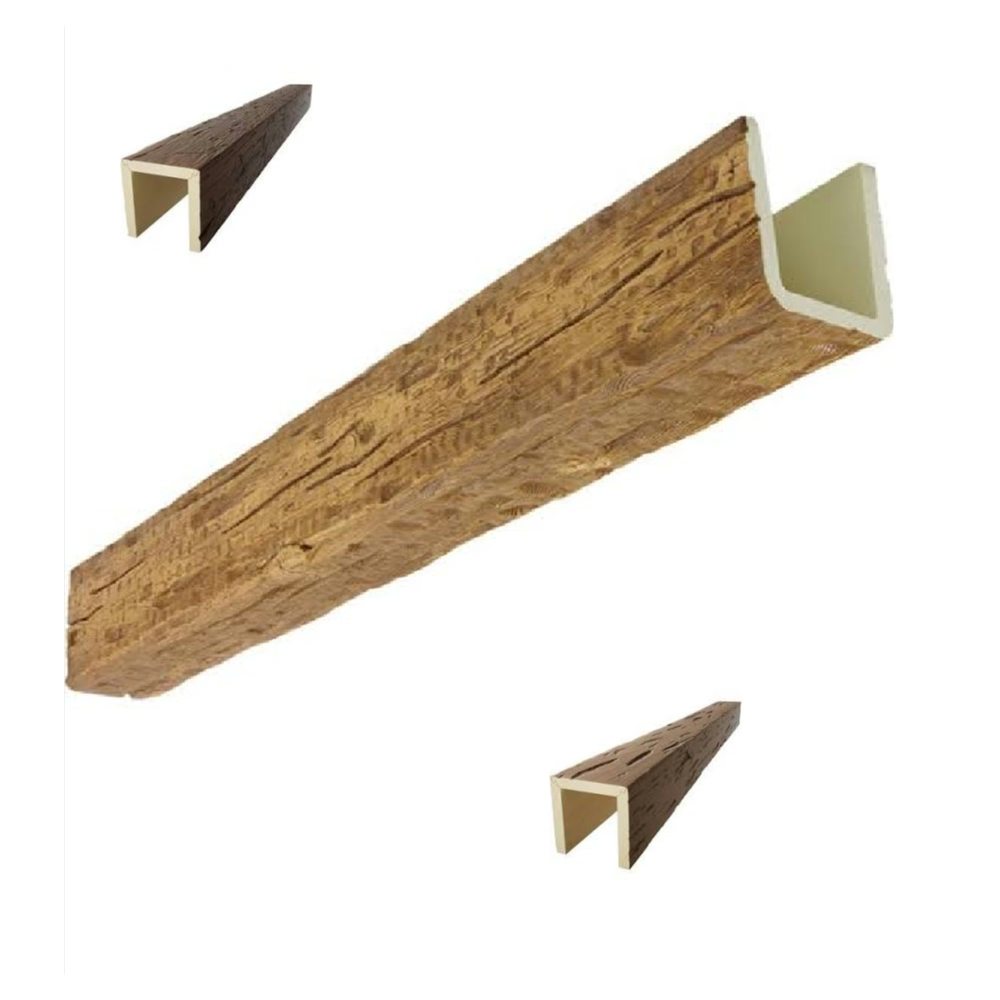
Hand-hewn profiles communicate rustic authenticity. Irregular texture suggests age and craft.
Coffered profiles suggest formal traditional design. Recessed panels add classical detail.
Finish as Mood Setter
The beam finish sets the room's mood:
Light natural finishes create openness and airiness. They work in bright rooms and contemporary spaces.
Medium natural finishes provide warmth without drama. They are the most versatile and universally appropriate.
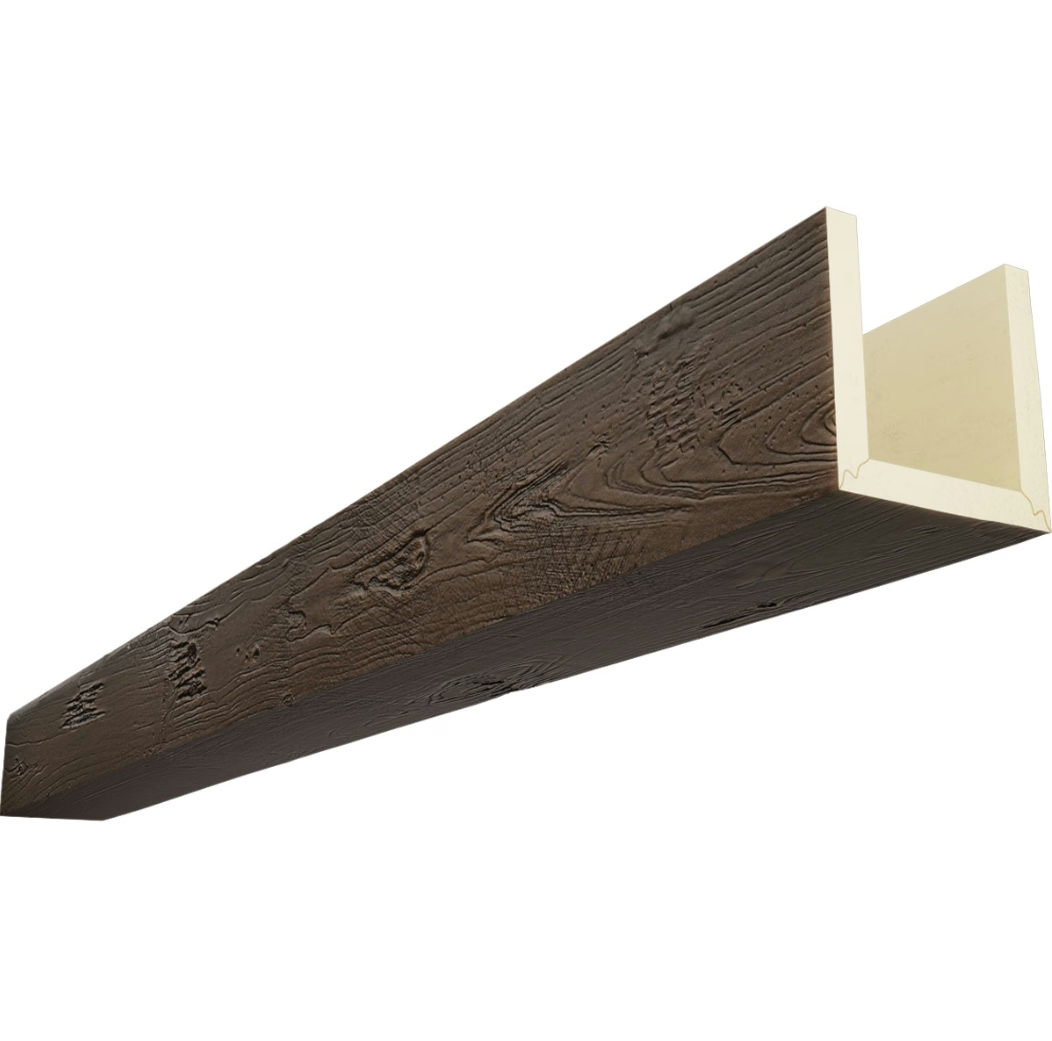
Dark natural finishes create drama and intimacy. They work in rooms seeking a sense of weight and formality.
Painted finishes offer unlimited color options. White beams recede. Colored beams make statements.
Accessory as Detail
Beams with accessories communicate attention to detail:
Straps and hardware suggest industrial or rustic authenticity.
Corbels and brackets suggest traditional craftsmanship.
Medallions and rosettes suggest classical formal design.
Purlins and cross-members suggest timber-frame construction.
The accessories should align with the profile and finish selections.
Strategic Placement for Style
Beam placement affects the stylishness of the result:
Direction Matters
Beam direction affects spatial perception:
- Beams perpendicular to the longest wall make the room feel longer
- Beams parallel to the longest wall make the room feel wider
- Beams at angles create dynamic visual interest
Spacing Creates Rhythm
Beam spacing creates rhythm:
- Dense spacing creates formal rhythm with high visual complexity
- Moderate spacing creates balanced rhythm appropriate for most rooms
- Sparse spacing creates casual rhythm that feels relaxed
Alignment Adds Sophistication
Alignment with other elements adds sophistication:
- Beams aligned with window frames create visual connections
- Beams perpendicular to the fireplace establish focus
- Beams centered on the room create symmetry
The Stylish Upgrade Process
Achieving a stylish ceiling involves several steps:
Assessment
Evaluate the existing ceiling:
- Measure dimensions and proportions
- Note existing architectural elements
- Identify constraints—fixtures, soffits, mechanical systems
- Determine the overall design direction
Concept Development
Develop a ceiling concept:
- Select beam profile and finish
- Determine placement strategy
- Plan accessory integration
- Coordinate with other design elements
Specification
Specify the beams precisely:
- Profile and dimension
- Finish and color
- Accessories and hardware
- Manufacturer and product line
Installation
Install with attention to detail:
- Verify blocking and backing
- Maintain alignment and spacing
- Address joints and transitions
- Touch up finish
Integration
Integrate with the room:
- Coordinate lighting and electrical
- Address trim and transitions
- Consider soft goods and furnishings
- Evaluate in context
Common Style Mistakes
Several mistakes undermine stylish ceilings:
Oversized beams: Beams that are too large overwhelm the room and reduce perceived height.
Undersized beams: Beams that are too small disappear and waste the installation effort.
Mismatched style: Beams in one style in a room with a different style create visual confusion.
Poor finish coordination: Beams with finishes that clash with the room undermine the design.
Inconsistent spacing: Irregular beam spacing creates visual restlessness rather than rhythm.
Avoiding these mistakes requires attention during design and installation.
The Style Investment
A stylish ceiling is an investment in the quality of interior space. The returns include:
Daily pleasure: A stylish room is pleasant to inhabit. The ceiling contributes to this daily experience.
Impression on others: Stylish rooms impress visitors and create positive associations with the space.
Property value: Stylish interiors contribute to property value and marketability.
Timelessness: Classic beam treatments remain appropriate across changing trends.
For homeowners and designers, the investment in a stylish ceiling pays dividends over years of enjoyment.
Room-by-Room Style Guidance
Different rooms benefit from different ceiling styles:
Living Rooms
Living rooms are social spaces where comfort and welcome are paramount. Ceiling style should support these functions:
- Warm wood tones create a welcoming atmosphere
- Moderate detail level suits most living room activities
- Coordination with fireplace, windows, and other focal points
- Balance between formality and casual comfort
Dining Rooms
Dining rooms host meals and gatherings. Ceiling style should support the dining experience:
- Formal styles for formal dining rooms
- Warmer, more casual styles for family dining
- Coordination with chandeliers and dining furniture
- Appropriate scale for table and seating arrangement
Kitchens
Kitchens are functional spaces that benefit from warmth. Ceiling style should balance function and aesthetics:
- Easy-to-clean finishes for kitchen environments
- Warm tones that balance stainless steel and hard surfaces
- Coordination with cabinetry and countertop materials
- Appropriate scale for kitchen size and layout
Bedrooms
Bedrooms are private retreats. Ceiling style should support rest and relaxation:
- Calming tones and moderate detail
- Scale appropriate to bedroom proportions
- Coordination with bed and furniture placement
- Balance between visual interest and peaceful atmosphere
Home Offices
Home offices are productive spaces. Ceiling style should support focus:
- Clean, contemporary styles for productive atmosphere
- Moderate warmth to prevent sterile feeling
- Coordination with desk and shelving placement
- Professional appearance for video calls
Budgeting for Style
A stylish ceiling can be achieved at various budget levels:
Essential budget: A single accent beam with good finish and lighting. Creates impact without comprehensive treatment.
Moderate budget: Multiple beams with consistent styling and basic accessories. Creates meaningful architectural statement.
Comprehensive budget: Complete beam system with accessories, custom finishes, and integrated lighting. Creates dramatic transformation.
The appropriate budget depends on the overall project scope, the importance of the ceiling in the design, and the desired impact.
Working with Designers
Professional designers bring value to ceiling beam installations:
Concept development: Designers develop cohesive ceiling concepts that integrate with overall interior design.
Profile selection: Designers select beam profiles that align with the design vocabulary.
Finish coordination: Designers ensure beam finishes coordinate with all other materials in the space.
Specification: Designers prepare detailed specifications that ensure quality products and installation.
For significant projects, professional design input improves outcomes and reduces costly revisions.
The Enduring Appeal of Style
Stylish ceilings have enduring appeal that transcends trends:
- They create spaces that feel designed and considered
- They add value that appreciates over time
- They age gracefully without looking dated
- They contribute to daily quality of life
For property owners seeking to create spaces of lasting quality, stylish ceiling treatments are a sound investment.
Making Style Happen
Achieving a stylish ceiling is not about spending the most money or specifying the most elaborate treatment. It is about making thoughtful choices that result in coherence and character.
Polyurethane faux wood beams make stylish ceilings accessible. They provide the materials and the variety to achieve any style direction. They install efficiently and perform reliably.
The key is intentionality: understanding what style means in the specific context, selecting beams that express that style, and installing them with care.
When these elements come together, the result is a ceiling that transcends the ordinary—a surface that earns attention and rewards the people who live and work beneath it.
Technical References
ASTM standards cited in every specification
Test Data
Lab results from internal testing program
Updated 2026
Reviewed against current product specs


