
Architectural detail is the difference between a room that functions and a room that delights. These details—mouldings, trim, hardware, and surface treatments—reward close attention and contribute to the overall quality perception of a space. Polyurethane faux joist beams are among the most impactful detail elements available for ceilings, adding rhythmic structure and material warmth that transform plain surfaces into designed environments.
The Nature of Architectural Detail
Architectural details serve several functions:
Visual interest: Details break up flat surfaces and add visual complexity that engages the eye.
Craft communication: Details suggest attention to craftsmanship and quality of construction.
Period expression: Details communicate the era and style of a building's design.
Spatial refinement: Details help define transitions, hierarchies, and relationships within the architecture.
Ceilings are surfaces that often lack detail. Adding joist beams introduces detail at the largest scale while maintaining visual coherence.
Why Joist Beams as Detail
Joist beams are particularly effective as architectural detail because they:
Create rhythm: The regular repetition of joists across a ceiling establishes visual rhythm that organizes the space.
Suggest structure: Joists imply the structure above, adding authenticity and substance to the design.
Add texture: The surface of timber joists adds texture that flat ceilings lack.
Frame space: Joists help define the boundaries of the ceiling plane, making the room feel more enclosed and designed.
This combination of effects makes joist beams a high-impact architectural detail.
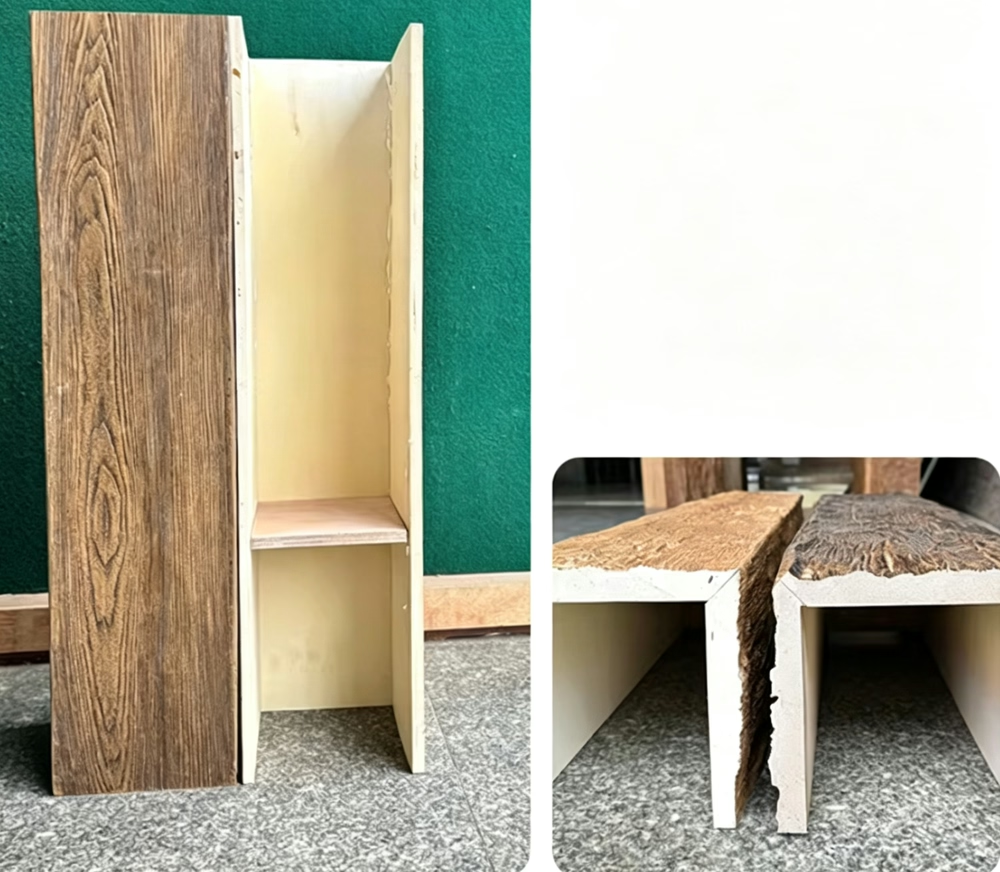
Understanding Joist Rhythm
The spacing of joist beams creates different rhythmic effects:
Dense Rhythm
Joists spaced 12 to 16 inches on center create dense rhythm:
- High visual complexity
- Formal, traditional appearance
- Works in rooms with substantial height
- Creates strong shadow pattern
Standard Rhythm
Joists spaced 18 to 24 inches on center create balanced rhythm:
- Moderate visual complexity
- Appropriate for most residential applications
- Works with standard ceiling heights
- Creates readable shadow pattern
Open Rhythm
Joists spaced 30 to 48 inches on center create open rhythm:
- Light, contemporary appearance
- Maintains openness and height perception
- Works in large rooms
- Creates subtle shadow pattern
The spacing should relate to the beam size: larger beams can be spaced more widely; smaller beams benefit from closer spacing.
Joist Profile Selection
The joist profile affects the detail character:
Dimensional Timber Profile
Simple rectangular or slightly tapered profiles suggest dimensional lumber:
- Contemporary and clean
- Easy to coordinate with other trim
- Works in modern and transitional interiors
Hand-Hewn Profile
Irregular surfaces with tool marks suggest hand-hewn timber:
- Rustic and traditional
- Maximum textural interest
- Works in farmhouse, lodge, and cottage interiors
Chamfered Profile
Beveled edges on a rectangular profile add subtle detail:
- Refined without being ornate
- Works across multiple styles
- Creates interesting shadow lines
Fluted Profile
Grooved or fluted faces add classical detail:
- Traditional and formal
- Works in classical and period interiors
- Creates complex shadow patterns
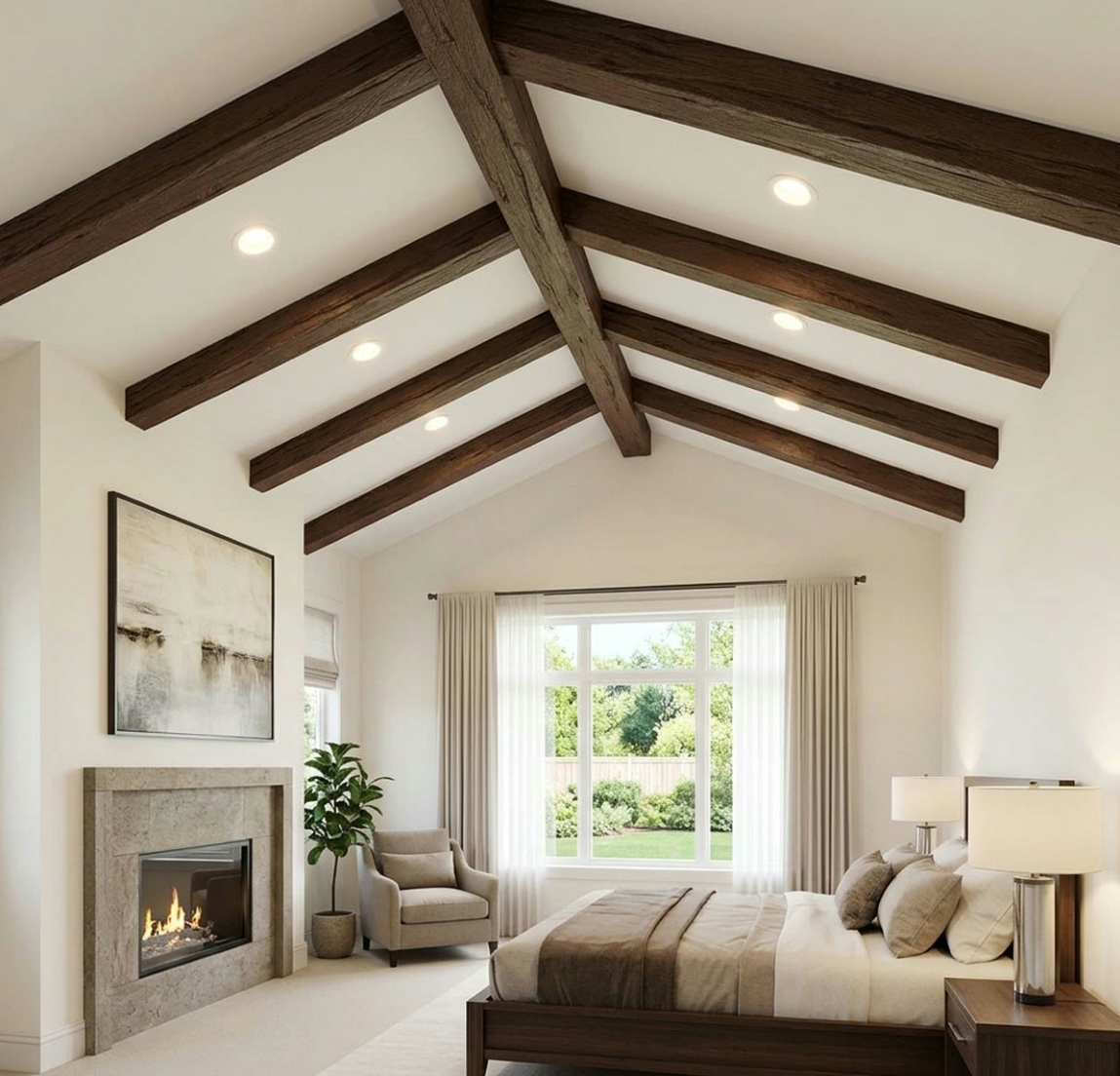
Adding Secondary Detail Elements
Joist beams can be enhanced with secondary elements:
Running Trim
Moulding applied along the top or bottom of joist runs adds detail:
- Crown moulding along the top creates a classical cornice
- Bed moulding along the bottom adds subtle refinement
- Bargeboard or cornice return at beam ends finishes exposed cuts
Connecting Hardware
Metal-look straps, plates, or connectors at joist ends suggest authentic timber connection:
- Wrought iron straps for rustic authenticity
- Steel plates for industrial character
- Bronze or brass for traditional formality
Collar Ties
Horizontal members connecting joists at mid-span:
- Suggest load transfer and structural logic
- Break up the visual field between joists
- Can incorporate decorative details
Purlins
Perpendicular members spanning between joists:
- Add complexity to the ceiling composition
- Create secondary rhythm that complements joist rhythm
- Suggest authentic timber-frame construction
Coordination with Primary Beams
Joist installations often work alongside primary beam elements:
Joists and Main Beams
In timber-frame-inspired ceilings, main beams carry joists:
- Joists span perpendicular to main beams
- Main beams establish the primary visual structure
- Joists add the repetitive detail
Beam Grid with Joist Infill
A complete grid system with joists filling between main beams:
- Creates the most complex ceiling composition
- Suggests exposed floor structure
- Requires careful coordination of profiles and finishes
Parallel Systems
Joists running parallel to main beams:
- Creates linear rhythm rather than grid pattern
- Works in long, narrow rooms
- More contemporary than perpendicular arrangement
Scale Considerations
Joist detail must be scaled appropriately:
Room Proportions
Large rooms support more elaborate joist detail:
- Denser spacing is readable in large rooms
- Larger joist profiles register at room scale
- More accessories and secondary elements are appropriate
Small rooms require restraint:
- Too much detail overwhelms small spaces
- Wider spacing maintains openness
- Simpler profiles work better
Ceiling Height
Higher ceilings accommodate more substantial joist elements:
- Greater beam depth creates more dramatic shadows
- More elaborate profiles are readable
- Additional accessories add value
Lower ceilings require proportional restraint:
- Shallower beams prevent compression
- Wider spacing maintains height perception
- Simpler profiles avoid visual clutter
Installation Strategy
Joist detail installation benefits from systematic approach:
Layout Planning
Plan joist positions on paper before marking the ceiling:
- Determine joist direction based on room proportions
- Calculate spacing for desired rhythm
- Position end joists for balanced margins
- Note any obstacles or conflicts
Blocking Installation
Install blocking or backing for joist attachment:
- Locate ceiling joists or structure
- Add blocking where joists will terminate
- Verify blocking can support joist weight
Systematic Installation
Install joists in order:
- Install blocking and backing
- Mark layout lines on ceiling
- Install joists systematically
- Address joints and connections
- Install any secondary elements
- Touch up finish
Finishing for Cohesion
Joist detail should be finished to coordinate with the room:
Matching Other Woodwork
If the room has wood flooring, trim, or furniture, the joist finish should coordinate:
- Match or complement existing wood tones
- Consider wood grain direction and character
- Verify finish compatibility
Painted Coordination
Joists painted to match walls or trim create sculptural presence:
- White or off-white joists recede while adding texture
- Match the wall color for cohesive effect
- Consider the shadow effect at different paint sheens
Contrast for Drama
Joists in contrasting finishes create strong visual statements:
- Dark joists on light ceilings create drama
- Light joists on dark ceilings add definition
- The contrast draws attention to the detail
The Detail Dividend
Architectural detail is what separates designed spaces from ordinary ones. Joist beams add detail at the largest scale, transforming the ceiling from a neglected surface to a designed element.
The investment in joist detail returns through:
- Enhanced perceived quality and craftsmanship
- Improved room character and atmosphere
- Better photography and visual marketing
- Increased satisfaction with the finished space
For designers and homeowners seeking to elevate interiors, joist detail offers one of the most effective tools available. The ceiling becomes a designed surface rather than an afterthought.
Styles That Benefit from Joist Detail
Certain interior styles particularly benefit from joist ceiling treatment:
Craftsman and Arts and Crafts
These styles celebrate craftsmanship and honest materials. Joist ceilings with natural wood finishes reinforce these values:
- Exposed timber-like beams with subtle texture
- Warm wood tones that complement built-ins and casework
- Simple, honest details without excessive ornament
- Integration with Mission-style furniture and accessories
Farmhouse and Country
Rustic farmhouse interiors embrace natural materials and traditional details:
- Weathered or distressed wood finishes
- Substantial beams that feel authentic
- Accessories like corbels and metal straps
- Coordination with farmhouse furniture and textiles
Industrial and Loft
Industrial interiors reference warehouse and manufacturing spaces:
- Dark-stained or painted beams
- Metal hardware and connector details
- Clean lines with honest material expression
- Coordination with exposed brick and metal fixtures
Scandinavian and Nordic
Scandinavian design emphasizes simplicity and functionality:
- Light natural wood tones
- Clean, minimal profiles
- Bright, airy appearance
- Balance between warmth and contemporary restraint
Traditional and Classical
Formal interiors benefit from refined joist treatment:
- Rich wood tones with polished finishes
- Ornate profiles with classical details
- Coordination with traditional millwork and casework
- Integration with formal furniture and accessories
Coordination with Lighting Design
Joist ceilings interact with lighting in specific ways:
Recessed fixtures: Can be installed between joists for general illumination without visible hardware.
Pendant lights: Hung from joists at appropriate heights for task and accent lighting.
Track lighting: Mounted to joist faces for adjustable accent illumination.
Uplighting: Fixtures aimed at joists from below create dramatic uplighting effects.
Linear lighting: LED strips in joist-to-ceiling junctions create continuous light lines.
Lighting design should be coordinated with joist layout during the design phase.
Acoustic Considerations
Joist ceilings affect room acoustics:
Sound reflection: Hard wood surfaces reflect sound, potentially causing flutter echo in large rooms.
Bass absorption: The cavity behind joists can provide some bass absorption if filled with insulation.
Sound diffusion: The irregular surface of textured joists can help diffuse sound energy.
Noise control: Joist ceilings are not typically used for noise control, but they can be combined with dedicated acoustic treatment.
For rooms with demanding acoustic requirements, joist treatment should be combined with appropriate acoustic design.
Commercial Applications
Commercial spaces use joist ceilings for specific purposes:
Restaurants: Joist ceilings add warmth and character to dining spaces without overwhelming the design.
Hotels: Joist treatments in lobbies and corridors convey quality and attention to detail.
Retail: Joist ceilings create atmosphere that supports brand positioning and customer experience.
Offices: Joist treatments add visual interest to corporate spaces without sacrificing professionalism.
Commercial applications should consider durability, maintenance, and fire rating requirements.
The Timeless Appeal of Detail
Joist detail has enduring appeal that transcends trends:
- It references traditional construction techniques
- It adds warmth that modern materials often lack
- It creates visual interest that rewards close attention
- It ages gracefully without looking dated
For spaces seeking lasting quality, joist detail is a sound investment.
Professional Design Value
Joist ceiling design benefits from professional input:
Concept development: Designers develop cohesive joist concepts aligned with overall interior design.
Scale optimization: Designers ensure joist sizing and spacing is appropriate for the space.
Accessory coordination: Designers specify accessories that enhance rather than clutter the design.
Finish specification: Designers ensure finish selection coordinates with all other materials.
Professional design input improves outcomes and reduces costly revisions.
Technical References
ASTM standards cited in every specification
Test Data
Lab results from internal testing program
Updated 2026
Reviewed against current product specs


