
Fine detailing is what separates architecture from mere construction. It is the difference between a house and a home, between a room and a space. These details—delicate moldings, precise proportions, considered transitions—reward close inspection and contribute to the overall quality that occupants feel even if they cannot name it. Polyurethane ornamental trim beams bring fine detailing to ceiling treatments, delivering the precision and intricacy that fine architecture demands.
The Role of Fine Detailing in Interiors
Fine detailing in interior architecture serves several purposes:
Craft communication: Details reveal the level of care invested in a space. Precise, well-executed details suggest a crafted environment.
Quality perception: Spaces with fine detailing are perceived as higher quality, regardless of the underlying construction quality.
Age resistance: Classic detailing transcends trends. Spaces with traditional fine details age gracefully.
Value addition: Fine detailing contributes to perceived and actual property value.
Ceiling trim beams are among the most visible detail elements. Their quality registers immediately.
What Makes Trim Beams Ornamental
Ornamental trim beams distinguish themselves through:
Profile Complexity
Ornamental beams feature more complex profiles than standard beams:
- Multiple stepped or molded surfaces
- Intricate edge treatments
- Detailed bottom faces with coffering or fluting
- Classical motifs carved into the profile
Dimensional Precision
Precision moulding ensures consistent profiles:
- Sharp edges that hold their shape
- Consistent depth of detail across the surface
- Clean transitions between profile elements
Scale Refinement
Ornamental beams are often scaled for finer detail:
- Shallower depths that read as refined
- Proportional widths that relate to room scale
- Delicate proportions that suggest craftsmanship
Accessory Coordination
Ornamental beams typically coordinate with complementary accessories:
- Matching corner blocks and connectors
- Coordinating medallions and rosettes
- Complementary crown and bed mouldings
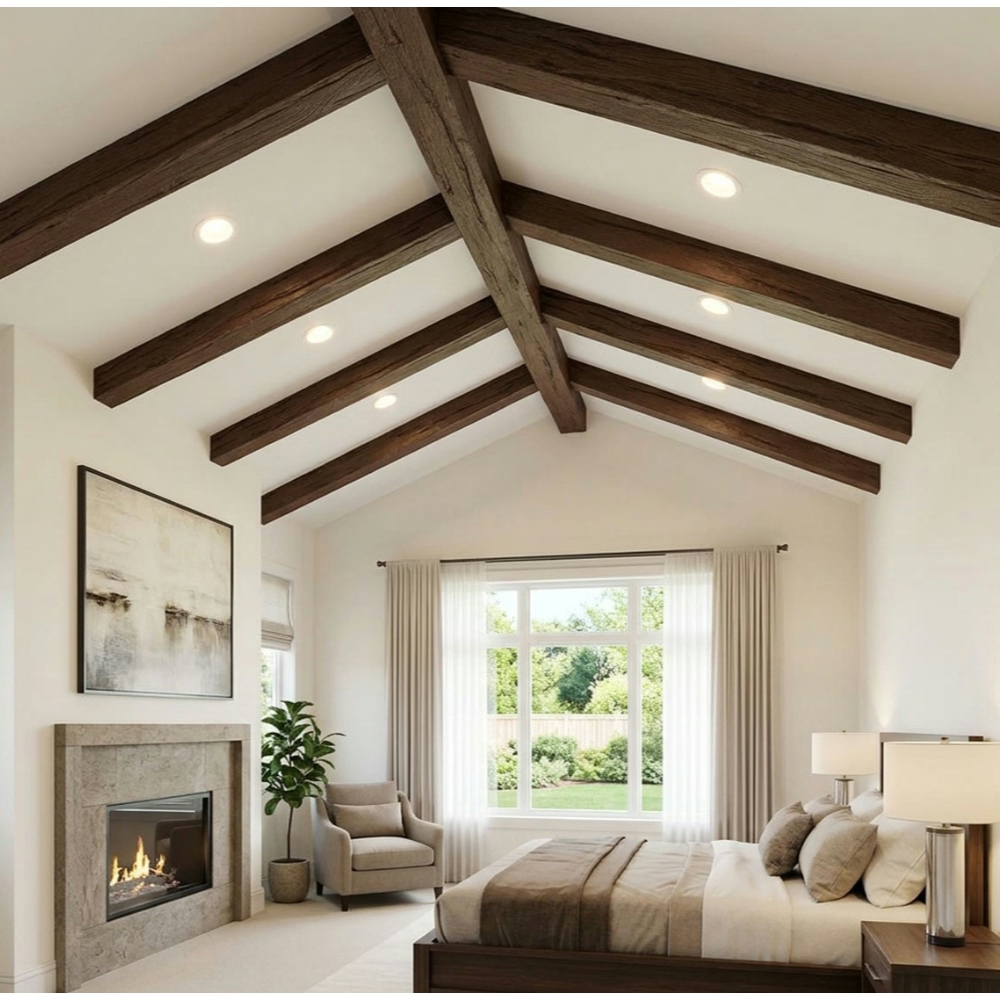
Design Applications
Classical Interiors
Ornamental trim beams fit naturally in classically-inspired interiors:
- Traditional profiles that reference historical precedents
- Rich wood tones that complement classical furnishings
- Coordinating classical accessories
- Integration with traditional millwork throughout
Transitional Spaces
Transitional interiors blend traditional and contemporary:
- Simplified ornamental profiles
- Clean lines with subtle detail
- Flexible finishes that coordinate with various styles
- Accessories that work across style boundaries
Contemporary Refinement
Even contemporary interiors benefit from refined detailing:
- Clean ornamental profiles without historical reference
- Simple step or chamfer details
- Coordinate with contemporary trim packages
- Precision that suggests modern craft
Eclectic Details
Ornamental trim beams support eclectic design:
- Mixing ornamental profiles with unexpected elements
- Coordinating with collected furnishings and art
- Creating visual complexity that rewards attention
- Details that tell a story through their execution
Profile Types for Fine Detailing
Stepped Profiles
Multiple horizontal steps create classical cornice detail:
- Each step casts a small shadow
- The steps create visual depth
- Traditional and formal in character
- Work with classical millwork packages
Fluted Profiles
Vertical grooves create refined texture:
- Subtle detail that reads at close range
- Classical reference without ornamentation
- Works in both traditional and contemporary contexts
- Coordinate with fluted columns or pilasters
Coffered Profiles
Recessed panels create formal ceiling details:
- Each coffer casts strong shadow
- Formal, traditional appearance
- Often used in grids or repeated patterns
- Requires precise installation for clean coffer edges
Egg-and-Dart Details
Classical ornamental band with egg shapes alternating with dart shapes:
- Traditional Greek and Roman reference
- High decorative content
- Works at beam ends or as continuous bands
- Requires quality moulding for crisp detail
Beaded Profiles
Small rounded details create texture:
- Subtle ornamentation that adds interest
- Works in traditional and cottage interiors
- Coordinate with other beaded trim
- Read well in both natural and artificial light

Coordination with Room Trim
Ornamental beams should coordinate with the overall trim vocabulary:
Casing Alignment
Beam depth and profile should relate to door and window casings:
- Match casing depth for visual consistency
- Coordinate the complexity of detail
- Align finish across all millwork
Crown Moulding Integration
If the room has crown moulding, beams should integrate:
- Match crown depth at beam-to-ceiling junction
- Coordinate the level of ornamental detail
- Consider continuous crown through beam runs
Base and Chair Rail Coordination
Beam proportions should balance with base and chair rail:
- Maintain visual hierarchy with base as lowest element
- Chair rail height should relate to beam position
- Coordinate ornamental detail level throughout
Installation Excellence
Fine detailing requires installation excellence:
Precision Measurement
Ornamental profiles demand precise measurement:
- Measure each location individually
- Account for wall irregularities
- Plan joints for minimal visibility
Careful Handling
Ornamental profiles are more fragile than simple beams:
- Protect finished surfaces during handling
- Support long pieces to prevent sag
- Avoid impacts that damage detail edges
Clean Joinery
Joints in ornamental trim must be flawless:
- Miter corners precisely for clean transitions
- Use wood glue in addition to mechanical fasteners
- Fill and sand joints for invisible repairs
Alignment Verification
Check alignment throughout installation:
- Verify level across long beam runs
- Check spacing consistency
- Confirm joint alignment at corners
Finish Selection for Detail
The finish on ornamental beams affects how detail reads:
Stain and Clear Coat
Stained finishes emphasize wood grain and texture:
- Highlight the depth of ornamental detail
- Work with traditional wood finishes throughout
- May require grain filling for smooth profiles
Painted Finish
Painted finishes emphasize form over texture:
- Clean shadow lines in ornamental detail
- Coordinate with wall and trim color
- May require fill before painting on rough textures
Glazing
Glazing techniques highlight ornamental detail:
- Dark glaze in recesses emphasizes shadow
- Antiquing creates aged patina
- Technique requires skill for consistent results
Room-Specific Detail Applications
Dining Rooms
Formal dining rooms benefit from refined ornamental detail:
- Beams with classical profiles and rich finishes
- Coordination with wainscoting and formal trim
- Integration with chandelier and wall sconces
Living Rooms
Living rooms use ornamental detail to establish quality:
- Beams that complement traditional or transitional furnishings
- Refined profiles that reward close inspection
- Integration with built-in millwork
Entryways and Foyers
Entries set the tone for the home:
- Ornamental detail that establishes quality perception
- Coordination with stair detailing and wall paneling
- Integration with lighting and architectural features
Libraries and Studies
Formal rooms benefit from refined ornamentation:
- Dense ornamental detail appropriate to room function
- Coordination with bookcases and built-ins
- Traditional materials and classical references
The Investment in Fine Detailing
Fine detailing costs more than simple trim work:
- Ornamental profiles are more expensive to produce
- Installation requires more skill and time
- Coordination with other trim requires attention
This investment returns through:
- Enhanced perceived quality
- Better aging characteristics
- Higher property value
- Greater satisfaction with the finished space
For clients who value quality and are willing to invest in it, ornamental trim beams deliver returns that justify the cost.
Excellence in Execution
Fine detailing requires commitment to excellence at every stage:
Design: Select profiles appropriate to the space and budget.
Specification: Specify quality products from reputable manufacturers.
Coordination: Plan the trim system as a whole, not element by element.
Installation: Use skilled craftspeople who understand fine trim work.
Finishing: Apply finishes with care and attention to detail.
When these elements come together, the result is a space that communicates quality through every detail. The ceiling is not merely finished—it is designed.
Polyurethane ornamental trim beams make this level of detailing accessible. Precision moulding delivers consistency that site work cannot match. Factory finishing ensures quality that field application approaches but rarely achieves.
For architects, designers, and clients who understand the value of fine detailing, ornamental trim beams are an investment in the quality of the built environment.
Technical References
ASTM standards cited in every specification
Test Data
Lab results from internal testing program
Updated 2026
Reviewed against current product specs


