
Sacred spaces have long relied on timber construction and timber decorative elements to create environments conducive to contemplation, worship, and spiritual reflection. The organic warmth of wood connects congregations to natural materials while providing the visual grandeur appropriate for spaces dedicated to higher purposes. However, traditional timber construction presents practical challenges that modern materials can address without compromising aesthetic integrity.
Churches and chapels built throughout history demonstrate remarkable variety in their architectural approaches to incorporating timber beams. Gothic cathedrals often featured exposed timber roof structures that created soaring spaces beneath elaborate stone vaulting. Smaller chapels and meeting houses frequently employed timber framing both structurally and decoratively, with beams forming essential visual components of the interior architecture.
Contemporary congregations face decisions about maintaining, restoring, or reimagining these spaces. PU faux wood beams offer solutions that honor historical precedents while addressing practical concerns about weight, maintenance, and installation complexity. Understanding how these materials integrate with sacred space design principles helps committees and designers make informed choices.
Honoring Traditional Aesthetics
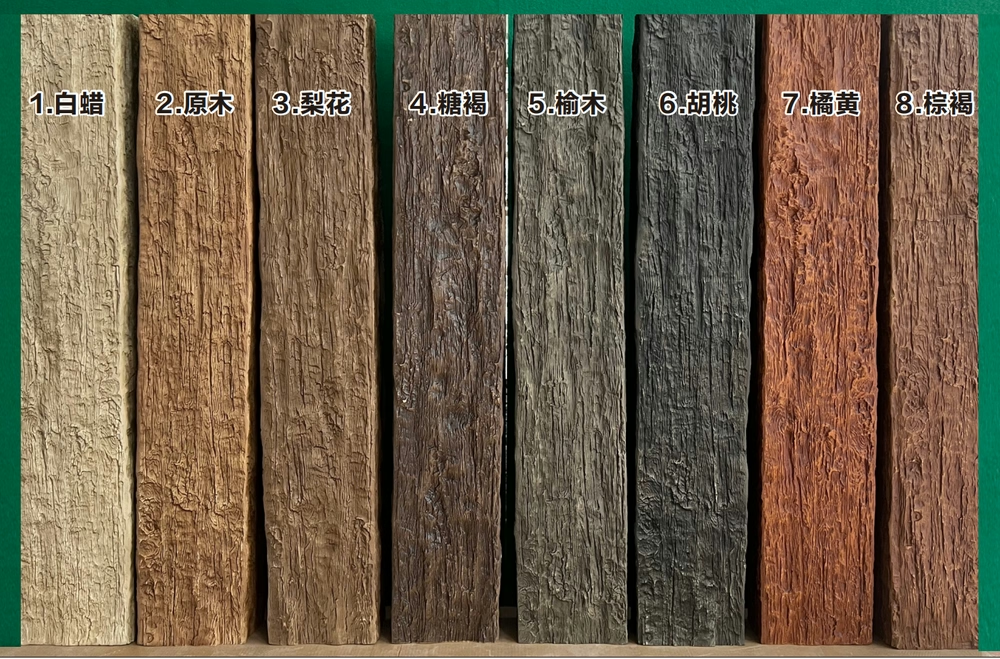
Genuine timber beams communicate history and craftsmanship in ways that synthetic materials often cannot replicate. The organic variation in grain patterns, subtle color shifts, and natural imperfections contribute to authentic appearances that mass-produced alternatives may lack. PU faux wood beams have evolved significantly in their ability to capture these qualities, with modern manufacturing techniques creating remarkably realistic textures and profiles.
When installing beams in historically significant structures, maintaining visual consistency with existing architectural elements becomes paramount. Faux beams can be formulated to match the species, color, and character of original timber, creating seamless integration that preserves the space's historical integrity. This approach has proven valuable in restoration projects where replacing deteriorated beams with authentic materials would prove prohibitively expensive.
The symbolic significance of wood in religious contexts extends beyond mere aesthetic considerations. Biblical references to trees, forests, and wooden construction elements create cultural associations that reinforce the spiritual dimension of timber materials. Chapel visitors often experience genuine wood elements as more authentic and meaningful than synthetic alternatives, even when visual differences are minimal.
Liturgical traditions may influence beam selection and placement decisions. Spaces designed for specific denominational practices might incorporate beam arrangements that support particular ceremonial elements, acoustic requirements for spoken word or music, or visual hierarchies that guide attention toward liturgical focal points.

Structural Considerations for Sacred Spaces
The original construction methods used in historic churches often reflect building technologies no longer common or affordable today. Massive timber rafters, hewn beams, and hand-joined connections represented significant labor investments that contemporary construction budgets cannot support. The weight of genuine timber beams also requires substantial structural support that older buildings may no longer provide adequately.
Faux wood beams eliminate structural concerns by attaching to existing ceiling surfaces without requiring the bearing capacity that genuine timber demands. This characteristic proves particularly valuable in chapels where original roof structures have been modified over centuries or where building codes present challenges for adding significant weight to existing construction.
Seismic considerations influence material selection in regions prone to earthquakes. The reduced weight of PU beams compared to genuine timber decreases the forces that building structures must resist during seismic events. This benefit has led to increased adoption of faux beams in churches located in seismically active areas, where congregations seek to balance traditional aesthetics with modern safety requirements.
Foundation limitations present similar challenges. Historic buildings often rest on foundations designed for the loads present at the time of construction. Adding genuine timber beams for ceiling restoration could exceed foundation capacities, requiring expensive structural reinforcement. Faux beams avoid this issue by adding minimal weight while providing equivalent visual impact.
Acoustic Enhancement
Sacred spaces frequently serve multiple functions that include spoken word, congregational singing, instrumental music, and recorded audio playback. Each use case presents distinct acoustic requirements that ceiling design can either support or undermine. The irregular surfaces created by beam installations help distribute sound energy more evenly throughout congregations, reducing dead spots and echo problems.
Beam placement affects acoustic performance in measurable ways. Beams positioned perpendicular to the long axis of rectangular sanctuaries create chambers that trap certain frequencies while allowing others to pass. This effect can be tuned through careful spacing calculations that address specific acoustic goals for music reproduction versus speech clarity.
Historic churches often achieved their acoustic properties through timber roof structures that absorbed excess reverberation while providing reflective surfaces for direct sound. The combination created balanced acoustics that supported both spoken liturgy and musical performance. Replicating this effect with modern materials requires understanding the principles underlying traditional acoustic design.
Contemporary worship music presents different acoustic challenges than traditional liturgical settings. Amplified sound systems interact differently with beam treatments than acoustic instruments and unamplified voices. Beam installations for modern worship spaces must account for these differences, potentially incorporating acoustic treatments that absorb excessive sound energy from amplification systems.
Lighting Integration
Sacred spaces rely heavily on natural and artificial lighting to create appropriate atmospheres for worship activities. Daylight entering through windows or skylights creates constantly changing visual conditions that beam installations interact with in complex ways. Understanding these interactions helps designers position beams to maximize positive effects while avoiding problematic glare or shadow patterns.
Artificial lighting systems in churches have evolved from simple incandescent fixtures to sophisticated LED installations capable of dramatic color temperature and intensity control. Faux wood beams accommodate these systems through integrated mounting options that allow fixtures to attach directly to beam surfaces or recess within beam profiles. This flexibility enables lighting designers to create layered illumination that highlights beam architecture while providing functional light levels.
Highlight lighting directed across beam surfaces emphasizes the three-dimensional quality of the installation, creating shadow patterns that enhance the sense of depth and craftsmanship. Wash lighting provides more uniform illumination suitable for general congregational activities. The combination allows spaces to transition between different lighting modes for various services and events.
Emergency lighting requirements in public assembly spaces must be addressed during design phases. Faux beams can incorporate emergency fixture mounting points or wire pathways that maintain code compliance without disrupting visual appearances. Planning for these requirements early prevents costly modifications during later construction phases.

Budget and Preservation
Church construction and renovation projects typically operate under significant budget constraints, with committees balancing aesthetic goals against practical financial limitations. The cost differential between genuine and faux timber beams often determines feasibility for beam installation projects in spaces where budget resources are limited.
Genuine timber beams require not only material costs but also specialized carpentry labor for installation, finishing, and ongoing maintenance. Faux beams reduce labor requirements through lighter weight handling, pre-finished surfaces, and simpler attachment methods. These savings can redirect resources toward other building priorities or allow projects to proceed when genuine timber would prove unaffordable.
Preservation funds designated for historic structures often come with restrictions on materials and methods. Faux wood beams may qualify for approval in contexts where original timber cannot be replicated due to cost or availability constraints. Documenting the visual equivalence between genuine and faux materials helps committees communicate the appropriateness of synthetic alternatives to preservation authorities.
Long-term maintenance budgeting benefits from the durability characteristics of PU materials. While genuine timber requires periodic inspection, refinishing, and occasional replacement, faux beams maintain their appearance with minimal intervention. This predictability simplifies financial planning for congregations that prefer to avoid unexpected maintenance expenses.
Community and Cultural Considerations
Churches and chapels serve as community gathering spaces beyond their liturgical functions. Meeting rooms, fellowship halls, and social spaces may also benefit from beam installations that create consistent design language throughout building complexes. Faux beams enable this continuity across varied room types and construction conditions.
Cultural expectations about sacred space aesthetics vary across communities and denominations. Some congregations expect traditional timber appearances that connect them to historical faith practices, while others embrace contemporary design that reflects current cultural values. Faux beam options accommodate both preferences through diverse profile, species, and finish selections.
Accessibility considerations influence beam installation decisions in public buildings. While beams themselves present no accessibility challenges, their installation may affect ceiling heights, fixture placement, or other elements that interact with accessibility requirements. Coordinating beam installations with accessibility upgrades ensures that all members of the congregation can participate fully in worship activities.
Technical References
ASTM standards cited in every specification
Test Data
Lab results from internal testing program
Updated 2026
Reviewed against current product specs


