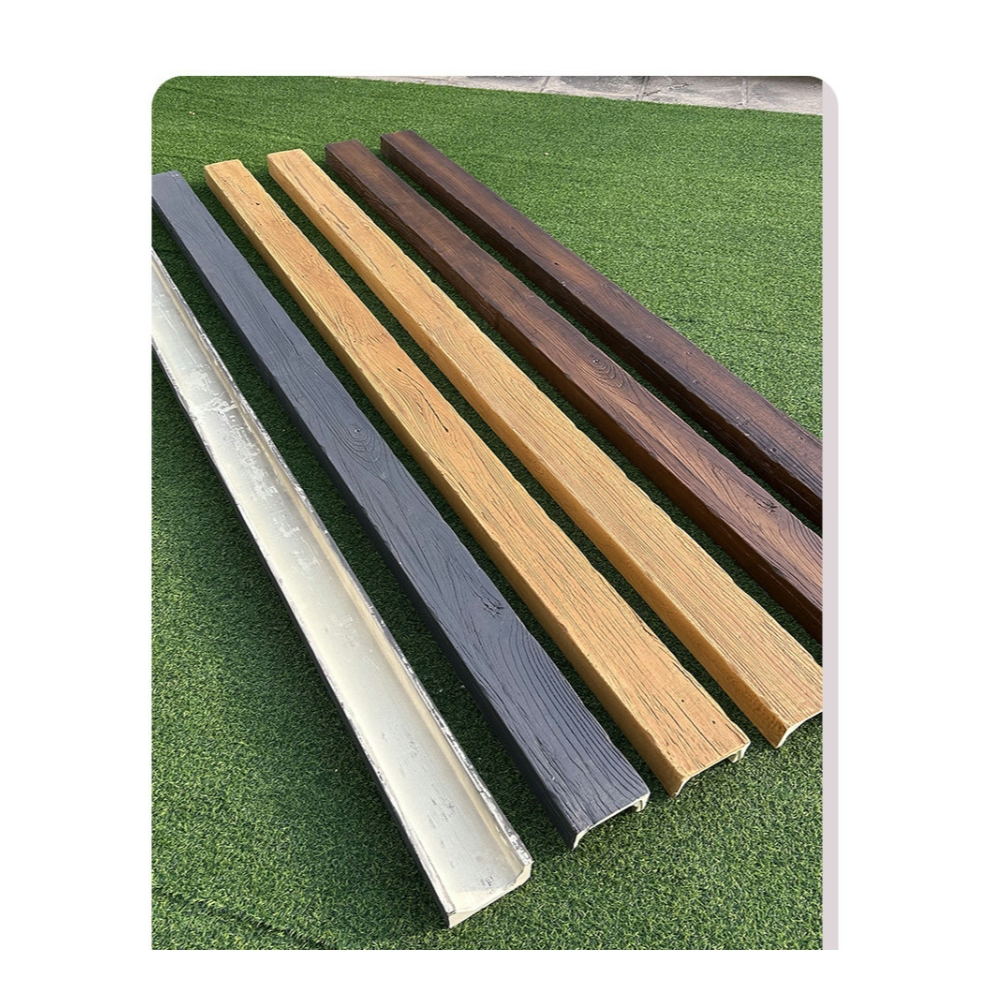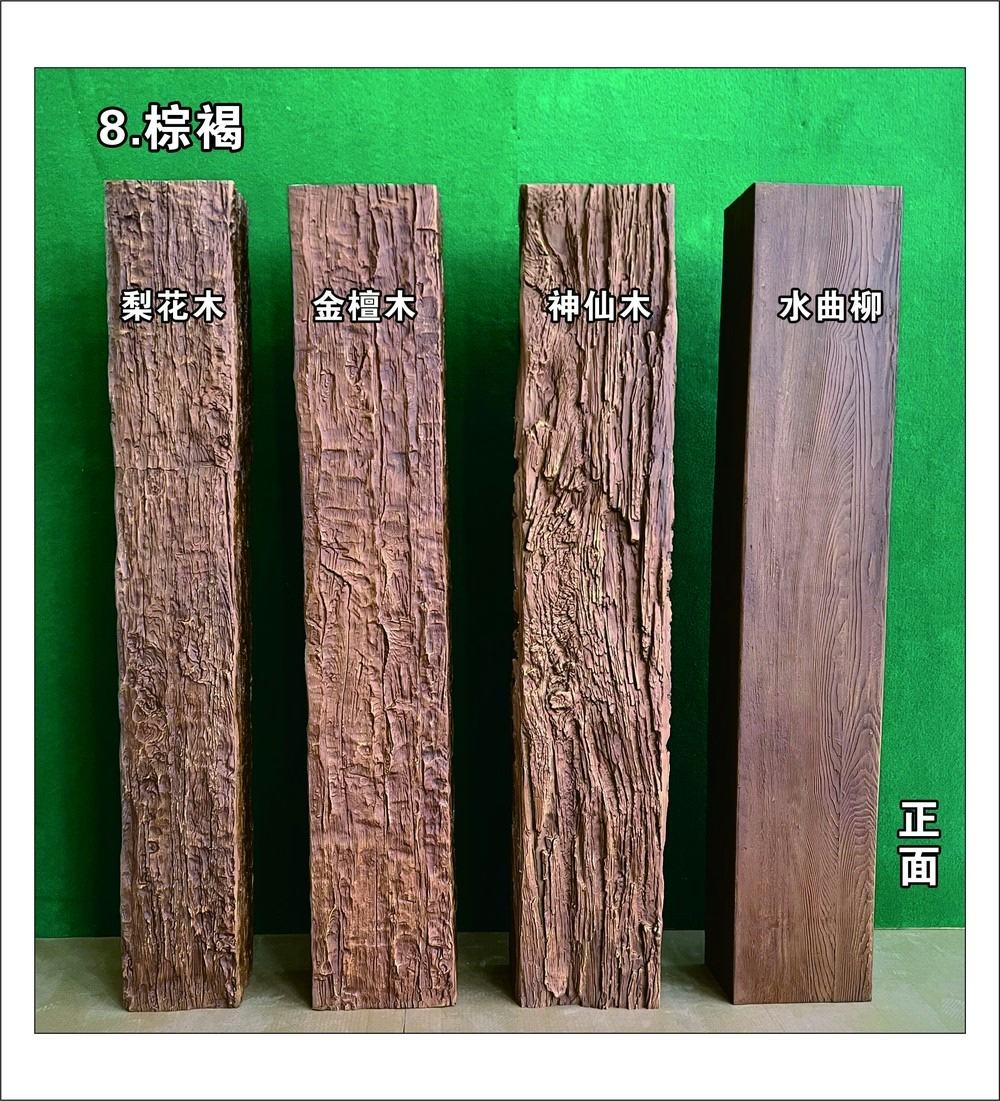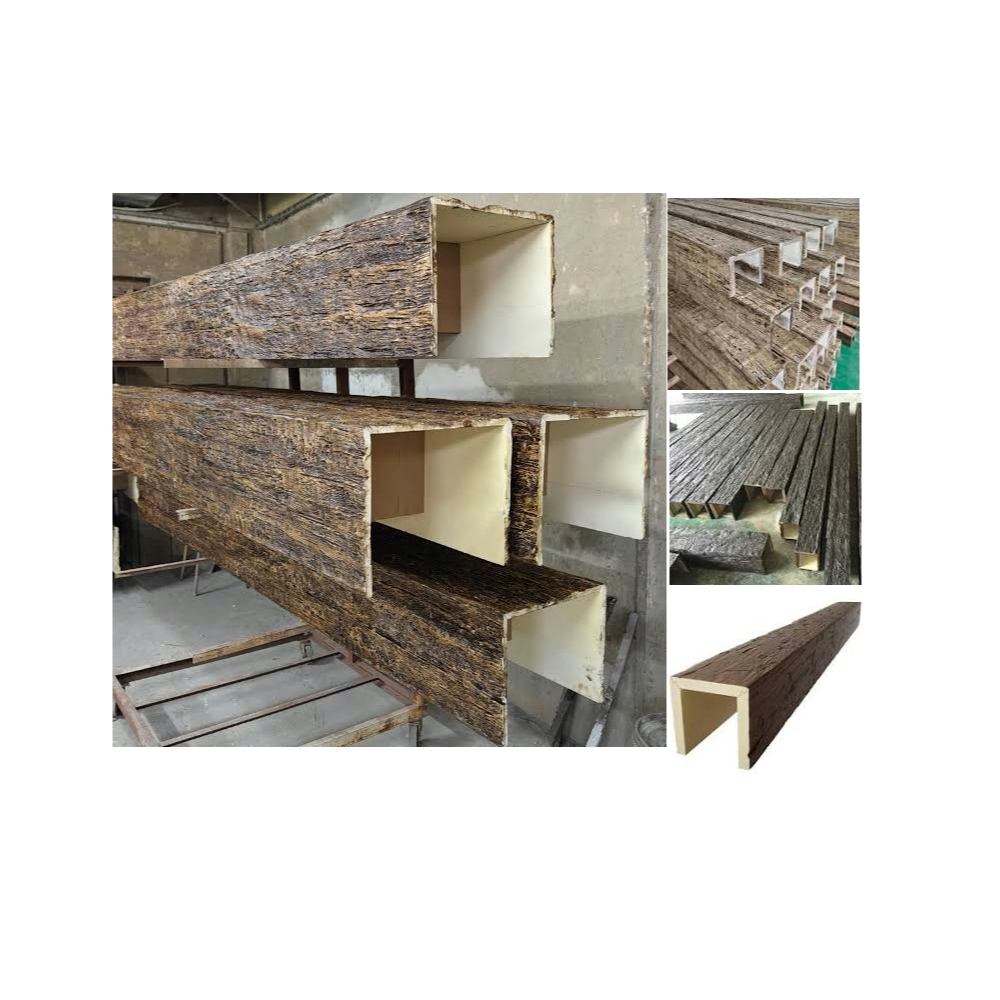
Every experienced installer knows the frustration: the main beams arrive on time and look perfect, but the accessories—end caps, corners, and fittings—are either missing from the shipment or do not quite match. Slight color variations become glaringly obvious in finished work. Substitutions compromise the professional appearance the project demands. Combined bundle packs solve this coordination problem by delivering complete installation-ready packages with every component needed for a professional finish.
Why Accessory Coordination Matters
Professional installations depend on details. A beautifully crafted beam installation with mismatched or poorly fitting accessories looks amateurish regardless of the quality of the primary structural elements. End caps, corners, and fittings occupy visible termination points where the eye naturally focuses—these transition areas either reinforce or undermine the intended aesthetic.
Color matching between beams and accessories presents particular challenges. Even when manufactured to the same color specification, components produced in different batches or at different times can vary slightly. When all accessories come from the same production run as the beams they accompany, color consistency is guaranteed. Bundle packs from coordinated production runs eliminate this source of visible variation.
Beyond color, dimensional coordination requires attention. End caps must fit beam profiles precisely—loose-fitting accessories look hastily installed even when carefully applied. Corners must align perfectly at mitered joints without visible gaps or misalignment. Fittings must accept beam members cleanly while providing adequate gluing or fastening surface. Bundle packs ensure these relationships are engineered correctly before products reach the job site.
Components Included in Bundle Packages
Professional bundle packs typically include four categories of components that address all standard installation requirements. Understanding what each component does helps installers plan their work and ensure they receive appropriate quantities for specific projects.
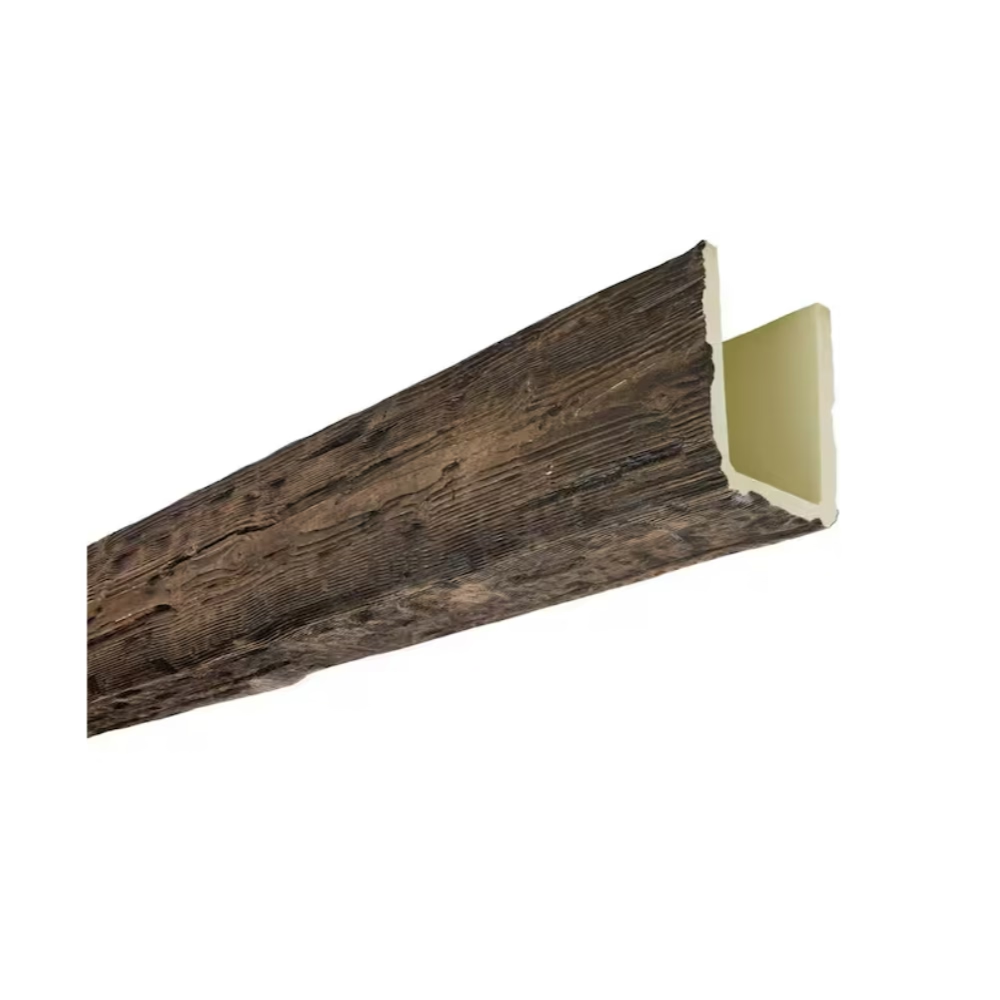
End caps provide finished terminations at beam ends. They mount over cut beam ends, covering the foam core and creating the appearance of continuous material. Standard end caps match common beam dimensions; custom profiles accommodate non-standard sizes. Installation involves applying polyurethane-compatible adhesive to the cap interior and pressing firmly over the beam end until the adhesive sets.
Corner pieces address the intersection of beams at room corners, stair wells, or architectural transitions. These components are molded or fabricated to match the specific corner configuration—90-degree corners for standard rooms, custom angles for unique architectural conditions. Corner pieces eliminate the difficult mitering that frustrates field crews while providing consistent, professional results.
Fascia covers extend beam installations around corners or across ceiling planes where beam ends terminate against walls or other surfaces. These wide-format pieces create the appearance of beam runs continuing behind visible surfaces, eliminating the visual termination that occurs when beams simply end at walls.
Joist hangers and mounting clips provide structural connection between beams and building structure. These components must be both structurally adequate and visually appropriate—exposed hardware should match or complement beam appearance where visible. Quality bundle packs include appropriately finished mounting hardware.
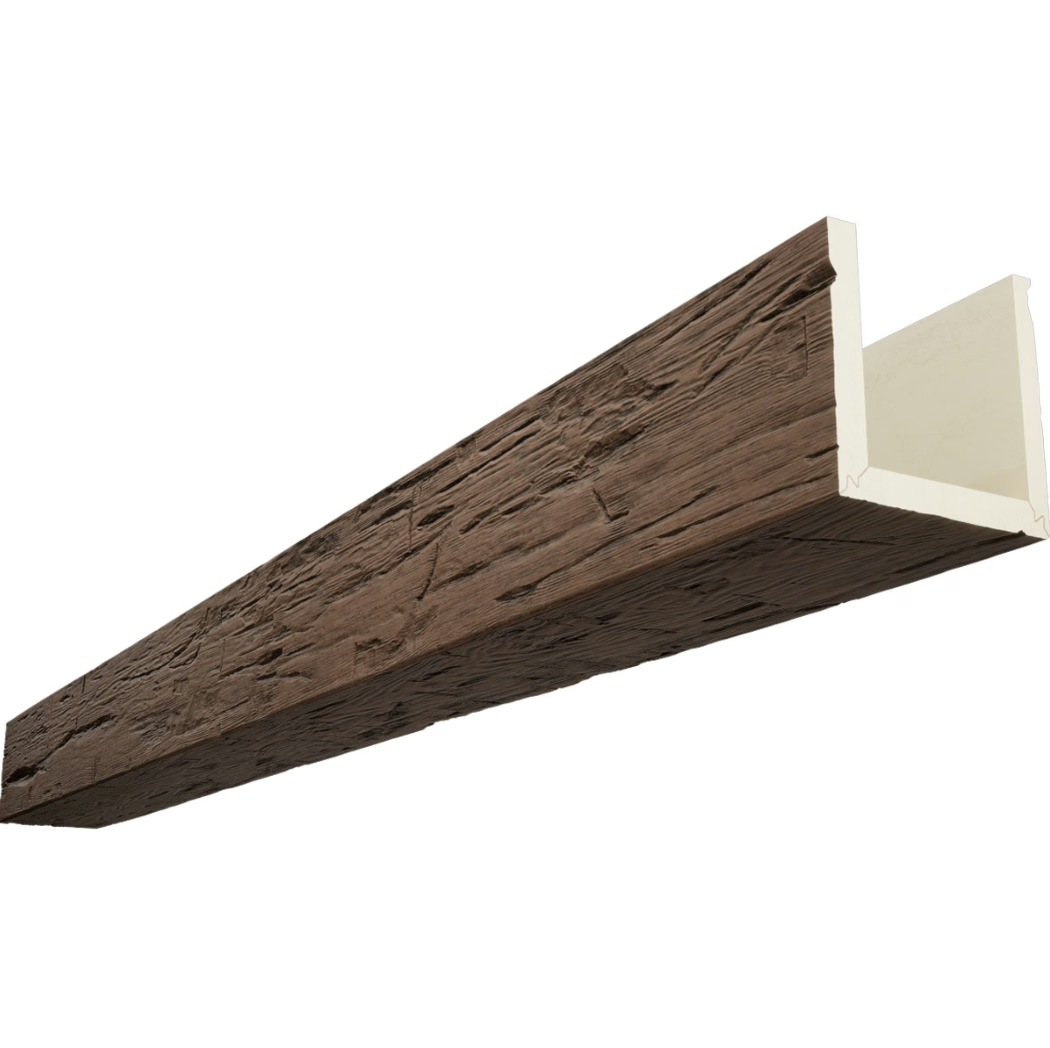
Standard Bundle Configurations
Manufacturers offer several standard bundle configurations designed for common installation scenarios. These packages provide economical access to complete accessory sets while minimizing inventory requirements for both suppliers and contractors.
| Bundle Type | Typical Contents | Best For |
|---|---|---|
| Starter Kit | 10 end caps, 4 corners, mounting hardware | Small residential projects |
| Standard Commercial | 25 end caps, 12 corners, 10 fascia pieces, hardware | Typical retail/hospitality |
| Large Project | 50 end caps, 24 corners, 20 fascia pieces, hardware | Hotels, restaurants, offices |
| Custom Project | Configured per project requirements | Unique specifications |
Project managers should review bundle contents against specific project drawings to ensure adequate quantities. Running short of end caps at the end of an installation creates project delays while waiting for replacement shipments. Ordering excess accessories ties up capital unnecessarily. Careful quantity takeoff prevents both problems.
Installation Efficiency Gains
The time savings from coordinated bundle packs compound throughout an installation. When accessories are pre-coordinated with beam products, installers eliminate the identification and sourcing steps that would otherwise require research, phone calls, or field substitutions. Everything arrives together, ready for installation.
Color matching requires no field verification. Because components come from the same production batches, installers can proceed directly to assembly without checking whether purchased accessories match the beams they received. This certainty prevents callbacks or rework that would otherwise occur when subtle color differences become apparent only after installation.
Quantity estimation becomes more accurate when working with established bundle configurations. Standard packages contain known quantities of each component type, simplifying takeoff and ordering. Deviations from standard configurations (custom angles, non-standard beam sizes, unique architectural conditions) can be addressed through custom component orders while still benefiting from the quality assurance that coordinated production provides.
Quality Assurance with Coordinated Components
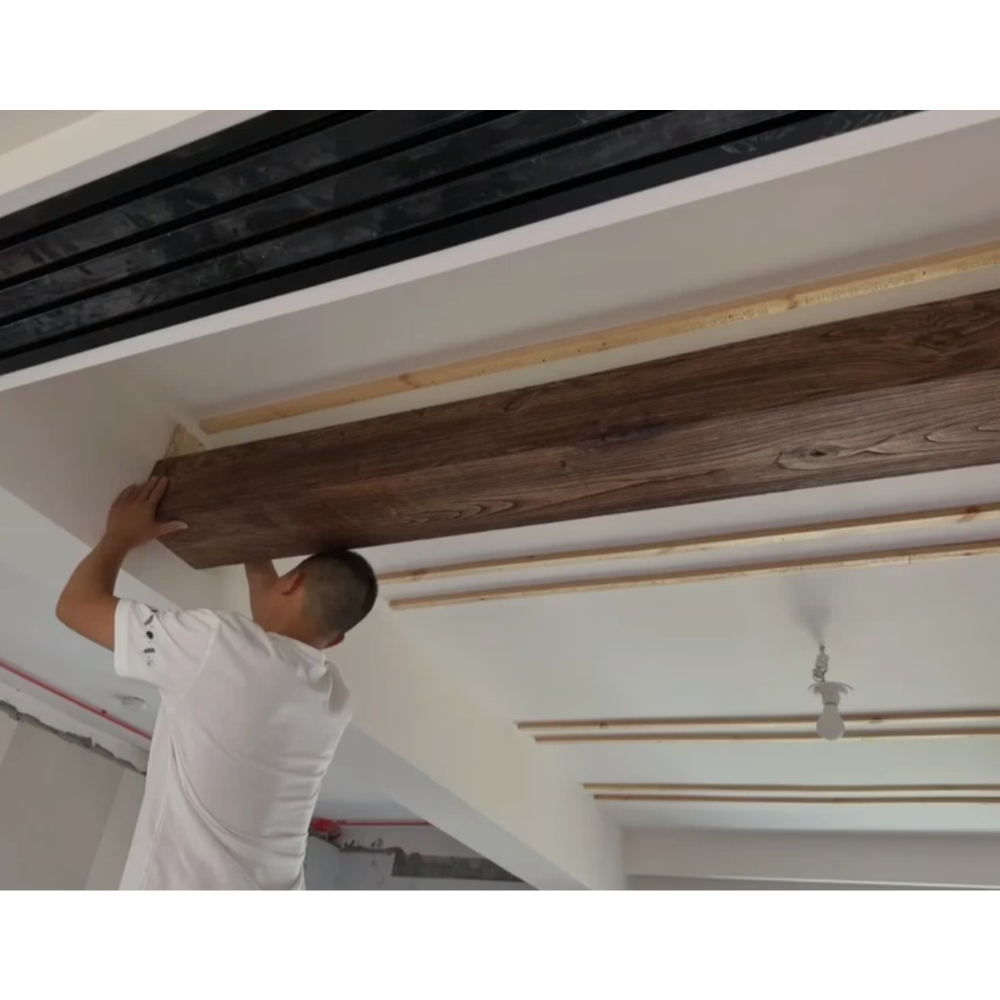
Bundle packs represent a quality assurance strategy as much as a convenience feature. When manufacturers produce accessories in the same facilities, using the same materials and processes as their beam products, consistency follows naturally. The same color pigment concentrates, the same surface texture specifications, the same UV stabilization packages—all apply equally to every component in the package.
This coordination extends to physical dimensions. End caps produced for specific beam profiles are engineered to fit those profiles precisely—snap fits where appropriate, adequate gluing surfaces where mechanical attachment supplements adhesive bonding. Corners are molded or fabricated to the exact angles required, with built-in clearance that allows thermal movement without creating visible gaps.
Adhesive compatibility represents another coordination advantage. When all components share the same polyurethane formulation, adhesive selection becomes straightforward—products recommended by the manufacturer work consistently across all package components. This eliminates the frustration of discovering that a specific adhesive works well with beam surfaces but poorly with accessory components, requiring different products for different parts of the same installation.
Planning Quantities for Specific Projects
Accurate quantity planning prevents project delays and excess inventory. Begin by reviewing architectural drawings to count beam runs, identifying terminations at walls, corners, and other beams. Each beam end requires an end cap. Each corner intersection requires corner pieces sized to the beam dimensions and corner angle.
For wall-mounted beams, calculate exposed end count based on beam length and room dimensions. Standard 12-foot beam lengths commonly used in commercial installations produce specific end counts based on room sizes—account for these standard practices when estimating. Custom lengths affect end count differently, so verify against actual project specifications.
Fascia requirements depend on installation configuration. Continuous beam runs wrapped around ceiling perimeters require fascia pieces at all wall-beam intersections. Exposed beam ends that terminate at solid surfaces may or may not require fascia depending on design intent. Clarify with the design team before finalizing quantities.
Mounting hardware requirements depend on installation method and structural substrate. Wood-framed construction uses different fasteners than steel or concrete. Heavier beams require more substantial mounting systems than lighter decorative elements. Bundle pack hardware is sized for typical conditions—verify that included hardware meets structural requirements for specific projects.
Storage and Handling Considerations
Bundle pack components require appropriate storage to maintain quality until installation. Keep all components in original packaging until needed to protect against dust accumulation and physical damage. Store in climate-controlled conditions to prevent temperature cycling that could affect adhesive performance or dimensional stability.
Handle accessories with care during unpacking and installation. The same polyurethane foam that provides lightweight handling characteristics also means components can be damaged by excessive force or impact. Dropped end caps may crack or chip; corner pieces can break at thin sections. Careful handling prevents this waste and the project delays it creates.
Sourcing and Lead Time Planning
Coordinate bundle pack ordering with beam product orders to ensure all components arrive together. Confirm that the manufacturer or supplier has production capacity for both beams and accessories before committing to project timelines. Custom accessory configurations may require longer lead times than standard bundle packages.
For projects with phased installations, bundle packs can be staged to match delivery schedules. Order components for initial phases first, with subsequent phase quantities following as project timelines solidify. This approach reduces warehouse storage requirements while ensuring materials are available when needed.
Professional installers develop relationships with suppliers who understand project logistics and can accommodate the coordination requirements that large installations demand. Early engagement with suppliers allows time for custom component fabrication if project requirements exceed standard package offerings.
Technical References
ASTM standards cited in every specification
Test Data
Lab results from internal testing program
Updated 2026
Reviewed against current product specs