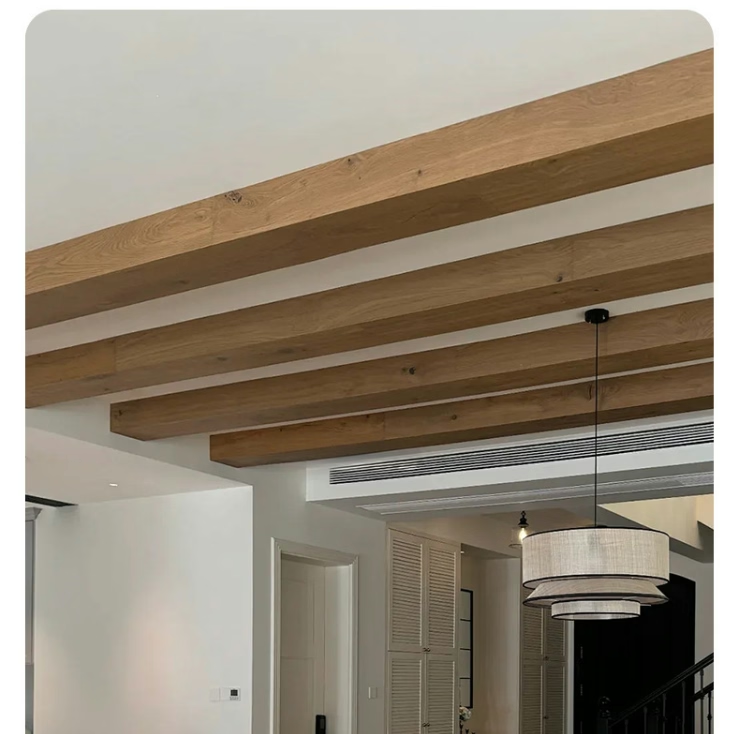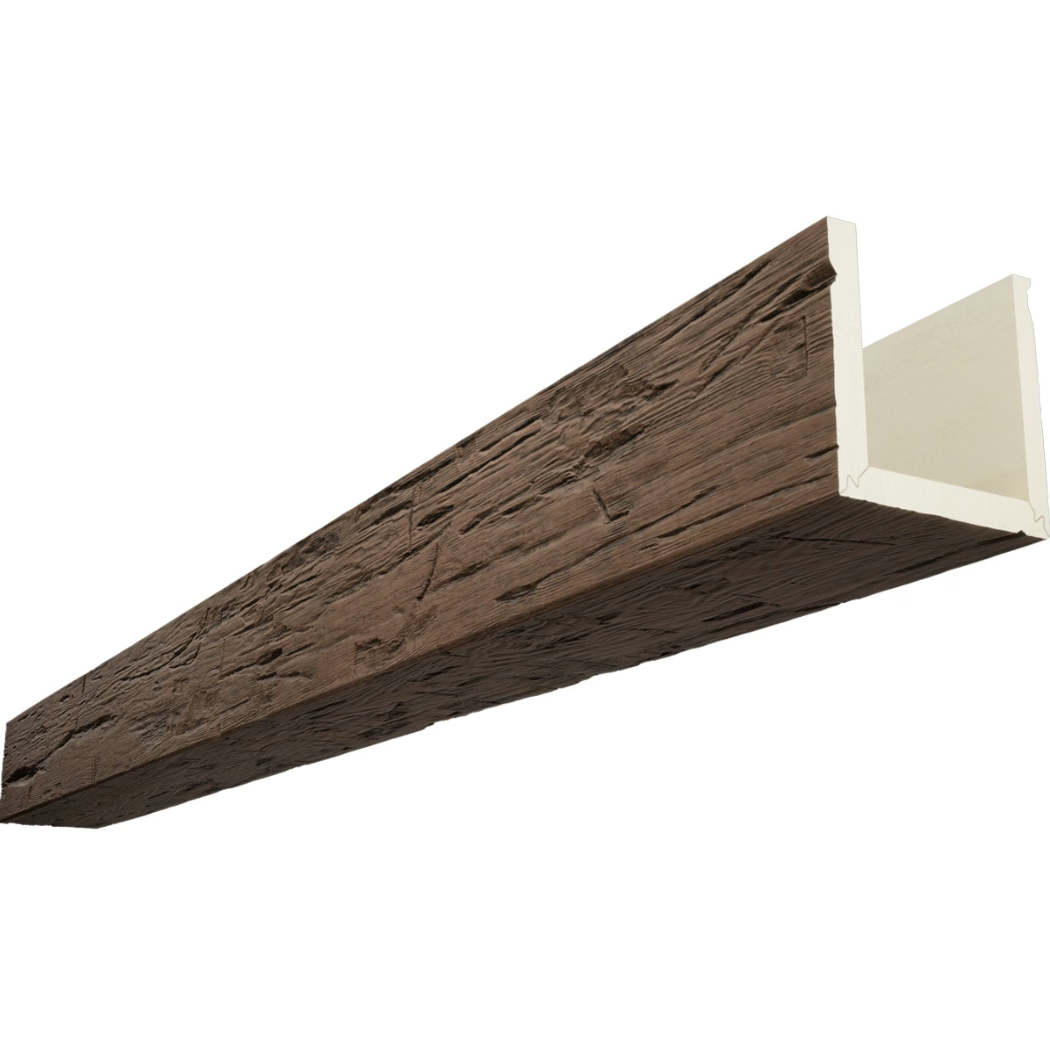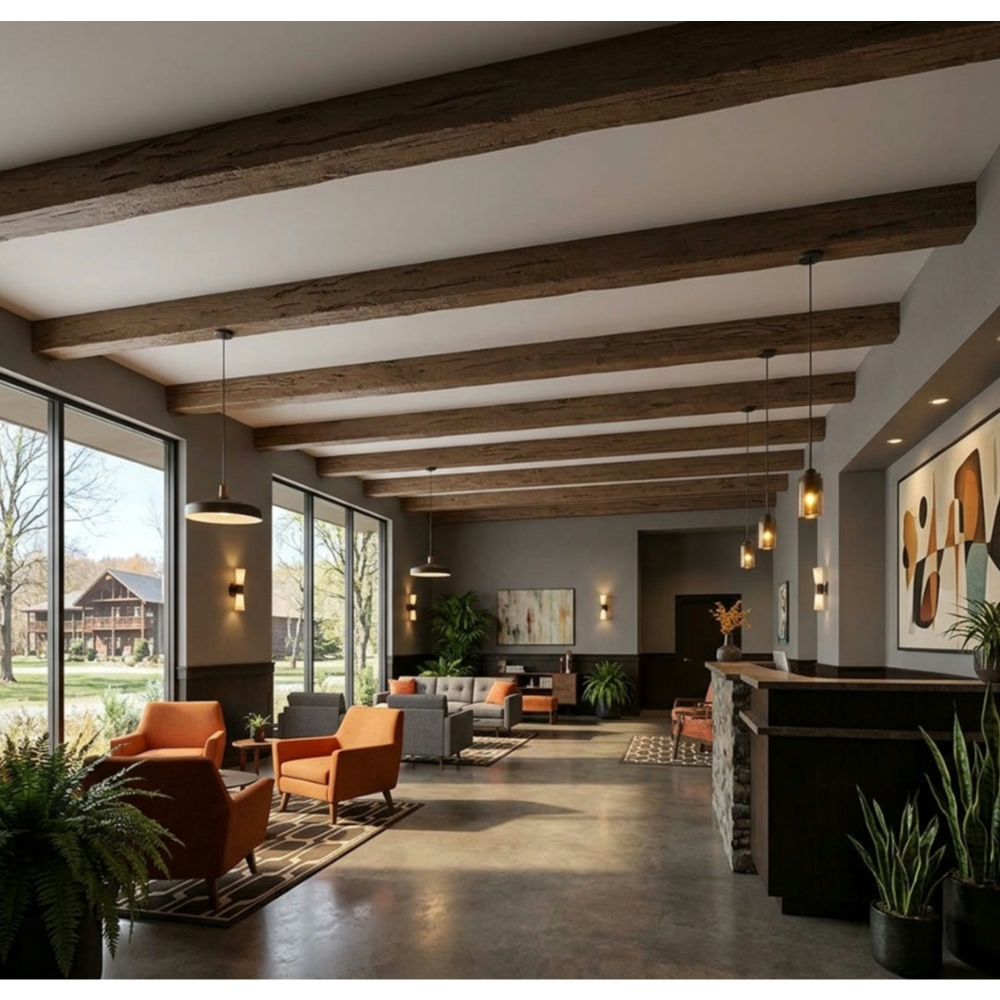
A restaurant group planning twelve new locations across three states encountered a problem: their designer specified faux timber ceiling beams for the dining rooms, but the procurement department could not find a manufacturer with FF&E approval. Three potential suppliers offered attractive products at competitive prices, but none had completed the certification process. The group faced a choice: select a non-certified supplier and risk procurement complications, or redesign the ceiling treatment with certified alternatives. The eight-month delay required to complete certification with their preferred supplier cost the project significant market opportunity. Restaurant groups that understand FF&E certification requirements and work with certified manufacturers from the start avoid these costly delays.
Restaurant Group Procurement Realities
Restaurant groups operating multiple locations face unique procurement challenges compared to standalone restaurants. Brand consistency across locations requires standardized materials and finishes. Procurement efficiency demands volume contracts with manufacturers who can serve multiple properties simultaneously. Quality assurance depends on relationships with suppliers who understand and meet brand specifications consistently.
FF&E certification processes exist to manage these requirements. Certified manufacturers have demonstrated capability across the dimensions that restaurant groups care about: consistent product quality, production capacity for multi-property deployment, financial stability for ongoing supply relationships, and quality control processes that maintain standards over years of operation.
For restaurant groups, working with FF&E certified suppliers transforms procurement from an approval-intensive process into a streamlined ordering activity. Once certified, manufacturers can supply products to any property within the group without requiring individual project approvals. This efficiency becomes critical when groups open 10, 20, or 50 locations within compressed development timelines.
The investment in FF&E certification pays back through operational simplicity. Restaurant groups that proactively identify and certify preferred suppliers before development needs arise position themselves to move quickly when opportunities emerge. Groups that wait until specific projects require materials often find themselves accepting suboptimal alternatives or delaying projects while certification processes complete.
Specific Requirements for Restaurant Ceilings
Restaurant ceiling applications present specific requirements that FF&E certification processes address. Understanding these requirements helps manufacturers prepare successful certifications and helps restaurant groups evaluate supplier suitability.
Fire Safety and Code Compliance
Restaurants face strict fire safety requirements due to kitchen operations, fuel sources, and occupant loads. Ceiling finishes must meet applicable fire ratings—typically Class A or Class B depending on occupancy classifications. FF&E certification processes verify that manufacturers can consistently produce products meeting these standards.
Documentation requirements include test reports per ASTM E84 (Standard Test Method for Surface Burning Characteristics) or equivalent standards. Results must demonstrate flame spread and smoke development indices within code-acceptable ranges. Some jurisdictions require additional testing per NFPA 286 for certain applications—verify local requirements when specifying products.
Food Service Environment Compatibility
Restaurant environments expose ceiling materials to grease, steam, cleaning chemicals, and food-related contamination. FF&E processes assess material compatibility with these exposures. Polyurethane faux timber beams offer advantages over natural wood: they resist grease absorption, clean more easily, and do not support microbial growth in ways that organic materials can.
Manufacturers seeking certification should document chemical compatibility testing results. Standard restaurant cleaning products, degreasers, and sanitizers should not damage or discolor certified beam surfaces. Testing should follow industry protocols that simulate years of routine restaurant cleaning cycles.
Acoustic Considerations
Restaurant noise management affects both guest experience and staff working conditions. Excessive reverberation makes conversation difficult and creates uncomfortable dining atmospheres. FF&E certification may address acoustic properties—either through material characteristics or through configuration requirements that affect room acoustics.
Ceiling beam installation affects acoustics through surface area, configuration, and material density. Certification processes should consider how beam installations interact with other acoustic treatments to achieve desired room sound profiles. Manufacturers who can provide acoustic modeling support or configuration guidance add value beyond basic product certification.
Multi-Location Development Coordination
Restaurant groups developing multiple locations simultaneously require coordinated procurement that serves all properties efficiently. FF&E certification enables this coordination through standardized purchasing processes that work across all certified properties.
Standardized Specifications
Certification allows restaurant groups to establish beam specifications once and apply them across all properties. Standardization reduces design variation, simplifies procurement documentation, and enables volume purchasing agreements that lower costs. The visual consistency that standardization provides supports brand identity across geographically dispersed locations.
Standardized specifications also simplify quality management. Group quality teams can verify compliance using consistent criteria across all properties. Issues identified at one property can be addressed through standardized corrective actions across the entire portfolio. This systemic approach to quality management is impossible without FF&E certification.
Volume Pricing Benefits
Multi-location development creates natural opportunities for volume procurement. FF&E certified suppliers offer pricing tiers that recognize the value of committed multi-property business. These pricing benefits improve project economics while securing supply capacity during industry busy periods when standard supply channels may face constraints.
Volume procurement requires careful logistics coordination. Certified manufacturers experienced with multi-location projects can stage deliveries to match construction timelines at individual properties, reducing on-site storage requirements and minimizing handling damage. This logistics capability adds value beyond pricing considerations.
Construction Timeline Synchronization
Restaurant groups typically operate on aggressive construction timelines to capture market windows. Certified suppliers familiar with group requirements can prioritize production and delivery to support these timelines. This responsiveness becomes especially valuable when multiple properties face similar deadlines or when construction adjustments require rapid material resupply.
Certification Process for Faux Timber Beam Manufacturers
Manufacturers seeking FF&E certification for faux timber beam products face structured processes that require sustained effort over extended periods. Understanding these processes helps manufacturers plan certification strategies and helps restaurant groups evaluate supplier commitment to certification.
Initial certification typically requires 9-15 months from documentation preparation through final approval. The process begins with documentation submission and progresses through facility audits, sample evaluation, and committee decisions. Manufacturers should anticipate significant administrative effort during this period.
Facility audits assess manufacturing capability, quality control procedures, and operational maturity. Auditors examine production equipment, review quality documentation, and interview key personnel. Findings may include required improvements that must be completed before certification proceeds.
Sample evaluation tests production capability against specific product specifications. Multiple production runs may be evaluated to assess consistency over time. Manufacturers with strong quality control systems typically pass sample evaluation efficiently; those with inconsistent production may face repeated testing requirements.
Final committee decisions involve stakeholders from procurement, operations, quality, and design teams. These decisions consider not only product quality but also supplier relationship factors that affect long-term partnership viability. Manufacturers should approach certification as relationship building rather than transactional approval seeking.
Maintaining Certification Over Time
FF&E certification is not a one-time achievement—it requires ongoing maintenance. Restaurant groups periodically re-evaluate certified suppliers to ensure continued compliance with standards. Manufacturers must maintain quality, update documentation, and communicate changes that may affect certification status.
Material formulation changes are common as manufacturers improve products or respond to supply chain considerations. Each change may trigger re-evaluation requirements depending on the nature of the change. Manufacturers should establish internal processes for evaluating changes against certification requirements before implementing them.
Production process modifications, facility changes, or ownership transitions all potentially affect certification status. Transparent communication with restaurant group procurement teams prevents certification complications. Maintaining relationships through regular updates, facility visits, and performance reviews strengthens certification positions.
Practical Considerations for Restaurant Group Procurement
Restaurant group procurement teams face practical considerations beyond certification status. Lead times, minimum order quantities, payment terms, and delivery logistics all affect supplier selection decisions. Certified manufacturers offering favorable terms across these dimensions provide maximum value to restaurant group operations.
Lead time requirements vary by manufacturer and product configuration. Standard beam profiles typically offer shorter lead times than custom products. Restaurant groups planning standard specifications across properties can leverage standard lead times to optimize procurement timing.
Minimum order quantities may affect smaller properties or phased developments. Some manufacturers accommodate small orders with premium pricing; others require commercial volumes for any purchase. Restaurant groups with varying property sizes should evaluate minimum order requirements against their actual procurement patterns.
Delivery logistics matter for multi-location operations. Manufacturers with regional warehouses or distribution partners can reduce shipping costs and delivery times for properties across different geographic areas. This logistical capability often differentiates commercial-grade suppliers from smaller operations serving local markets.
Long-Term Partnership Benefits
Successful FF&E certification relationships often evolve into strategic partnerships that benefit both restaurant groups and manufacturers. Manufacturers gain insight into restaurant group requirements and preferences that informs product development. Restaurant groups gain supplier partners who understand their specific needs and respond to changes proactively.
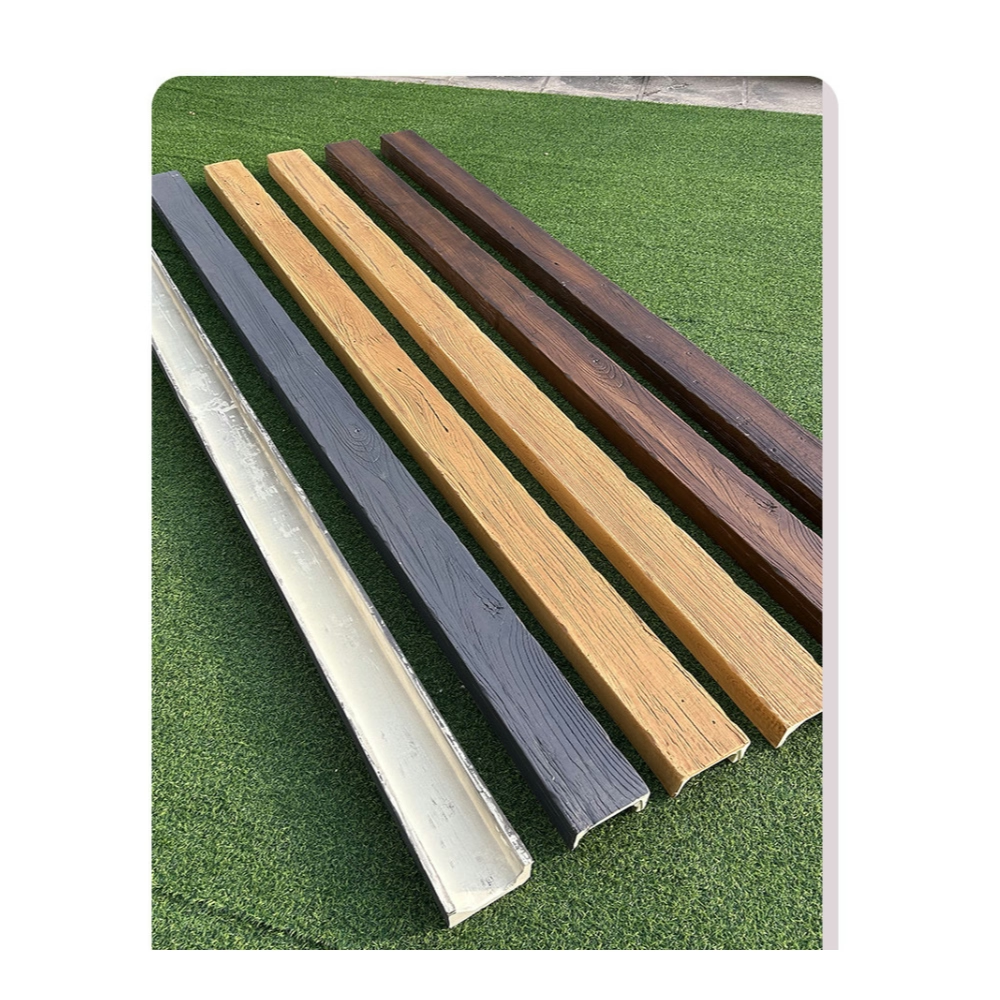
Strategic partnerships enable collaborative product development. Restaurant groups seeking distinctive design elements can work with certified manufacturers to develop custom profiles or colors that become signature elements within the brand. These customizations strengthen brand differentiation across competitive markets.
The partnership approach also enables better crisis management when supply chain disruptions affect materials or logistics. Certified manufacturers working closely with restaurant groups can adapt to disruptions through coordinated planning that minimizes impact on operations. This collaborative resilience represents one of the most valuable benefits of mature FF&E certification relationships.
Technical References
ASTM standards cited in every specification
Test Data
Lab results from internal testing program
Updated 2026
Reviewed against current product specs