
The building inspector's notice cited Section 1205 of the International Building Code requiring Class A interior finish materials for the ceiling of the newly renovated office building lobby. The architect had specified attractive wood-look beams but had not verified that the selected product carried an appropriate fire rating. The contractor faced a choice between removing the installed beams and installing compliant alternatives, or locating a rated product that matched the aesthetic specification. The second option required additional engineering analysis and correspondence with the building department, but ultimately preserved the design intent while achieving compliance.
Fire ratings are not optional aesthetic preferences—they are legal requirements enforced through building code adoption, permit issuance, and occupancy certification processes. Understanding fire rating classifications, testing standards, and specification requirements enables architects and contractors to specify materials that satisfy both safety regulations and design objectives.
Understanding Fire Rating Classifications
Fire ratings classify materials based on flame spread index and smoke development index measured through standardized testing. These indices indicate how quickly flames propagate across material surfaces and how much smoke the material produces during combustion, factors that determine occupant safety during fire events.
Class A ratings represent the highest performance classification, with flame spread indices below 25 and smoke development indices below 450. Class A materials are required in most commercial occupancy applications including corridors, assembly spaces, and building egress routes. They provide the most protection against fire propagation and smoke generation that threatens occupant evacuation.
Class B ratings allow flame spread indices up to 75, with smoke development still below 450. Class B materials may be acceptable in some commercial applications with reduced requirements, though building codes vary regarding which occupancies and locations permit Class B materials. Verification with local code authorities is essential before specifying Class B products.
Class C ratings permit flame spread indices up to 200, typically acceptable only for residential occupancies or limited commercial applications with special provisions. Many building codes prohibit Class C materials in commercial occupancies above certain heights or occupancy loads, making Class C specifications risky for commercial projects.
ASTM E84 Testing Standards
The standard test method for surface burning characteristics of building materials is ASTM E84, also known as the Steiner tunnel test. This test measures flame spread and smoke development as flames propagate along a test specimen mounted in the ceiling position of a 25-foot horizontal tunnel furnace.
During the test, the specimen is exposed to a controlled flame environment while observers document flame propagation distance and smoke density measurements. The results are compared to performance of reinforced concrete and fiberboard cement board reference materials, with indices calculated based on flame travel distance and timing.
Other recognized testing standards equivalent to ASTM E84 include UL 723, CAN/ULC-S102, and BS 476 Part 7. Products tested according to any of these standards may be acceptable for code compliance, though authorities having jurisdiction may have preferences for specific standards based on their adoption of testing references.
Third-Party Testing and Certification
Third-party testing by independent laboratories provides credible verification that products meet fire rating requirements. Testing laboratories such as Intertek, Underwriters Laboratory, and Southwest Research Institute maintain testing facilities and issue reports documenting product performance.
Testing laboratory marks or badges on product labels indicate that products have been tested and verified to meet specified ratings. Products without third-party marks rely on manufacturer self-declaration, which may be acceptable for preliminary specification but should be verified through actual test reports before procurement.
Report verification through testing organization databases confirms that test reports are current and apply to the products being specified. Some manufacturers test initial formulations but change compositions without re-testing, creating products that may not perform as originally documented. Direct verification with testing organizations protects against this misrepresentation.
Specification Strategies for Fire Compliance
Fire-rated specification requires identifying applicable building codes and determining which ratings apply to specific project locations. Code analysis should occur during schematic design so that material selections can satisfy requirements from the beginning rather than requiring redesign when compliance issues emerge.
Specification documents should require fire rating documentation as a submittal requirement, ensuring that supplied products carry verified ratings before installation proceeds. This verification prevents installation of non-compliant materials that must later be removed and replaced at contractor expense.
Equivalent products provisions enable substitution when primary products are unavailable, provided that substitute products demonstrate equivalent ratings. These provisions should specify verification requirements including test reports, third-party certification, and approval procedures for substitutions.
Installation Considerations for Fire-Rated Beams
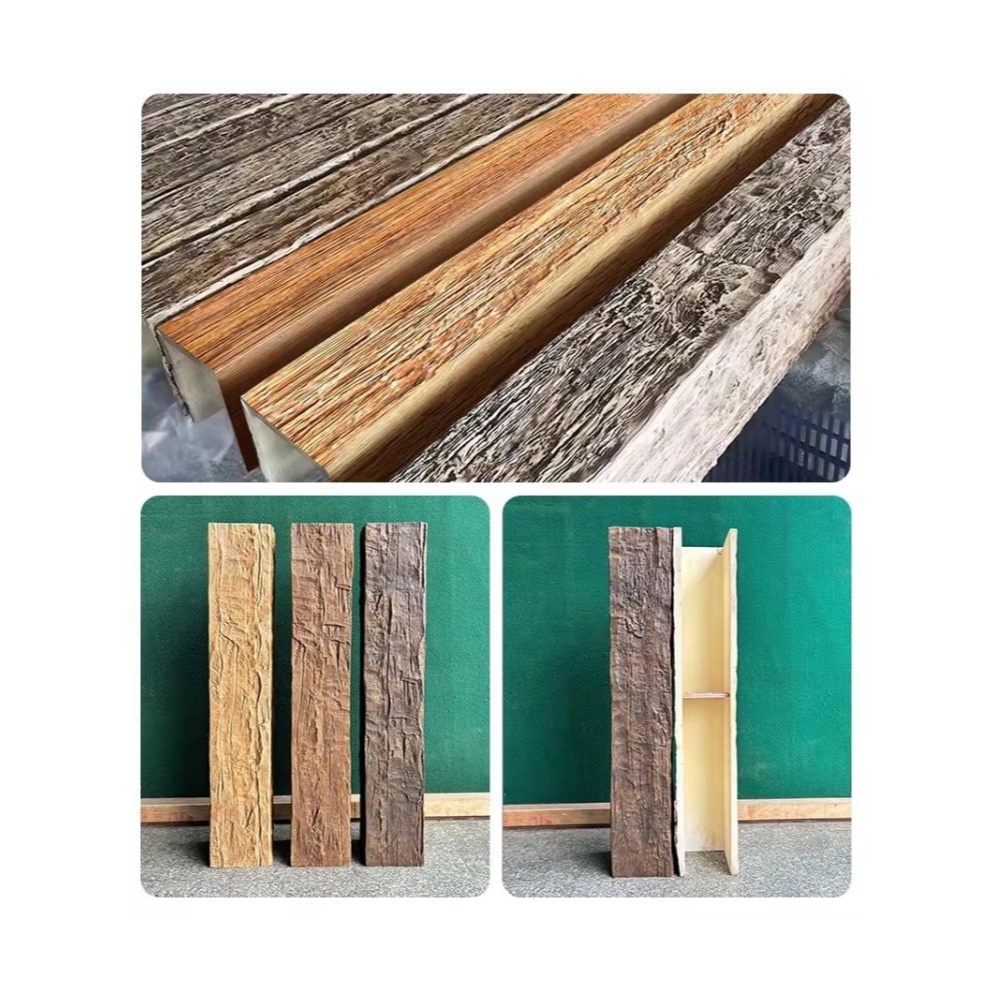
Fire-rated products maintain their ratings only when installed according to tested configurations. Manufacturers' installation instructions specify mounting methods, spacing requirements, and accessory limitations that ensure rated performance. Deviation from tested configurations may void fire ratings and create compliance issues.
Adjacent materials including adhesives, sealants, and insulation must also meet fire rating requirements for complete assembly compliance. A beam with excellent fire rating contributes little to safety if mounting adhesives or surrounding insulation create fire pathways that compromise overall assembly performance.
Penetrations through fire-rated ceiling assemblies require protection that maintains rated assembly continuity. Light fixtures, speaker grilles, and other ceiling penetrations must include fire-rated protective devices or be located outside fire-rated beam installation areas.
Maintenance and Inspection Considerations
Fire-rated assemblies must maintain their protective characteristics throughout building operation. Inspection protocols should verify that beam finishes remain intact, mounting connections stay secure, and no modifications have compromised fire-rated assembly performance.
Damage from impacts, cleaning, or building modifications may require repair or replacement to maintain fire ratings. Understanding repair procedures for specific products enables timely response to damage that might otherwise accumulate without attention until inspection identifies compliance issues.
Re-coating or refinishing fire-rated beams requires products and procedures that maintain original fire performance. Some finish materials can compromise fire ratings by adding combustible layers or creating delamination risks. Manufacturer guidance should be obtained before applying any finishes to fire-rated materials.
Technical References
ASTM standards cited in every specification
Test Data
Lab results from internal testing program
Updated 2026
Reviewed against current product specs


