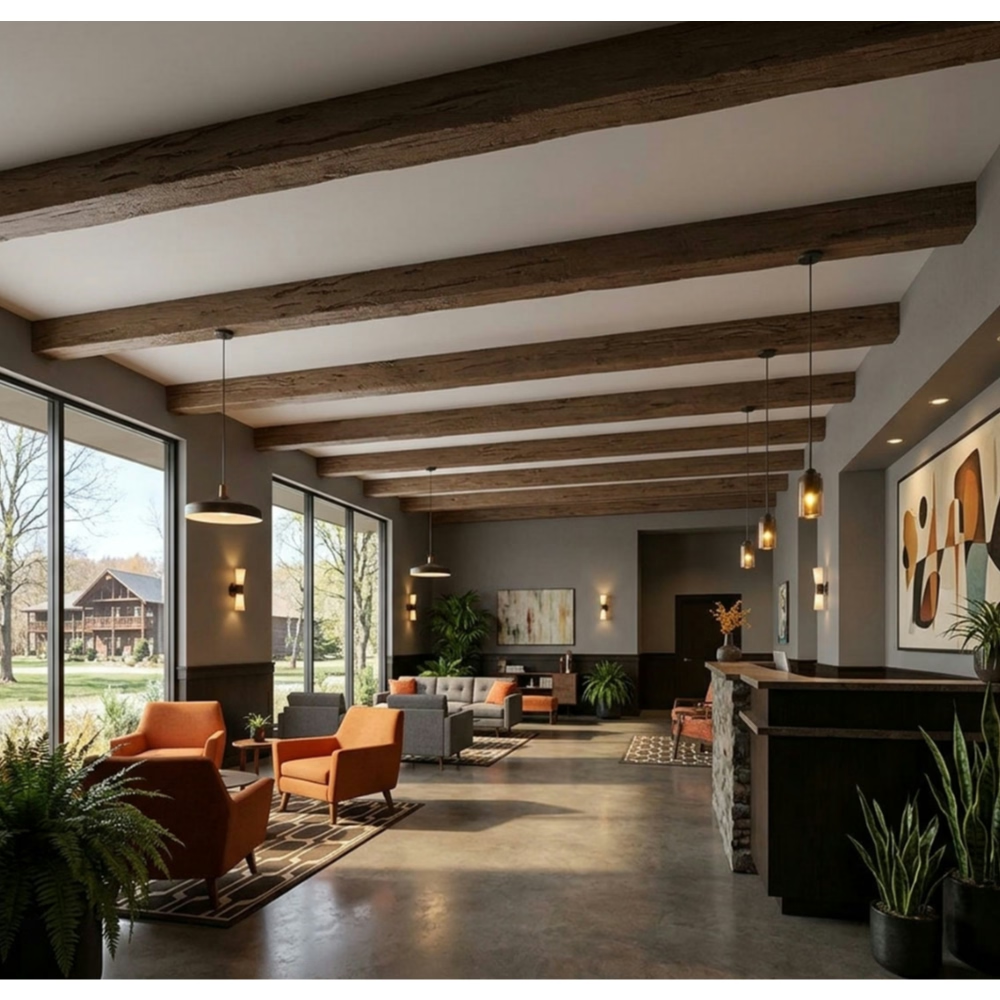
A boutique hotel brand expanding into new markets faced a recurring problem: each property had different ceiling heights, structural conditions, and design visions, yet ownership wanted consistent brand identity across all locations. The design team developed a beam specification system that accommodated these variations while maintaining visual consistency. Standard profiles, colors, and mounting methods enabled customization within a framework that guests recognized as distinctly on-brand. Commercial grade faux beams provided the flexibility this system required while delivering the durability that multi-property operations demand.
Hotel Decor Requirements
Hotel decor operates in a competitive environment where guest experience determines brand success. Understanding these requirements helps specify products that serve hospitality objectives effectively.
Guest Experience Priorities
Hotel guests form impressions within moments of entering properties. The lobby appearance significantly influences these impressions, setting expectations for the entire stay. Beam installations contribute to lobby atmosphere that shapes guest perception of property quality and brand positioning.
Beyond first impressions, guest experience extends throughout stays in rooms, restaurants, and public spaces. Consistent aesthetic quality across these spaces reinforces brand identity and contributes to guest satisfaction. Beam installations that maintain appearance throughout properties support this consistency.
Social media importance means that hotel spaces must photograph well for guest sharing and marketing promotion. Properties that photograph beautifully generate organic exposure that supports marketing efforts. Beam installations that look excellent in photographs contribute to this digital presence.
Brand Consistency Challenges
Hospitality brands operating multiple properties need consistency that enables guest recognition and brand identity. At the same time, individual properties must respond to local conditions, market positioning, and design opportunities. This balance requires products that offer both consistency and flexibility.
Consistency requirements affect color selection, profile choices, and installation approaches across properties. Flexible products that can be customized within consistent frameworks enable this balance. Commercial grade products designed for hospitality applications offer this flexibility.
Design guidelines developed by hospitality brands provide frameworks within which local teams can customize. These guidelines should specify beam characteristics that define brand identity while identifying areas where customization is acceptable.
Maintenance and Housekeeping Integration
Hotel maintenance operates continuously, balancing preventive care with responsive repairs while minimizing disruption to guests. Beam installations must accommodate these operational realities through appropriate specification and maintenance program development.
Housekeeping departments interact with beam surfaces during regular cleaning activities. Specifications should ensure that beam surfaces can be cleaned effectively without specialized training or products. Commercial grade products designed for hospitality use address these practical considerations.
Damage repair must be rapid and effective when incidents occur. Touch-up products, spare inventory, and trained maintenance staff all contribute to rapid response. Commercial grade suppliers who serve hospitality markets provide support that enables effective damage management.
Design Applications
Hotel beam installations appear across diverse applications within properties. Understanding these applications helps develop comprehensive decor strategies.
Lobby and Public Space Applications
Hotel lobbies serve as primary brand expression points where designers create lasting impressions. Beam installations in lobbies often feature prominently, creating visual interest and establishing design character that guests associate with the property.
Lobby beam specifications typically receive significant design attention and budget allocation. These visible installations warrant premium specification that creates impressive guest experiences and photographs beautifully for marketing.
Public spaces beyond lobbies—including corridors, elevators, and rest areas—also feature beam installations that extend brand aesthetics throughout properties. Consistent specification across these spaces reinforces brand identity while maintaining design coherence.
Restaurant and Bar Applications
Food and beverage spaces within hotels represent significant investment where designers create distinctive atmospheres. Beam installations contribute to these atmospheres through aesthetic character, spatial definition, and lighting integration.
Restaurant beam specifications often coordinate with furniture, finishes, and other design elements that define dining environments. Commercial grade products that accommodate this coordination enable cohesive design outcomes.
Bar and lounge areas may feature more dramatic beam treatments that create intimate atmospheres within larger spaces. The visual weight of beams helps define zones that support varied dining and social experiences.
Guest Room Applications
Guest rooms present smaller-scale opportunities for beam installation that extend brand aesthetics into private spaces. Ceiling beams, headboard treatments, and accent elements all contribute to room character.
Guest room beam specifications typically balance visual impact with practical constraints. Limited ceiling heights, furniture placement, and functional requirements affect what beam treatments work effectively in room environments.
Bathroom beam treatments present specific challenges related to moisture exposure. Commercial grade products designed for hospitality use address these challenges through appropriate formulation and finishing.
Specification Development
Effective hotel beam specification requires systematic approaches that address diverse applications while maintaining brand consistency.
Brand Standard Development
Hospitality brands benefit from comprehensive standards that guide beam specification across properties. These standards should balance consistency with flexibility, establishing brand requirements while enabling appropriate customization.
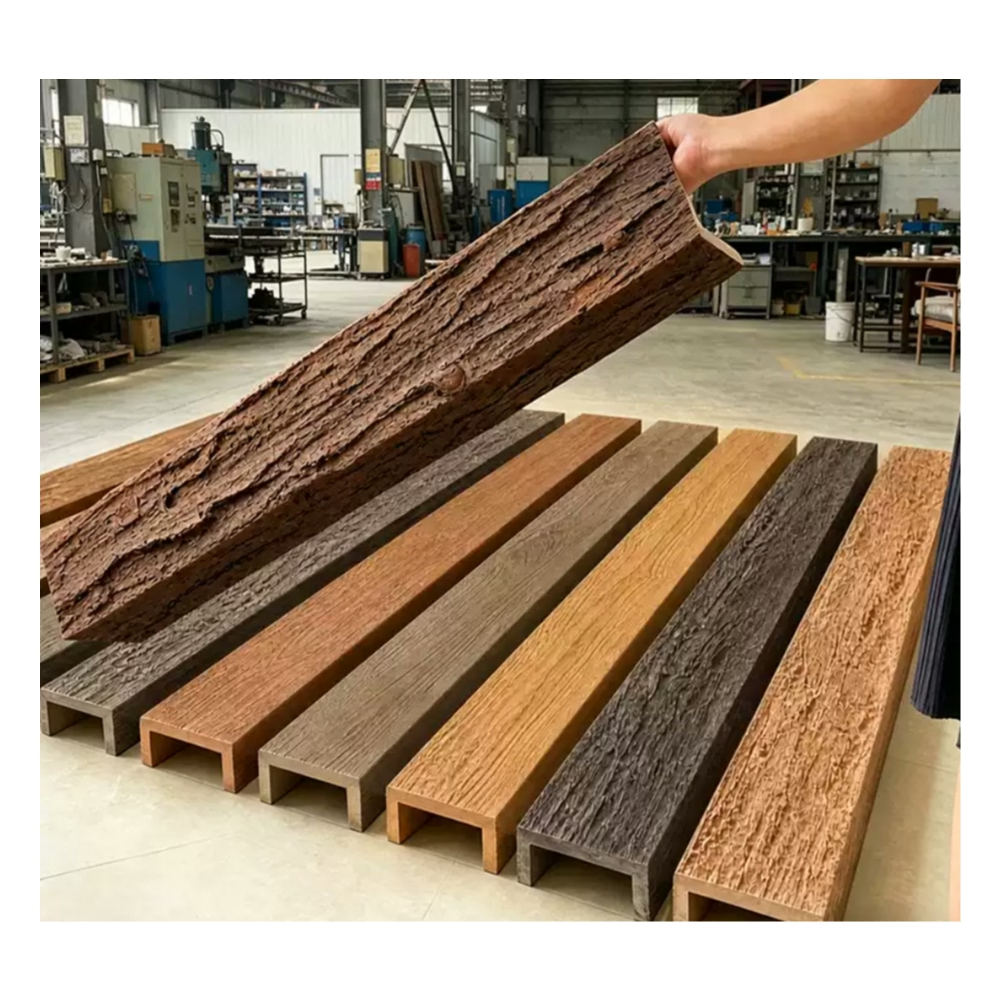
Standard specifications should identify specific products, colors, and profiles that define brand identity. These specifications provide clear guidance for design teams while enabling competitive procurement that delivers consistent results.
Guidance for customization within brand standards helps design teams work effectively within established frameworks. Clear boundaries between required and optional elements enable creativity within appropriate limits.
Performance Requirements
Hotel beam specifications must address performance requirements that affect long-term satisfaction. These requirements should be documented clearly to ensure that specified products meet expectations.
Fire ratings required by applicable codes must be specified explicitly. Commercial grade products offer fire-rated formulations that meet commercial occupancy requirements.
Durability requirements should reflect the intensive use that hotel installations experience. Impact resistance, cleanability, and appearance retention all matter for these demanding applications.
Integration Requirements
Hotel beam installations must integrate with other building elements and systems. Specification should address these integrations clearly.
Lighting integration requirements should identify fixture types, mounting methods, and control systems. Commercial grade products that accommodate integrated lighting simplify coordination and improve outcomes.
Acoustic integration may be required in spaces where sound management matters. Beam configurations that support acoustic treatment help achieve comfortable environments.
Installation Considerations
Hotel beam installation faces specific challenges related to occupied properties, tight schedules, and quality expectations. Understanding these challenges helps plan installations effectively.
Occupied Property Strategies
Many hotel projects occur in properties that remain partially operational during construction. Installation strategies must minimize disruption to guests and staff while maintaining quality standards.
Noise management becomes critical in occupied properties. Installation methods that minimize cutting, drilling, and hammering reduce noise impacts. Pre-finished commercial grade products reduce noisy finishing work.
Dust control measures protect air quality in occupied areas. Containment strategies, negative pressure controls, and scheduling coordination all contribute to effective dust management.
Schedule Optimization
Hotel projects typically face tight schedules tied to reopening dates or event calendars. Installation methods that accelerate completion support schedule achievement.
Prefinished products eliminate finishing steps that extend schedules. Commercial grade products that arrive ready for installation reduce the sequential dependencies that lengthen critical paths.
Prefabricated assemblies that combine multiple beam elements reduce field work. Corner packages, junction assemblies, and coordinated accessories all contribute to installation efficiency.
Quality Verification
Hotel quality expectations exceed typical commercial standards due to guest scrutiny and brand requirements. Quality verification processes should ensure that installations meet these elevated expectations.
Pre-installation verification of product quality identifies issues before installation makes access difficult. Checking products upon delivery and before mounting prevents problems that would require expensive remediation.
Final inspection processes should involve knowledgeable personnel who understand hotel quality expectations. This inspection identifies issues that might pass scrutiny in less demanding applications.
Long-Term Performance
Hotel beam installations must perform reliably over years of intensive use. Understanding long-term performance requirements helps specify products appropriately.
Maintenance Program Development
Comprehensive maintenance programs ensure that beam installations maintain appearance throughout hotel service life. These programs should address routine care, damage response, and periodic restoration.
Routine maintenance protocols should be simple enough for housekeeping staff to execute consistently. Commercial grade products designed for easy cleaning support these protocols.
Damage response procedures should enable rapid repair when incidents occur. Maintenance staff training, spare inventory, and supplier support all contribute to effective damage response.
Appearance Monitoring
Regular appearance monitoring identifies developing issues before they become visible problems. This monitoring enables preventive intervention that extends service life.
Documentation of appearance conditions supports warranty claims and maintenance planning. Photographs and measurement records provide reference that demonstrates change over time.
Professional assessment periodically evaluates overall appearance and condition. This assessment identifies areas needing attention and guides maintenance resource allocation.
Replacement Planning
Eventually, all installations require replacement. Planning for this eventuality ensures that properties can maintain aesthetic quality throughout their operational life.
Replacement provisions should identify compatible products, color matches, and supplier relationships that enable future procurement. Commercial grade suppliers who maintain product lines over extended periods support these replacement requirements.
Budget provisions for eventual replacement should account for both material and installation costs. Planning these provisions prevents reactive decisions when replacement becomes necessary.
Technical References
ASTM standards cited in every specification
Test Data
Lab results from internal testing program
Updated 2026
Reviewed against current product specs


