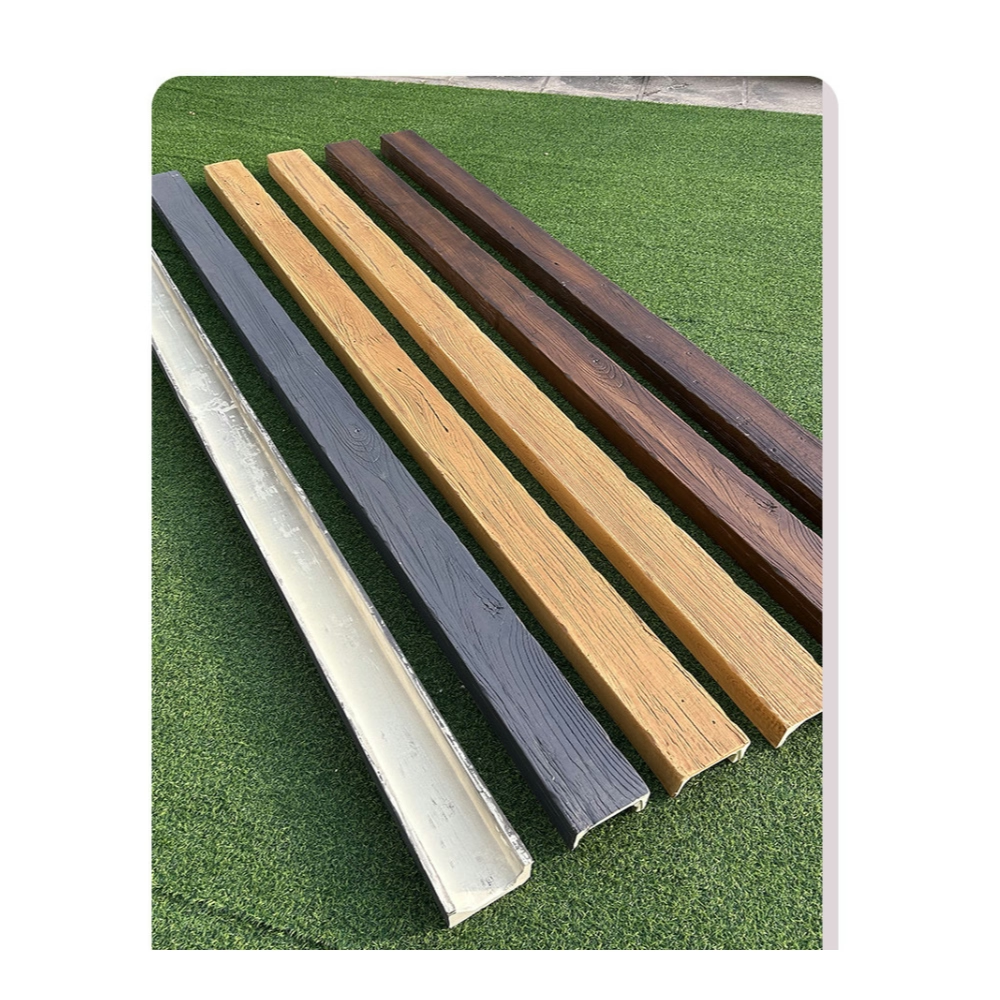
The contractor who installed ceiling beams in his own home made an error that cost him an entire weekend of rework: he mounted the first beam without verifying that his reference line was actually parallel to the wall. By the time he reached the far end of the room, the cumulative drift left a visible wedge-shaped gap that would have required either removing all beams or living with an obviously amateur result. He removed the installation, reset his reference using a laser level, and started over with the discipline that professional work demands. The lesson cost him time but prevented permanent embarrassment.
Installation mistakes range from minor cosmetic issues that require touch-up to major structural problems that require complete reinstallation. Understanding common errors before they occur enables proactive prevention rather than reactive correction that costs time, money, and sometimes the materials themselves.
Planning and Preparation Mistakes
Inadequate planning before beam installation begins creates problems that cascade through the entire project. Rushing into installation without detailed measurement, layout verification, and material assessment typically results in mistakes that could have been avoided with proper preparation.
Failure to verify ceiling structure before installation is one of the most serious planning mistakes. Installers who assume that ceiling joists align with intended beam positions, or that ceiling substrates can support intended loads, create installation conditions that may fail after completion. Joist location verification, substrate condition assessment, and load capacity estimation should occur before any installation begins.
Insufficient material ordering creates project delays and may result in inconsistent materials when replacement orders arrive from different production runs. Ordering ten to fifteen percent extra material beyond calculated requirements provides safety margin for cutting waste, damage during installation, and future repair needs. Material shortages mid-project create stress that often leads to additional mistakes.
Ignoring building codes and permit requirements creates legal and safety issues that exceed any time savings from skipping compliance steps. Many beam installations require no permits, but installations involving structural modifications, electrical work, or fire-rated assemblies typically require permits and inspections. Researching local requirements before installation prevents later complications.
Measurement and Layout Errors
Inaccurate measurements create alignment problems that compound through installations. Small errors in initial measurements become large errors by the time installation reaches distant points, requiring progressive correction or complete reinstallation. Precise measurement tools and verification against multiple reference points prevent measurement errors from creating installation problems.
Reference line errors affect all subsequent beam positions because every beam is positioned relative to the reference. Establishing accurate reference lines using laser levels, chalk lines, or careful measurement ensures that the entire installation aligns properly. Reference lines should be verified against multiple room features before installation begins.
Spacing inconsistencies between beams create visual rhythm problems that may be more noticeable than uniform alignment errors. Consistent beam spacing requires careful measurement at each position rather than assuming consistent spacing from initial marks. Marking beam positions individually rather than measuring from previous beams prevents spacing drift.
Failing to account for beam thickness in spacing measurements results in beams that are either too close together or too far apart. Center-to-center spacing versus edge-to-edge spacing affects how beams relate to each other and to surrounding architecture. Consistent measurement convention throughout installation prevents confusion.
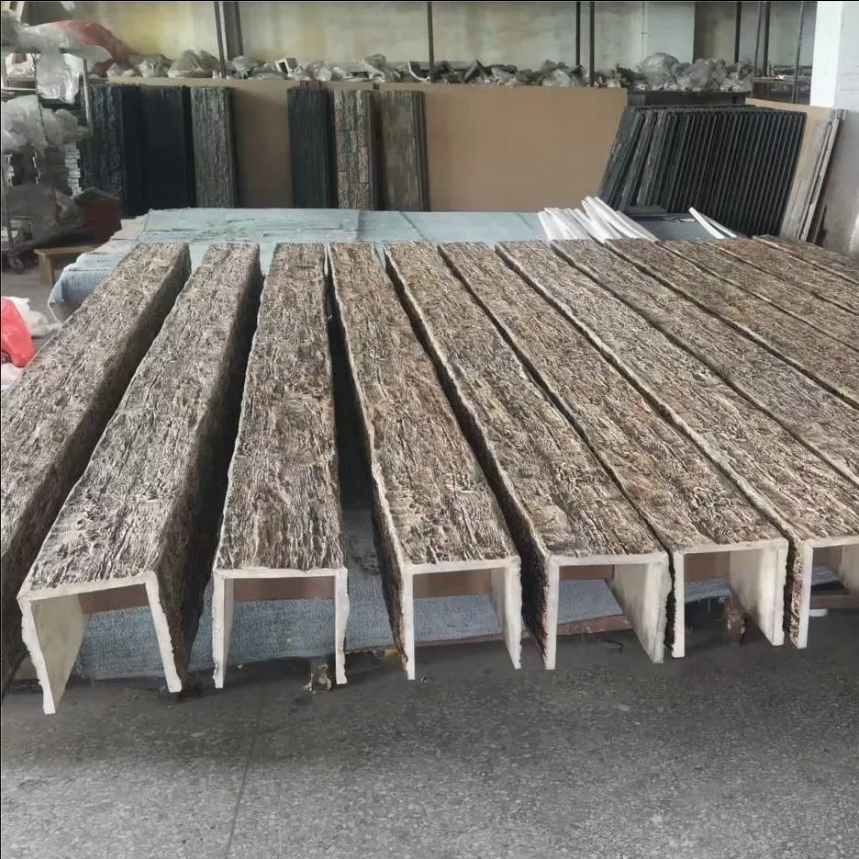
Mounting and Structural Mistakes
Inadequate mounting hardware creates safety hazards and installation failures. Fasteners that are too small, too few, or improperly spaced may hold initially but fail under load, vibration, or environmental stress. Manufacturer mounting specifications provide guidance, but installers must verify that substrates can support the intended fasteners.
Missing structural blocking behind mounting surfaces creates inadequate support for beam installations. Drywall or plaster alone cannot support beam weight, and mounting beams to these materials without structural backing behind them creates installations that may pull away from ceilings over time. Blocking between joists provides solid mounting surfaces that distribute loads properly.
Improper load distribution across multiple mounting points creates stress concentrations that may cause mounting failures. Loads should be distributed evenly across all mounting points, with each point capable of supporting the share of total load it carries. Uneven load distribution may cause some mounting points to fail while others remain intact, creating catastrophic installation failure.
Neglecting thermal expansion considerations in long beam runs creates buckling or gap problems as temperatures change. Beams expand and contract with temperature variation, and installations that don't accommodate this movement develop stress that manifests as visible deformation or joint failure.
Adhesive and Fastening Errors
Using inappropriate adhesives for polyurethane substrates results in inadequate bond development or even chemical reactions that damage beam materials. Construction adhesives specifically formulated for polyurethane provide reliable bonds, while other adhesives may not develop adequate strength or may contain solvents that damage beam surfaces.
Insufficient adhesive coverage creates weak spots that may fail under load. Adhesive should be applied in continuous beads or patterns that provide complete coverage across mounting surfaces. Spot applications of adhesive create concentrated stress points that may fail, while continuous coverage distributes stress evenly.
Premature loading before adhesive cure creates bond failures that may not be immediately apparent. Most construction adhesives require 24 to 48 hours to develop full bond strength, and loading beams before this cure period creates bonds that never reach intended strength. Installation schedules should allow adequate cure time before additional loads are applied.
Over-driving fasteners during installation cracks or splits beam materials, compromising both appearance and structural integrity. Fasteners should be driven to snug engagement without excessive force that damages surrounding material. Pilot holes help prevent splitting while ensuring proper fastener engagement.
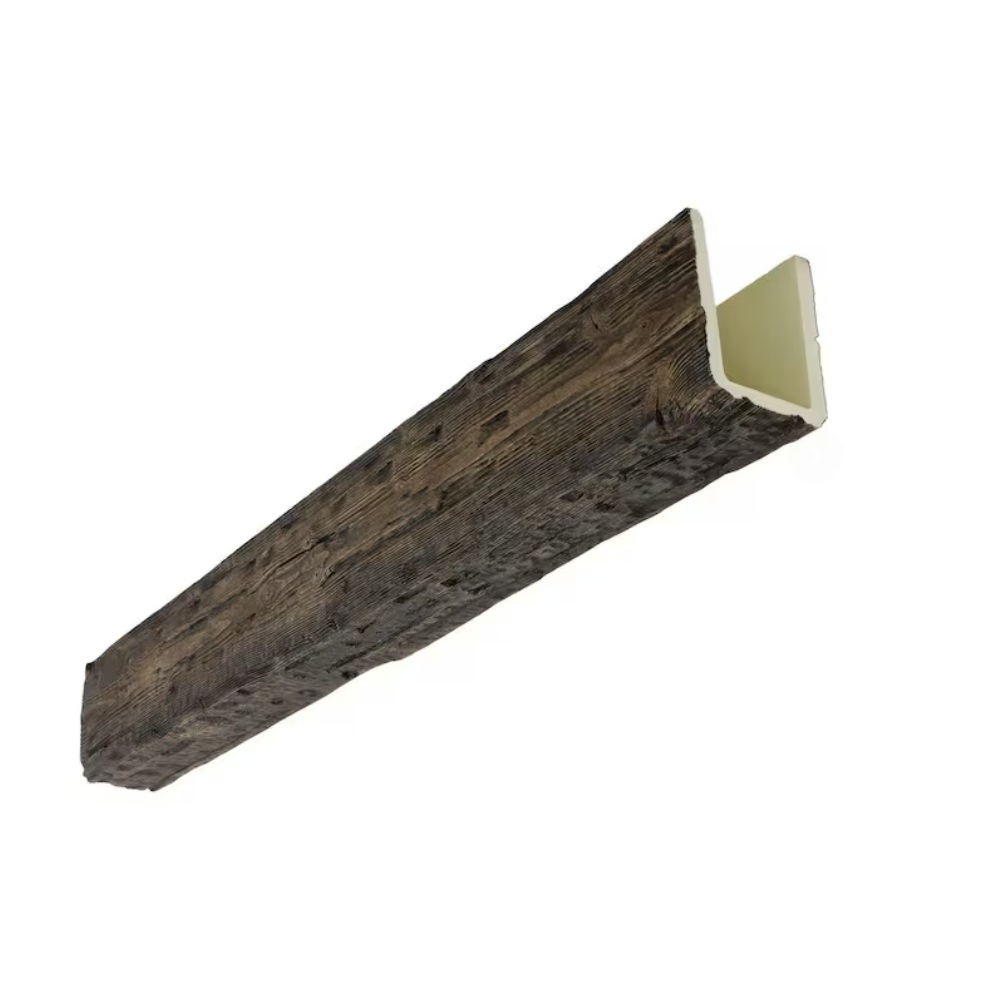
Finish and Aesthetic Problems
Inconsistent finish application creates visible variation between beams or across beam surfaces. Spray application typically produces more consistent results than brush application, but both methods require careful technique to maintain consistency. Practice on scrap material helps develop technique before working on visible beams.
Color matching between original and touch-up materials creates visible repair areas that detract from finished appearance. Manufacturer-supplied touch-up materials typically provide better color matching than generic alternatives, and even slight color differences become visible on large beam surfaces.
Texture inconsistency between beam sections or between beams and surrounding materials creates visual disconnection that undermines installation quality. Beam textures should be evaluated under the lighting conditions where they will be installed, as lighting dramatically affects how textures appear.
Seam visibility between beam sections or between beams and adjacent construction detracts from finished appearance. Joint treatments including fillers, color-matched materials, and texture continuation help hide seams, but visible seams may persist despite best efforts. Planning beam layouts to minimize seams helps reduce this problem.
Safety and Code Violations
Blocking access to electrical junction boxes creates safety hazards and code violations that require correction. Junction boxes must remain accessible for future electrical work, and beam installations that cover junction boxes without proper access provisions create problems during future electrical work and may fail inspection.
Creating fire-rated assembly violations through improper penetration or covering of fire-rated materials creates safety hazards that inspectors may identify during plan review or construction inspection. Beams that penetrate fire-rated assemblies require proper sealing and treatment that maintains assembly performance.
Inadequate structural support for beam loads creates safety hazards that may not be immediately apparent but can cause catastrophic failure. Beam weight plus any additional loads from fixtures, decorations, or environmental forces must be supported by appropriate structural elements with adequate capacity.
Ignoring manufacturer specifications for mounting, spacing, and load limits creates installations that fail to perform as designed. Manufacturer specifications reflect testing and engineering analysis that ensures safe, reliable performance, and deviations from specifications create unknown risk.
Time Management Errors
Rushing installation creates mistakes that careful work would prevent. Installation timelines should include adequate time for measurement, preparation, installation, and finishing without artificial pressure that compromises quality. Projects completed under time pressure typically require rework that eliminates any time savings.
Failing to allow adequate cure time between installation steps creates problems that emerge after completion. Adhesive cure, finish drying, and other time-dependent processes require patience that rushed schedules cannot accommodate. Building adequate cure time into project schedules prevents problems that appear after installation completion.
Underestimating project duration leads to frustration and quality compromises as installers struggle to complete work within self-imposed deadlines. Realistic project timelines that account for unexpected problems, learning curves, and material delivery delays produce better outcomes than aggressive timelines that create pressure.
Technical References
ASTM standards cited in every specification
Test Data
Lab results from internal testing program
Updated 2026
Reviewed against current product specs