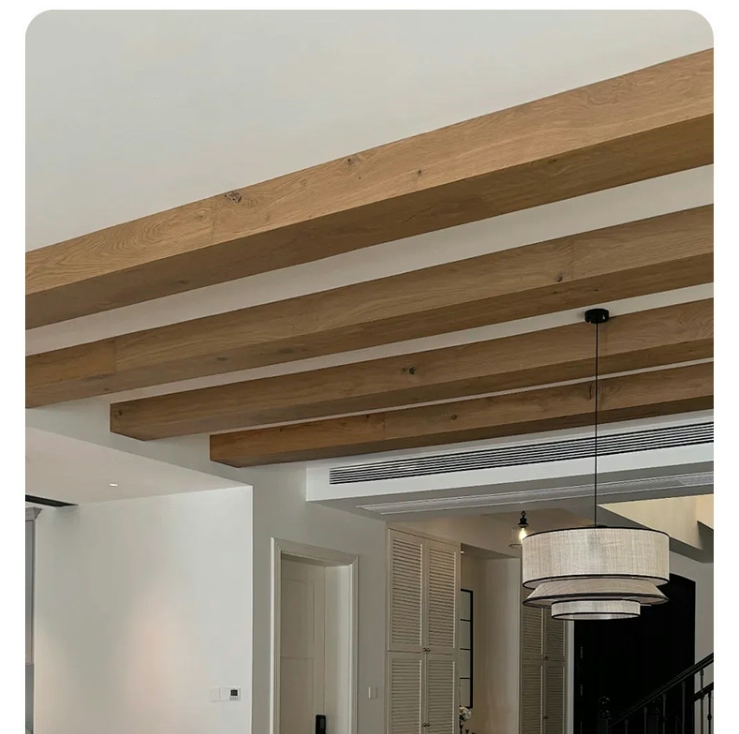
The importer received a container shipment of six-meter faux wood beams only to discover that shipping damage had affected eighteen percent of the order. The beams had been packaged in standard wooden crates that protected beam ends but left middle sections unsupported, allowing the beams to flex during ocean transit and arrive with cracks, chips, and finish damage. The importer worked with the manufacturer to redesign packaging that fully supported beam lengths, reducing damage rates to under two percent on subsequent shipments. The packaging redesign cost more than standard crating but saved far more in reduced damage claims, customer satisfaction improvements, and warranty expenses.
Long beam shipments present unique logistics challenges that require specialized packaging, handling procedures, and transportation methods. Compact easy-transport designs address these challenges through engineering solutions that balance protection, efficiency, and cost across complex supply chains spanning multiple countries and transportation modes.
Shipping Damage Mechanisms
Long beam products face several damage mechanisms during shipping that require different protective measures. Understanding these mechanisms enables packaging design that addresses specific risks rather than applying generic protection that may not prevent the actual damage types encountered.
Flexural damage occurs when long beams bend under their own weight or under dynamic loading during transportation. Beams packaged horizontally without adequate intermediate support develop sag that exceeds material弹性 limits, creating permanent deformation or cracking. Support spacing must be close enough to prevent flexural stress from exceeding damage thresholds.
Impact damage happens when beams strike other objects during handling, transportation, or stacking. Forklift contact, crane sling impacts, and shifting during transit create concentrated forces that may crack, chip, or puncture beam materials. Edge protection and adequate spacing between beams prevent contact damage during the rough handling common in commercial shipping.
Vibration damage results from repeated small movements during transportation that gradually loosen connections, separate joints, or degrade finishes. Extended transit times on trucks, ships, or trains expose beams to thousands of vibration cycles that may cause cumulative damage not apparent immediately after shipping but emerging during subsequent storage or installation.
Packaging Design Principles
Effective long beam packaging addresses multiple damage mechanisms simultaneously while remaining practical for the logistics systems that handle the products. Packaging design must balance protection, cost, weight, and handling convenience through careful engineering rather than simply maximizing any single factor.
Cradle support systems that hold beams along their entire length prevent flexural damage while allowing efficient stacking and handling. Foam or molded plastic cradles sized to beam profiles distribute support forces across adequate contact areas, preventing the concentrated stress that point supports create. Multiple cradles per beam provide redundancy that protects against isolated support failures during transit.
Edge protectors prevent damage to beam corners and edges that contact other surfaces during handling and transport. Plastic or cardboard edge protectors applied to vulnerable areas absorb impact energy while preventing abrasion that degrades finishes. Edge protectors should extend along entire beam lengths rather than only protecting end sections.
Surface protection films preserve finishes during shipping and handling. Adhesive films applied to visible beam surfaces prevent scratches from packaging materials, handling contact, or abrasion during transit. Films should be removable without damaging underlying finishes, and they should remain in place through installation to protect beams during subsequent handling.
Modular and Nested Designs
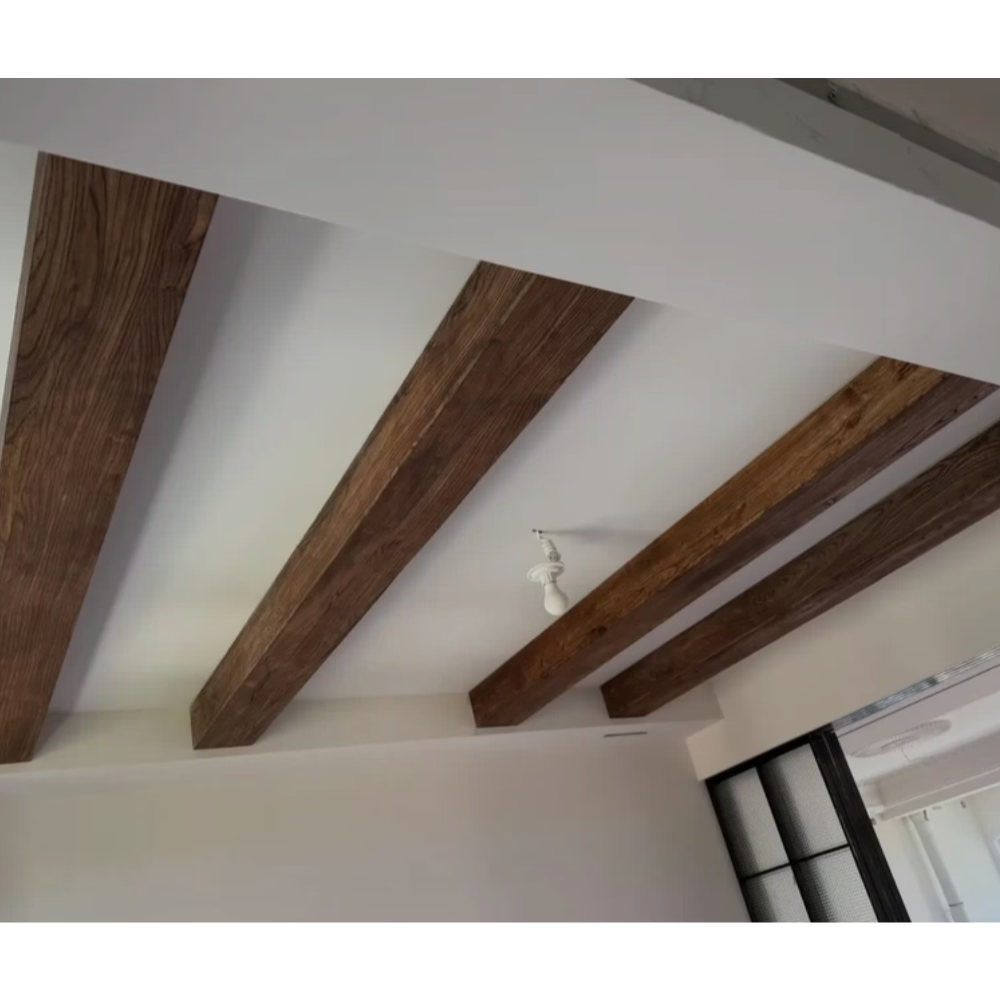
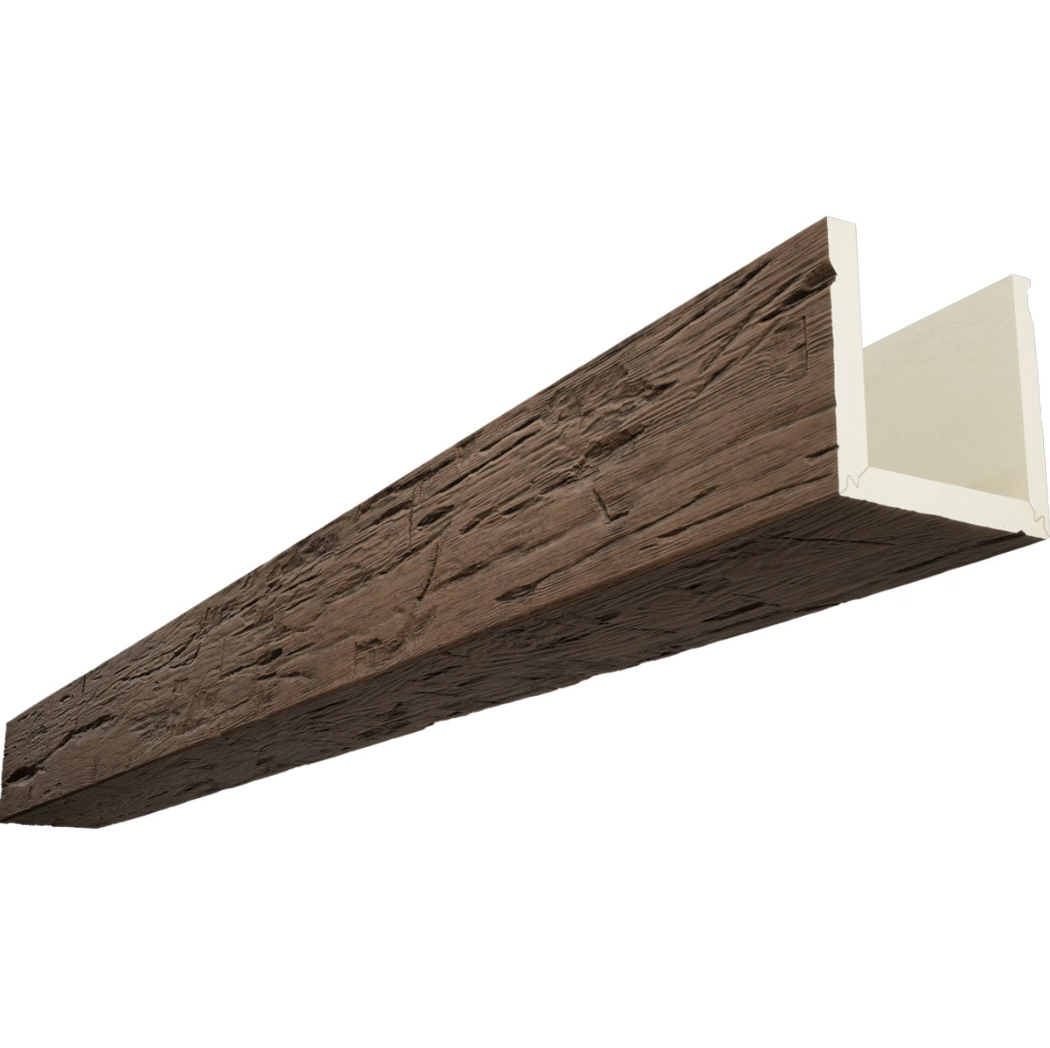
Compact designs that nest beam sections within each other reduce shipping volume and weight while maintaining protective packaging. U-shaped or channel profiles can be nested by alternating orientation, while solid rectangular sections require different nesting strategies that may include interleaving materials.
Sectioned designs that allow long beams to ship in shorter pieces enable standard shipping containers and common carrier services rather than requiring specialized transportation. Field assembly of sectioned beams at installation sites adds complexity but dramatically reduces shipping costs and damage risk for very long beam runs.
Modular packaging systems that combine beam protection with accessory storage consolidate shipments and reduce handling complexity. Mounting hardware, installation instructions, and finishing materials packaged with beams arrive together, simplifying receiving and staging at job sites. This consolidation reduces the risk of missing components while simplifying inventory management.
Container Optimization
Shipping container utilization significantly affects transportation costs per linear meter of beam delivered. Standard 40-foot containers provide approximately 120 cubic meters of volume, and beam packaging should maximize utilization of this space while maintaining damage protection.
Vertical loading of long beams in containers requires ceiling clearance that limits beam length or stacking height. Container ceiling heights of approximately 2.6 meters allow standing beams up to about 2.5 meters, while horizontal loading accommodates longer beams with reduced stacking efficiency. Hybrid loading strategies combine vertical and horizontal placement to optimize container utilization.
Stability during ocean transit requires securing beams against shifting that can damage products and create dangerous conditions for workers. Dunnage bags, straps, and bracing prevent beam movement during the rolling and pitching motion that container ships experience. Securing methods should distribute forces across multiple beam packages rather than concentrating stress on individual units.
International Shipping Considerations
International beam shipments face additional challenges including customs clearance, multiple handling transfers, and extended transit times. Packaging design for international shipments must protect against damage across the entire supply chain rather than only the longest transportation segment.
Customs documentation requirements vary by country and product category. Faux wood beams typically classify under furniture or building materials tariff codes, with documentation requirements including commercial invoices, packing lists, certificates of origin, and sometimes material composition certifications. Proper documentation prevents customs delays that extend transit times and increase damage risk.
Multiple handling transfers between truck, ship, rail, and final delivery vehicles expose beams to repeated handling stress. Packaging designed for international shipping must withstand these multiple transfers without protection degradation, requiring more robust construction than packaging designed for single-mode domestic shipping.
Last-Mile Delivery Challenges
Final delivery from port or distribution center to installation site often presents the greatest damage risk because handling becomes less controlled and equipment may be inappropriate for long beam products. Last-mile packaging must accommodate the variety of handling conditions encountered during final delivery.
Receiving inspection protocols at job sites should verify beam condition before accepting delivery. Damaged beams identified during receiving can typically be replaced under shipping damage claims, while damage discovered after acceptance becomes the recipient's responsibility. Clear documentation including photographs taken during uncrating supports damage claims.
Storage conditions between delivery and installation affect beam quality through environmental exposure and handling stress. Climate-controlled storage prevents temperature and humidity extremes from affecting beam materials, while organized storage systems that minimize beam movement reduce handling damage during staging for installation.
Cost-Benefit Analysis
Packaging investment must be balanced against damage prevention savings and customer satisfaction improvements. Premium packaging costs more initially but reduces damage claims, warranty expenses, and customer dissatisfaction that ultimately cost more than packaging savings.
Total cost analysis should include direct packaging costs, damage claim expenses, customer service costs for damage resolution, and lost sales from customers who experience delivery problems. Premium packaging that addresses all these cost categories often provides net savings despite higher initial packaging costs.
Sustainability considerations increasingly affect packaging decisions as companies evaluate environmental impact across supply chains. Recyclable, reusable, or biodegradable packaging materials reduce environmental footprint while potentially reducing costs through reusable packaging programs that distribute packaging investment across multiple shipments.
Technical References
ASTM standards cited in every specification
Test Data
Lab results from internal testing program
Updated 2026
Reviewed against current product specs