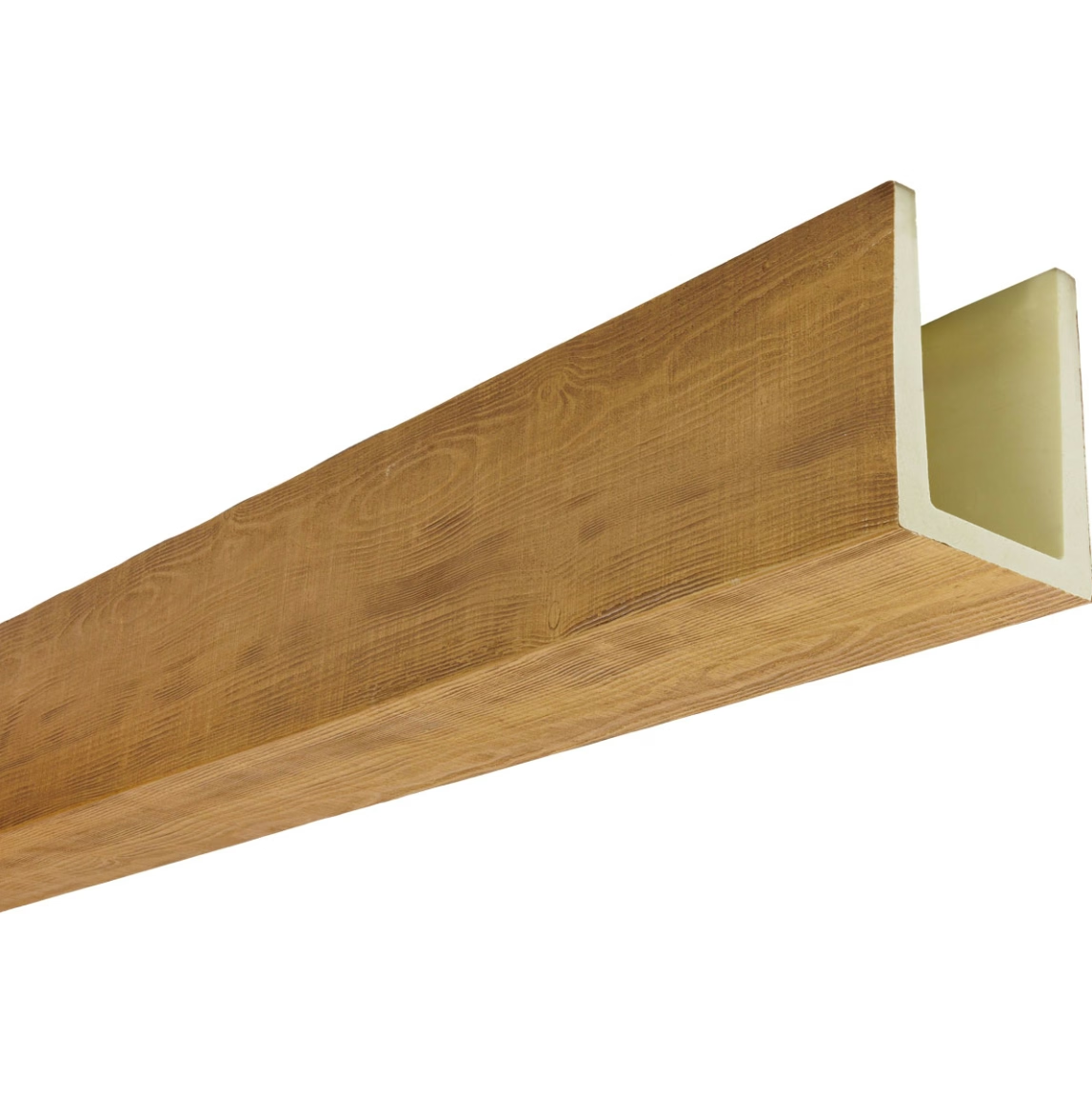
The architect designed a barrel-vaulted ceiling for a boutique hotel lobby that required beams following the vault's curve with a radius of just two meters. Traditional solid timber beams cannot reliably achieve such tight curves without extensive kerfing or lamination that compromises structural integrity and aesthetic quality. The polyurethane resin beam manufacturer proposed a steam-bending process combined with flexible core construction that achieved the precise curve while maintaining beam cross-section consistency and wood-grain appearance. The installation created a dramatic curved ceiling that defined the hotel's identity and demonstrated the possibilities that modern manufacturing enables.
Curved beams create distinctive architectural moments that straight runs cannot replicate. Small radius curves—those with radii under three meters—present particular manufacturing challenges that have historically limited their availability. Modern polyurethane resin technology has expanded the possibilities for curved beam installations through flexible core construction and post-cure bending processes.
Curve Geometry and Design Applications
Small radius curves serve specific architectural purposes that distinguish them from gentle arcs and straight runs. Understanding these applications helps designers identify where curved beams add value and where straight alternatives might serve equally well.
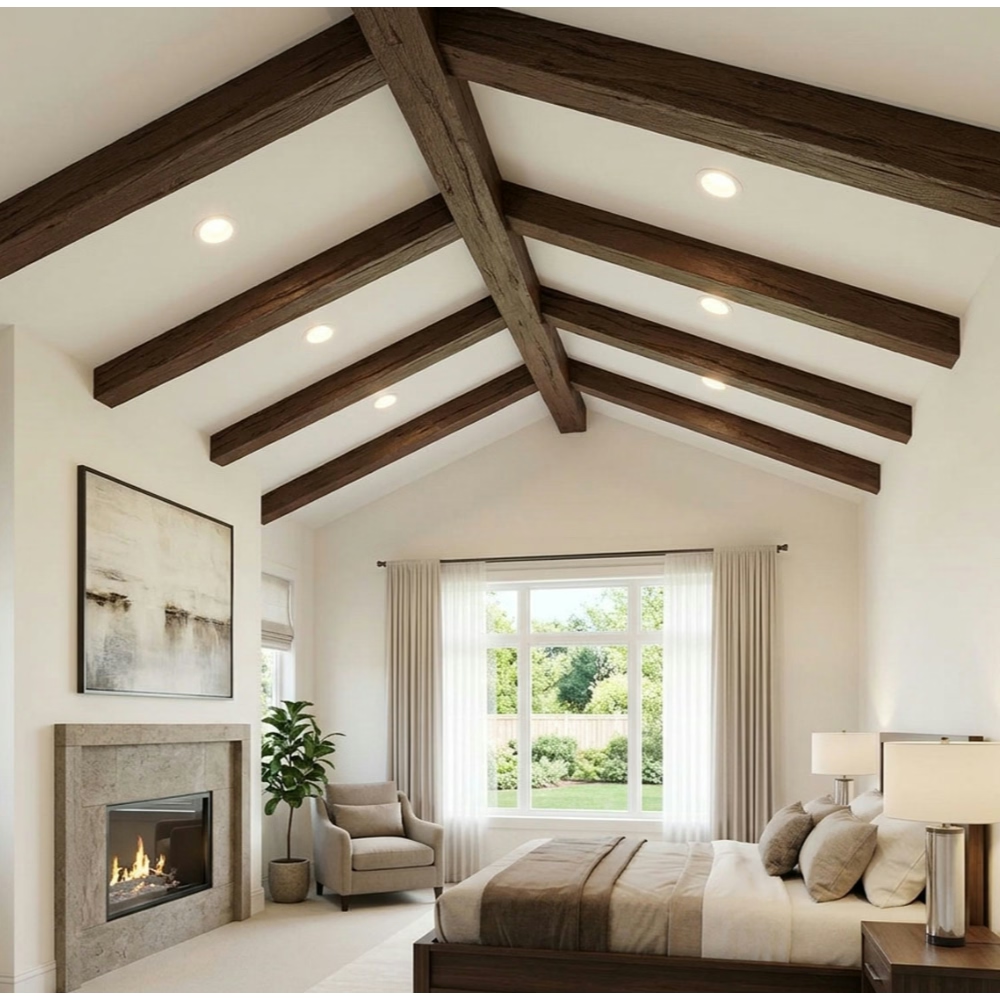
Barrel vaults represent classic applications where curved beams follow vault profiles to create dramatic ceiling architecture. Small radius barrel vaults create intimate scale suitable for restaurant dining rooms, spa treatment spaces, or residential great rooms. Beam spacing within vaults affects both structural requirements and visual rhythm.
Eyebrow beams create softening transitions between flat and vaulted ceilings, particularly at room perimeters where vaulted ceilings meet flat perimeter ceilings. These curved transition elements eliminate harsh angular junctions while providing visual interest at points where the eye naturally focuses.
Arched openings and windows benefit from curved beam headers that follow the arch profiles while maintaining consistent beam depth. These applications often combine structural function with aesthetic emphasis, drawing attention to important architectural features.
Coffered ceiling designs frequently incorporate curved elements within rectangular coffer grids, creating variation that prevents monotony in large ceiling installations. Curved beams within coffers can follow various profiles including segmental arcs, full semi-circles, or compound curves combining multiple radii.
Manufacturing Capabilities
Polyurethane resin technology enables curved beam production through several methods, each suited to different curve requirements and production volumes. Understanding these methods helps specifiers identify appropriate products for their specific curve requirements.
Steam bending of solid polyurethane sections allows curves down to approximately 1.5-meter radius for standard beam profiles. This process heats the material to make it flexible, bends it to the required radius, and allows it to cool in the curved shape. Steam bending produces continuous grain patterns that flow naturally along the curve, though the process limits production rates.
Kerfing and lamination enables tighter curves through cutting partial slots in beam backs and laminating multiple thin sections together. This process can achieve radii as small as 300 millimeters but creates visible joints at the back of beams that may telegraph through to visible surfaces if not properly addressed.
Flexible core construction sandwiches flexible materials between rigid polyurethane surfaces, enabling curves while maintaining surface quality. The flexible core allows tighter curves than solid materials while the rigid surfaces preserve finish quality and dimensional stability. This method suits production of multiple identical curved beams.
Segmented construction combines multiple straight sections cut with mitered joints that approximate curves. Tight radius curves require small segments that create visible joints, while gentle curves can be approximated with larger segments. Segmented construction works well for applications where joints can be hidden through finish techniques.
Installation Methods for Curved Beams
Curved beam installation differs from straight beam installation in several important respects. The curved geometry affects mounting, alignment, and field adjustment in ways that require specialized techniques.
Mounting surface preparation must follow the curve profile rather than a flat plane. Curved beams cannot be mounted to flat surfaces without forcing them into incorrect geometry, and curved mounting surfaces must be constructed to match beam profiles. This preparation adds complexity to installation compared to straight beam work.
Mounting hardware for curved beams typically uses more frequent attachment points than straight beam installations. The curved geometry creates outward thrust at curve midpoints that requires additional fastening to prevent movement. Mounting systems should distribute forces across the entire curve rather than concentrating at curve endpoints.
Field adjustment during curved beam installation requires careful attention to maintaining consistent curve profile throughout installation. Minor variations in mounting or alignment create visible discrepancies that disrupt the smooth curve appearance. Professional installers use templates and reference curves to verify consistent geometry during installation.
Joint treatment between curved beam sections requires techniques that maintain curve continuity across joints. Butt joints between curved sections may create visible discontinuities, while scarf joints that follow the curve direction preserve smoother transitions. Joint placement at less visible curve points helps reduce joint visibility.
Structural Performance Considerations
Curved beams experience different structural forces than straight beams because curve geometry creates additional stress components. Engineering analysis should verify that curved beams and their mounting systems can handle anticipated loads including the additional thrust forces that curves create.
Thrust forces at curve endpoints or supports must be accommodated through appropriate structural design. Curved beams push outward at their endpoints, and supports must resist this thrust through adequate structural capacity or tension ties across the span. Engineers should calculate thrust forces and design supports accordingly.
Load distribution along curved beams differs from straight beams because the curve geometry affects how loads transfer to supports. Uniform loads create varying reactions at different support points along the curve, and structural analysis should verify that actual loads remain within design limits throughout the curve length.
Thermal expansion in curved beams creates complex movement patterns that straight beams don't experience. Curves may expand unevenly as temperatures change, creating stress concentrations or geometry changes that mounting systems must accommodate. Expansion joints or flexible connections may be necessary for curved installations in environments with significant temperature variation.
Aesthetic Integration with Curved Architecture
Curved beams should integrate visually with the architectural curves they follow rather than appearing as applied elements. Successful integration requires attention to beam profile, finish, and proportions that complement the surrounding curved architecture.
Beam profiles for curved applications should match the architectural language of the surrounding curves. Deep beams may dominate in shallow vaults, while shallow beams may disappear within deep vaulted spaces. Profile dimensions should be proportional to the architectural scale of the curved spaces they occupy.
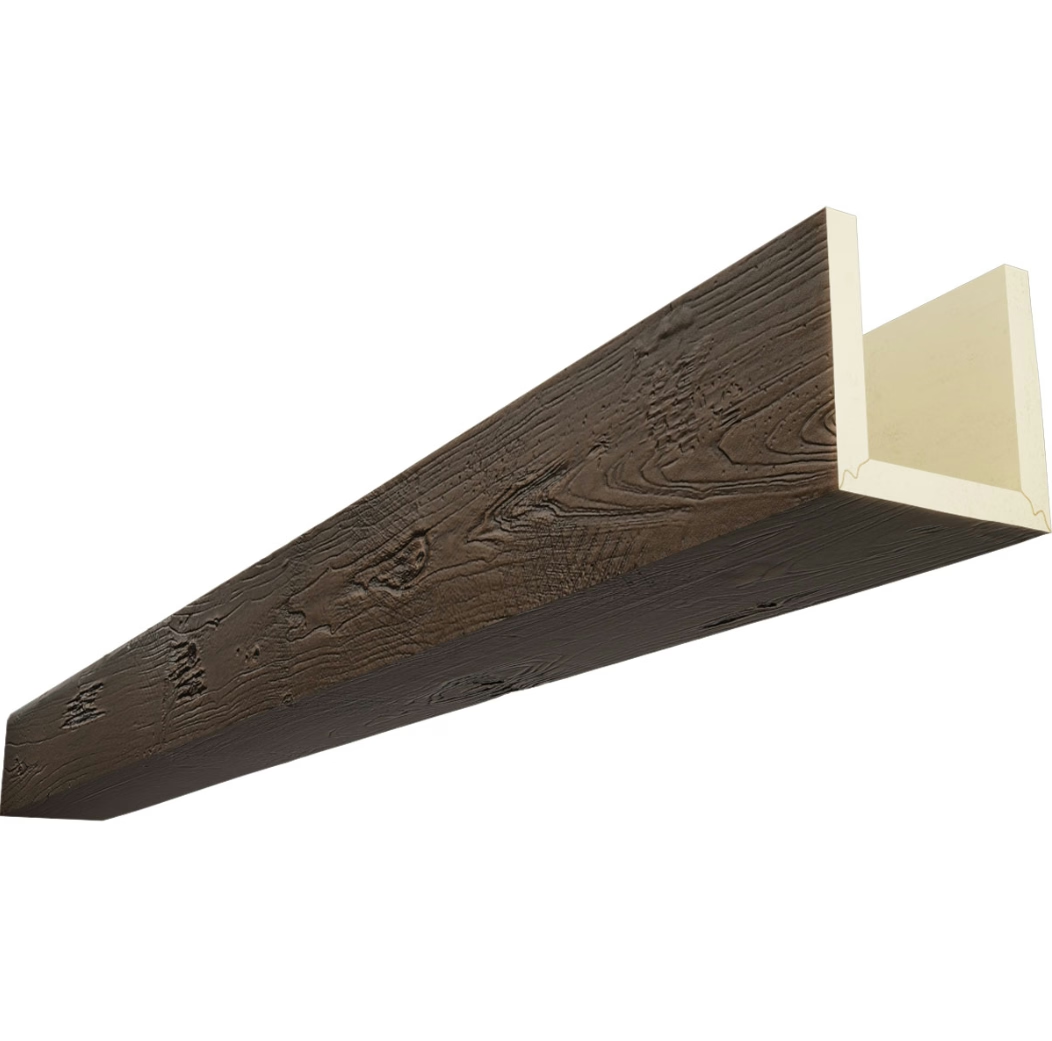
Finish continuity between curved beams and adjacent architectural elements creates visual integration that prevents beams from appearing as foreign objects. Finish colors, textures, and sheens should coordinate with surrounding curved surfaces while potentially adding subtle definition through slight variations.
Lighting integration with curved beams can emphasize the curved geometry while providing functional illumination. Lighting within beam cavities follows the curve to create flowing light patterns, while fixtures mounted along curves emphasize beam geometry through shadow and highlight patterns.
Practical Project Considerations
Curved beam projects require additional planning and coordination compared to straight beam installations. Custom curve requirements, manufacturing lead times, and installation complexity all affect project scheduling and cost.
Custom curve requirements for specific projects require consultation with manufacturers during design development. Most curved beam manufacturers maintain engineering teams that can evaluate curve feasibility, recommend appropriate construction methods, and provide preliminary pricing during early design phases.
Manufacturing lead times for curved beams typically exceed those for standard straight sections, with custom curves requiring six to twelve weeks for production and quality verification. Project schedules should accommodate these longer lead times through early specification and order placement.
Installation costs for curved beams reflect the additional complexity compared to straight beam installation. Specialized mounting systems, additional labor time, and quality verification procedures contribute to higher installation costs that should be budgeted during project planning.
Technical References
ASTM standards cited in every specification
Test Data
Lab results from internal testing program
Updated 2026
Reviewed against current product specs


