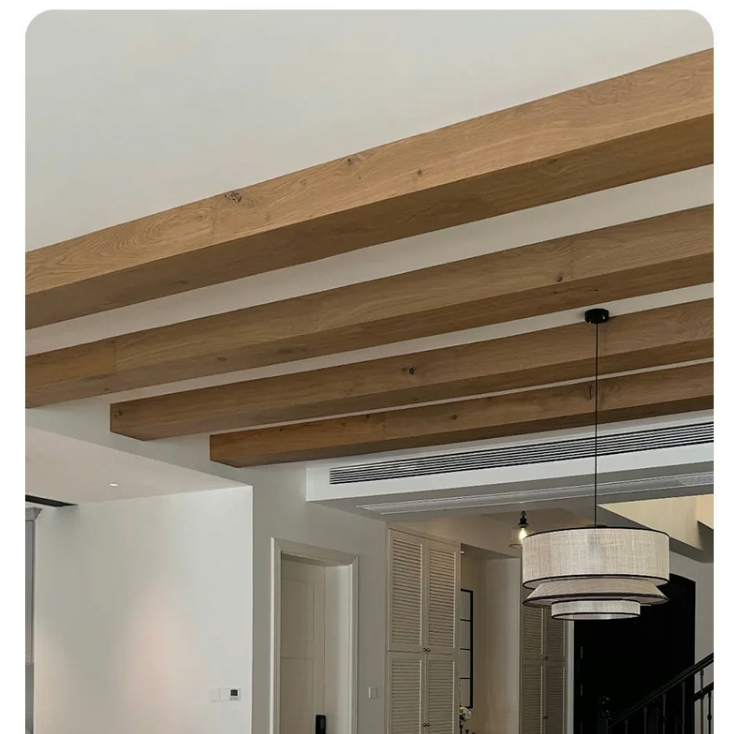
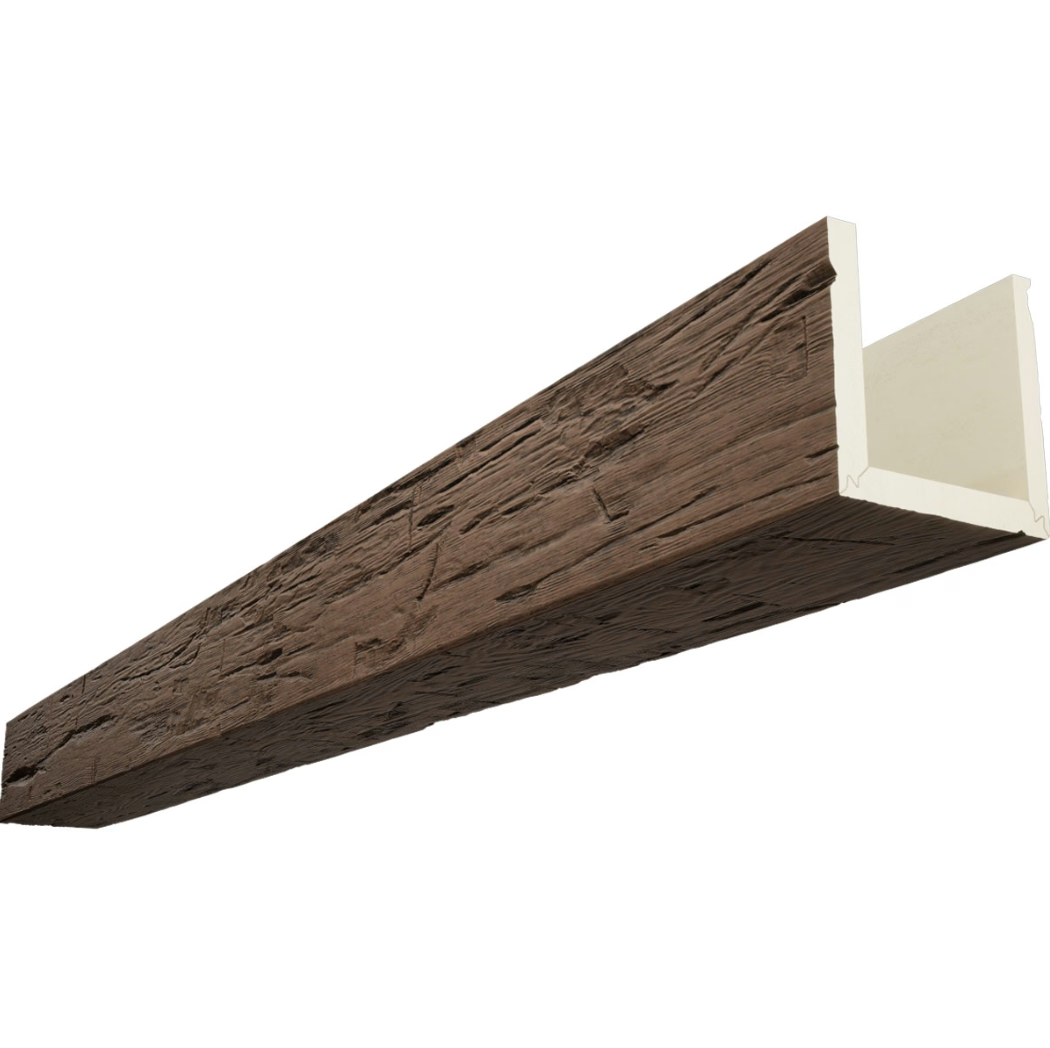
Professional construction and renovation projects rely on Bills of Quantities to establish clear specifications for procurement, enable accurate cost comparisons between bidders, and provide the documentation foundation for contracts and change management. For interior renovation projects incorporating faux wood beams, understanding how to prepare complete BOQs that satisfy professional standards prevents delays, disputes, and procurement problems that can derail project success.
Understanding BOQ Purpose and Structure
Bills of Quantities serve multiple functions in the construction process, each with distinct documentation requirements. Understanding these functions guides what information to include and how to present it.
The procurement function requires BOQs that clearly communicate what is needed so suppliers can accurately price and schedule deliveries. Specifications must be complete enough that suppliers understand exactly what they would provide without requiring extensive clarification. Ambiguous specifications lead to pricing uncertainty, delivery delays, and quality disputes.
The cost estimation function requires BOQs organized to facilitate quantity calculations and unit pricing. Clear measurement rules, consistent formatting, and logical organization enable estimators to work efficiently while minimizing calculation errors that propagate through project budgets.
The contractual function requires BOQs that define scope precisely enough to establish clear boundaries between contractor and owner responsibilities. Items omitted from BOQs may be disputed regarding whether they were included in contract scope or represent additional work requiring change orders.
BOQ Format Standards
Industry-standard BOQ formats facilitate understanding across project teams, streamline software integration, and meet professional expectations. While formats vary by region and project type, common elements appear consistently in professionally prepared documents.
Standard measurement conventions define how quantities are calculated and presented. For beams, this typically means linear footage by profile type and finish, with separate line items for different sizes and specifications. Clear measurement boundaries prevent disputes about what is included in stated quantities—does measured length include returns beyond visible ceiling planes, for example?
Table formatting with consistent columns provides structured presentation that supports both human reading and software processing. Typical columns include item numbers, descriptions, unit of measurement, quantities, and sometimes rate columns left blank for bidder completion. Professional formatting includes headers, dividers, and identification that enables reference throughout the project.
Unique identification codes enable systematic tracking of BOQ items across documents, changes, and payment applications. Numbering systems vary by organization but should be systematic, logical, and documented so that any team member can understand how items are organized.
Faux Wood Beam Specification Details
Complete specifications for faux wood beams must address multiple dimensions that collectively define exactly what products are acceptable. Generic specifications that could apply to numerous products create procurement uncertainty and quality disputes.
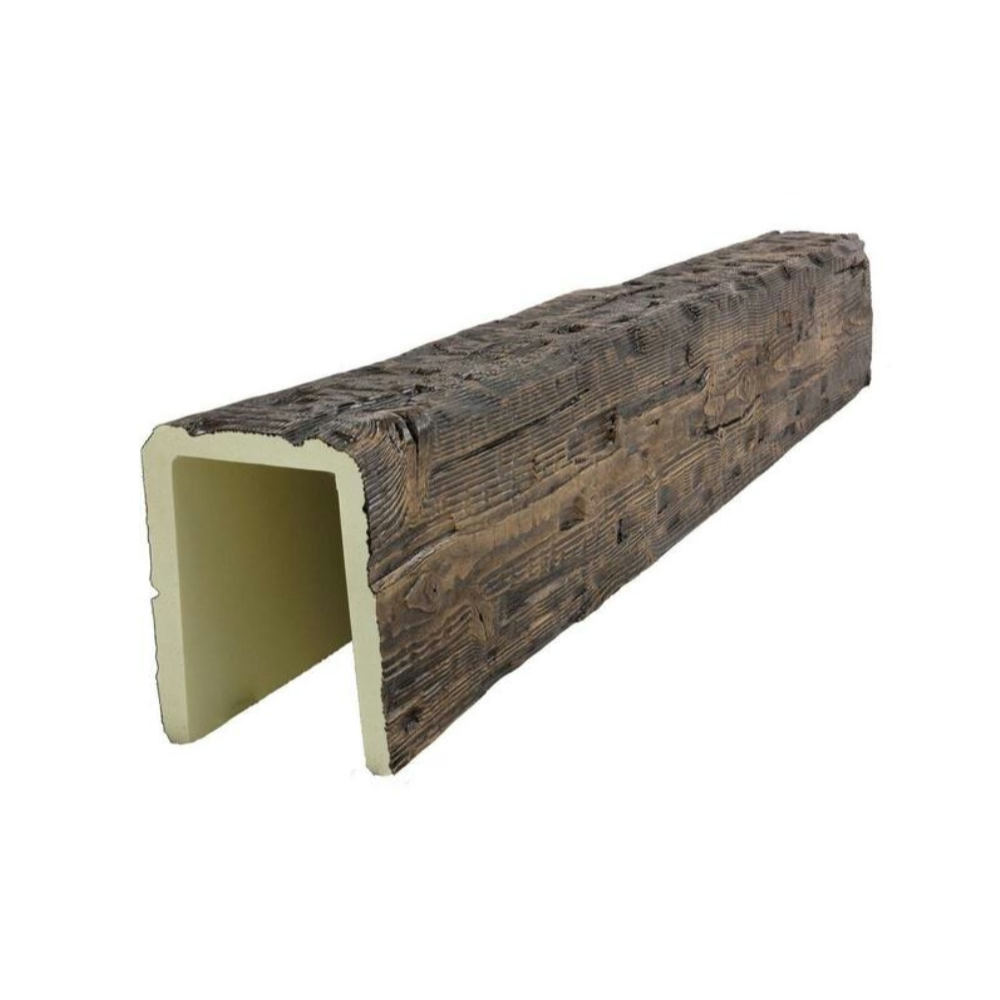
Physical specifications include dimensions by profile—typically width, height, and length for each beam type. Standard tolerances should be stated, as actual dimensions may vary slightly from nominal sizes. Material specifications should define the product type (polyurethane core with wood veneer or textured finish, for example) and relevant performance characteristics (density ranges, fire ratings, etc.).
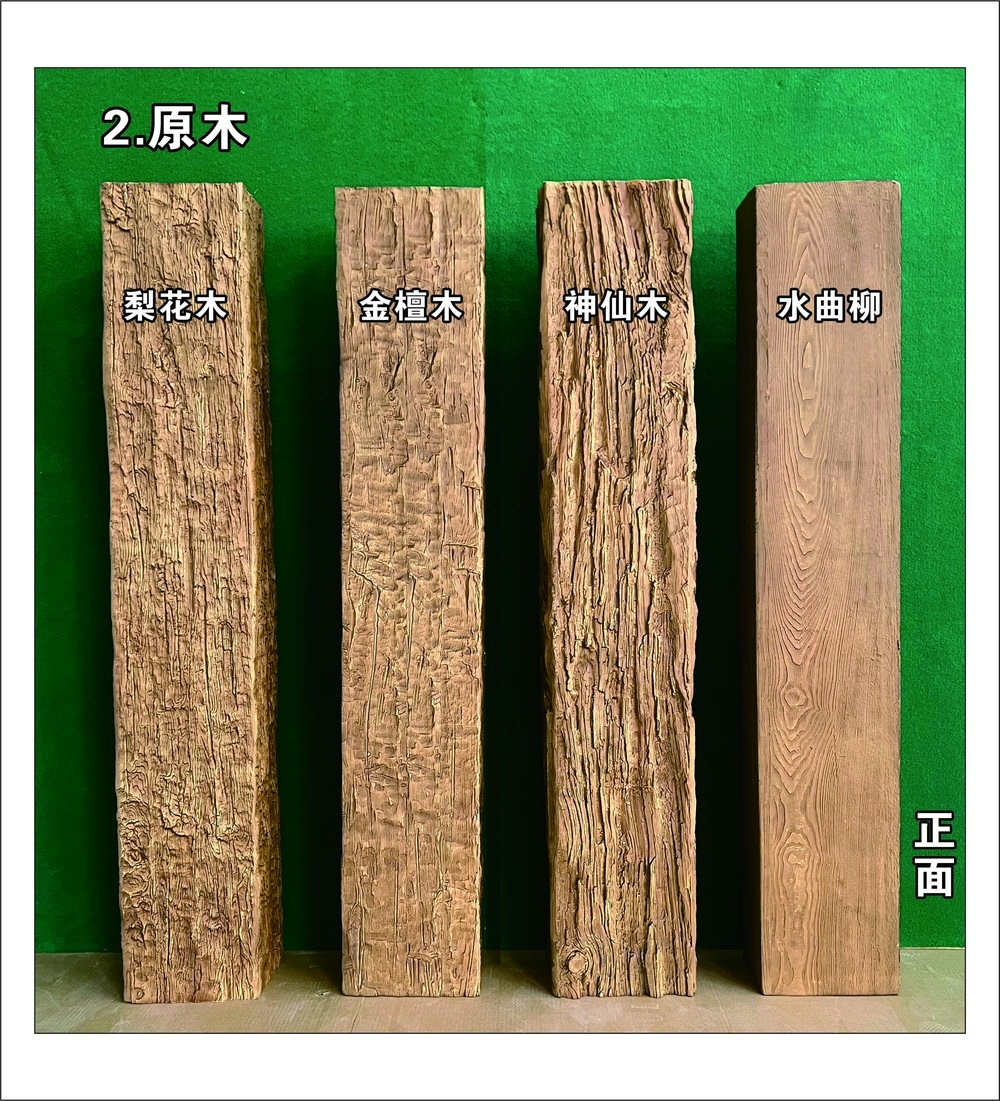
Finish specifications must be sufficiently detailed to ensure consistent appearance across all units and from any supplier. This includes color names or numbers from reference systems, texture descriptions (hand-hewn, resawn, smooth, etc.), and any distressing or aging treatments required. Reference samples or photographs attached to BOQ documents provide visual clarification that words alone cannot convey.
Performance specifications address how products must function in service. Fire performance ratings, UV stability requirements, and temperature tolerance ranges all affect product suitability for specific applications. Climate zone considerations may require different specifications for exterior versus interior applications or humid versus dry environments.
Accessory and Support Material Quantification
Beam BOQs must account for all materials required for complete installations, not just the visible beam elements themselves. Accessory quantities often equal or exceed beam quantities in terms of line items required.
Mounting hardware specifications should identify compatible systems and any performance requirements. The relationship between beam specifications and mounting systems must be clear—some BOQs list these separately while others require matching specifications ensuring compatibility. Include mounting cleats, structural fasteners, and any specialized hardware unique to your installation approach.
Support elements including corbels, brackets, and column wraps should be listed separately with quantities based on installation layout drawings. These items often come from the same manufacturer as beams but may also be sourced separately, requiring independent specification to ensure proper coordination.
Trim pieces, end caps, and transition moldings complete installation specifications. These items are frequently overlooked in preliminary BOQs but create significant procurement challenges when discovered late. Thorough installation drawings should identify all trim pieces required, enabling complete specification before procurement begins.

Organization by Project Area
For renovation projects involving multiple spaces, organizing BOQs by area facilitates both procurement and installation. Different areas may require different beam specifications, and grouping items by location simplifies material handling and installation sequencing.
Living areas might feature formal beam arrangements in prominent spaces like great rooms while more casual installations serve secondary spaces like hallways or bathrooms. Distinct specification sections for each area enable appropriate material selection while maintaining clear documentation of what goes where.
Commercial projects with multiple tenant spaces require careful separation of specifications to prevent confusion during construction and future maintenance. Clearly labeled areas with consistent identification across all project documents prevent installation errors where materials intended for one space end up in another.
The scope boundary between renovation areas and existing construction requires explicit definition. BOQ items that reference existing elements for connection, support, or coordination must clearly identify what existing conditions must be verified or provided by others before faux beam installation can proceed.
BOQ Review and Validation
Before issuing BOQs for procurement, thorough review prevents costly errors that would surface during bidding or construction. Multiple review approaches catch different problem types.
Technical review verifies that specifications are achievable and appropriate. Someone familiar with faux wood beam products and installation should confirm that specified items actually exist in the marketplace and that described specifications make sense together.
Quantity review confirms that calculated quantities match installation drawings and site conditions. Cross-checking linear footage calculations, accessory counts, and hardware quantities against dimensioned plans catches calculation errors that would result in procurement shortages or excess.
Format review ensures professional presentation that reflects well on the preparing organization and facilitates efficient bidder review. Inconsistencies, missing information, and formatting problems in issued documents create unfavorable impressions and may trigger clarification requests that delay procurement.
Complete BOQ preparation for faux wood beam interior renovation projects requires attention to specification detail, organizational clarity, and professional presentation standards that facilitate successful procurement and installation. The investment in thorough documentation pays returns throughout project execution.
Technical References
ASTM standards cited in every specification
Test Data
Lab results from internal testing program
Updated 2026
Reviewed against current product specs