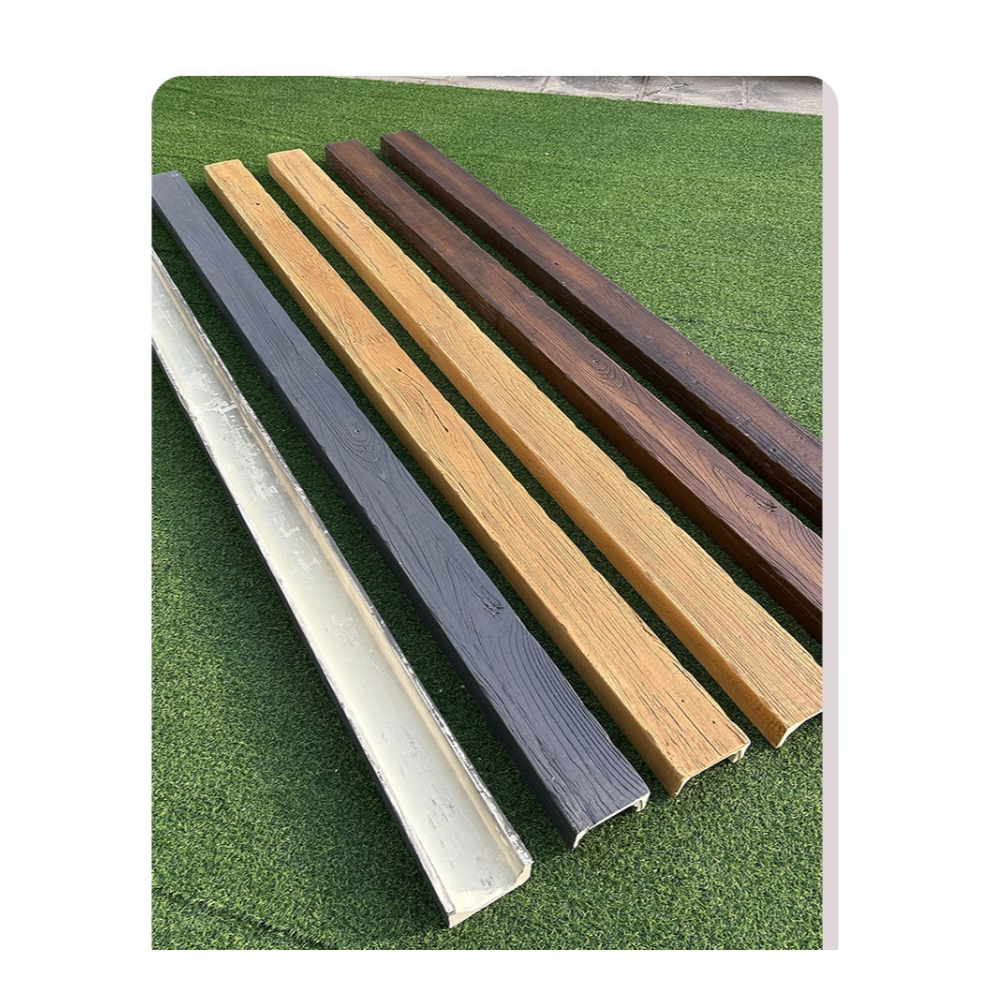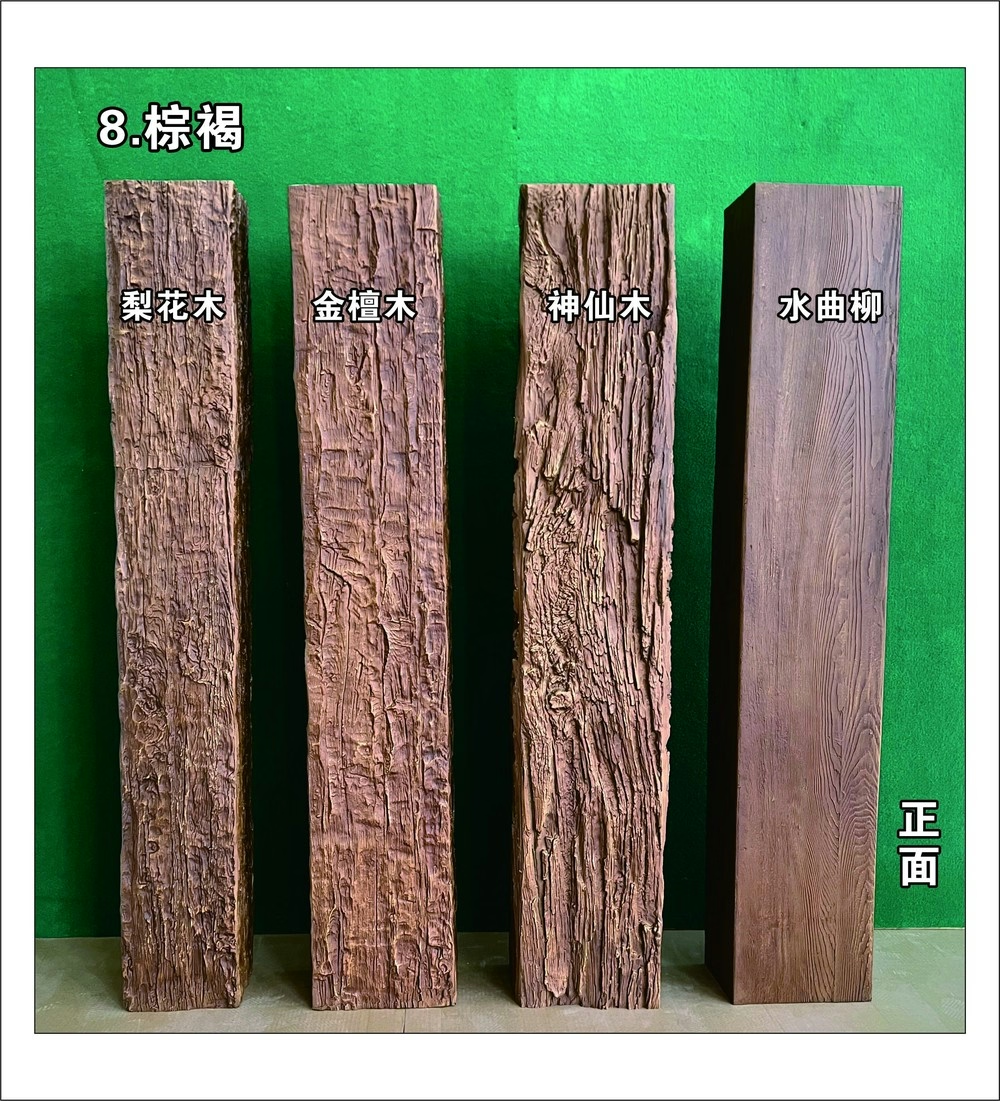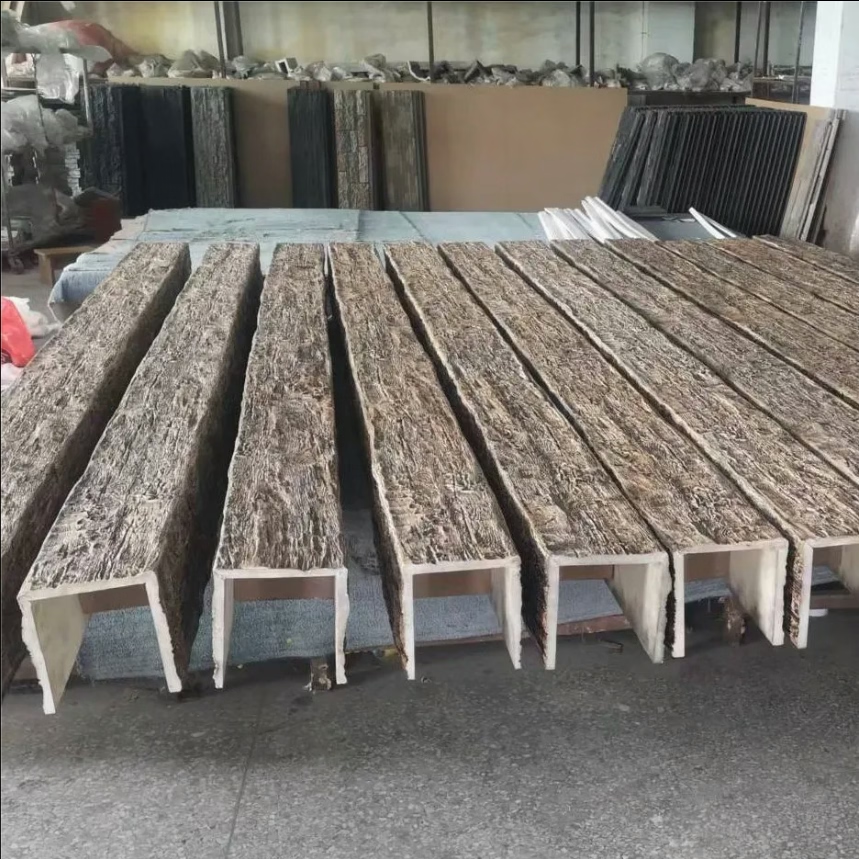
Polyurethane faux wood beams are among the lowest-maintenance decorative architectural elements available, which is one of the major reasons they have become so popular in both residential and commercial settings. Unlike real timber, polyurethane does not require sealing, oiling, refinishing, or treatment against insects or rot. That said, even the most durable decorative finish benefits from thoughtful care, and a few simple maintenance practices will keep PU faux wood beams looking their best for decades.
Routine Cleaning Practices
The primary maintenance task for installed faux wood beams is periodic cleaning to remove dust, cobwebs, and any accumulated airborne contaminants. In most interior environments, a thorough cleaning every six to twelve months is sufficient, though beams in kitchens or commercial spaces with higher exposure to airborne grease or contaminants may benefit from more frequent attention.
Dry dusting is the most common cleaning method and is appropriate for almost all installations. A long-handled duster with microfiber or lamb's wool attachment reaches the bottom of ceiling beams effectively, while a regular microfiber cloth handles the sides and any wall-mounted beam sections. Microfiber attracts dust particles through static charge rather than simply pushing them around, which makes the cleaning process faster and more thorough.
For more substantial cleaning, a damp cloth with mild soap and water can be used safely on most polyurethane finishes. The cloth should be well wrung out, as standing water on any decorative surface for extended periods is undesirable. Avoid harsh cleaning chemicals, abrasive scrubbers, and solvent-based cleaners, as these can damage the finish. Common household cleaners containing ammonia or bleach should be avoided unless the manufacturer's documentation specifically permits their use.
For beams in kitchens, exposure to cooking grease and steam is a common concern. Periodic cleaning with a degreasing dish soap—used sparingly and applied with a soft cloth—will keep kitchen beams looking fresh. Beams installed near ranges with high-output ventilation hoods receive relatively little direct grease exposure, but the airborne particles that circulate through the kitchen environment can settle on any ceiling surface over time.
Touch-Up and Minor Repair Procedures
Even with careful installation and use, faux wood beams may occasionally require touch-up or minor repair. The most common touch-up needs are scratches, scuffs, and small chips in the finish, often caused by ladder contact during installation of adjacent fixtures, moving furniture near wall-mounted beams, or simple household accidents.
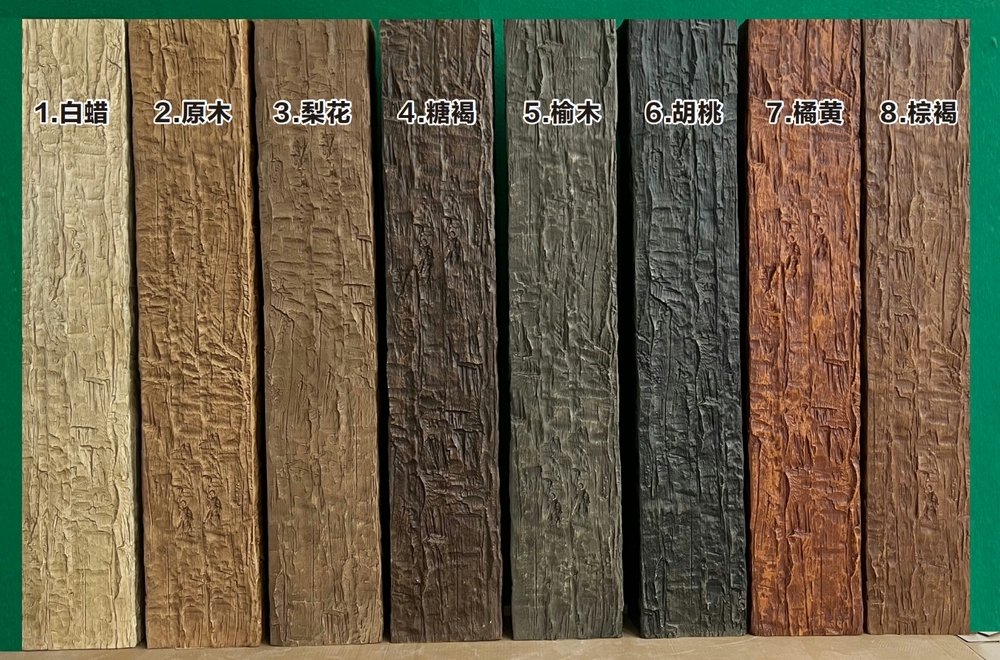
For minor surface scratches, a matching touch-up marker or stain pen is the simplest and most effective solution. Manufacturers and distributors typically offer these markers in colors matched to their standard beam finishes. The touch-up marker is applied directly to the scratched area, with the color deposited into the scratch filling it visually. Multiple light applications work better than a single heavy one, and blending the touched-up area with the surrounding finish is achieved by gently feathering the application with a soft cloth.
Small chips or gouges in the surface require a more involved repair. Lightweight spackle or wood filler designed for polyurethane materials can be pressed into the damaged area and smoothed flush with the surrounding surface. After the filler dries, it is sanded very lightly with fine-grit sandpaper, and then touched up with a matching marker or paint. Color matching filler compounds are available from some manufacturers in standard beam colors, which simplifies the process considerably.
For more substantial damage—cracks, larger chips, or sections that have detached—the manufacturer's warranty and replacement programs are typically the best recourse. Many manufacturers will provide replacement sections under warranty if the damage is covered by their terms, and even if it is not, replacement pieces are usually available for purchase. The installation process for a replacement beam section is essentially the same as the original installation, though accessing the damaged beam may require more extensive disassembly of adjacent components.
Long-Term Preservation Considerations
While polyurethane is inherently durable, certain environmental factors and use conditions can affect the long-term appearance of faux wood beams. Understanding these factors helps in designing installations that remain beautiful over time.
UV exposure is the primary environmental factor affecting beam finish. In installations where beams receive significant direct sunlight—through skylights, large windows, or open roof structures in covered outdoor applications—the finish may fade or shift in color over many years. Choosing a fade-resistant finish formulation or applying a UV-protective topcoat can mitigate this effect. Indoor installations that are not exposed to direct UV light generally experience negligible color change over their lifetimes.
Humidity and temperature cycles affect polyurethane differently than they affect real wood. Polyurethane is dimensionally stable across a wide range of temperatures and humidity levels, and it does not expand and contract significantly with normal indoor environmental variations. However, very large or rapid temperature changes—such as in unconditioned spaces or in buildings with inadequate HVAC control—can cause subtle dimensional changes that may stress joints or fasteners. Maintaining reasonable indoor environmental conditions benefits both the beams and the broader building.
Cleaning products and solvents can damage polyurethane finishes if used inappropriately. Any cleaning product should be tested on an inconspicuous area of the beam before being applied more broadly, and any product that causes visible damage to that test area should not be used on the installation. As a general rule, mild soap and water are safe for all polyurethane finishes, while any product containing strong solvents or abrasives should be avoided.
Professional Inspection and Maintenance
For commercial installations with significant safety responsibilities—such as hotels, public buildings, or spaces with high occupant loads—periodic professional inspection of beam installations is a worthwhile investment. Trained inspectors can identify loose fasteners, separating joints, or finish degradation before these issues become apparent to occupants or visitors, allowing for proactive maintenance rather than reactive repair.
The inspection frequency depends on the installation's age, environmental conditions, and use intensity. A typical recommended schedule is a professional inspection every three to five years for most commercial installations, with more frequent inspections for installations in challenging environments such as swimming pool enclosures, kitchens, or spaces with significant mechanical vibration.
The maintenance and care of PU faux wood beams is fundamentally simple and inexpensive, which contributes substantially to their overall value proposition. A few minutes of routine cleaning each year, occasional touch-up as needed, and a periodic inspection for any installation issues will keep PU beams looking and performing as intended for decades. The combination of low maintenance requirements and long service life is one of the most compelling arguments for specifying these products over alternative materials in both residential and commercial applications.
Technical References
ASTM standards cited in every specification
Test Data
Lab results from internal testing program
Updated 2026
Reviewed against current product specs