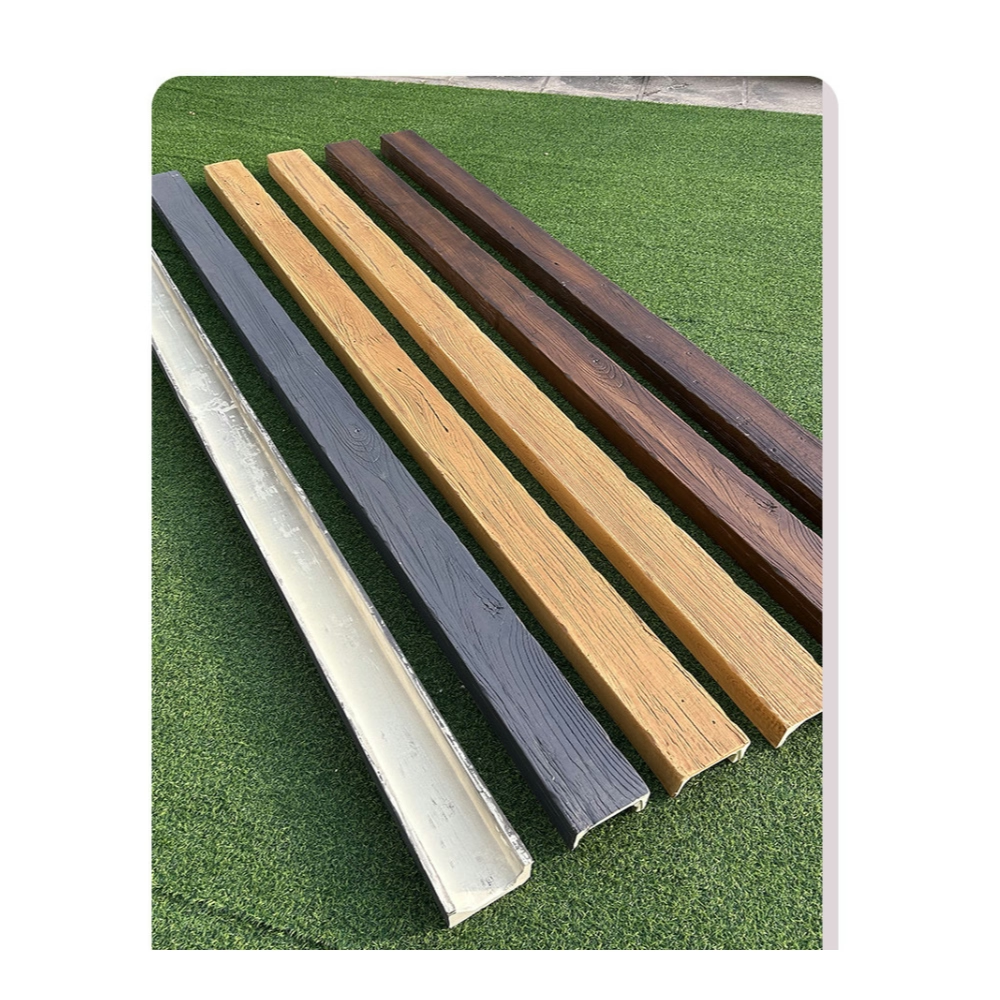
The term "fittings" refers to the hardware components used to join, support, terminate, and connect PU fake wood beams during installation. While similar to accessories in function, fittings are specifically the structural and connective hardware that ensures the beams are securely attached and properly aligned. Without the right fittings, even the highest-quality beams cannot be installed to professional standards. Understanding the full range of available fittings, and matching each fitting to its specific application, is essential knowledge for anyone specifying, installing, or overseeing a PU faux wood beam project.
Internal Mounting Fittings
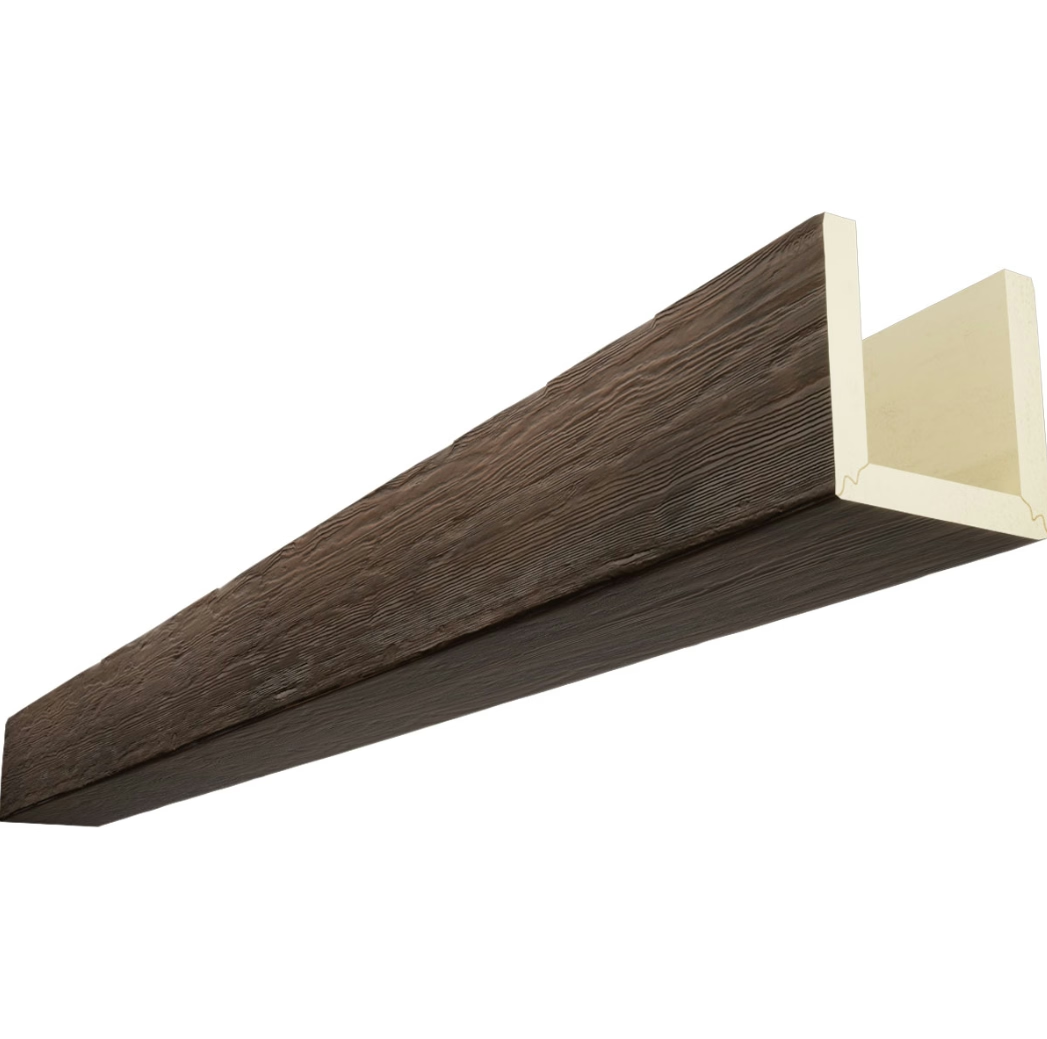
The most fundamental fitting in any PU beam installation is the internal mounting bracket or hanger. These fittings are inserted into the pre-formed mounting channel that runs the length of the beam's interior top surface. Once inserted, they engage with the channel geometry and become the structural anchor point through which the beam is attached to the building.
Standard L-brackets are the workhorses of beam mounting. These fittings have a vertical leg that engages with the beam channel and a horizontal leg that attaches to the ceiling joist or backing board. They are pre-drilled with mounting holes sized for standard fasteners, and they are available in sizes appropriate for different beam dimensions. For most ceiling installations, L-brackets are spaced at 24 to 32-inch intervals along the beam's length, with closer spacing near the ends and at joints.
Adjustable mounting fittings provide flexibility for installations where the ceiling plane is not perfectly level or where the beam must be positioned at a slight angle to match an uneven ceiling surface. These fittings incorporate a sliding or pivoting mechanism that allows for fine adjustment after the fitting is attached to the structure, ensuring that the beam's visible surface ends up perfectly aligned regardless of minor irregularities in the mounting surface.
For applications where the beam is suspended below the ceiling structure rather than mounted directly to it, drop-down or pendant fittings extend from the ceiling structure down to the beam's mounting channel. These fittings allow the beam to be positioned at a specific height below the ceiling, useful in spaces where the ceiling is unusually high or where a defined soffit effect is desired.
Splice and Joiner Fittings
When beams must be joined end-to-end to span distances longer than a single beam length, splice fittings ensure the joint is structurally sound and visually clean. A splice fitting bridges across the junction between two beams, providing both mechanical reinforcement and alignment guidance that keeps the joint tight and straight.
Inline splice plates are the simplest form of splice fitting. These thin metal or composite plates slide into the mounting channels of both beams at the joint, overlapping inside both channels. The plate is secured to each beam with screws driven through the beam's side walls and into the plate, creating a mechanical connection that prevents the beams from separating or shifting relative to each other. The plate is hidden inside the beam once the joint is closed, so it has no visible effect on the finished appearance.
Miter splice fittings serve a similar function at 90-degree corners or angled junctions where two beams meet. These fittings are designed with the appropriate angle pre-formed into the plate, allowing the two beam ends to come together precisely at the desired angle while being held in correct alignment by the internal fitting. Miter splices are commonly used in coffered ceiling grid systems and in installations where beams turn corners.
Keyed splice fittings incorporate a small alignment key that engages with matching slots in both beam ends, ensuring that the two beams are perfectly aligned along their length as well as across the joint. This is particularly useful for beams with deep profiles or asymmetric cross-sections, where even small misalignments at the joint would be visually obvious.
Corner and Termination Fittings
Beam terminations—where beams meet walls, ceilings, or other surfaces—require specialized fittings to address the unique structural and aesthetic challenges of these locations.
Wall-return fittings are used where a beam terminates at a vertical wall surface. These fittings engage with the beam's mounting channel and extend to the wall, where they are fastened to the wall structure. The fitting holds the beam securely in position while ensuring that the beam's end sits flush against the wall surface. Wall-return fittings are particularly important for mantel installations, where the beam must be securely attached to the wall and where any gap at the wall interface would be highly visible.
Ceiling-return fittings serve a similar function where beams terminate at the ceiling plane rather than at a wall. These fittings are typically mounted to the ceiling structure and engage with the beam's channel, providing a secure connection at the termination point. In coffered ceiling systems, ceiling-return fittings are used at every beam termination point to maintain consistent alignment across the entire grid.
End cap fittings address the appearance of the beam termination from the visible side. While not structural, end caps are essential to finishing the installation, and they typically attach with adhesive and small finishing nails. For beams that terminate at walls, end caps may be combined with small trim pieces that cover any gap between the cap and the wall surface, creating a seamless finish.
Decorative and Functional Specialty Fittings
Beyond the structural fittings, several specialty fittings serve specific functions within beam installations. These fittings address unique design situations or provide functionality that goes beyond basic structural support.
Lighting integration fittings are designed to accommodate the integration of light fixtures within beam installations. These include recessed light housings that mount inside the beam's hollow profile, pendant light brackets that attach to the beam's mounting channel, and track lighting adapters that convert a beam into a mounting surface for track lighting systems. These fittings are particularly valuable in commercial and hospitality installations, where integrated lighting is often a design requirement.
HVAC and wiring fittings allow electrical and low-voltage wiring to be routed through the beam's hollow interior without compromising the beam's appearance or structural integrity. These fittings include cable pass-through bushings that protect wiring from abrasion at the beam's cut edges, junction box adapters that provide code-compliant electrical connection points within the beam cavity, and access panels that allow wiring to be reached after the installation is complete.
Reinforcement fittings address specific load or structural concerns that arise in unusual installations. For example, when heavy pendant fixtures are suspended from a beam, reinforcement fittings distribute the load across a larger area of the beam's mounting channel. In installations where beams span longer distances than typical, reinforcement fittings provide additional support that prevents the beam from flexing or sagging over time.
Selecting and using the right fittings is one of the marks of a professional PU beam installation. The structural integrity, visual quality, and long-term performance of the installation all depend on appropriate fittings being used correctly. Reputable manufacturers and suppliers provide detailed fitting specifications with their beam products, and installers who follow these specifications consistently achieve results that stand the test of time.

Technical References
ASTM standards cited in every specification
Test Data
Lab results from internal testing program
Updated 2026
Reviewed against current product specs