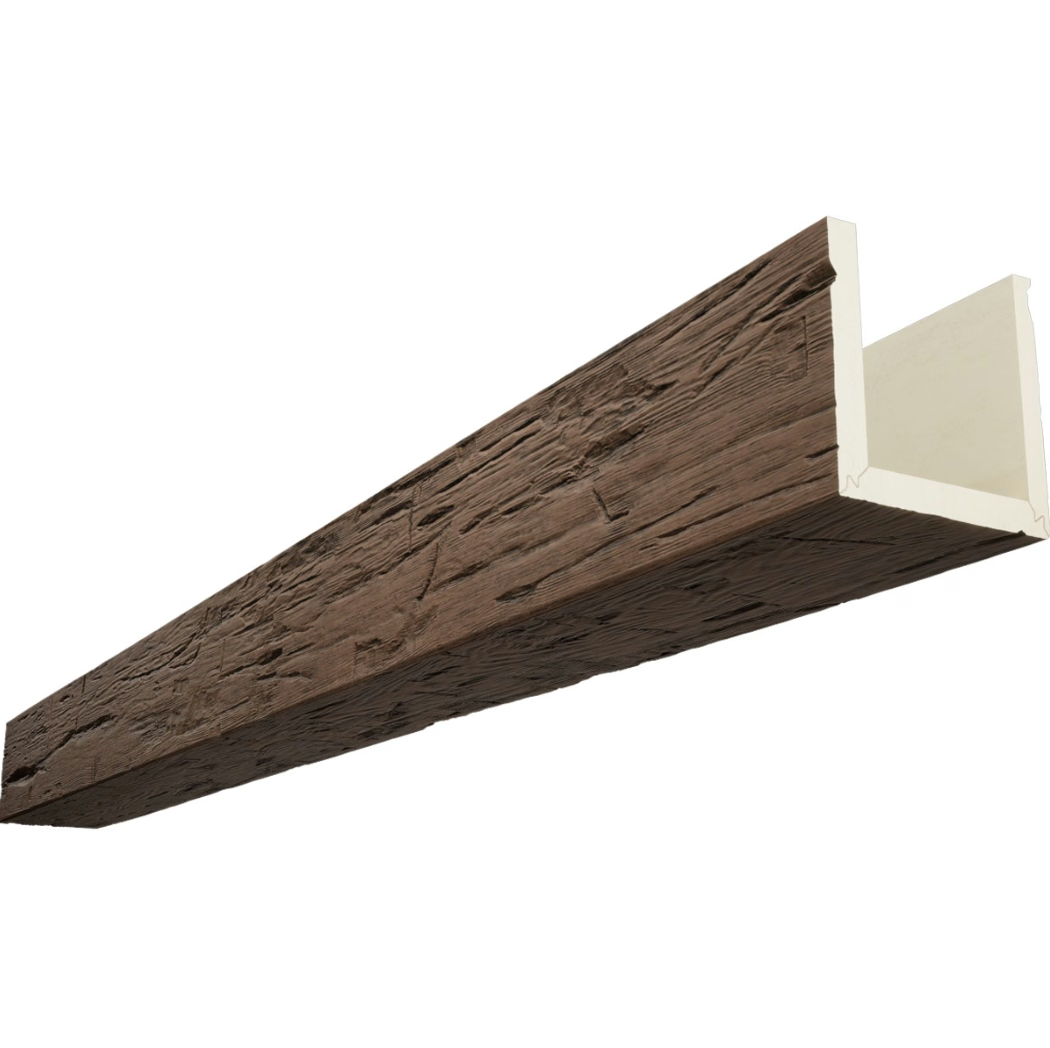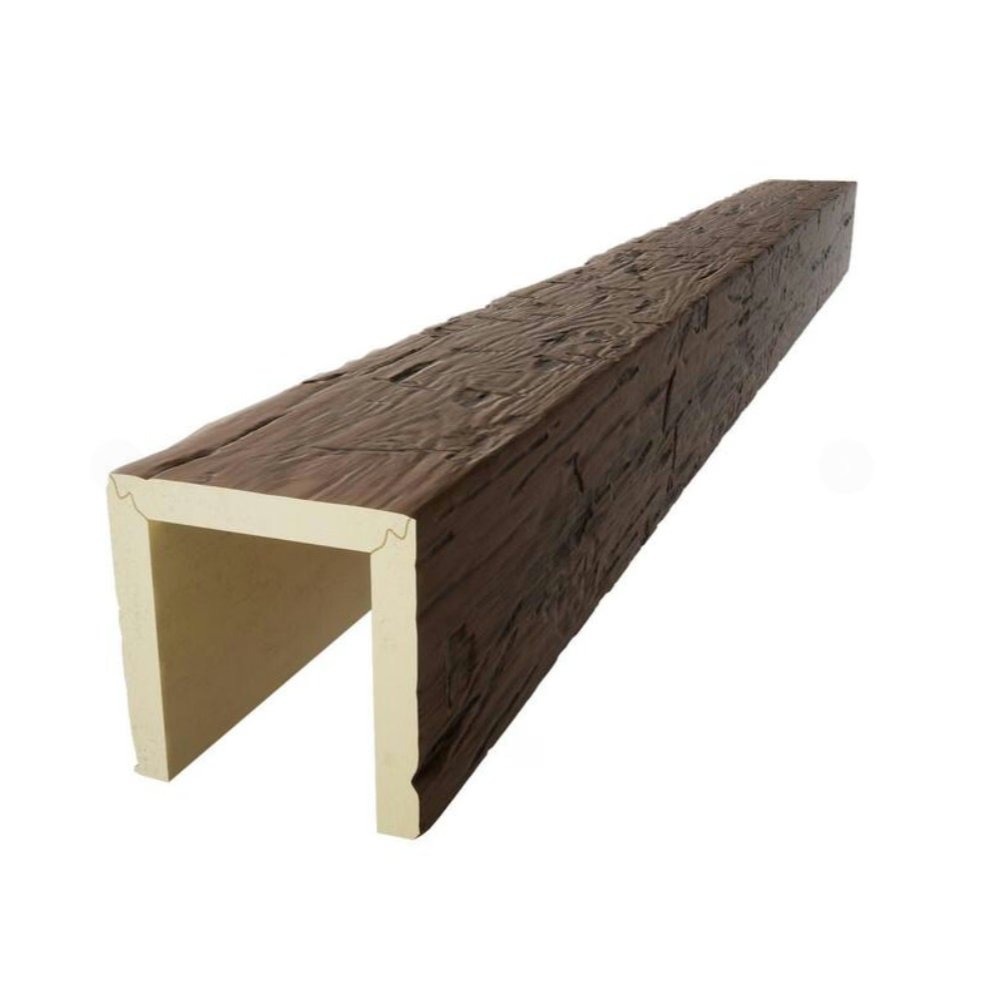
For construction professionals specifying polyurethane faux wood beams in residential, commercial, or hospitality projects, comprehensive specification documentation is the foundation of a successful project. Specification documents serve as the formal communication between the design team, the contractor, the supplier, and the building owner, ensuring that everyone shares a clear understanding of the products being specified, the performance requirements they must meet, and the procedures for verifying compliance with those requirements.
Categories of Specification Documents
Polyurethane faux beam projects typically require several distinct categories of documentation, each addressing a specific aspect of the product specification, supply, and installation process. Understanding what each category contains and how it is used helps ensure that the documentation package for a given project is complete.
Product data sheets are the foundational documents provided by manufacturers. These documents describe the product line in detail, including available profiles, dimensions, finish options, material composition, weight specifications, and recommended applications. Product data sheets are typically the first documents that specifiers review when evaluating whether a particular beam product is appropriate for a project.
Installation guides from the manufacturer provide detailed procedures for proper installation, including recommended hardware, mounting techniques, and finishing methods. These documents are essential for contractors who may not have prior experience with the specific product line. Installation guides typically include diagrams, photographs, and step-by-step instructions that translate the product specification into practical installation knowledge.
Material Safety Data Sheets document the chemical composition, hazard identification, and safe handling procedures for the product. As discussed in the companion article on MSDS, these documents are important for compliance with workplace safety regulations and for ensuring that all parties handling the product understand any associated hazards.
Performance and Compliance Documentation
Beyond the basic product documents, several categories of documentation address the performance and compliance characteristics of the beam product. These documents are particularly important for commercial and institutional projects where regulatory compliance is a formal requirement.
Fire performance documentation demonstrates that the beam product meets applicable fire safety standards. The most commonly referenced standard in the United States is ASTM E84, which measures surface burning characteristics of building materials. The corresponding European standard is the Euroclass system under EN 13501-1. Fire performance documentation typically includes test reports from accredited laboratories, certificates of compliance, and listings with organizations such as Underwriters Laboratories or equivalent bodies.
VOC emission documentation addresses the volatile organic compound emissions from the beam product. Indoor air quality standards in many jurisdictions limit VOC emissions from building materials, particularly in schools, healthcare facilities, and other sensitive environments. Documentation may include test reports from programs such as GREENGUARD, FloorScore, or equivalent regional certifications.
Structural performance documentation may be required for beams installed in locations where they are expected to support loads beyond their own weight. While decorative faux beams are not generally load-bearing, documentation of their structural performance may be requested for projects where beams will support lighting, equipment, or other items. This documentation typically includes load test reports, structural calculations, and engineered mounting details.
For projects pursuing green building certifications such as LEED, BREEAM, or WELL, additional documentation may be required to demonstrate the product's contribution to certification credits. This documentation may include recycled content declarations, regional materials sourcing information, manufacturing environmental impact data, and indoor air quality certifications.
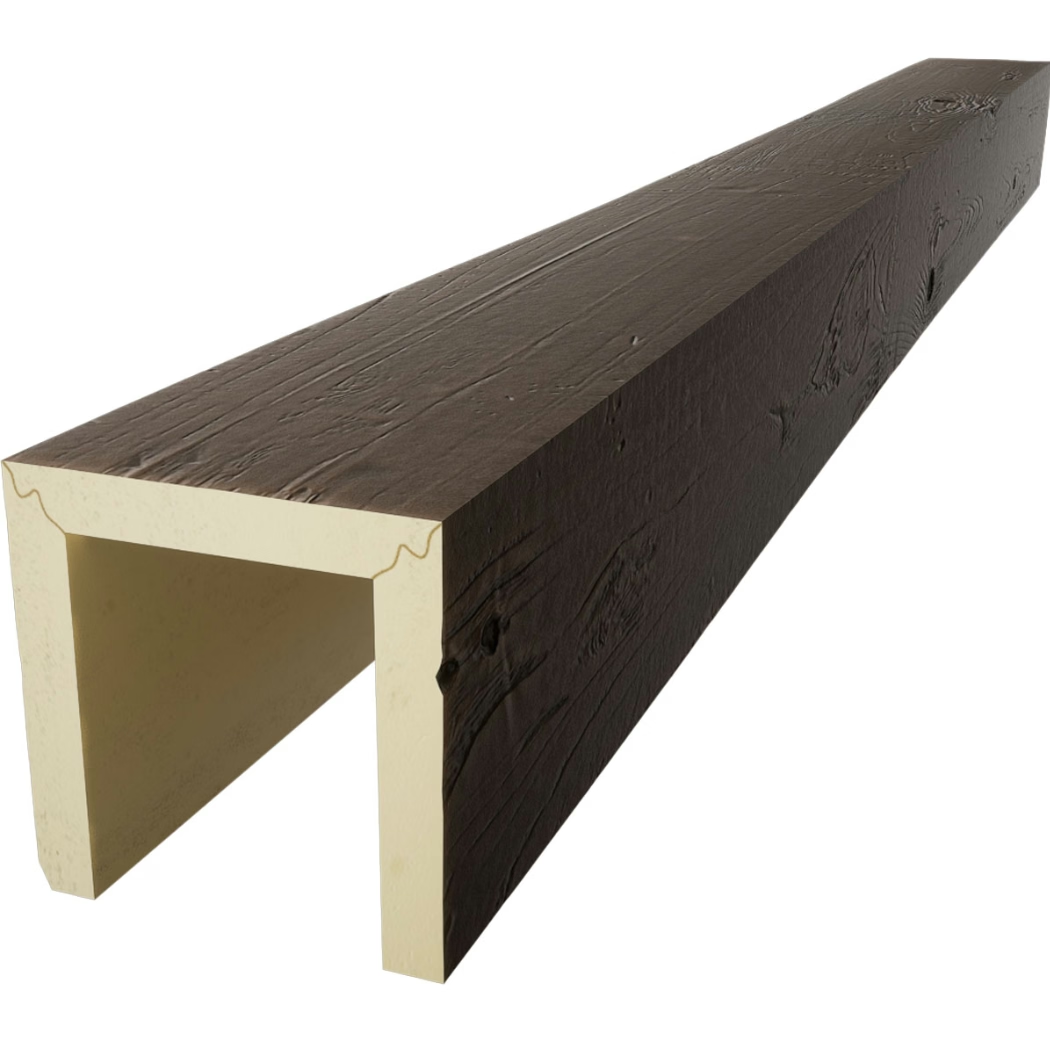
Submittal Documentation Process
In commercial construction, the submittal process is the formal mechanism through which the contractor communicates the specific products being used to the design team and the building owner. Submittals include product data, samples, and other documentation that allows the design team to verify that the products being supplied match the project specifications.
The submittal package for polyurethane faux beams typically includes the manufacturer's product data sheets for the specific products being supplied, physical samples showing the actual finish and texture of the beams, cut sheets or shop drawings showing the layout and configuration of the beams in the project, and any applicable certificates or compliance documentation.
The review process for submittals involves the design team examining the submitted documentation to verify compliance with the project specifications. Any deviations from the specifications must be identified and either accepted or rejected through a formal process. Approved submittals become part of the project record and serve as the reference for what was actually supplied and installed.
For international projects, the submittal process may involve additional considerations. Importers and their customers in different countries may have varying requirements for the format and content of submittal documentation. Some markets require notarized documents, apostilled certificates, or consular legalization of certain compliance documents, which adds complexity to the documentation package.
Project-Specific Specification Writing
Writing effective project specifications for polyurethane faux beams requires careful attention to both the technical requirements of the product and the administrative requirements of the project delivery process. Specification sections for faux beams typically include several subsections addressing different aspects of the product and its installation.
The general description subsection identifies the product category, manufacturer, and quality standards. A well-written description includes the manufacturer's name and product line designation, the standards against which the product is being specified, and any reference standards for testing or performance.
The materials subsection details the material composition, performance characteristics, and physical properties of the beams. This includes the base material composition, the finish characteristics, the dimensional tolerances, the weight specifications, and any other physical properties that affect the product's suitability for the project.
The execution subsection describes how the beams are to be installed, including surface preparation, mounting methods, hardware requirements, finishing procedures, and quality control. This subsection is sometimes supplemented by a separate installation detail drawing that shows mounting configurations, joint details, and finishing techniques.
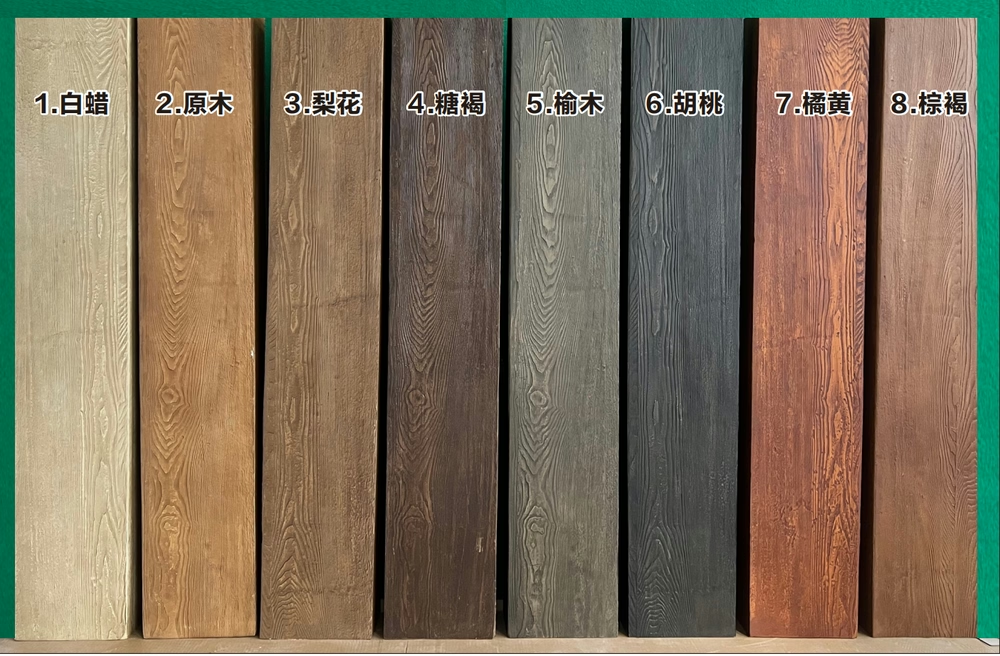
Accessory and related products may be specified separately within the same specification section or in a separate section that addresses related components. Specifying corbels, end caps, trim pieces, and finishing materials as part of the same product family simplifies the procurement process and ensures visual compatibility.
Managing Documentation Across Project Phases
Effective documentation management requires attention to the project lifecycle from initial design through construction, occupancy, and ongoing operation. Each phase has its own documentation requirements, and the documents produced at each phase build on those produced earlier.
During design, specifications are developed and included in the construction documents. The specifications describe what products are required and what performance they must achieve, without necessarily identifying a specific manufacturer or product. Performance-based specifications give manufacturers flexibility in how they meet the requirements, while prescriptive specifications name a specific product and limit substitution.
During procurement, the contractor uses the specifications to obtain pricing and availability from suppliers, develops submittals for review by the design team, and places orders for the approved products. The documentation produced during this phase includes quotes, product data, samples, and submittal packages.
During construction, the documentation supports the installation process and provides a record of what was actually installed. Installation records, as-built drawings, and inspection reports all contribute to the construction-phase documentation package.
After construction, the documentation supports ongoing maintenance, future renovations, and any warranty claims. Operation and maintenance manuals, warranty documentation, and as-built records should be compiled and stored in a location accessible to the building owner and facility management team.
Comprehensive project specification documentation is one of the hallmarks of a professionally managed polyurethane faux beam project. By developing, managing, and preserving this documentation throughout the project lifecycle, design professionals, contractors, and building owners create a record that supports successful project delivery and long-term performance.

Technical References
ASTM standards cited in every specification
Test Data
Lab results from internal testing program
Updated 2026
Reviewed against current product specs