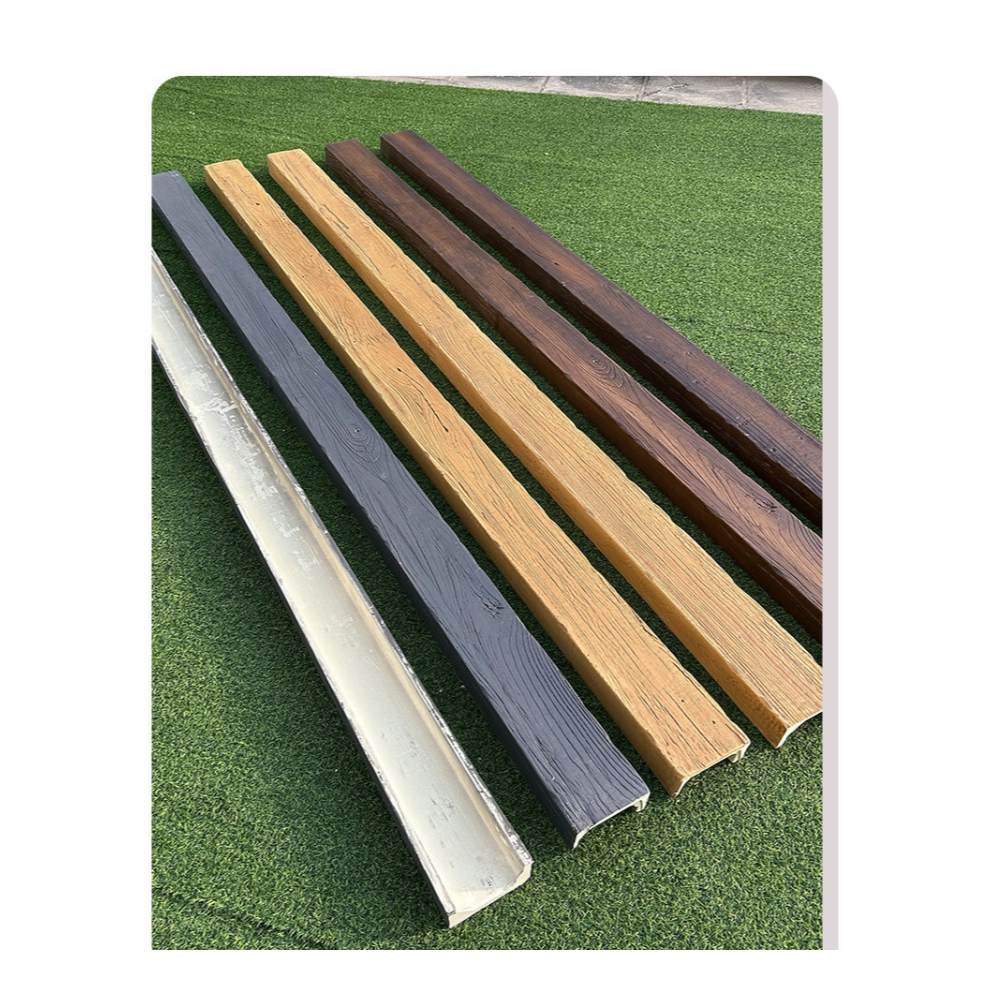
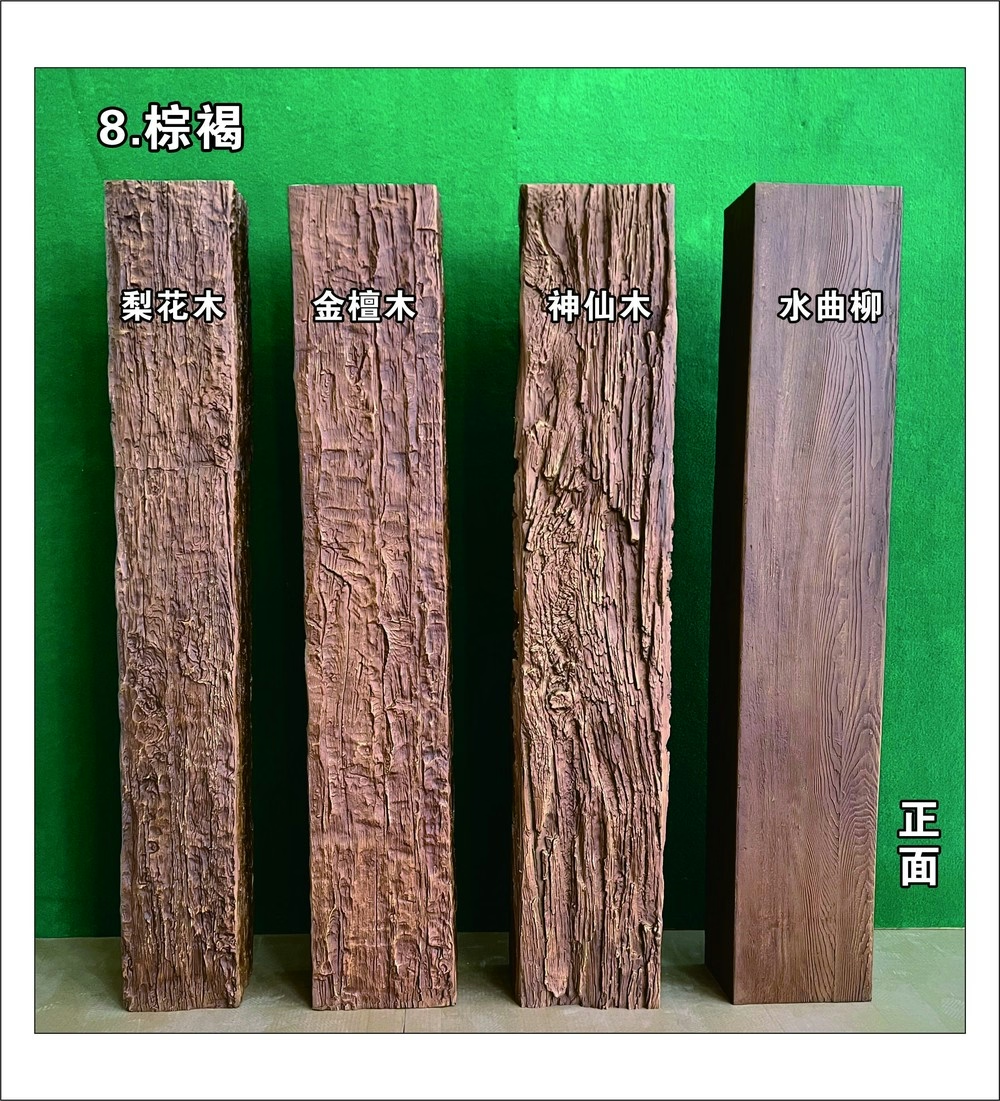
A complete PU faux wood beam installation kit is a curated collection of brackets, adhesive, connectors, and accessory components that work together as a coordinated system for installing PU beams. These kits simplify the procurement process, ensure component compatibility, and provide installers with everything needed to complete a professional installation in a single package. Understanding what these kits contain and how the components function together helps both installers and specifiers select the right kit for their project.
The Core Components of a Beam Installation Kit
While the specific contents of installation kits vary between manufacturers and product lines, most kits share a common structure built around three essential categories: brackets for mounting, adhesive for bonding, and connectors for joint reinforcement.
Mounting brackets form the primary structural component of any installation kit. These are the galvanized or stainless steel fittings that engage with the beam's internal mounting channel and attach to the building structure. Most kits include brackets designed specifically for the beam product they are intended to install, ensuring dimensional compatibility and load ratings appropriate for the beam's weight.
Bracket quantity is typically calculated based on the beam length being installed, with one bracket per 24 to 32 inches of beam being the standard recommendation. Higher bracket density may be appropriate for beams supporting additional loads, while lower density may suffice for installations on solid wood ceilings with joists spaced closely together.
Bracket style varies with the installation type. L-shaped brackets are standard for most ceiling applications, while specialized brackets handle wall-mounted beams, drop-down ceiling applications, and curved beam installations. Kits for specific beam products may include multiple bracket styles to accommodate the various configurations in which the beam can be installed.
Adhesive Components
Adhesive is the second essential component of a complete installation kit. Polyurethane construction adhesive is the industry standard for PU beam installations, offering excellent adhesion to both the polyurethane beam material and the common construction substrates encountered in ceiling and wall installations.
Kit adhesive is typically supplied in standard cartridge format, compatible with conventional caulking guns. The cartridge size is chosen to provide adequate adhesive for a typical installation without excessive waste. For larger projects, additional cartridges may need to be purchased separately.
The adhesive's working time and cure time are important practical considerations. Most polyurethane construction adhesives have a working time of 20 to 30 minutes, during which the beam must be positioned and secured. Full cure typically requires 24 hours, during which the installation should not be subjected to significant stress. These timeframes are compatible with normal installation practices.
Specialty adhesives may be included for specific applications. High-temperature adhesive for installations near heat sources, low-VOC adhesive for environmentally sensitive projects, or accelerated-cure adhesive for installations requiring rapid return to service are examples of the specialty adhesive options that may be available in different kit configurations.
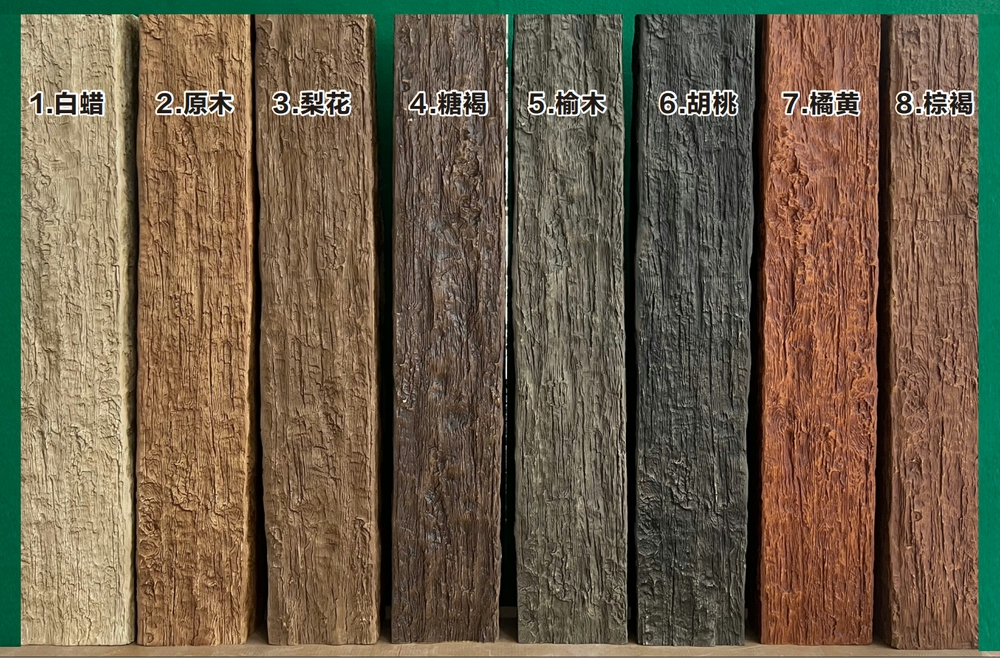
Connector Components
Connectors address the joints and intersections within a beam installation. These components ensure that beams joined end-to-end maintain alignment and structural integrity, and they address the specific challenges of corners, transitions, and beam-to-wall connections.
Splice plates for end-to-end beam joints are among the most commonly included connectors. These thin metal plates slide into the mounting channels of both beams at a joint, providing a mechanical bridge that prevents the beams from separating or shifting relative to each other. Splice plates are essential for installations that require longer beam runs than a single beam length.
Corner connectors handle the joints where beams meet at angles. Pre-formed corner connectors engage with both beams at the joint, maintaining the correct angle and providing structural reinforcement. These connectors are particularly important for coffered ceiling systems and for installations where beams turn corners around room perimeter.
Beam-to-wall connectors address the terminations where beams meet vertical wall surfaces. These connectors are engineered to provide secure attachment while accommodating the slight dimensional variations that often exist between the planned and actual wall positions. They help create a clean, gap-free transition between beam and wall.
Accessory Components and Hardware
Beyond the core brackets, adhesive, and connectors, complete installation kits typically include a range of accessory components and hardware that support the installation process.
Fasteners appropriate for the brackets and the anticipated mounting substrate are essential accessories. Kits typically include wood screws for attaching brackets to wood joists, and may also include concrete screws, hollow-wall anchors, or specialty fasteners depending on the substrate types the kit is designed to address.
Finishing components address the cosmetic aspects of the completed installation. Finishing plugs to cover screw holes, color-matched caulk for sealing gaps, and touch-up materials for addressing minor installation damage are all common kit inclusions.
Installation instructions provide the procedural framework for using the kit components. Well-designed installation guides include diagrams showing bracket placement, joint construction, and finishing techniques. These instructions are an essential part of the kit, ensuring that installers understand the proper use of each component.
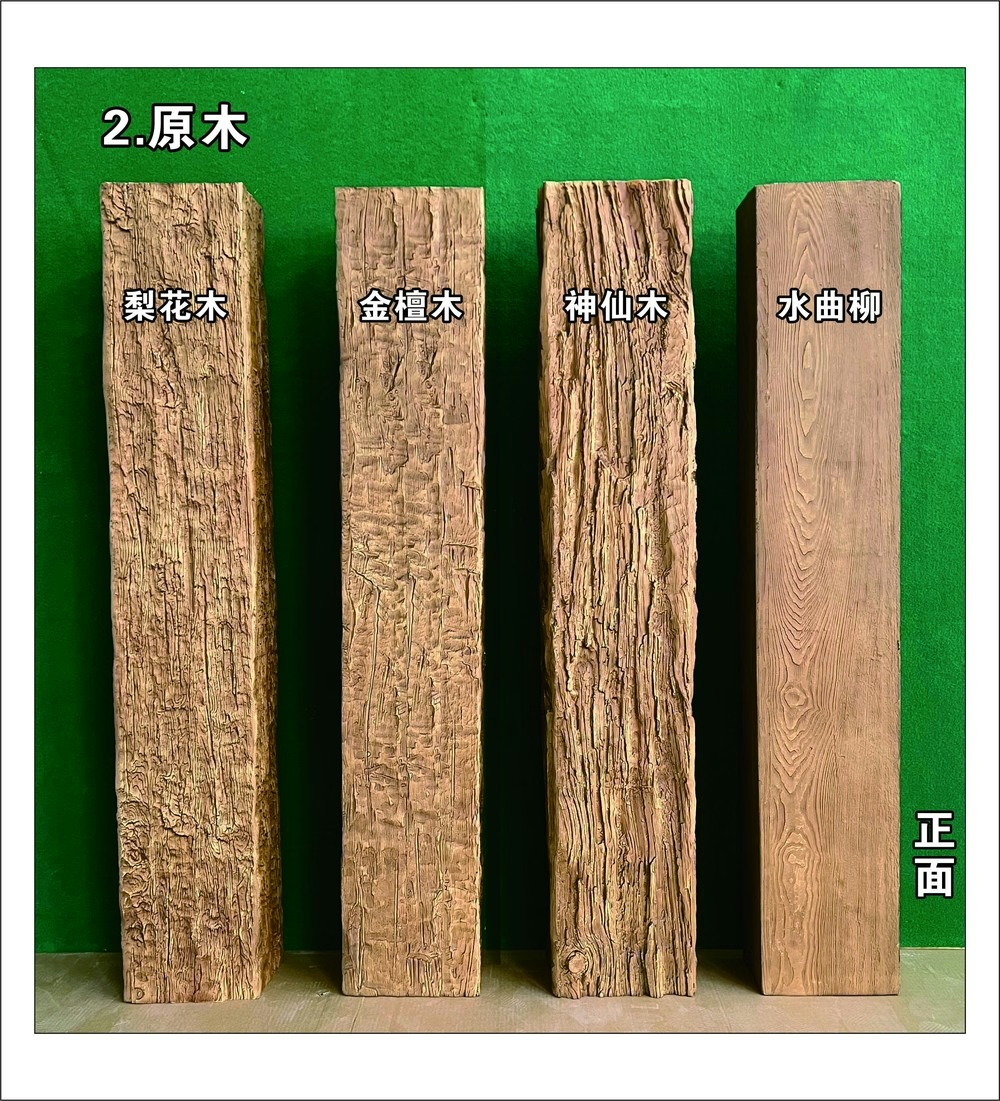
Selecting the Right Kit for Your Project
Choosing the appropriate installation kit requires matching the kit's capabilities to the project's requirements. Several factors should be considered when making this selection.
Beam compatibility is the first consideration. Installation kits are typically designed for specific beam products or product families, and using a kit designed for a different beam may result in dimensional mismatches or insufficient load ratings. Verifying that the kit is specified for the exact beam product being installed prevents these problems.
Substrate compatibility addresses the structural surface to which the beams will be mounted. Different substrates—wood joists, concrete ceilings, steel framing, plasterboard with backing—require different fastener types and installation techniques. Kits designed for specific substrates include the appropriate fasteners and accessories.
Project scale affects how much of each component is needed. Larger installations may require multiple kits or additional quantities of specific components, while smaller installations may not use all the components included in a full kit. Calculating the expected consumption of each component based on the project size helps in determining the appropriate kit quantity.
Quality and certification considerations apply to commercial and institutional projects where documentation of component quality may be required. Kits that include certified fasteners, tested adhesives, or documented load ratings provide the documentation needed for project submittals and inspections.
Benefits of Complete Kits
The advantages of using complete installation kits extend beyond simple convenience. Several practical benefits make kits the preferred approach for many installers and specifiers.
Component compatibility is ensured when all kit components are designed to work together. The brackets fit the beam channels, the adhesive is formulated for the beam material, and the connectors are sized appropriately for the bracket dimensions. This compatibility eliminates the trial-and-error that can occur when sourcing components separately.
Procurement efficiency is dramatically improved with kits. A single purchase order, a single delivery, and a single inventory item replaces the complexity of sourcing multiple components from multiple suppliers. This efficiency is particularly valuable for contractors managing multiple concurrent projects.
Cost savings often result from kit purchasing. Manufacturers and suppliers typically price kits at a discount compared to the equivalent components purchased separately. The savings can be substantial for larger projects, contributing to competitive project pricing.
Installation quality benefits from the consistency that kits provide. Installers become familiar with the kit's components and procedures, allowing them to work more efficiently and achieve more consistent results across multiple projects.
Complete installation kits with brackets, adhesive, and connectors represent a thoughtful approach to beam installation that benefits everyone involved in the project, from the manufacturer who designed the kit to the installer who uses it to the building owner who enjoys the finished result.

Technical References
ASTM standards cited in every specification
Test Data
Lab results from internal testing program
Updated 2026
Reviewed against current product specs