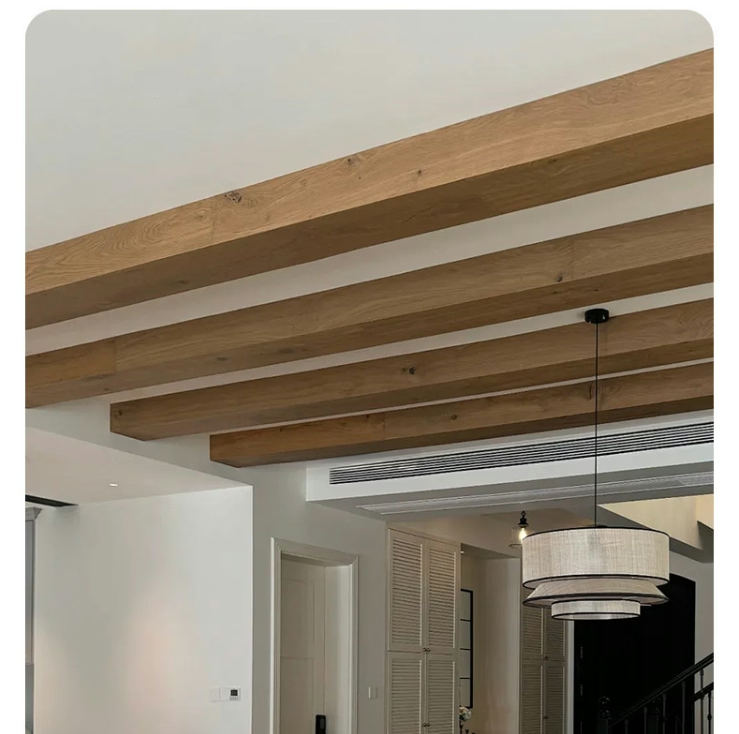
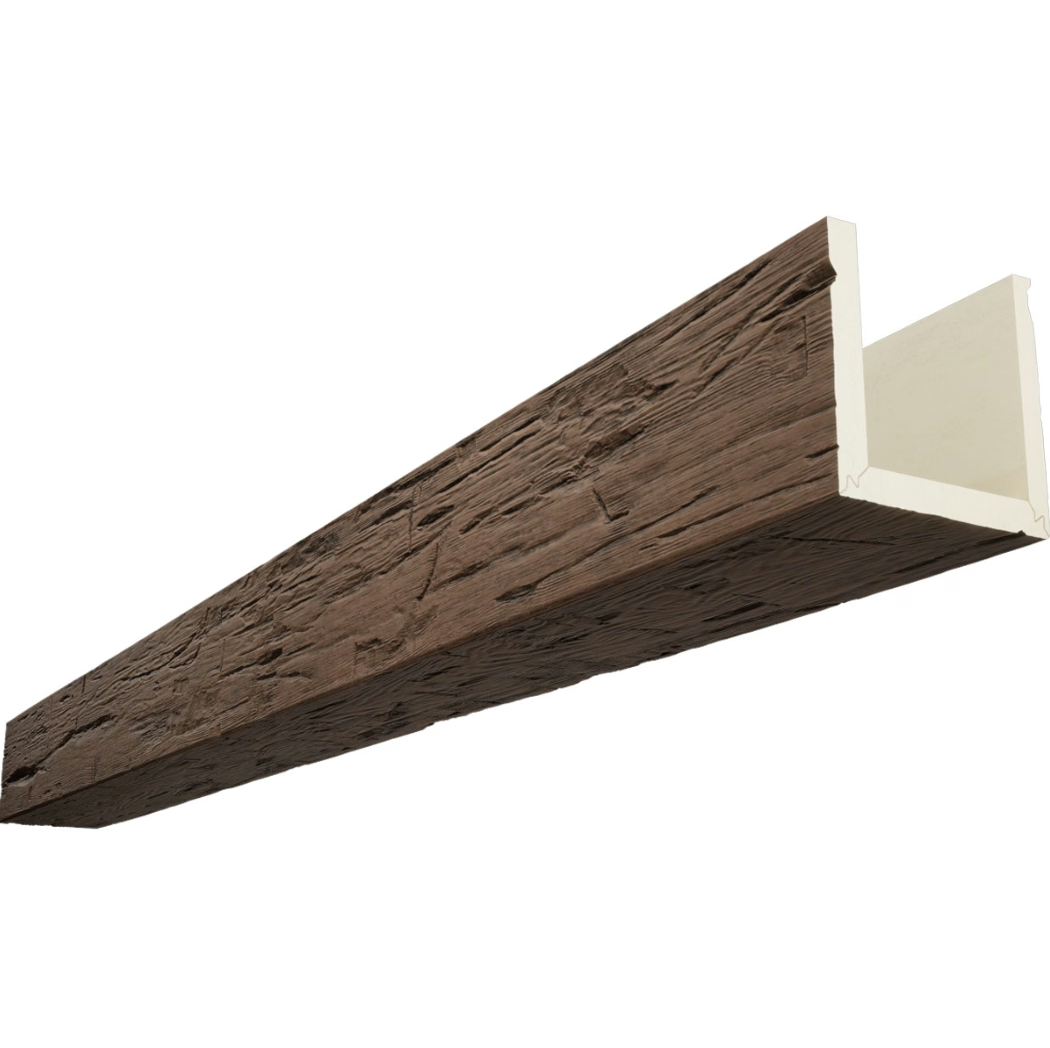
The container shows up at the destination half empty. The freight forwarder sends an invoice based on the container, not the contents. The importer pays for air. Everyone is unhappy, and nobody planned the load properly on the way out.
This is one of the most common complaints from buyers new to polyurethane — particularly those who used to import solid timber and have a mental image of how heavy a beam should feel. Polyurethane is light. The container fills with air long before it fills with weight. The math has to be done in cubic meters, not kilograms.
Start with the container, not the beams
The internal dimensions of a standard 40-foot high cube container give you about 76 cubic meters of usable volume. Subtract the door frame thickness, the corner posts, and any bracing, and the practical loading volume is closer to 73 cubic meters. That is the real budget.
| Container type | Internal volume (m³) | Payload (kg) |
|---|---|---|
| 20 ft standard | 33 | 21,500 |
| 40 ft standard | 67 | 26,500 |
| 40 ft high cube | 76 | 26,500 |
| 45 ft high cube | 86 | 27,500 |
For faux beams, the volume column is the one that matters. The payload column rarely constrains a load — except for very dense profiles or very long runs of small-section beams.
Calculate the cubic footprint of one beam
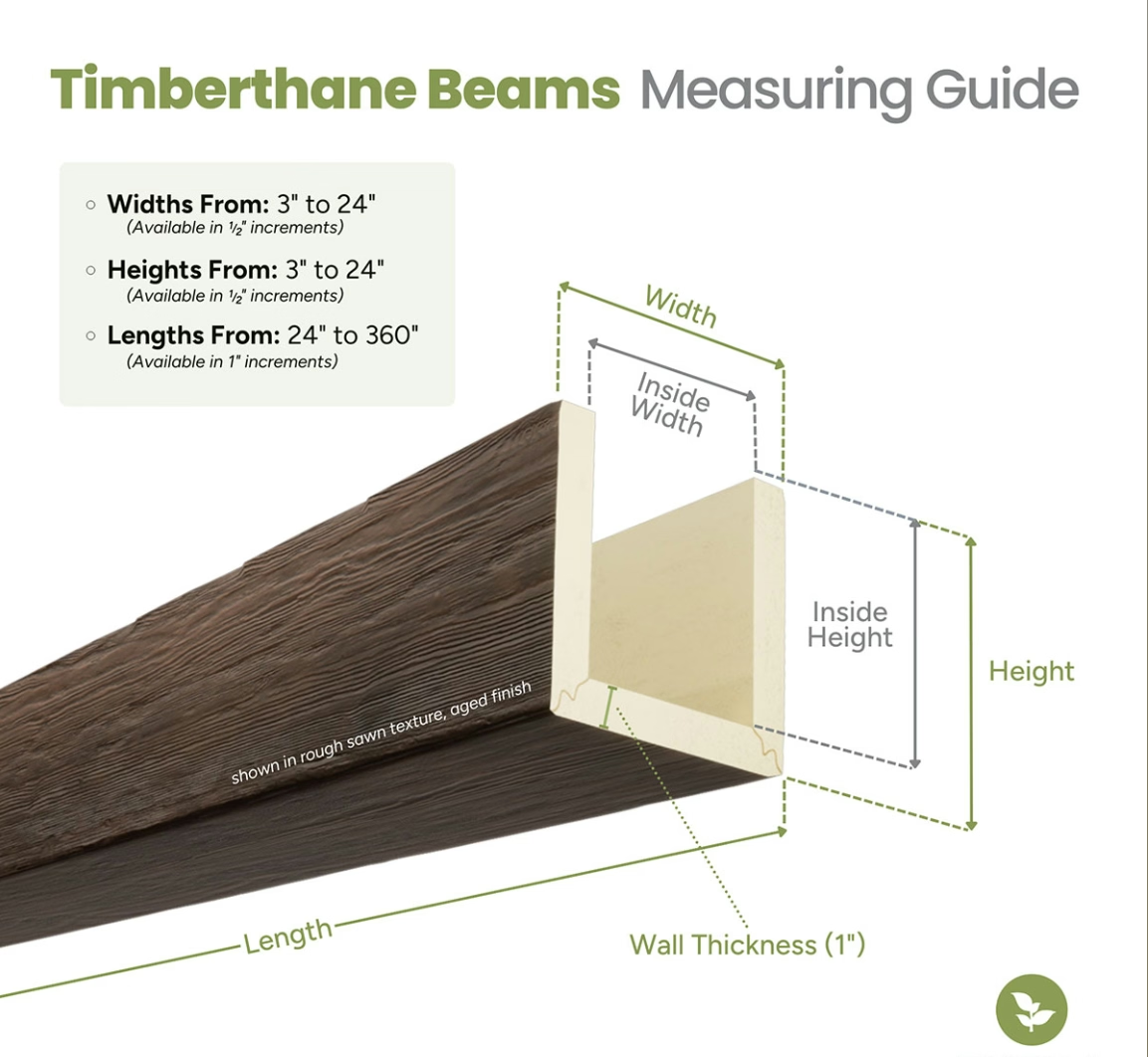
A faux beam is a rectangular prism for shipping purposes, even if the profile is U-shaped hollow.
For a 6-by-8-inch (152 by 203 mm) beam at 10 feet (3.05 m) length:
- Cross-section: 0.152 m × 0.203 m = 0.0309 m²
- Volume per linear meter: 0.0309 m³/m
- Volume per 10-foot beam: 0.0309 × 3.05 = 0.0942 m³
A 40-foot HC at 73 m³ of usable space therefore has theoretical room for 73 / 0.0942 = 775 beams at this profile.
In practice, you never reach theoretical maximum because of stacking geometry, end-of-beam taper, and the air gaps between curved profiles. A realistic utilization factor is 78 to 85 percent.
| Realistic utilization | Beams per 40 ft HC |
|---|---|
| 78% | 605 |
| 85% | 659 |
That is 6,050 to 6,590 linear feet per container for a 10-foot 6-by-8 oak grain profile. A solid timber equivalent would never reach this — the weight limit would stop the load at around 200 beams of similar size.
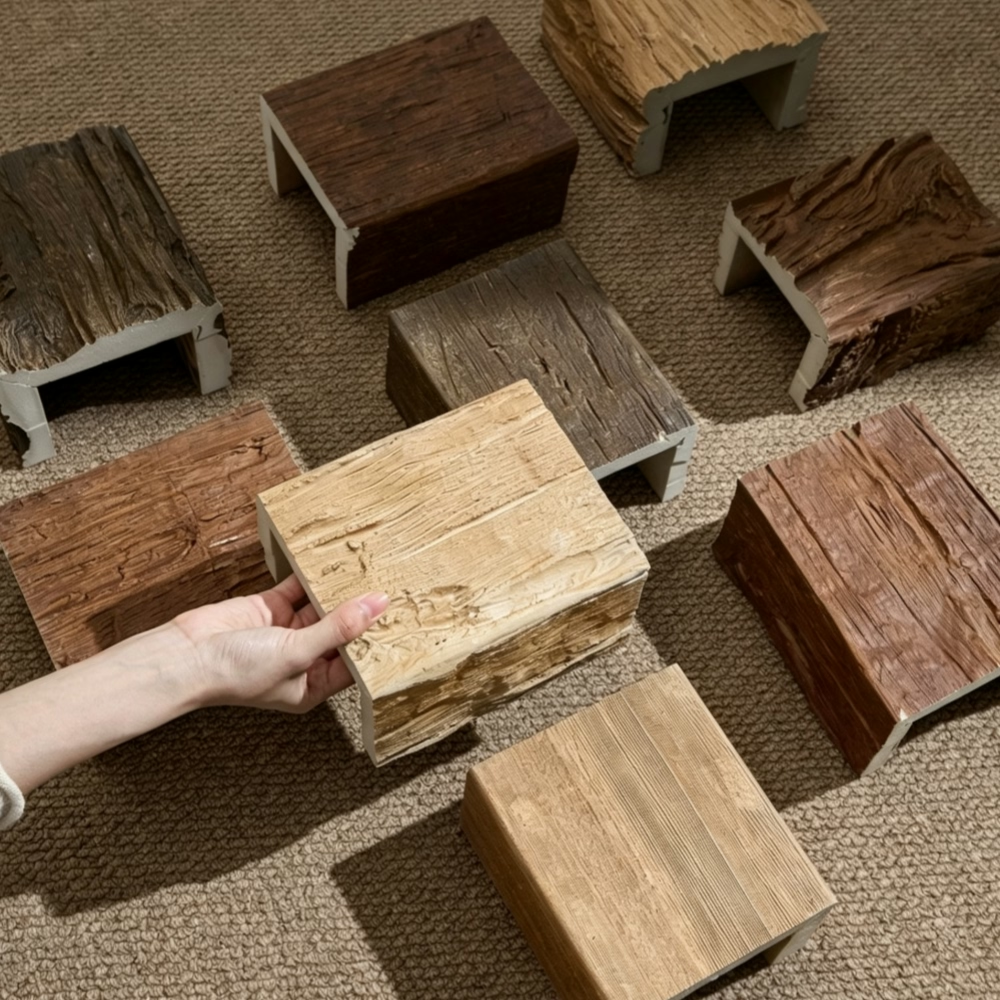
Mixing profiles: where the math gets interesting
Most importers are not running single-profile orders. A typical wholesale customer might want 800 linear feet of 6-by-8 oak, 400 linear feet of 4-by-6 walnut, and 600 linear feet of 8-by-10 hand-hewn — all in the same container.
Calculate the volume each profile consumes first, then check whether the sum fits.
| Profile | Linear feet | Volume per LF (m³) | Total volume (m³) |
|---|---|---|---|
| 6-by-8 oak | 800 | 0.0309 | 24.7 |
| 4-by-6 walnut | 400 | 0.0186 | 7.4 |
| 8-by-10 hand-hewn | 600 | 0.0535 | 32.1 |
| Total | 1,800 | — | 64.2 |
At 73 m³ of usable space, this load fits at about 88 percent utilization — too tight for safe transport. Either drop the 8-by-10 quantity by 100 linear feet or move to a 45-foot HC.
The point of this exercise is that without doing the math, the importer would have ordered based on weight and assumed the container would hold it. It would have held it — barely. The beams would have arrived in poor condition because there was no room for the bracing and protective dunnage that prevents damage in transit.
The lost space you did not plan for
Three categories of space get wasted on most faux beam shipments.
The first is the door area. Container doors are not full clearance. Beams longer than about 12.5 meters cannot be loaded through the door without tilting, and even then only specific lengths work. Plan the longest sections first and orient them so they sit fully inside the door frame.
The second is the corner posts. The four interior corner posts of a container take up roughly 0.15 m³ each — small individually, but noticeable in a load that is already tight.
The third is bracing. Straps, air bags, and corner boards take up volume. Allow at least 1.5 to 2.0 m³ for bracing on a full load.
Stacking patterns for hollow profiles
A hollow faux beam does not crush uniformly. The top face has the molded grain and the finish. The bottom face has the routed channel for splice plates or mounting cleats. Lay the beams top-up, bottom-down. This protects the visible face and lets the channels nest without scratching.
For 6-by-8 beams nested in stacks:
- Stack height limit: 8 to 10 layers for slim 4-by-6, dropping to 4 to 5 layers for 8-by-10 and above
- Stack width: any workable width up to about 1.5 m
- Stack length: usually the beam length itself
A practical stacking plan for 10-foot 6-by-8 beams:
- 18 beams per layer (3 across, 6 along), each layer taking 1.83 m wide by 3.05 m long of floor space
- 4 layers high, total 72 beams per stack
- 4 stacks in a 40-foot HC = 288 beams per layer position
This stacks to 1,152 linear feet per container at 10-foot lengths — somewhat below the theoretical maximum, but with safe bracing room.
Palletized loads lose volume but gain speed
A palletized load trades 8 to 12 percent of the volume for significantly faster handling at both ends of the journey. The math works out like this:
| Loading method | Volume utilization | Load/unload time | Damage rate |
|---|---|---|---|
| Floor loaded, hand stacked | 85-90% | 4-6 hours | 2-4% |
| Palletized, single tier | 78-82% | 1.5-2 hours | 0.5-1% |
| Palletized, double tier | 70-75% | 1-1.5 hours | 0.5-1.5% |
For shipments going to a port where the importer has a forklift and trained labor, palletizing almost always pays for itself. For shipments going to a port where the beams will be hand-carried to a warehouse, floor loading is simpler even with the damage risk.
Optimize for the destination, not the origin
The most common optimization mistake is optimizing for the loading dock at the factory instead of the destination warehouse. A 40-foot container packed to 92 percent utilization might be a great load at the origin, but if the destination warehouse has a low door, a narrow gate, or a residential street with a tight turn, the importer is going to spend hours getting it off the truck.
Two practical options:
- Ship two 20-foot containers when the destination is constrained. Yes, the per-cubic-meter cost is higher. Yes, it still beats a delivery that takes six hours to unload because the container will not fit.
- Drop-ship to the project address rather than to a central warehouse. For project-based orders, this can save the importer a handling step entirely.
A short optimization checklist
Before approving any faux beam container load, the importer should be able to answer five questions:
- What is the total cubic volume of the order by profile?
- What is the total weight by profile?
- Does the cubic volume fit in the chosen container at 85 percent or less utilization?
- Is the longest beam section compatible with the container door clearance?
- Are the pallet or stacking patterns documented for the destination handler?
If any answer is "not sure," the load plan is not done. Asking the factory for a written loading plan with the order takes one extra email and saves the importer a thousand-dollar surprise on the receiving end.
Technical References
ASTM standards cited in every specification
Test Data
Lab results from internal testing program
Updated 2026
Reviewed against current product specs