
The brief from the designer was clear and a little contradictory: "We want the room to feel warm, lived-in, and a little rustic. We do not want it to feel like a country house. We want it to feel like a modern apartment that has aged into character over thirty years."
That is the new wave of residential design. The post-farmhouse era. The "warm minimalism" movement. Whatever label the design press gives it next year, the formula is consistent — natural materials with restraint, clean lines with handmade texture, warmth without nostalgia. The faux beam is one of the hardest-working elements in this look, and the right rustic oak specification does a lot of the heavy lifting.
What "rustic oak" means in 2026
The 2014 rustic oak beam was a deep, knotty, heavily distressed piece of wood with visible saw marks and a dark walnut stain. It looked like it had been pulled out of a 1920s barn. That aesthetic served a design moment, but the moment has passed.
The 2026 version is different:
- Lighter base tone — wheat, honey, soft warm brown rather than dark walnut
- Visible grain, modest knots — the grain character is real, but the knots are smaller, less dramatic, and more evenly spaced
- Matte finish — no high-gloss polyurethane. The beam should look like it has absorbed light, not reflected it
- Clean profile — flat or slightly chamfered faces, no carved detail, no decorative iron strapping
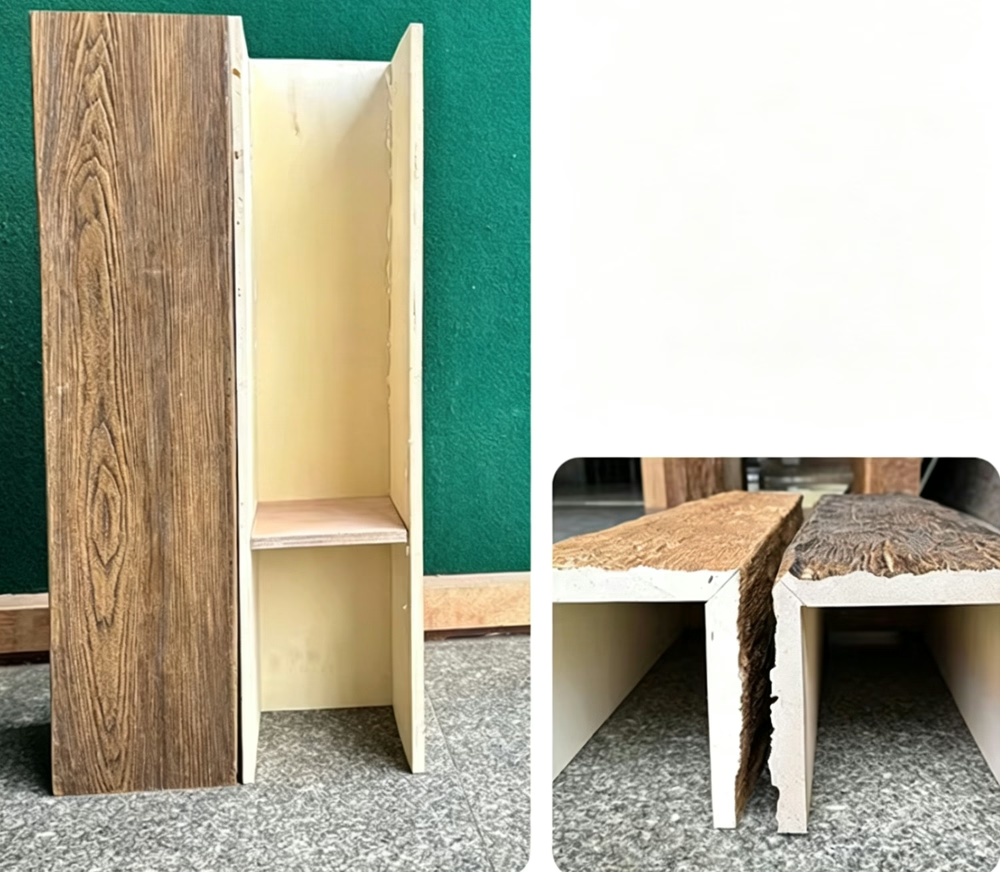
This is what a good contemporary rustic oak specification looks like from a polyurethane factory. The mold captures the warmth of real oak without imitating the character marks that would push the room into nostalgia.
Why polyurethane is the right material here
There is a real case for solid timber in some rustic oak installations — particularly for designers who want the irregularity of real wood and the cultural cachet that comes with it. For most projects, though, polyurethane is the better answer for five reasons.
Consistency across the run
A solid timber beam varies. Even when the architect specifies the same tree, the same milling, and the same stain, two beams can read differently. Polyurethane factory finish is consistent because the same mold and the same finish line produce every section.
Lead time
A solid timber rustic oak beam, particularly in a longer length, can take six to ten weeks from order to delivery. Polyurethane ships in two to four weeks for standard profiles.
Weight and handling
A 6-by-8 solid oak beam at 16 feet runs roughly 130 pounds. The polyurethane equivalent is around 35 pounds. For a residential install where two crew members are doing the work, the lighter weight translates directly into fewer callbacks about sagging fasteners, slower install times, and injuries.
Finish integrity
Real oak checks, splits, and grays over time. A polyurethane beam in a quality factory finish holds its color and surface integrity for decades. For a designer specifying rustic oak in a commercial hospitality project — restaurants, hotels, tasting rooms — the finish integrity is often the deciding factor.
Cost predictability
Solid oak beams have a commodity component. The price moves with lumber markets. Polyurethane pricing is more stable across the year.
What to specify
For a contemporary modern rustic oak look in 2026, the specification that lands in most rooms:
- Profile: 6-by-8 or 8-by-8 smooth face with optional 1/8-inch chamfer
- Mold: light to medium grain with modest knot detail, no deep carving
- Base color: warm wheat or honey tone, around a 30 to 40 percent luminance
- Glaze: subtle warm brown glaze in the grain valleys to add depth
- Topcoat: matte
- Length: up to 16 feet per section for residential installs

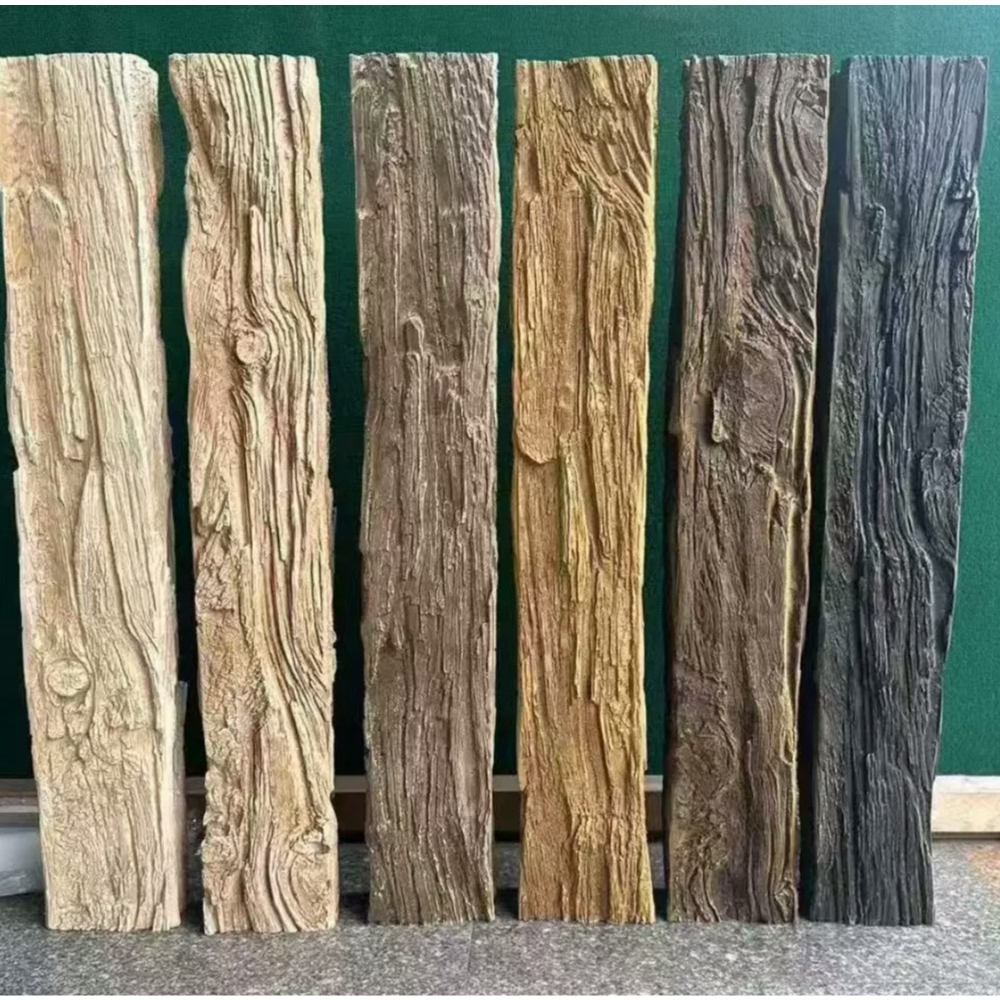
Most faux beam factories carry a "weathered oak" or "rustic oak" finish that fits this brief. If the standard finishes are too dark or too distressed, ask for a custom run with a lighter glaze.
Pairing the beam with the rest of the room
A rustic oak beam in a contemporary room works because of the contrast with everything else. The clean white ceiling, the smooth plaster walls, the untextured fabric on the sofa, the metal and stone on the tables — all of that becomes a foil for the warmth and texture of the beam.
What goes wrong is when the beam is not the only warm texture in the room. If the floor is heavily distressed wide-plank oak, the furniture is all reclaimed wood, and the accessories include rawhide and woven baskets, the beam disappears. The room tips into "cabin."
For a contemporary modern rustic look:
- One or two warm wood elements — the beam, or a credenza, or a dining table — but not all three
- Wall finishes in flat matte paint or natural lime wash
- Flooring in light oak, whitewashed oak, or a contrasting wide-plank gray
- Metals in matte black, brushed nickel, or unlacquered brass
- Textiles in linen, boucle, or cotton velvet
The beam is one texture among many, not the only texture.
Common client objections
Three objections come up during the specification phase.
"Won't it look fake?" A quality polyurethane beam in 2026 is hard to distinguish from real timber at conversational distance. The mold detail, the glaze technique, and the matte finish combine to read as wood. If the client is still skeptical, order one sample and let them see it in person.
"Will it yellow over time?" Cheaper polyurethane does yellow, particularly in direct sunlight. A quality closed-cell PU beam with a UV-stable topcoat will hold its color for at least a decade in normal interior lighting. Ask the factory for the UV warranty in writing.
"Can I refinish it if I want a different color?" Yes. A matte faux oak beam can be sanded lightly and re-stained on site. The factory finish is not a permanent commitment.
When to use solid timber instead
Polyurethane is not always the right answer. There are situations where the design brief calls for the real thing.
If the project is a heritage renovation where every other element is original timber, a polyurethane faux beam will read as the weak link. Use solid reclaimed timber.
If the client specifically wants the irregular character of hand-hewn timber and is paying for that exact look, polyurethane cannot deliver. The molding process can imitate, but it cannot copy the irregularity.
If the beam is being installed in a commercial project with a tight budget and a strict aesthetic, polyurethane is usually the better choice because of cost and lead time.
For everything in between — most residential projects, most hospitality projects, most small commercial projects — the contemporary modern rustic oak polyurethane faux beam delivers the look without the weight, the wait, or the budget hit.
A short spec checklist for designers
Before signing off on a rustic oak faux beam order, the designer should be able to confirm:
- The factory finish sample matches the chosen color in person, not just on screen
- The grain detail is consistent across sections, particularly at the joints
- The matte topcoat has UV inhibitors
- The lead time fits the construction schedule with at least one week of buffer
- The blocking or mounting plan has been coordinated with the contractor
A modest spec, well executed, holds up better than an ambitious spec cut to fit the budget. The contemporary modern rustic look depends as much on what is left out as on what is added. The beam is one of the largest additions the room will see. Specify it carefully, install it cleanly, and let the rest of the room breathe around it.
Technical References
ASTM standards cited in every specification
Test Data
Lab results from internal testing program
Updated 2026
Reviewed against current product specs


